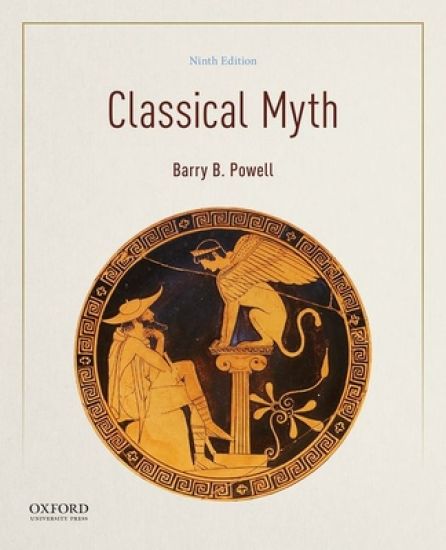
For decades, Classical Myth has been one of the most popular and best-selling texts for the study of classical myth. Oxford University Press is proud to publish this essential book in a vibrant new ninth edition, complemented by digital learning resources that further enhance the reader's engagement with the classical past. Visit www.oup.com/us/he/powell9e for a wealth of new digital teaching and learning resources. Package this text at a discount with one or more of the author's translations of the Iliad, the Odyssey, and the Aeneid--all pubished by Oxford University Press--or with any title in the Oxford World's Classics series. Please contact your OUP sales representative to set up a package.
War causes death, disability, and disease. It damages the health-supporting infrastructure, displaces populations, violates human rights, and diverts resources. And it subsequently leads to more violence. From Horror to Hope documents the health consequences of war, primarily for noncombatant civilians but also for military personnel and veterans, and outlines what can be done to minimize these consequences. Written by a public health physician engaged with this subject for decades, the book also describes positive developments in addressing the health impacts of war, including new initiatives to protect civilians during war, reduce gender-based violence and mental trauma, and control the international arms trade and nuclear weapons. In addition, From Horror to Hope profiles inspiring health professionals who are providing healthcare for war-affected populations and participating in education, research, and advocacy to reduce the health impacts of war. Finally, the book demonstrates how traditional public health frameworks and new paradigms can be applied to the prevention of war and the promotion of peace. Given the current peak in armed conflicts and the increasing threat of future wars, From Horror to Hope provides an extremely timely overview for anyone seeking to better understand and address the health consequences of war.
A dive into the origins, management, and uses and misuses of sovereign debt through the ages. Public debts have exploded to levels unprecedented in modern history as governments responded to the Covid-19 pandemic and ensuing economic crisis. Their dramatic rise has prompted apocalyptic warnings about the dangers of heavy debts—about the drag they will place on economic growth and the burden they represent for future generations. In Defense of Public Debt offers a sharp rejoinder to this view, marshaling the entire history of state-issued public debt to demonstrate its usefulness. Authors Barry Eichengreen, Asmaa El-Ganainy, Rui Esteves, and Kris James Mitchener argue that the ability of governments to issue debt has played a critical role in addressing emergencies—from wars and pandemics to economic and financial crises, as well as in funding essential public goods and services such as transportation, education, and healthcare. In these ways, the capacity to issue debt has been integral to state building and state survival. Transactions in public debt securities have also contributed to the development of private financial markets and, through this channel, to modern economic growth. None of this is to deny that debt problems, debt crises, and debt defaults occur. But these dramatic events, which attract much attention, are not the entire story. In Defense of Public Debt redresses the balance. The authors develop their arguments historically, recounting two millennia of public debt experience. They deploy a comprehensive database to identify the factors behind rising public debts and the circumstances under which high debts are successfully stabilized and brought down. Finally, they bring the story up to date, describing the role of public debt in managing the Covid-19 pandemic and recession, suggesting a way forward once governments—now more heavily indebted than before—finally emerge from the crisis.
War causes death, disability, and disease. It damages the health-supporting infrastructure, displaces populations, violates human rights, and diverts resources. And it subsequently leads to more violence. From Horror to Hope documents the health consequences of war, primarily for noncombatant civilians but also for military personnel and veterans, and outlines what can be done to minimize these consequences. Written by a public health physician engaged with this subject for decades, the book also describes positive developments in addressing the health impacts of war, including new initiatives to protect civilians during war, reduce gender-based violence and mental trauma, and control the international arms trade and nuclear weapons. In addition, From Horror to Hope profiles inspiring health professionals who are providing healthcare for war-affected populations and participating in education, research, and advocacy to reduce the health impacts of war. Finally, the book demonstrates how traditional public health frameworks and new paradigms can be applied to the prevention of war and the promotion of peace. Given the current peak in armed conflicts and the increasing threat of future wars, From Horror to Hope provides an extremely timely overview for anyone seeking to better understand and address the health consequences of war.
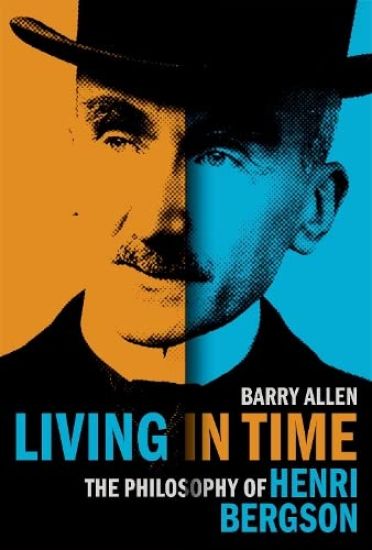
Henri Bergson (1859-1941) was once the most famous philosopher in the world, but his reputation waned in the latter half of the 20th century. Barry Allen here makes the case for Bergson as a great philosopher, one whose thought has much to contribute to contemporary philosophical questions. Living in Time presents chapters on each of Bergson's four major works, explaining his theories of time, perception, memory, and panpsychic consciousness, his innovative concept of virtual existence, his objection to Darwin, his controversy with Einstein, his philosophy of creative evolution, and his social philosophy of closed and open society. In particular Allen focusses on Bergson's powerful ideas on time. Classical arguments for determinism fallaciously apply spatial concepts to consciousness; once we take time seriously, which means acknowledging its reality as duration and its difference from space, Bergson showed that the arguments for determinism become insupportable. Bergson's ideas on time and evolution offer a comparison with Nietzsche, which Allen develops, exposing both philosophical concurrence and systematic difference. The book's conclusion discusses the question of Bergson and naturalism and summarizes the ontology of the virtual that emerges as a core part of Bergson's thought.
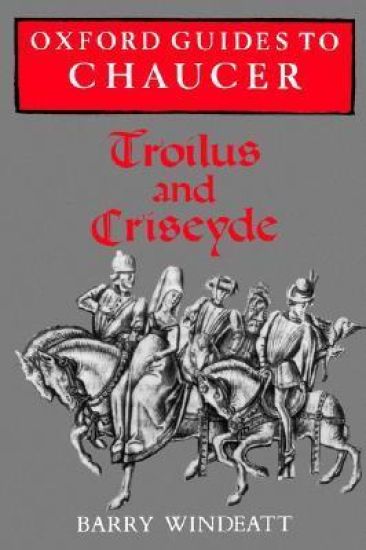
The three Oxford Guides to Chaucer are written by scholars of international repute, with the purpose of summarizing what is known about his work and offering interpretations based on recent advances in both historical knowledge and theoretical understanding. Barry Windeatt's contribution to the series offers students the most comprehensive introduction to Troilus and Criseyde yet produced. It includes the fullest and most convenient account of Chjauser's use of sources, the first exteded analysis of the poem's generic originality, and an invaluable commentary on all aspects of the poem that is Chaucer's most ambitious single achievement - its structure, themes, characterization, and style. It also contains a survey of literary responses to Troilus in the three centuries following Chaucer's death. Combining the informative substance of a reference book with the coherence of a critical reading, the Guide has taken its place as the standard introduction to Troilus and Criseyde.
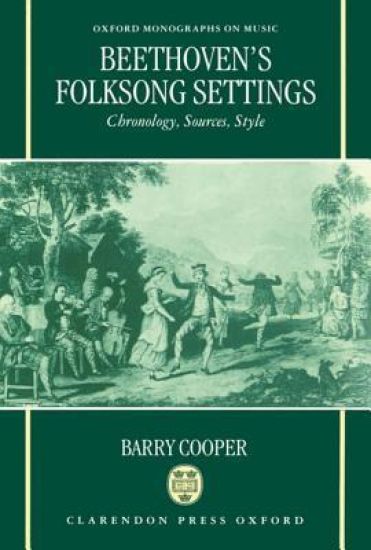
Beethoven composed far more folksong settings than any other type of composition. Most are British songs, including Auld Lang Syne and the The Miller of Dee, with text by such authors as Burns, Byron and Scott. Yet Beethoven's settings, commissioned by George Thomson of Edinburgh, have been neglected by performers and scholars alike, and nearly all accounts of them are both superficial and startlingly inaccurate. This book is based on a very elablorate study of a wide range of sources, and dispels the many myths that have been circulating about this music. Every one of the 179 settings is dated to within a few weeks and an account is given of the souces of the melodies and texts, the difficulties of sending the music across Europe during the Napoleonic Wars (smugglers were even called upon to assist!), the fees Beethoven received, and when and how the texts were added. By comparing Beethoven's settings with those of his predecessors Pleyel, Haydhn and Kozeluch, the author demonstrates that Beethoven comprehensively transcended the bounds of convention, producing settings of extra-ordinary quality and originality. Suggestions are also made for overcoming the problems of presenting these songs in performance.
This book examines the Reformation from the point of view of an almost forgotten congregation of Benedictine monks in Italy and southern France whose humanist approach to their studies put them in a unique position to understand the reformers.
This book raises questions about the nature of philosophy by examining the source and significance of one central philosophical problem: how can we know anything about the world around us? Stroud discusses and criticizes the views of such philosophers as Descartes, Kant, J.L. Austin, G.E. Moore, R. Carnap, W.V. Quine, and others.
Meaning, Understanding, and Practice is a selection of the most notable essays of a leading contemporary philosopher on a set of central topics in analytic philosophy. Barry Stroud offers penetrating studies of meaning, understanding, necessity, and the intentionality of thought. A question which runs through much of this work is what can be expected from a philosophical account of one's understanding of the meaning of something. Five of the essays are focused specifically on the philosophy of Wittgenstein, and most of the rest work with ideas derived from Wittgenstein. Stroud's introduction puts the papers in context by explaining how his ideas and aims developed over the years, and drawing out the recurring themes of the book.
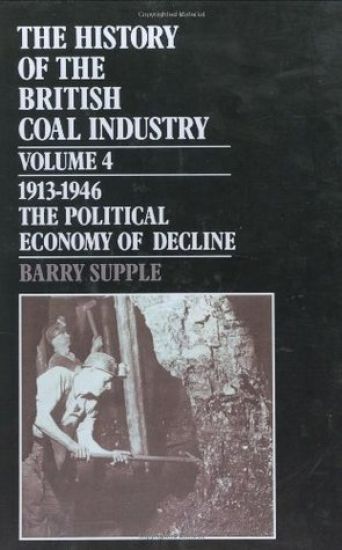
This volume studies the decline of a staple industry at a time of worldwide upheaval caused by war and economic slump. In 1913 British coalmining was at the height of its achievement and prosperity; by 1946 it was an ominous symbol of twentieth-century Britain's inability to adapt to technological and economic change and its social consequences. Written in the light of industrial and government records, this study gives full weight to the political aspects of economic decision-making and economic change. It demonstrates the extent to which the problems of the coal industry were, and still are, deeply rooted in its social, political, and economic history. It is also a classic case study of inflexibility in British industry.
Planners and decision-makers today need to be in command of a broader range of tools and information than ever before. Knowledge of the Land aims to show what is available in the way of natural resources information, and how it has been used (or not used) in planning and policy making. For both methods and applications, the authors have tried to provide enough detail for the reader to judge what data, skills, and procedures are required to meet their particular needs, and the ample references give guidance on where to find further information. There has been a notable shift in planning and rural development over the past decade. Technocratic, top-down approaches are still very much in evidence, but there has been an explosion of participatory initiatives. Many institutions cling to sectoral thinking. There is, however, growing recognition that sustainable development involves balancing environmental, social, and economic considerations, Such a balance requires an interdisciplinary approach, both to the the survey of natural resources, and to the use of the information acquired in land evaluation, planning, environmental impact assessment, and the preparation of coherent strategies and policies for sustainable development. The old ways and the new bring insights crucial to meeting these challenges. Both provide invaluable methods of work. By bringing together the standard methods of resource assessment and planning, and new thinking and emerging techniques, this book will help all practitioners to bridge the gap between the two.
This is the first volume of a two-volume work devoted to probability theory in physics, physical chemistry and engineering. This volume provides an introduction to the problem of "random walk" and its applications. In its simplest form, the random walk describes the motion of an idealized drunkard and is a discrete analogue of the diffusion through a medium with traps, laser speckle and the conformations of polymers in dilute solution. Prior knowledge of probability theory is helpful, but not assumed.
This is the second volume of a two-volume work devoted to probability theory in physical chemistry, and engineering. Rather than dealing explicitly with the idea of an ongoing random walk, each chaotic step taking place at fixed time intervals, this volume addresses models in which the disorder is frozen in space-random environments. The volume begins with a largely self-contained introduction to the geometry of random environments, emphasizing Bernoulli percolation models. The scope of the investigation then widens as we ask how structural disorder affects the transport process. The final chapters confront the interplay of two different forms of randomness; spatial randomness frozen into the environment and temporal randomness associated with the choices for next steps made by a random walker. The book ends with a discussion of "the ant in the labyrinth" problems. It is supported by an extensive bibliography and very little prior knowledge is assumed.
Designed for first year students at university studying chemistry, and students taking physical chemistry as part of their degree course this Workbook is comprised of eight main sections covering revision of key elements. There are some 68 examples and 139 exercises through which students ability and confidence with tackling quantitative calculations will be developed, beginning with material based on pre-university knowledge through to topics such as chemical equilibrium that feature in first year unversity courses. The important equations are collected together at the end of each section for easy reference and a list of useful mathematical formulae is included. Students can work through the book as self-paced individuals, or in groups, alongside traditional lecture courses.
Free Radicals in Biology and Medicine has become a classic text in the field of free radical and antioxidant research. Now in its fifth edition, the book has been comprehensively rewritten and updated whilst maintaining the clarity of its predecessors. Two new chapters discuss 'in vivo' and 'dietary' antioxidants, the first emphasising the role of peroxiredoxins and integrated defence mechanisms which allow useful roles for ROS, and the second containing new information on the role of fruits, vegetables, and vitamins in health and disease. This new edition also contains expanded coverage of the mechanisms of oxidative damage to lipids, DNA, and proteins (and the repair of such damage), and the roles played by reactive species in signal transduction, cell survival, death, human reproduction, defence mechanisms of animals and plants against pathogens, and other important biological events. The methodologies available to measure reactive species and oxidative damage (and their potential pitfalls) have been fully updated, as have the topics of phagocyte ROS production, NADPH oxidase enzymes, and toxicology. There is a detailed and critical evaluation of the role of free radicals and other reactive species in human diseases, especially cancer, cardiovascular, chronic inflammatory and neurodegenerative diseases. New aspects of ageing are discussed in the context of the free radical theory of ageing. This book is recommended as a comprehensive introduction to the field for students, educators, clinicians, and researchers. It will also be an invaluable companion to all those interested in the role of free radicals in the life and biomedical sciences.
Free Radicals in Biology and Medicine has become a classic text in the field of free radical and antioxidant research. Now in its fifth edition, the book has been comprehensively rewritten and updated whilst maintaining the clarity of its predecessors. Two new chapters discuss 'in vivo' and 'dietary' antioxidants, the first emphasising the role of peroxiredoxins and integrated defence mechanisms which allow useful roles for ROS, and the second containing new information on the role of fruits, vegetables, and vitamins in health and disease. This new edition also contains expanded coverage of the mechanisms of oxidative damage to lipids, DNA, and proteins (and the repair of such damage), and the roles played by reactive species in signal transduction, cell survival, death, human reproduction, defence mechanisms of animals and plants against pathogens, and other important biological events. The methodologies available to measure reactive species and oxidative damage (and their potential pitfalls) have been fully updated, as have the topics of phagocyte ROS production, NADPH oxidase enzymes, and toxicology. There is a detailed and critical evaluation of the role of free radicals and other reactive species in human diseases, especially cancer, cardiovascular, chronic inflammatory and neurodegenerative diseases. New aspects of ageing are discussed in the context of the free radical theory of ageing. This book is recommended as a comprehensive introduction to the field for students, educators, clinicians, and researchers. It will also be an invaluable companion to all those interested in the role of free radicals in the life and biomedical sciences.
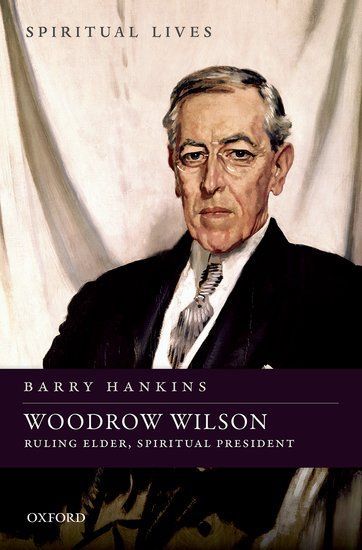
When Woodrow Wilson was elected as a ruling elder in the Presbyterian Church in 1897, his preacher father allegedly remarked, "I would rather that he held that position than be president of the United States." Fifteen years later he was both. Easily one of the most religious presidents in American history, almost all of Wilson's policies and important speeches were infused with religious concepts. The son, grandson, and nephew of southern Presbyterian divines, with six consecutive generations of preachers on his mother's side, Wilson viewed his political career as a sacred calling. As he remarked to a Democratic Party leader just before his inauguration in 1913, "God ordained that I should be the next president of the United States." As a scholar, Princeton University president, governor of New Jersey, then president, Wilson spent his entire career trying to further the cause of public righteousness. In 1905, he uttered his life's credo: "There is a mighty task before us and it welds us together. It is to make the United States a mighty Christian nation and to Christianize the World." Nonetheless, the 28th president was not principally a religious figure, and he didn't fit comfortably in any religious camp, either in his own time or today. In Woodrow Wilson: Ruling Elder, Spiritual President, Barry Hankins tells the story of Wilson's religion as he moved from the Calvinist orthodoxy of his youth to a progressive, spiritualized religion short on doctrine and long on morality.
Statistical Mechanics is the study of systems where the number of interacting particles becomes infinite. In the last fifty years tremendous advances have been made which have required the invention of entirely new fields of mathematics such as quantum groups and affine Lie algebras. They have engendered remarkable discoveries concerning non-linear differential equations and algebraic geometry, and have produced profound insights in both condensed matter physics and quantum field theory. Unfortunately, none of these advances are taught in graduate courses in statistical mechanics. This book is an attempt to correct this problem. It begins with theorems on the existence (and lack) of order for crystals and magnets and with the theory of critical phenomena, and continues by presenting the methods and results of fifty years of analytic and computer computations of phase transitions. It concludes with an extensive presentation of four of the most important of exactly solved problems: the Ising, 8 vertex, hard hexagon and chiral Potts models.
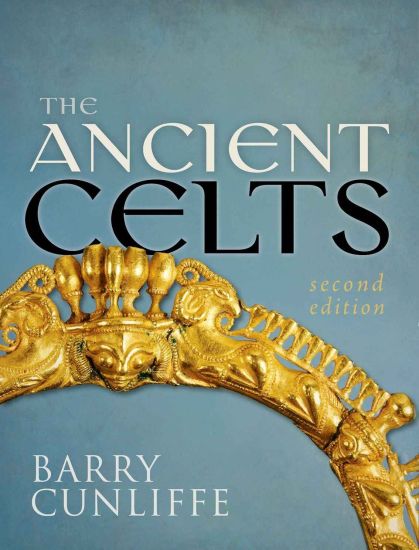
Fierce warriors and skilled craftsmen, the Celts were famous throughout the Ancient Mediterranean World. They were the archetypal barbarians from the north and were feared by both Greeks and Romans. For two and a half thousand years they have continued to fascinate those who have come into contact with them, yet their origins have remained a mystery and even today are the subject of heated debate among historians and archaeologists. Barry Cunliffe's classic study of the ancient Celtic world was first published in 1997. Since then huge advances have taken place in our knowledge: new finds, new ways of using DNA records to understand Celtic origins, new ideas about the proto-urban nature of early chieftains' strongholds, All these developments are part of this fully updated , and completely redesigned edition. Cunliffe explores the archaeological reality of these bold warriors and skilled craftsmen of barbarian Europe who inspired fear in both the Greeks and the Romans. He investigates the texts of the classical writers and contrasts their view of the Celts with current archaeological findings. Tracing the emergence of chiefdoms and the fifth- to third-century migrations as far as Bosnia and the Czech Republic, he assesses the disparity between the traditional story and the most recent historical and archaeological evidence on the Celts. Other aspects of Celtic identity such as the cultural diversity of the tribes, their social and religious systems, art, language and law, are also examined. From the picture that emerges, we are -- crucially -- able to distinguish between the original Celts, and those tribes which were 'Celtized', giving us an invaluable insight into the true identity of this ancient people.