
Kirjahaku
Etsi kirjoja tekijän nimen, kirjan nimen tai ISBN:n perusteella.
1000 tulosta hakusanalla Bill C. Lector

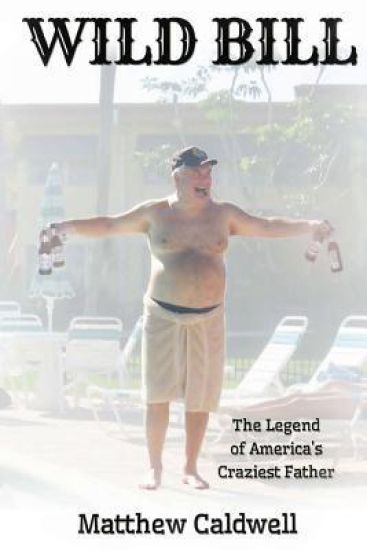
Wild Bill: Legend of America's Craziest Father
Matthew Caldwell
2013
nidottu

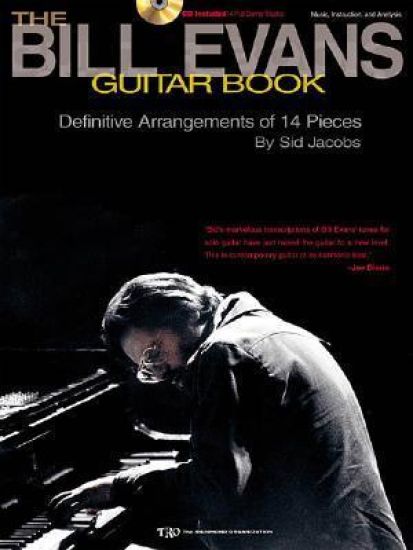
(Guitar Solo). In this book/online audio pack, Musicians Institute instructor Sid Jacobs, who organized the school's Jazz Guitar elective, translates the playing of quintessential jazz pianist Bill Evans for guitarists to enjoy. Includes music, instruction and analysis of 14 Evans' pieces, all in their original keys and with full demonstration tracks. The price of this book includes a unique code that provides access to audio tracks online, for download or streaming. The tracks include PLAYBACK+, a multi-functional audio player that allows you to slow down audio without changing pitch, set loop points, change keys, and pan left or right available exclusively from Hal Leonard. Songs include: Funkallero * Laurie * Letter to Evan * My Bells * Orbit * Peace Piece * Peri's Scope * Remembering the Rain * A Simple Matter of Conviction * Time Remembered * Turn Out the Stars * The Two Lonely People * Very Early * Waltz for Debby. "Sid's marvelous transcriptions of Bill Evans' tunes for solo guitar have just raised the guitar to a new level. This is contemporary guitar at its harmonic best." Joe Diorio
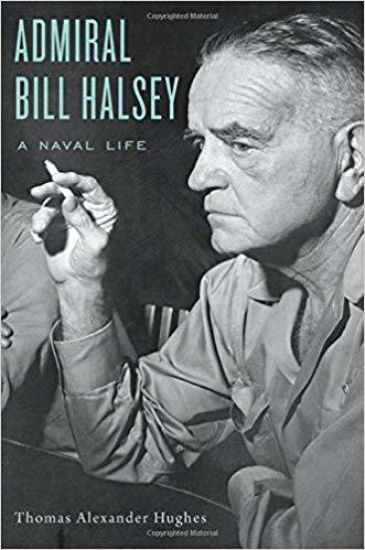
William Halsey was the most famous naval officer of World War II. His fearlessness in carrier raids against Japan, his steely resolve at Guadalcanal, and his impulsive blunder at the Battle of Leyte Gulf made him the “Patton of the Pacific” and solidified his reputation as a decisive, aggressive fighter prone to impetuous errors of judgment in the heat of battle. In this definitive biography, Thomas Hughes punctures the popular caricature of the “fighting admiral” to reveal the truth of Halsey’s personal and professional life as it was lived in times of war and peace.Halsey, the son of a Navy officer whose alcoholism scuttled a promising career, committed himself wholeheartedly to naval life at an early age. An audacious and inspiring commander to his men, he met the operational challenges of the battle at sea against Japan with dramatically effective carrier strikes early in the war. Yet his greatest contribution to the Allied victory was as commander of the combined sea, air, and land forces in the South Pacific during the long slog up the Solomon Islands chain, one of the war’s most daunting battlegrounds. Halsey turned a bruising slugfest with the Japanese navy into a rout. Skillfully mediating the constant strategy disputes between the Army and the Navy—as well as the clashes of ego between General Douglas MacArthur and Admiral Chester Nimitz—Halsey was the linchpin of America’s Pacific war effort when its outcome was far from certain.
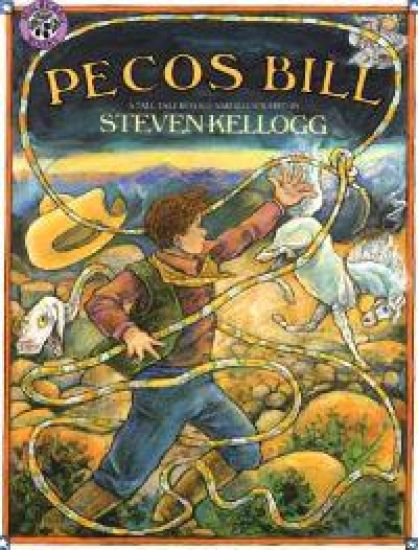
The adventures of Pecos Bill, larger-than-life hero of a popular American tall tale, recounts his youth as the adopted child of a coyote, his taming of the Hell's Gulch Gang, and his first encounters with Slewfoot Sue and the horse Lightning
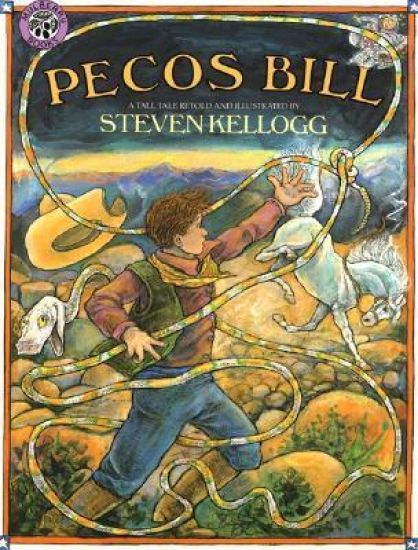
The adventures of Pecos Bill, larger-than-life hero of a popular American tall tale, recounts his youth as the adopted child of a coyote, his taming of the Hell's Gulch Gang, and his first encounters with Slewfoot Sue and the horse Lightning
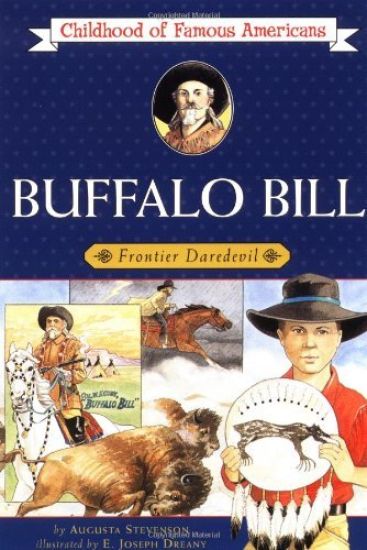
Concentrates on the boyhood of Bill Cody, Pony Express rider, scout, showman, and buffalo hunter.
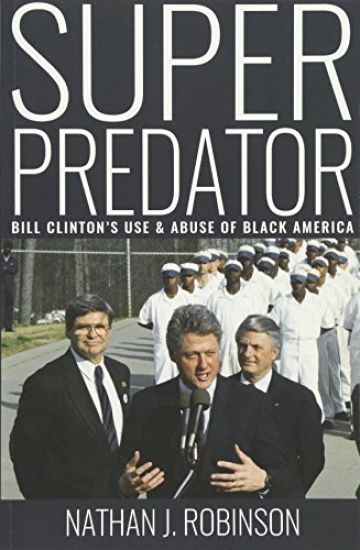
Superpredator: Bill Clinton's Use and Abuse of Black America
Nathan J. Robinson
Demilune Press
2016
nidottu
Bill Clinton has always had a congenial relationship with African Americans, even being labeled "the first black president." Yet Clinton's presidency inflicted devastating harm on many black communities, from which they have yet to recover. Was Clinton a friend to black America? Or did his progressive rhetoric mask a ruthless opportunism? Was Clinton's attitude toward his black supporters "politically pragmatic" or "callously indifferent"? Superpredator is an in-depth look at Bill Clinton's treatment of black lives from Little Rock to Rwanda. Forcefully argued and meticulously sourced, Superpredator will change our view of America's 42nd president. Working with the Current Affairs research team, Nathan J. Robinson has produced a powerful indictment of Clinton's record on race.
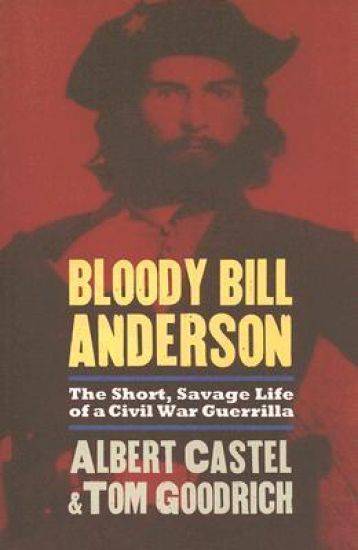
This book talks about the short, savage life of a civil war guerrilla. Nowhere was the Civil War as savage as it was in Missouri - and nowhere did it produce a killer more savage than William Anderson. For a brief but dramatic period, ""Bloody Bill"" played the leading role in the most violent arena of the entire war - and did so with a vicious abandon that spread fear throughout the land. A name associated with William Quantrill and Jesse James, Bloody Bill Anderson was known for never taking prisoners. A former horse thief turned bushwhacker, he became the scourge of Kansas and Missouri with a reputation for unspeakable atrocities. Sometimes he left the bodies of dead Federal soldiers scalped, skinned, and castrated. Sometimes he decapitated them and rearranged their heads. Wherever Bloody Bill rode, the Grim Reaper rode alongside. In telling this story of bitter bloodshed, historians Castel and Goodrich track Bloody Bill's reign of terror over increasingly violent raids. He rode with Quantrill in the infamous sack of Lawrence and killed more victims than any other raider. Then he led the brutal Centralia Massacre, a blood-soaked nightmare recounted here hour-by-hour from firsthand accounts. More than compiling a chronicle of horrors, Castel and Goodrich have produced the first full-fledged account of Anderson's career. They examine his prewar life, explain how he became a guerrilla, then describe the war that he and his men waged against Union soldiers and defenseless civilians alike. The authors' disagreements on many aspects of Anderson's gruesome career add a fascinating dimension to the book. Only 26 when he was killed charging an ambush, Bloody Bill Anderson had already become a legend. This book takes readers behind the legend and provides a closer look at the man - and at the face of terror.
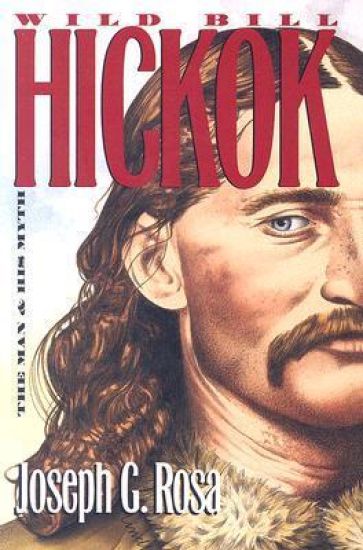
Eulogised and ostracised, James Butler Hickok was alternately labelled courageous, affable, and self-confident; cowardly, cold-blooded, and drunken; a fine specimen of manhood; an overdressed dandy with perfumed hair; an unequaled marksman; and a poor shot. Born in Illinois in 1837, he was shot dead in Deadwood only 39 years later. By then both famous and infamous, he was widely known as ""Wild Bill"". Excavating the reality behind the myth, this text delves into the exploits and ego that defined Hickok, and shows how the man was overtaken by his own legend. Rosa exposes a controversial and charismatic man - army and Indian scout, wagon master, courier, frontiersman, gunfighter, lawman, prospector, addicted gambler, and actor - who was elevated from regional fame to national notoriety by inadvertently being in the right place at the right time. Aggrandized in an 1867 ""Harper's New Monthly Magazine"" article, Hickok reluctantly embraced his exaggerated role in a far-fetched story that has inspired writers, folklorists and movie moguls. Dime novelists sensationalised him. Biographers praised and criticised. Gary Cooper portrayed him sensitively, Douglas Kennedy villainously, and Charles Bronson laconically. Howard Keel played him romantically (albeit historically incorrectly) against Doris Day's Calamity Jane. Culminating four decades of research on Wild West legends, this work aims to provide an accurate account of the larger-than-life character whose reported accomplishments - both real and imaginary - in Kansas, Missouri, and the surrounding territory frequently brought him unwanted publicity. Setting the record straight, Rosa exposes some of the deliberate lies that vested Hickok with a ""man-killer"" reputation he didn't deserve. The book shows that the number of men he killed is probably a lot closer to ten than to the more than 100 he is often credited with. Establishing the role an overzealous press and fortune-seeking dime novelists played in immortalising Wild Bill, Rosa reveals how myths were initiated and perpetuated to glorify the 19th-century frontier. He also illuminates why imaginative accounts of unorthodox heroes continue to skew our understanding of this era of American history.

Buffalo Bill Cody was bigger than life. He was also braver, handsomer, and kinder—in short, just about perfect, as any reader of Prentiss Ingraham's dime novels could tell you. Along with his nearly 600 novels and plays, Ingraham (1843–1904), Confederate colonel and mercenary, penned a biography of his hero. The Buffalo Bill Cody who emerges from this book is not so very different from the paragon in Ingraham's novels, but as Cody's close companion, Ingraham had the inside story on this iconic figure of the American West. Add to that the dime novel-writer's bravura style, and Ingraham's Buffalo Bill Cody: A Man of the West becomes an irresistible work of Americana, in many ways an apt portrait of its larger-than-life subject. And because both men were firsthand witnesses to historic moments—the struggle between slavers and abolitionists, the Civil War, the building of the railroads, the Indian Wars, the golden age of circuses— - the biography offers a close-up perspective of life on the American frontier. Published here with an introduction and notes by Cody aficionado Sandra K. Sagala, who transcribed and edited the text of the biography from the original that was serialized in 1895 by Duluth Press, and illustrated with line drawings by one of Ingraham's contemporaries, Buffalo Bill Cody: A Man of the West is at once a unique view of an outsize figure of the Wild West, an original document of American history, and a performance as entertaining as any the self-styled cowboy and showman Buffalo Bill Cody ever staged.
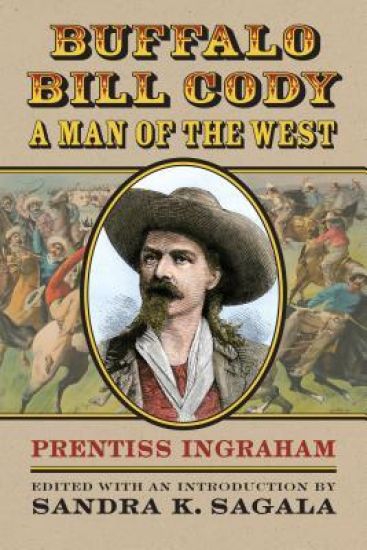
Buffalo Bill Cody was bigger than life. He was also braver, handsomer, and kinder—in short, just about perfect, as any reader of Prentiss Ingraham's dime novels could tell you. Along with his nearly 600 novels and plays, Ingraham (1843–1904), Confederate colonel and mercenary, penned a biography of his hero. The Buffalo Bill Cody who emerges from this book is not so very different from the paragon in Ingraham's novels, but as Cody's close companion, Ingraham had the inside story on this iconic figure of the American West. Add to that the dime novel-writer's bravura style, and Ingraham's Buffalo Bill Cody: A Man of the West becomes an irresistible work of Americana, in many ways an apt portrait of its larger-than-life subject. And because both men were firsthand witnesses to historic moments—the struggle between slavers and abolitionists, the Civil War, the building of the railroads, the Indian Wars, the golden age of circuses— - the biography offers a close-up perspective of life on the American frontier. Published here with an introduction and notes by Cody aficionado Sandra K. Sagala, who transcribed and edited the text of the biography from the original that was serialized in 1895 by Duluth Press, and illustrated with line drawings by one of Ingraham's contemporaries, Buffalo Bill Cody: A Man of the West is at once a unique view of an outsize figure of the Wild West, an original document of American history, and a performance as entertaining as any the self-styled cowboy and showman Buffalo Bill Cody ever staged.
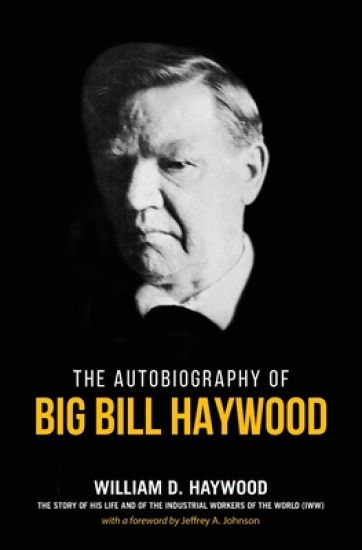
Big Bill Haywood's Book
William D Haywood; Johnson A Jeffrey
International Publishers Co Inc.,U.S.
2020
pokkari
This is William D. Haywood's own story, written during the last year of his life. A heroic giant of the American labor movement during its most turbulent years, "Big Bill" was a Socialist and a founder and leader of the Industrial Workers of the World (IWW). Born in Salt Lake City, he went into the Nevada metal mines at the age of 15 and joined the Western Federation of Miners in 1896 at 27. At 31, he was Secretary-Treasurer of the WFM and led its epic struggles against the mining trusts. He became the storm center of many other great labor struggles on the eve of the first World War, including the strikes of textile workers in Lawrence, Mass. and in Paterson, N.J. He also led the militant Wobbly "Free Speech" fights, and was prosecuted for opposing U.S. entry into World War I. His story, a swift moving narrative as absorbing as a novel, should be known to the present generation.