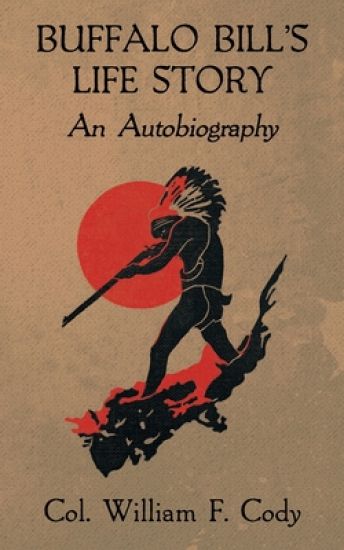
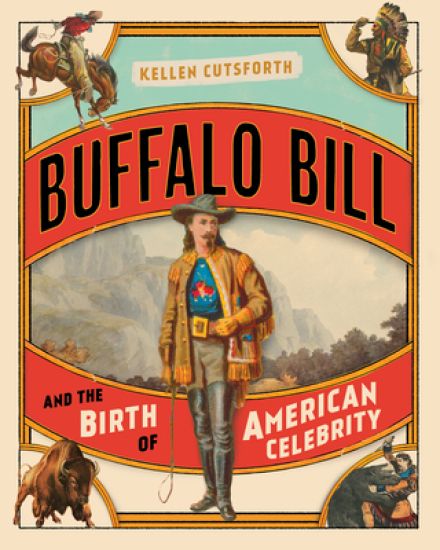
William Frederick "Buffalo Bill" Cody (1846- 1917) was an American soldier, bison hunter, and showman. Buffalo Bill started working at the age of eleven, after his father's death, and became a rider for the Pony Express at age 15. During the American Civil War, he served the Union from 1863 to the end of the war in 1865. Later he served as a civilian scout for the US Army during the Indian Wars, receiving the Medal of Honor in 1872.One of the most famous and well-known figures of the American Old West, Buffalo Bill's legend began to spread when he was only 23. Shortly thereafter he started performing in shows that displayed cowboy themes and episodes from the frontier and Indian Wars. He founded Buffalo Bill's Wild West in 1883, taking his large company on tours in the United States and, beginning in 1887, in Great Britain and continental Europe.
Pecos Bill is a cowboy who was raised by wild animals, once roped a whole heard of cattle at one time, and invented Texas chili. Learn more about this wild cowboy.
In the four decades between 1920 and 1960, William Deacon, Canada's first full-time literary journalist, devoted his career to the twin goals of fostering a Canadian readership for Canadian writers and creating a sense of community among those writers. His reviews in Saturday Night, The Mail and Empire, and Globe and Mail were the most widely read literary commentary of his day. His vast correspondence with a wide range of writers, politicians, historians, cultural nationalists and a select number of eccentrics created a forty-year dialogue in which is ideas about writing, publishing culture, and politics were shared, formulated, and debated with a formidable array of personal and literary friends, among them E.J. Pratt, Laura Goodman Salverson, Duncan Campbell Scott, A.R.M. Lower, J.S. Woodsworth, Thomas Raddall, Hugh MacLennan, and Mazo de la Roche. The exchanges trade the ebullient cultural nationalism of the 1920s and Deacon's enthusiastic immersion in that climate, the hardships and readjustments of the 1930s, the consolidation and new discoveries of the 1940s, and the rounding-off of his career in the 1950s. A few exchanges from the 1960s reveal his continuing interest in the issues of the day and his support of young writers. Whether he was corresponding with Emily Murphy or Peter Newman, with Grey Owl or Gabrielle Roy, his goal was the same -- to encourage, celebrate, and support the literary and culture vitality of Canada. His correspondents responded with intimacy, candour, and warmth, expressing their concerns and rejoicing in their successes. Their combined voices within the Deacon correspondence still create an immediate sense of the unfolding of Canadian cultural history across four important decades.
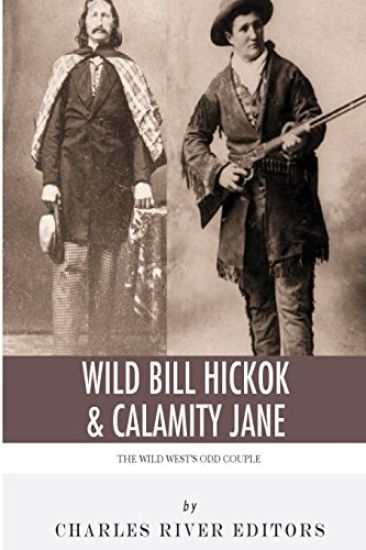
*Discusses the myths and legends surrounding the relationship between Wild Bill and Calamity Jane, including whether they were married. *Includes pictures of Wild Bill, Calamity Jane, and important people, places, and events in their lives. *Explains the true origins of the nickname Calamity Jane. *Discusses Wild Bill's most famous shootouts and his murder, explaining what's fact and what's legend. *Includes a bibliography for further reading. "When fired upon Capt. Egan was shot. I was riding in advance and on hearing the firing turned in my saddle and saw the Captain reeling in his saddle as though about to fall. I turned my horse and galloped back with all haste to his side and got there in time to catch him as he was falling. I lifted him onto my horse in front of me and succeeded in getting him safely to the Fort. Capt Egan on recovering, laughingly said: 'I name you Calamity Jane, the heroine of the plains.' I have borne that name up to the present time." - Calamity Jane "Wild Bill was a strange character. Add to this figure a costume blending the immaculate neatness of the dandy with the extravagant taste and style of a frontiersman, you have Wild Bill, the most famous scout on the Plains."" - General George Custer In many ways, the narrative of the Wild West has endured more as legend than reality, and a perfect example of that can be found in the legend of James Butler Hickok (1837-1876), forever known as "Wild Bill". Indeed, separating fact from fiction when it comes to the life of Wild Bill is nearly impossible, something due in great measure to the fact that the man himself exaggerated his own adventures or fabricated stories altogether. When he was killed while playing poker in the mining South Dakotan outpost of Deadwood, he put Deadwood on the map and ensured both his place and his poker hand's place in legend. Whether Hickok's legacy would have endured without his legendary death is anyone's guess, but by becoming the first well known Westerner to die with his boots on, he immediately became the West's first hero. The most famous woman of the Wild West was also possibly the most colorful and mysterious. "Considered a remarkable good shot and a fearless rider for a girl of my age", Calamity Jane claimed to be a veteran of the Indian Wars, a scout, and the wife of Wild Bill Hickok, all on the way to becoming a dime novel heroine. While all of those legends have stuck, it's unclear to what extent if any they are actually true, and even her contemporaries doubted the authenticity of her statements. More than anything, people in frontier towns like Deadwood looked on with amusement at the girl who was more often than not drunk and was described by one of Wild Bill's friends as "simply a notorious character, dissolute and devilish." Her frequent drinking binges and her insistence that messing with her would "court calamity" had helped establish her nickname even before she arrived in Deadwood in the mid-1870s. Ultimately, Calamity Jane's tall tales, eccentric personality, and association with Wild Bill would all make her a popular figure in the last quarter of the 19th century, and she became so well known that she started taking part in traveling shows of the kind made famous by Buffalo Bill Cody, where spectators could hear her colorfully (and drunkenly) talk about her life in the Wild West, with each telling stretching the truth ever further. Her legacy continued to crystallize after her death and eventually turn her into a legend, immortalized in countless dime novels, books, TV and the silver screen, helping make some of her contemporaries and surroundings notorious as well. Wild Bill Hickok & Calamity Jane chronicle the colorful lives of the two Western legends and examines their relationship and legacies. Along with pictures and a Table of Contents, you will learn about Wild Bill & Calamity Jane like you never have before.
Buffalo Bill and the Birth of American Celebrity commemorates the rise of Buffalo Bill’s Wild West show and tells the tale of a visionary whose real-life experiences (and embellishments) created an entertainment phenomenon that became a worldwide sensation. From Bill Cody's earliest ideas of entertainment spectacles using Indians and examples of frontier life in their productions; the elements of Cody’s early life that found their way into his Wild West spectacle; his friendship with Ned Buntline and early stage career; Cody’s inclusion in outlandish dime novels; how the Wild West show idea was hatched with Cody’s partner Doc Carver and their tumultuous relationship; early financial wobbles and European influence to take the Wild West overseas culminating in the 1887 American Exhibition; the hiring of Annie Oakley and treatment of Native Americans in the enterprise, and finally a look at Cody’s lasting influence on today’s entertainment culture.
You can’t separate football from the man. The game gave him everything and “Bullet Bill” Dudley said as much. But you can separate the man from football. As a husband, father, businessman and citizen, he put far more into this world than he took out. Three years before Bill died, he asked his son-in-law Steve Stinson to write his story. William McGarvey "Bullet Bill" Dudley (December 24, 1921 – February 4, 2010) led a thrilling career as a professional American football player in the National Football League for the Pittsburgh Steelers, Detroit Lions, and Washington Redskins. With humble beginnings in Bluefield, Virginia he made the football team his junior year, and in 1938 he kicked a 35-yard field goal in the season's finale. Dudley was drafted in the 1942 NFL Draft with the first overall pick by the Pittsburgh Steelers. He was inducted into the Pro Football Hall of Fame in 1966 and the Virginia Sports Hall of Fame in 1972. During the 1942 season, he led the league in rushing with 696 yards on 162 carries and was then named to the All-Pro team. Steve Stinson revisits his father-in-law’s journey from Bluefield, Virginia through his retirement from the NFL and shares everything he brought to communities in between each pivotal moment in Dudley’s life.