Miles of Learning is a collection of short stories and humorous, sometimes political, essays. Yes, it will make you smile, and it is not infected by the politically correct statements. The author was trying to express his opinion on many issues without offending anyone. Did it work? You have to judge for yourselves while traveling around the world. So, fasten your safety belts and let's go.
This is a collection of satiric essays, poetry, and words of wisdom (author's quotations) written over the years and in different corners of the world. Most of it is not politically correct and reflects the feelings at the time and the place. Some places were more abrasive on the thoughts of the author that the others. Some of it was conceived in the Soviet Union, Russia, Saudi Arabia, Palestine, Eastern Europe, Western Europe, and some in the United States. Still, if you look at it from the right angle, it would tickle your funny bone.
When the Germans invaded the Soviet Union in 1941 the Red Army had four times as many tanks as the Wehrmacht and their tanks were seemingly superior, yet the Wehrmacht won the border battles with extraordinary ease the Red Armys tank force was pushed aside and for the most part annihilated. How was this victory achieved, and were the Soviet tanks really as well designed as is often believed? These are the basic questions Boris Kavalerchik answers in this absorbing study of the tanks and the tank tactics of the two armies that confronted each other at the start of the war on the Eastern Front. Drawing on technical and operational documents from Russian archives, many of which were classified until recently and are unknown to Western readers, he compares the strengths and weakness of the tanks and the different ways in which they were used by the opposing armies. His work will be essential reading for military historians who are interested in the development of armoured warfare and in this aspect of the struggle on the Eastern Front.
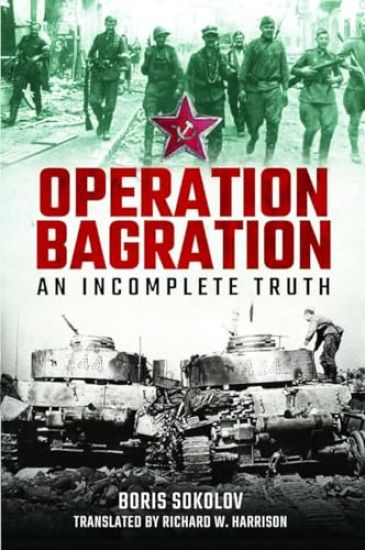
_Operation Bagration_ analyses the great Russian offensive in Belorussia in the summer of 1944 covering the planning of the operation as well as the German plans of the summer campaign of 1944\. In depth research sets out to determine the real ratio of the Soviet and German forces as well as their actual losses during the operation. As well as some good decisions, command on both sides made some crucial mistakes as well as main tactical errors all of which are studied in this book to produce a fully rounded view of the campaign and highlights a connection to Operation Overlord by proving that it was only due to the landing at Normandy that the Soviet forces were able to destroy the German Army Group Centre while the elite mobile forces were concentrated in France.
In his famous Moonlight and Vodka, Chris de Burgh got it right: Espionage is a serious business. And like every serious business, it must be taken seriously. Less than two decades after the untimely death of Sasha Litvinenko, poisoned at the heart of London's Mayfair by Russian secret agents by the previously unknown radioactive substance containing a fatal dose of Polonium-210, it is hardly remembered by anyone in the West. No wonder, we live in an information-rich world when the wealth of information means a dearth of something else: a scarcity of whatever it is that information consumes. Such an obvious thing was suddenly discovered by a simple old man from Milwaukee, and he's got a point there. This book is about the murder of Alexander Litvinenko, whose legal case seems to many people like open-and-shut. Even to his widow Marina and their son. To MI6, MI5 and the Special Operations branch of the London's Metropolitan Police who presented it to the public as thoroughly investigated and closed. To judge Sir Robert Owen appointed to hold the inquest into the death of a Russian Spy as the BBC and other media has put it - a terrible mistake. To journalists and writers who had been following this case for as long as a decade, not to mention the prime suspect living a good life in Moscow. But not for me. For me this case remains open.
The Strugatsky brothers' poignant and introspective novel of first contact that inspired the classic film StalkerRed Schuhart is a stalker, one of those strange misfits who are compelled by some unknown force to venture illegally into the Zone and, in spite of the extreme danger, collect the mysterious artefacts that the alien visitors left scattered around. His life is dominated by the Zone and the thriving black market in the alien products. Even the nature of his daughter has been determined by the Zone. And it is for her that Red makes his last, tragic foray into the hazardous and hostile depths.Readers can't stop thinking about Roadside Picnic:'A story of a horrific yet fascinating place, a story of an ordinary and unlikable man just trying to get by, a philosophical interlude on humanity and its significance or lack thereof, of greed and wonder, and the fever dream of the soul scream. It still speaks to me' Goodreads reviewer, ? ? ? ? ?'Such an intriguing setting for me, such an unusual take on alien interaction' Goodreads reviewer, ? ? ? ? 'It is a thought-provoking, hard-to-put down masterpiece, most probably the best introduction to Soviet science fiction. A must read for any sci-fi fan' Goodreads reviewer, ? ? ? ? ?'A fantastic and creative exploration of what first contact might be like' Goodreads reviewer, ? ? ? ? ?'The tone of the book is akin to that of some noir works, dark, gritty, getting darker and grittier as the tale wears on . . . Like many great books, the meaning of the ending is left up to the reader' Goodreads reviewer, ? ? ? ? ?'A beautifully depressive and wonderfully atmospheric science fiction novel about life on Earth after an alien "Visitation" that leaves humans with more questions than answers . . . Once I started reading it today, I couldn't stop. The story captured my heart and held my attention' Goodreads reviewer, ? ? ? ? ? 'This is the sort of book that you read and then immediately feel the need to lend it to someone you know so that they can experience and enjoy it themselves . . . I was truly astonished-by both the poignancy and the deceptive(?) simplicity of this relatively short novel' Goodreads reviewer, ? ? ? ? ?
The appearance of this English edition of my book, ?rst published in Russian in mid-2006, is related to the help and support of two prominent scientists: Professor Michael Brown (Rhodes University Grahamstown, South Africa) and Dr. Judit Simon (Budapest University of Technology and Economics, Hungary). The story is as follows. In the winter of 2006, in the process of exchange of views by email with Michael on some problems of decomposition kinetics, I asked him about the possibility of publishing my book in English. He s- gestedthatIshouldcontactJudit,theSeriesEditorof“HotTopicsinThermal Analysis and Calorimetry”. My application was kindly accepted, considered, and approved. As a result, Judit strongly recommended this book to Springer for publication, and Michael kindly agreed to help me with linguistic impro- ments of my hurriedly translated book. In the process of editing, he made some critical comments and questions, which stimulated me to improve and clarify the text, but we did have to agree to put our di?erences of scienti?c opinions aside so as not to delay the process. Without this invaluable help, this book would not be as “readable” as I hope it is now. The author uses this opportunity to express his sincere thanks to Michael and Judit for their signi?cant help and support. Although only about a year has gone after the preparation of the original edition of the book (in Russian), this English version of the manuscript has undergone considerable revision. These changes refer to Sections2. 2, 2.
Digitally Assisted Pipeline ADCs: Theory and Implementation explores the opportunity to reduce ADC power dissipation by leveraging digital signal processing capabilities in fine line integrated circuit technology. The described digitally assisted pipelined ADC uses a statistics-based system identification technique as an enabling element to replace precision residue amplifiers with simple open-loop gain stages. The digital compensation of analog circuit distortion eliminates one key factor in the classical noise-speed-linearity constraint loop and thereby enables a significant power reduction. Digitally Assisted Pipeline ADCs: Theory and Implementation describes in detail the implementation and measurement results of a 12-bit, 75-MSample/sec proof-of-concept prototype. The Experimental converter achieves power savings greater than 60% over conventional implementations. Digitally Assisted Pipeline ADCs: Theory and Implementationwill be of interest to researchers and professionals interested in advances of state-of-the-art in A/D conversion techniques.
Contemporary / British English The Russian Revolution -- four young people, Yury, Tonya, Lara and Pasha, find love and lose it in this extraordinary time. Their heart-breaking stories make Dr Zhivago one of the greatest romantic books, and films, of the century.
This reader is accompanied with a CD that contains the full audio of the text in MP3 format. The Russian Revolution - four young people, Yury, Tonya, Lara and Pasha, find love and lose it in this extraordinary time. Their heart-breaking stories make Dr Zhivago one of the greatest romantic books, and films, of the century.
The importance of technology transfer for the competitive advantage of companies and the economic success of nations cannot be overstated. Technology is a determining element for firms and nations to increase productivity, to compete, and to prosper. In The Competitive Advantage of Regions and Nations, the authors stress that companies, investment promotion agencies, and government bodies cannot simply sit and wait until new technologies arrive in their domain. Rather, they need to manage the identification, assessment, attraction, absorption and application of new technologies. In this comprehensive book, Boris Ricken and George Malcotsis explain how technology transfer in Foreign Direct Investment (FDI) projects can be systematically managed. Using some 40 case studies as illustration, they give step-by-step guidance for managers. The explanation of theory in this book, together with the frameworks and cases delivering solutions to the various challenges of technology transfer will be highly appreciated by managers of companies, investment promotion agencies, and government bodies alike. It also offers students confronted with the topic an understandable study guide.
This unique book explores the problems of the national crisis management system in Russia, a country undergoing political, social and economic transition and one which is also prone to natural and man-made disasters. In detailing policy, institutional and legal issues and illustrating a number of case studies, the authors offer new ways of resolving the effects of disasters as well as increasing resilience by improving our understanding of the risks and vulnerabilities. In the book six chapters offer case studies of various types of disaster written in a unique collaboration between Russian scientists, Russian policy makers and Swedish scholars. Other chapters relate the role of mass media in Russian society and policy development. Taken together the book details changes in a crisis management system, policy and approach in a country that has undergone rapid fundamental political economic and social change.
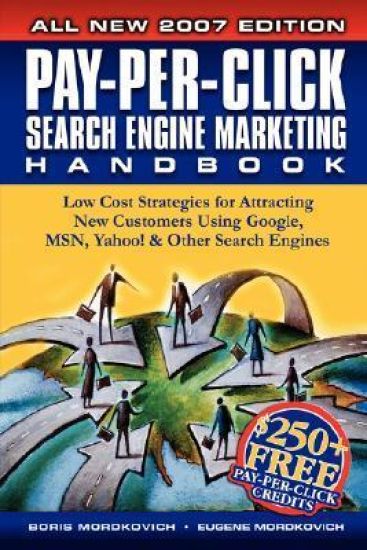
You've got products. You've got a website. You're ready to do business online. Now, how do you attract new customers? You'll find the answers in this book. In it, search engine advertising pioneers, Boris and Eugene Mordkovich, share their knowledge from the most basic information explaining how Pay-Per-Click works to why it is so extraordinarily effective, as well as offer detailed information on how to design a successful campaign, how to test concepts, determine what works, and fine-tune your campaigns to maximize the Return on Investment (ROI). It also delves into more advanced topics affecting advertisers today, including contextual advertising (getting your website listed on thousands of websites without paying a penny), localized search (targeting a specific local area through search engines), and click fraud (how to protect yourself against it). The book also offers tips, techniques, and ideas contributed by 14 top experts in the industry.