Training for manhood in 1886, Chiricahua Apache Runs With Horses becomes one of the last surviving resistors to the U.S. Army, and after enduring many harsh tests, he is unable to accept his father's plan to surrender. Simultaneous.
This gripping historical novel set during the final years of the Indian Wars explores army life in the American West as it details one boy's struggle to become a man.
Nora, a writer in search of inspiration, phones her ex-lover Isaac, a photographer who is about to turn in his camera, re-igniting their romance and re-invigorating their creativity.
Adam Weller is a moderately successful novelist, past his prime, but squiring around a much younger woman and still longing for greater fame and glory. His former wife, Eleanor, is unhappily playing the role of the overweight, discarded woman. Their daughter Maud has just begun a frankly sexual affair that unexpectedly becomes life-changing. Into each of these lives the past intrudes in a way that will test them to their core. With perfect pitch and a rare empathy, Brian Morton is equally adept at portraying the life of the mind and how it plays out in the world, brilliantly tracing the border between honor and violation. Here Morton tells his strongest story yet--a story about love, friendship, literary treachery, and what each of us owes to the past.
Leonard Schiller is a novelist in his seventies, a second-string but respectable talent who produced only a small handful of books. Heather Wolfe is an attractive graduate student in her twenties. She read Schiller's novels when she was growing up and they changed her life. When the ambitious Heather decides to write her master's thesis about Schiller's work and sets out to meet him--convinced she can bring Schiller back into the literary world's spotlight--the unexpected consequences of their meeting alter everything in Schiller's ordered life. What follows is a quasi-romantic friendship and intellectual engagement that investigates the meaning of art, fame, and personal connection. "Nothing less than a triumph" (The New York Times Book Review), Starting Out in the Evening is Brian Morton's most widely acclaimed novel to date.
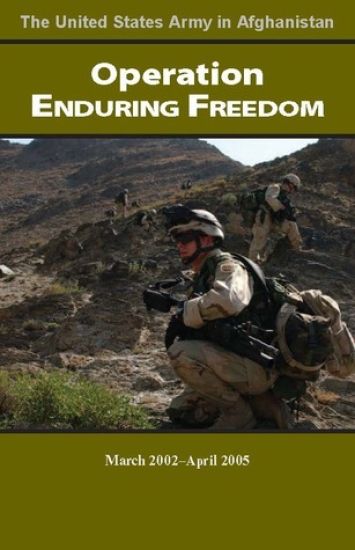
"NOTE; NO FURTHER DISCOUNT FOR THIS PRINT PRODUCT- OVERSTOCK SALE -- Significantly reduced list price" This pamphlet provides details on the role of the U.S. Army in the critical three-year period following the conclusion of Operation Anaconda in March 2002. It details the story of American and international forces working to solidify the initial invasion s crippling of al-Qaeda and removal of the Taliban. It recounts the story of the quest to build a new, democratic Afghan government capable of maintaining internal security and tending to the needs of the Afghan people. It tells the tale of theU.S. Army s search for a proper balance between counterterrorism andcounterinsurgency operations as the enemy rebuilt his forces from safehavens in Pakistan. Finally, it chronicles the Army s efforts to maintainan effective presence in Afghanistan while juggling the challenges ofan indigenous population historically opposed to foreign forces andthe decreased resources available after the start of the Iraq war in 2003. Operation Enduring Free dom, March 2002 April 2005, was writtenby historians Dr. Brian F. Neumann, Dr. Lisa Mundey, and Dr. JonMikolashek in the Histories Division of the Center of Military History. We hope that you enjoy and profit from this dramatic but often overlookedstory of our Army in action in the Global War on Terrorism. Itis the second in the Center s series of campaign brochures on the U.S.Army in Afghanistan. Related items: On Point II: Transition to the New Campaign: The United States Army in Operation Iraqi Freedom, May 2003-January 2005 is available here: https: //bookstore.gpo.gov/products/sku/008-000-00989-9 Operational Culture for the Warfighter: Principles and Applications is availalbe here: https: //bookstore.gpo.gov/products/sku/008-000-01021-8 Applications in Operational Culture: Perspectives From the Field is available here: https: //bookstore.gpo.gov/products/sku/008-000-01054-4 Iraq & Persian Gulf Wars resources collection can be found here: https: //bookstore.gpo.gov/catalog/us-military-history/battles-wars/iraq-..."
An Introduction to the Philosophy of Religion provides a critical examination of the fundamental questions posed by religious belief: What does it mean to believe in God? Can God's existence be proven? Is there life after death? Brian Davies considers these questions and many others, sometimes offering provocative answers of his own, but more often giving students room to form their own conclusions. In addition to exploring the views of several classic philosophers of religion--including Anselm, Aquinas, Descartes, Leibniz, Hume, and Kant--Davies surveys a variety of contemporary thinkers. Revised and updated to cover the latest developments in the field, the new edition of this influential textbook provides an ideal introduction for all students of the philosophy of religion.
Since the election of President Donald Trump, the Twenty-Fifth Amendment to the Constitution-covering presidential incapacity-has been a frequent topic of public discussion. Meanwhile, Section 4 has become a mainstay in television dramas, which usually represents it inaccurately. The country needs this complicated but essential topic explained.Unable: The Law, Politics, and Limits of Section 4 of the Twenty-Fifth Amendment is designed to educate and inform the public about Section 4 in an evenhanded and accessible way. This book is not about President Trump; it offers no opinions on his fitness for office. By the end of the book, though, it will be clear how Section 4 applies to him, as well as to any other president.
Although the jury is often referred to as one of the bulwarks of the American justice system, it regularly comes under attack. Recent changes to trial procedures, such as reducing jury size, allowing non-unanimous verdicts, and rewriting jury instructions in plain English, were designed to promote greater efficiency and adherence to the law. Other changes, such as capping damages and replacing jurors with judges as arbiters in complex trials, seem designed to restrict the role of laypeople in trial outcomes. Whether these innovations are implemented to facilitate the administration of justice or due to the belief that juries have excessive power and make irrational decisions, they raise a host of questions about their effects on juries' judgments and about justice. Policymakers sometimes make incorrect assumptions about jury behavior, with the result that some reform efforts have had surprising and unintended consequences. The Jury Under Fire reviews a number of controversial beliefs about juries as well as the implications of these views for jury reform. It reviews up-to-date research on both criminal and civil juries that uses a variety of research methodologies: simulations, archival analyses, field studies, and juror interviews. Each chapter focuses on a mistaken assumption or myth about jurors or juries, critiques these myths, and then uses social science research findings to suggest appropriate reforms. Chapters discuss the experience of serving as a juror; jury selection and jury size; and the impact of evidence from eyewitnesses, experts, confessions, and juvenile offenders. The book also covers the process of deciding damages and punishment and the role of emotions in jurors' decision making, and it compares jurors' and judges' decisions. Finally, it reviews a broad range of efforts to reform the jury, including the most promising reforms that have a solid backing in research. Featuring highly visible trials to illustrate key points, The Jury Under Fire will interest researchers in psychology and the law, practicing attorneys, and policymakers, as well as students and trainees in these areas.
The Wallflower Avant-Garde argues for the importance of a strain of modernist formalism based in ekphrasis, the literary imitation of the visual arts. Often associated with a conservative aesthetic of wholeness, permanence, and autonomy, ekphrastic writing also involves excess, failure, and mimesis, conjuring an aesthetic sense of closure and unity out of impossible imitations. This choreography of imitation and autonomy resonates with many of the foundational insights of queer theory: the way it situates identity as an effect of performativity, artifice, and mimesis. Unlike many queer theorists, however, this book insists that we value both the imitations and the aspirations that guide them, underlining not only the illusoriness of identity but also its allure. This more capacious formalism allows aspects of modernists aesthetic that have seemed regressive or repressive to be read as generative forms of stasis, quiet, reserve, shyness, and so on.
The Philosophy of Quantitative Methods focuses on the conceptual foundations of research methods within the behavioral sciences. In particular, it undertakes a close philosophical examination of a variety of quantitative research methods that are prominent in (or relevant for) the conduct of research in these fields. By doing so, the deep structure of these methods is examined in order to overcome the non-critical approaches typically found in the existing literature today. In this book, Brian D. Haig focuses on the more well-known research methods such as exploratory data analysis, statistical significant testing, Bayesian confirmation theory and statistics, meta-analysis, and exploratory factor analysis. These methods are then examined with a philosophy consistent of scientific realism. In addition, each chapter provides a helpful Further Reading section in order to better assist the reader in extending their own thinking and research methods specific to their needs.
Philosophy and the Human Condition: An Anthology brings together a rich collection of historically arranged readings on the crucial philosophical problems related to the human condition and human nature. Its contents are drawn from a wide range of sources, including the traditional works of Western philosophers from Plato to the present day; relevant extracts from religious texts; and contributions by women, traditions outside of the western philosophical canon, and other disciplines. Each reading selection is accompanied by an introduction. An extended introduction to philosophy at the beginning of the text addresses each of six principal issues that will be prominent in the reading selections drawn from the history of philosophy--the relation of mind and body; personal immortality; freedom of the will; the question of whether humans are naturally benevolent or naturally brutal; the nature and possibility of human happiness; and philosophical issues relating to race and gender--making the text an ideal all-in-one resource for introductory courses in philosophy.
When considering the structures that drive the global diffusion of human rights norms, Brian Greenhill argues that we need to look beyond institutions that are explicitly committed to human rights and instead focus on the dense web of international government organizations (IGOs)-some big, some small; some focused on human rights; some not-that has arisen in the last two generations. While most of these organizations have no direct connection to human rights issues, their participation in broader IGO networks has important implications for the human rights practices of their member states. Featuring a rigorous empirical analysis, Transmitting Rights shows that countries tend to adopt similar human rights practices to those of their IGO partners, whether for better or worse. Greenhill argues that IGOs constitute a tightly-woven fabric of ties between states and that this network provides an important channel through which states can influence the behavior of others. Indeed, his analysis suggests that a policy of isolating "rogue" states is probably self-defeating given that this will reduce their exposure to some of the more positive IGO-based influences on their human rights. Greenhill's analysis of the role of IGOs in rights diffusion will not only increase our understanding of the international politics of human rights; it will also reshape how we think about the role of international institutions in world politics.
When considering the structures that drive the global diffusion of human rights norms, Brian Greenhill argues that we need to look beyond institutions that are explicitly committed to human rights and instead focus on the dense web of international government organizations (IGOs)-some big, some small; some focused on human rights; some not-that has arisen in the last two generations. While most of these organizations have no direct connection to human rights issues, their participation in broader IGO networks has important implications for the human rights practices of their member states. Featuring a rigorous empirical analysis, Transmitting Rights shows that countries tend to adopt similar human rights practices to those of their IGO partners, whether for better or worse. Greenhill argues that IGOs constitute a tightly-woven fabric of ties between states and that this network provides an important channel through which states can influence the behavior of others. Indeed, his analysis suggests that a policy of isolating "rogue" states is probably self-defeating given that this will reduce their exposure to some of the more positive IGO-based influences on their human rights. Greenhill's analysis of the role of IGOs in rights diffusion will not only increase our understanding of the international politics of human rights; it will also reshape how we think about the role of international institutions in world politics.
Marriage has been declared dead by many scholars and the media. Marriage rates are dropping, divorce rates remain high, and marriage no longer enjoys the prominence it once held. Especially among young adults, marriage may seem like a relic of a distant past. Yet young adults continue to report that marriage is important to them, and they may not be abandoning marriage, as many would assume. The Marriage Paradox explores both national U.S. data and a smaller sample of emerging adults to find out how they really view marriage today. Interspersed with real stories and insight from emerging adults themselves, this book attempts to make sense of the increasingly paradoxical ways that young adults are thinking about marriage. The combination of national trends, statistical findings, and quotations from emerging adults makes for a deep exploration of why we see the marital trends of today, and why they may not actually represent emerging adults moving away from marriage.
Build mathematical knowledge and skills and explore the PYP transdisciplinary themes via this colourful, inquiry-based Student Book. · Fully support the PYP approach with comprehensive coverage of the PYP Mathematics Scope and Sequence · Progressively build understanding via guided, independent and extended learning activities · Cover the five strands of Number, Pattern and Function, Measurement, Shape and Space, and Data Handling using the PYP methodology of constructing, transferring and applying meaning · Encourage learners to explore and apply knowledge using real-world problems
Build mathematical knowledge and skills and explore the PYP transdisciplinary themes via this colourful, inquiry-based Student Book. · Fully support the PYP approach with comprehensive coverage of the PYP Mathematics Scope and Sequence · Progressively build understanding via guided, independent and extended learning activities · Cover the five strands of Number, Pattern and Function, Measurement, Shape and Space, and Data Handling using the PYP methodology of constructing, transferring and applying meaning · Encourage learners to explore and apply knowledge using real-world problems
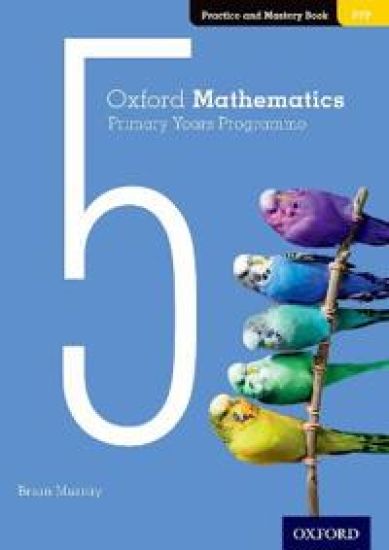
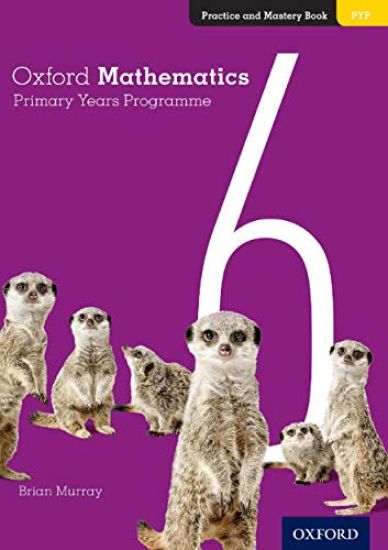
Provide opportunities to consolidate mathematical knowledge and skills and help learners to grow in confidence and independence with this colourful, inquiry-based Practice and Mastery Book. · Cover the five strands of Number, Pattern and Function, Measurement, Shape and Space, and Data Handling · Provide comprehensive coverage of the PYP Mathematics Scope and Sequence · Support and extend learning through reinforcement activities · Encourage learners to explore and apply knowledge using real-world problems
Provide opportunities to consolidate mathematical knowledge and skills and help learners to grow in confidence and independence with this colourful, inquiry-based Practice and Mastery Book. · Cover the five strands of Number, Pattern and Function, Measurement, Shape and Space, and Data Handling · Provide comprehensive coverage of the PYP Mathematics Scope and Sequence · Support and extend learning through reinforcement activities · Encourage learners to explore and apply knowledge using real-world problems
Provide opportunities to consolidate mathematical knowledge and skills and help learners to grow in confidence and independence with this colourful, inquiry-based Practice and Mastery Book. · Cover the five strands of Number, Pattern and Function, Measurement, Shape and Space, and Data Handling · Provide comprehensive coverage of the PYP Mathematics Scope and Sequence · Support and extend learning through reinforcement activities · Encourage learners to explore and apply knowledge using real-world problems