This is the first-ever full-length biography of Frederick Fyvie Bruce (1910-1990), one of the most influential British biblical scholars of the twentieth century. Over his lifetime F. F. Bruce authored some fifty books and nearly two thousand articles and reviews. His career offers valuable insights into key issues that affected evangelicals from the 1950s onwards, including the relationship between academic theology and church life and the perception of evangelical scholarship within the academy at large.
Title: History of Scotland during the Reign of Robert I. surnamed the Bruce.Publisher: British Library, Historical Print EditionsThe British Library is the national library of the United Kingdom. It is one of the world's largest research libraries holding over 150 million items in all known languages and formats: books, journals, newspapers, sound recordings, patents, maps, stamps, prints and much more. Its collections include around 14 million books, along with substantial additional collections of manuscripts and historical items dating back as far as 300 BC.The HISTORY OF BRITAIN & IRELAND collection includes books from the British Library digitised by Microsoft. As well as historical works, this collection includes geographies, travelogues, and titles covering periods of competition and cooperation among the people of Great Britain and Ireland. Works also explore the countries' relations with France, Germany, the Low Countries, Denmark, and Scandinavia. ++++The below data was compiled from various identification fields in the bibliographic record of this title. This data is provided as an additional tool in helping to insure edition identification: ++++ British Library Kerr, Robert; 1811. 2 vol.; 8 . 600.e.16.
Title: History of Scotland during the Reign of Robert I. surnamed the Bruce.Publisher: British Library, Historical Print EditionsThe British Library is the national library of the United Kingdom. It is one of the world's largest research libraries holding over 150 million items in all known languages and formats: books, journals, newspapers, sound recordings, patents, maps, stamps, prints and much more. Its collections include around 14 million books, along with substantial additional collections of manuscripts and historical items dating back as far as 300 BC.The HISTORY OF BRITAIN & IRELAND collection includes books from the British Library digitised by Microsoft. As well as historical works, this collection includes geographies, travelogues, and titles covering periods of competition and cooperation among the people of Great Britain and Ireland. Works also explore the countries' relations with France, Germany, the Low Countries, Denmark, and Scandinavia. ++++The below data was compiled from various identification fields in the bibliographic record of this title. This data is provided as an additional tool in helping to insure edition identification: ++++ British Library Kerr, Robert; 1811. 2 vol.; 8 . 600.e.16.
The 18th century was a wealth of knowledge, exploration and rapidly growing technology and expanding record-keeping made possible by advances in the printing press. In its determination to preserve the century of revolution, Gale initiated a revolution of its own: digitization of epic proportions to preserve these invaluable works in the largest archive of its kind. Now for the first time these high-quality digital copies of original 18th century manuscripts are available in print, making them highly accessible to libraries, undergraduate students, and independent scholars.Rich in titles on English life and social history, this collection spans the world as it was known to eighteenth-century historians and explorers. Titles include a wealth of travel accounts and diaries, histories of nations from throughout the world, and maps and charts of a world that was still being discovered. Students of the War of American Independence will find fascinating accounts from the British side of conflict. ++++The below data was compiled from various identification fields in the bibliographic record of this title. This data is provided as an additional tool in helping to insure edition identification: ++++British LibraryT121312Sometimes attributed to Thomas Hall. With an appendix, with separate pagination and register.Edinburgh: printed for A. Guthrie; sold by him and the other booksellers in town. - By Morison and Son, Perth; and R. Nicol and J. More, Dundee, 1788] 2],42;15, 1]p.; 8
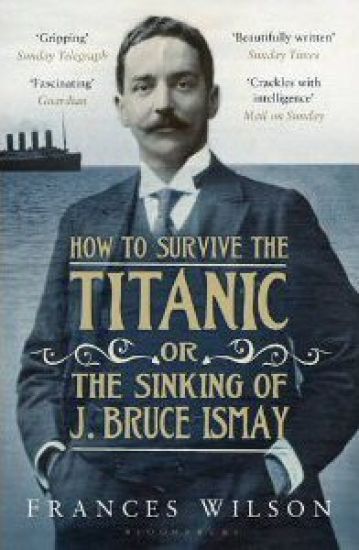
**WINNER OF THE ELIZABETH LONGFORD PRIZE FOR HISTORICAL BIOGRAPHY 2012**The strange and fascinating story of the owner of the Titanic, J. Bruce Ismay, the man who jumped ship'Beautifully written, and beautifully deconstructed' Sunday Times'Wonderfully rich and multi-layered . . . Full of fascinating details . . . Every sentence crackles with intelligence' Mail on SundayAs the Titanic sinks on that fateful day in April 1912, a thousand men prepared to die. J. Bruce Ismay, the ship’s owner and inheritor of the White Star fortune, however, jumps into a lifeboat with the women and children and rows away to safety.Publicly reviled as a coward, Ismay became, according to one headline, ‘The Most Talked-of Man in the World’ and the first victim of a press hate campaign. His reputation never recovered and while other survivors were piecing together their accounts, Ismay never spoke of his beloved ship again.With the help of that great narrator of the sea, Joseph Conrad, whose Lord Jim so uncannily foretold Ismay’s fate, Frances Wilson explores the reasons behind Ismay’s jump, his desperate need to make sense of the horror of it all, and to find a way of living with ignominy.Wilson’s biography of Ismay depicts the indelible stain of public disrepute and a life led in the aftermath of seismic disaster.
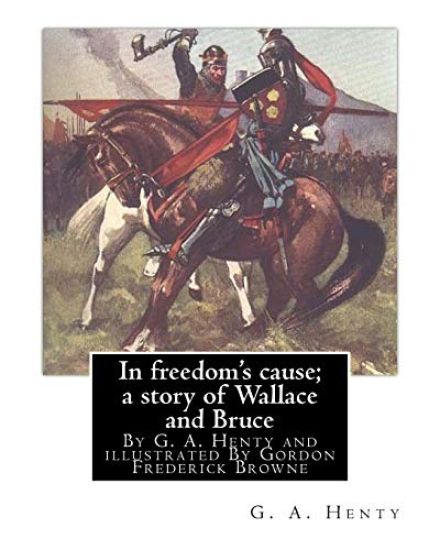
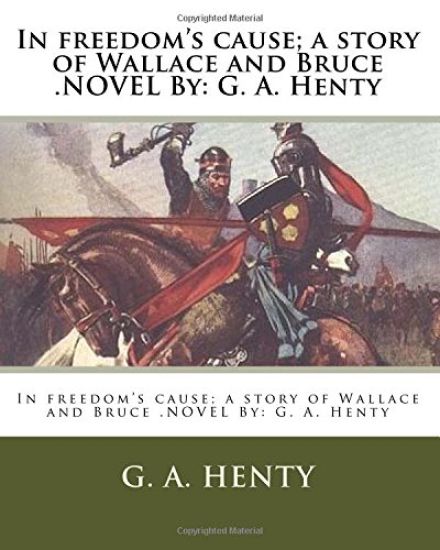
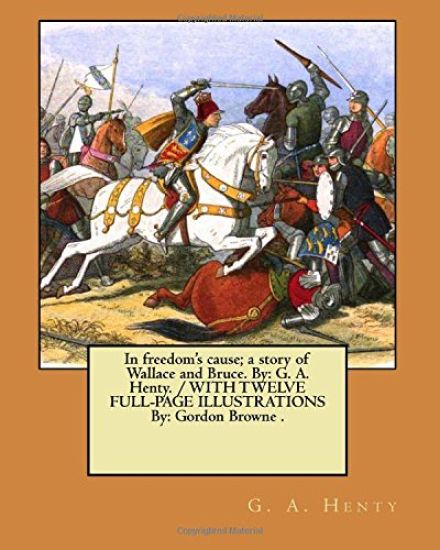
At the end of the thirteenth century, the oppressed people of Scotland rebelled against their despised English ruler, Edward Longshanks. In Freedom's Cause recounts the Scots' desperate but ultimately triumphant struggle in the face of overwhelming odds - a hard-fought series of battles conducted under the leadership of William Wallace and Robert Bruce. Time has burnished the feats of these great heroes to mythic proportions, but Wallace and Bruce were real people. This gripping tale of courage, loyalty, and ingenuity recounts their deeds within an accurate historical context. Readers join their company alongside a fictional protagonist, young Archie Forbes, whose estates have been wrongfully confiscated. Archie forms a group of scouts to fight alongside the legendary Scottish chieftains (who were memorably portrayed in the film Braveheart) for their country's independence. In Freedom's Cause is one among the many historical novels for young readers by George Alfred Henty. A storyteller who specialized in blending authentic historical facts with exciting fictional characters, Henty produced more than 140 books and achieved a reputation as "The Prince of Storytellers." Immensely popular and widely used in schools for many years, Henty's novels continue to fire young imaginations with their spirited tales of adventure amid exciting historical eras.... George Alfred Henty (8 December 1832 - 16 November 1902) was a prolific English novelist and war correspondent.He is best known for his historical adventure stories that were popular in the late 19th century. His works include The Dragon & The Raven (1886), For The Temple (1888), Under Drake's Flag (1883) and In Freedom's Cause (1885).G. A. Henty was born in Trumpington, near Cambridge. He was a sickly child who had to spend long periods in bed. During his frequent illnesses he became an avid reader and developed a wide range of interests which he carried into adulthood. He attended Westminster School, London, and later Gonville and Caius College, Cambridge, where he was a keen sportsman. He left the university early without completing his degree to volunteer for the Army Hospital Commissariat when the Crimean War began. He was sent to the Crimea and while there he witnessed the appalling conditions under which the British soldier had to fight. His letters home were filled with vivid descriptions of what he saw. His father was impressed by his letters and sent them to The Morning Advertiser newspaper which printed them. This initial writing success was a factor in Henty's later decision to accept the offer to become a special correspondent, the early name for journalists now better known as war correspondents. Shortly before resigning from the army as a captain in 1859 he married Elizabeth Finucane. The couple had four children. Elizabeth died in 1865 after a long illness and shortly after her death Henty began writing articles for the Standard newspaper. In 1866 the newspaper sent him as their special correspondent to report on the Austro-Italian War where he met Giuseppe Garibaldi. He went on to cover the 1868 British punitive expedition to Abyssinia, the Franco-Prussian War, the Ashanti War, the Carlist Rebellion in Spain and the Turco-Serbian War.He also witnessed the opening of the Suez Canal and travelled to Palestine, Russia and India. Henty was a strong supporter of the British Empire all his life; according to literary critic Kathryn Castle: "Henty...exemplified the ethos of the new imperialism, and glorified in its successes". Henty's ideas about politics were influenced by writers such as Sir Charles Dilke and Thomas Carlyle.... Gordon Frederick Browne (15 April 1858 - 27 May 1932) was an English artist and children's book illustrator in the late 19th century and early 20th century........
In this booklet, I have started with my scientific explanations of the mystical interpretation of the Ji form of tai chi power by a famous tai chi master, Master Wang Pui-sheng. Many people are impressed with tai chi masters' demonstrations of using this form of power to push demonstration partners in the air. However, if this pushing technique can really be used in a real fight wouldn't it be used by highly paid sports professionals like Sumo wrestlers in Japan? From my researches I have found that the origin of this powerful technique was discovered by Master Guo雲深 y nshēn (1829-1900) of 形意x ng y when he was handcuffed and shackled for three years in a prison. 形意x ng y is a form of martial arts that stress heavily on pile stance training and footwork. Since Master Guo's movements were limited in prison he could only practice pile stance and one step at time footwork. With a lot of practice, he created his「Half step beng punch, 半(meaning half)步(meaning step)崩(meaning collapse)拳(meaning fist), b n b bēng qu n' in Chinese」, with which he knocked out many opponents in one punch. But his punch did not push people in the air. The tai chi demonstration of pushing people in the air was made famous by Yang楊shǎo h u 少侯(1862-1930), one of the sons of Yang楊 L ch n 露禪, the founder of Yang style tai chi, who never bothered to demonstrate his real kung fu. As a bodyguard of the Qing's Imperial members, his kung fu was well witnessed when Yang楊 L ch n 露禪protected his masters by hurting and even killing people. After he died Yang楊shǎo h u 少侯 did not get his job as a bodyguard. He could only make a living by teaching tai chi to the Qing's Imperial members and their friends. I think this is why he thought of using the demonstration of bouncing partners up in the air to win his kung fu credibility. For fear of hurting his Imperial students, he trained Wang汪Yongquan永泉(1904-1987) as his demonstration partner, who could then learn this special kung fu that was regarded as a family secret. Then came Bruce Lee, who was a kung fu fanatic and he probably read about all the above people and their skills in martial art. His one-inch punch and six-inch punch are just as effective as the Ji form of tai chi power. The mechanics are very similar. However, his martial arts training did not help his epilepsy, which is a common brain disorder characterized by recurrent seizures. Again from my researches, I think he did not practice his static meditation in a way so that he could do煉精化氣Li n jīng hu q , the process in which jīng (hormonal secretion is my scientific conception of jing精) is used to stimulate the further development of the nervous system, vaguely called qi in Chinese. Please read his famous quote about meditation, "Be like water making its way through cracks." Please compare Bruce's conception of meditation with the highly sophisticated Buddhist meditation method, called 6 Wonderful Ways, 六妙法門Li mi ofǎ m n, that could lead to 禪定 ch n ding, in which one can enhance one's wisdom, the sign of the evolution of the nervous system. With his highly sophisticated martial arts as a form of Dong gong he could probably cure his epilepsy with a good Jing gong practice of static meditation, during which he could acquire the essential breathing technique, called報身氣B o shēn q in Buddhism or胎息 Taixi, the embryonic mode of respiration in Daoism. Master Sun Lutang, who demonstrated Master Guo's「Half step beng punch」in this booklet is the best example of how to complement his martial arts training as a form of Dong gong with his pile stance as a form of Jing gong and he attained Enlightenment. Master Guo雲深 y nshēn's 「Half step beng punch」also shows us that the form of dong gong that complements jing gong does not have to be complicated or slow like tai chi quan as a form of martial arts. I have experimented wi
The actors profiled in this graphic novel share one thing in common: They're unforgettable. Born Marion Mitchell Morrison, his distinct vocal cadence, intimidating physical presence, and signature look made him a box office draw for 30 years. Few actors achieve the level of fame afforded silver screen icon, John Wayne. What makes a man a true hero? Is it the role he plays or the life he leads? Explore the life of legendary actor and philanthropist Christopher Reeve in this tribute to the man behind Superman's cape. The most influential martial artist of all time, Bruce Lee was an actor, teacher, and now, an icon. Follow Bruce's life from child actor to his tragic death and posthumous superstardom. The name Vincent Price is synonymous with all things horror. Explore the life of an actor who transcended a genre and became the voice of the darker side of life. TidalWave's popular TRIBUTE line tells the stories of famous people who left an indelible impression on our popular culture.
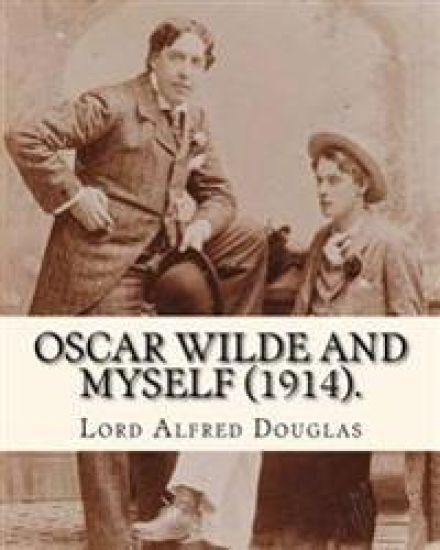
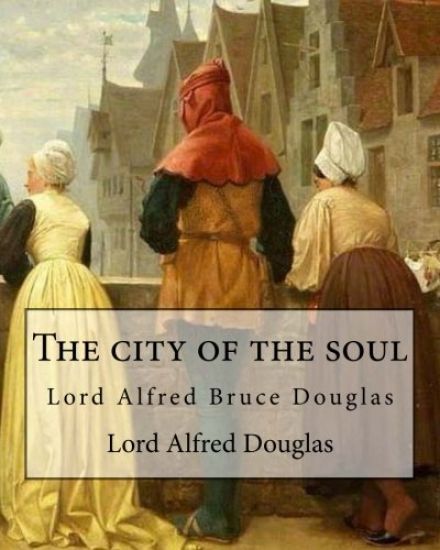
Lord Alfred Bruce Douglas (22 October 1870 - 20 March 1945), nicknamed Bosie, was a British author, poet, translator, and political commentator, better known as the friend and lover of Oscar Wilde. Much of his early poetry was Uranian in theme, though he tended, later in life, to distance himself from both Wilde's influence and his own role as a Uranian poet. Politically he would describe himself as "a strong Conservative of the 'Diehard' variety". Early life and background: Douglas was born at Ham Hill House in Powick, Worcestershire, the third son of John Douglas, 9th Marquess of Queensberry and his first wife Sibyl Montgomery. He was his mother's favourite child; she called him Bosie (a derivative of "boysie", as in boy), a nickname which stuck for the rest of his life. His mother successfully sued for divorce in 1887 on the grounds of his father's adultery.The Marquess married Ethel Weeden in 1893 but the marriage was annulled the following year. Douglas was educated at Wixenford School, Winchester College (1884-88) and Magdalen College, Oxford (1889-93), which he left without obtaining a degree. At Oxford, he edited an undergraduate journal, The Spirit Lamp (1892-3), an activity that intensified the constant conflict between him and his father. Their relationship had always been a strained one and during the Queensberry-Wilde feud, Douglas sided with Wilde, even encouraging Wilde to prosecute the Marquess for libel. In 1893, Douglas had a brief affair with George Ives. In 1858, before Douglas's birth, his grandfather, the 8th Marquess of Queensberry, had died in what was reported as a shooting accident, but was widely believed to have been suicide. In 1862, his widowed grandmother, Lady Queensberry, converted to Roman Catholicism and took her children to live in Paris. One of his uncles, Lord James Douglas, was deeply attached to his twin sister "Florrie" (Lady Florence Douglas) and was heartbroken when she married. In 1885, he tried to abduct a young girl, and after that became ever more manic. In 1888, Lord James married, but this proved disastrous. Separated from Florrie, James drank himself into a deep depression, and in 1891 committed suicide by cutting his throat. Another of his uncles, Lord Francis Douglas (1847-1865) had died in a climbing accident on the Matterhorn. His uncle Lord Archibald Edward Douglas (1850-1938), on the other hand, became a clergyman.Alfred Douglas's aunt, Lord James's twin Lady Florence Douglas (1855-1905), was an author, war correspondent for the Morning Post during the First Boer War, and a feminist. 10] In 1890, she published a novel, Gloriana, or the Revolution of 1900, in which women's suffrage is achieved after a woman posing as a man named Hector D'Estrange is elected to the House of Commons. The character D'Estrange is clearly based on Oscar Wilde......
Lord Alfred Bruce Douglas (22 October 1870 - 20 March 1945), nicknamed Bosie, was a British author, poet, translator, and political commentator, better known as the friend and lover of Oscar Wilde. Much of his early poetry was Uranian in theme, though he tended, later in life, to distance himself from both Wilde's influence and his own role as a Uranian poet. Politically he would describe himself as "a strong Conservative of the 'Diehard' variety". Early life and background: Douglas was born at Ham Hill House in Powick, Worcestershire, the third son of John Douglas, 9th Marquess of Queensberry and his first wife Sibyl Montgomery. He was his mother's favourite child; she called him Bosie (a derivative of "boysie", as in boy), a nickname which stuck for the rest of his life. His mother successfully sued for divorce in 1887 on the grounds of his father's adultery.The Marquess married Ethel Weeden in 1893 but the marriage was annulled the following year. Douglas was educated at Wixenford School, Winchester College (1884-88) and Magdalen College, Oxford (1889-93), which he left without obtaining a degree. At Oxford, he edited an undergraduate journal, The Spirit Lamp (1892-3), an activity that intensified the constant conflict between him and his father. Their relationship had always been a strained one and during the Queensberry-Wilde feud, Douglas sided with Wilde, even encouraging Wilde to prosecute the Marquess for libel. In 1893, Douglas had a brief affair with George Ives. In 1858, before Douglas's birth, his grandfather, the 8th Marquess of Queensberry, had died in what was reported as a shooting accident, but was widely believed to have been suicide. In 1862, his widowed grandmother, Lady Queensberry, converted to Roman Catholicism and took her children to live in Paris. One of his uncles, Lord James Douglas, was deeply attached to his twin sister "Florrie" (Lady Florence Douglas) and was heartbroken when she married. In 1885, he tried to abduct a young girl, and after that became ever more manic. In 1888, Lord James married, but this proved disastrous. Separated from Florrie, James drank himself into a deep depression, and in 1891 committed suicide by cutting his throat. Another of his uncles, Lord Francis Douglas (1847-1865) had died in a climbing accident on the Matterhorn. His uncle Lord Archibald Edward Douglas (1850-1938), on the other hand, became a clergyman.Alfred Douglas's aunt, Lord James's twin Lady Florence Douglas (1855-1905), was an author, war correspondent for the Morning Post during the First Boer War, and a feminist. In 1890, she published a novel, Gloriana, or the Revolution of 1900, in which women's suffrage is achieved after a woman posing as a man named Hector D'Estrange is elected to the House of Commons. The character D'Estrange is clearly based on Oscar Wilde.......
George Alfred Henty (8 December 1832 - 16 November 1902) was a prolific English novelist and war correspondent.He is best known for his historical adventure stories that were popular in the late 19th century. At the end of the thirteenth century, the oppressed people of Scotland rebelled against their despised English ruler, Edward Longshanks. In Freedom's Cause recounts the Scots' desperate but ultimately triumphant struggle in the face of overwhelming odds - a hard-fought series of battles conducted under the leadership of William Wallace and Robert Bruce. Time has burnished the feats of these great heroes to mythic proportions, but Wallace and Bruce were real people. This gripping tale of courage, loyalty, and ingenuity recounts their deeds within an accurate historical context. Readers join their company alongside a fictional protagonist, young Archie Forbes, whose estates have been wrongfully confiscated. Archie forms a group of scouts to fight alongside the legendary Scottish chieftains (who were memorably portrayed in the film Braveheart) for their country's independence.
De l'Opera en 1847, a propos de Robert Bruce, des directions passees, de la direction presente et de quelques-unes des 500 directions futures / par M. Louis Desnoyers; dissertation accompagnee des proclamations de M. Duponchel a ses concitoyens sur cette meme question et des repliques de M. Leon Pillet a icellesDate de l'edition originale: 1847"Comprend: Proclamations relatives a l'Opera; Repliques"Ce livre est la reproduction fidele d'une oeuvre publiee avant 1920 et fait partie d'une collection de livres reimprimes a la demande editee par Hachette Livre, dans le cadre d'un partenariat avec la Bibliotheque nationale de France, offrant l'opportunite d'acceder a des ouvrages anciens et souvent rares issus des fonds patrimoniaux de la BnF.Les oeuvres faisant partie de cette collection ont ete numerisees par la BnF et sont presentes sur Gallica, sa bibliotheque numerique.En entreprenant de redonner vie a ces ouvrages au travers d'une collection de livres reimprimes a la demande, nous leur donnons la possibilite de rencontrer un public elargi et participons a la transmission de connaissances et de savoirs parfois difficilement accessibles.Nous avons cherche a concilier la reproduction fidele d'un livre ancien a partir de sa version numerisee avec le souci d'un confort de lecture optimal. Nous esperons que les ouvrages de cette nouvelle collection vous apporteront entiere satisfaction.Pour plus d'informations, rendez-vous sur www.hachettebnf.fr