Kirjojen hintavertailu. Mukana 12 459 402 kirjaa ja 12 kauppaa.

Kirjahaku

Etsi kirjoja tekijän nimen, kirjan nimen tai ISBN:n perusteella.

1000 tulosta hakusanalla Carbone Gerald M.

Carbon Fibers

Carbon Fibers

Leighton H. Peebles

CRC Press
2017
sidottu
Carbon Fibers presents an up-to-date review of the progress pertaining to the formation of carbon fibers from rayon, acrylic, and pitch precursors. The book emphasizes the preparation, characterization, and properties of commercial materials. It also considers the compressive properties of carbon fibers, the lack of correlation between surface characterization and fiber-matrix interactions, and the discrepancy between surface composition as determined by XPS and the reaction of surface groups with chemical reagents. Other topics discussed include:
Carbon Allotropes and Composites
CARBON ALLOTROPES and COMPOSITES The book discusses the most recent developments and trends in the use of carbon allotropes and their composites for environmental restoration and protection including synthesis, characterization and applications. Due to their huge surface area and numerous other distinguishing characteristics, nanostructure materials are widely used in a variety of applications. The production of substrates for better environmental protection and cleanup has been prompted by these qualities. They offer a superior surface for the adsorption of impurities and pollutants that contaminate industrial eff luents, wastewater, air, and soil. These all include a variety of harmful environmental substances such as toxic metals, phenolic compounds, dyes, and other substances that must be treated appropriately before being released into the environment. Composites made of highly efficient and relatively noble carbon allotropes are attracting significant attention for environmental protection and restoration. The use of carbon allotropes offers many benefits, including low cost, low toxicity, simple manufacture, and high efficiency. Therefore, they are ideal replacements for previously established materials. Carbon Allotropes and Composites is one of the first books on carbon allotropes and their composites in environmental protection and remediation, and features a description of CO2 capturing capability. Audience The book is designed for a broad audience working in the fields of materials science and engineering, nanotechnology, energy, environmental chemistry, environmental science, etc.
Carbon-based Nanomaterials for Green Applications
Gain valuable insight into applying carbon-based nanomaterials to the green technologies of the future The green revolution is the most important technological development of the new century. Carbon-based nanomaterials, with their organic origins and immense range of applications, are increasingly central to this revolution as it unfolds. There is an urgent need for an up-to-date overview of the latest research in this ever-expanding field. Carbon-Based Nanomaterials for Green Applications meets this need by providing a brief outline of the synthesis and characterization of different carbon-based nanomaterials, including their historical backgrounds. It proceeds to move through each major category, outlining properties and applications for each. The result is an essential contribution to a huge range of sustainable and renewable industries. With contributions from a global list of distinguished writers, the book includes: Discussion of nanomaterial applications in fields from drug delivery to biomedical technology to optics Analysis of nanomaterial categories including graphene, fullerene, mesoporous carbon, and many more Separate chapters describing aspects of supercapacitors, solar cells, and fuel cells Carbon-Based Nanomaterials for Green Applications is ideal for scientists and researchers working in nanotechnology, life sciences, biomedical research, bioengineering, and a range of related fields.
Carbon City Zero

Carbon City Zero

ORION PUBLISHING CO
2023
peli
A COLLABORATIVE CLIMATE ACTION GAME: work together to create a carbon neutral city.PLAY AND LEARN: learn about climate action as you play this new board game for all the familySCREEN-FREE FUN for 2-4 players aged 8 and upECO-CONSCIOUS PACKAGING: a quality product made to last, printed on FSC stocksLAURENCE KING PUBLISHING has been capturing imaginations and inspiring creativity in new and unexpected ways for over 30 years, with playful and eye-catching games, gifts and booksCarbon City Zero is a collaborative climate action game in which players develop a sustainable city by greening transport, transforming industries, getting citizens on board and showing world leaders how it's done. Each player starts with an identical deck, buying additional cards from a shared marketplace to create a more sustainable city. Balancing the need to generate income with reducing carbon, you can follow numerous paths to victory, but collaboration is key. You'll need to bring together governments, industries and the public. And if you can't bring carbon levels to zero before it's too late, everybody loses. The stakes couldn't be higher.
Carbon Dioxide Recovery and Utilization

Carbon Dioxide Recovery and Utilization

Springer-Verlag New York Inc.
2003
sidottu
Carbon Dioxide Recovery and Utilization is a complete and informative resource on the carbon dioxide sources and market at the European Union level, with reference to the world situation. The book covers the following themes: - Sources of carbon dioxide and their purity, - Market of carbon dioxide and its uses, - Separation techniques of carbon dioxide from flue gases, - Analysis of the potential of each technique and application, - Basic science and technology of supercritical CO2, - Reactions in supercritical CO2 and its use as reactive solvent, - Utilization of CO2 in the synthesis of chemicals with low energy input, - Conversion of CO2 into fuels: existing techniques, - Dry reforming of methane, - Assessment of the use of carbon dioxide for the synthesis of methanol. This book is unique in providing integrated information and a perspective on innovative technologies for the use of carbon dioxide. The book is suitable for use as a textbook for courses in chemical engineering and chemistry. It is also of great interest as a general reference for those involved with technologies for avoiding carbon dioxide production and for economists. This is an invaluable reference for specialists on synthetic chemistry, gas separation, supercritical fluids, carbon dioxide marketing, renewable energy and sustainable development. In addition, it will be useful for those working in the chemical industry and for policy makers for carbon dioxide mitigation, innovative technologies, carbon recycling, and power generation.
Carbon and Its Domestication

Carbon and Its Domestication

A.M. Mannion

Springer-Verlag New York Inc.
2006
sidottu
Carbon is chemically versatile and is thus the body and soul of biological, geological, ecological and economic systems. Its appropriation by humans through diversion of its biogeochemical cycle has been a mainstay of development. This domestication is characterized by a number of thresholds: control of fire, development of agriculture, expansion of Europe, fossil-fuel use and biotechnology. All have exacted an environmental toll, not least being climatic change and biodiversity loss. Carbon management now and in the future is a ‘hot’ political issue. There is no existing book which focuses on the pivotal role of carbon in the environment and society and the ways in which carbon has been domesticated in time and space to generate wealth and political advantage. Students of environmental science, geography, biology and general science will find this work invaluable as a cross-disciplinary text.
Carbon and Its Domestication

Carbon and Its Domestication

A.M. Mannion

Springer-Verlag New York Inc.
2006
nidottu
Carbon is chemically versatile and is thus the body and soul of biological, geological, ecological and economic systems. Its appropriation by humans through diversion of its biogeochemical cycle has been a mainstay of development. This domestication is characterized by a number of thresholds: control of fire, development of agriculture, expansion of Europe, fossil-fuel use and biotechnology. All have exacted an environmental toll, not least being climatic change and biodiversity loss. Carbon management now and in the future is a ‘hot’ political issue. There is no existing book which focuses on the pivotal role of carbon in the environment and society and the ways in which carbon has been domesticated in time and space to generate wealth and political advantage. Students of environmental science, geography, biology and general science will find this work invaluable as a cross-disciplinary text.
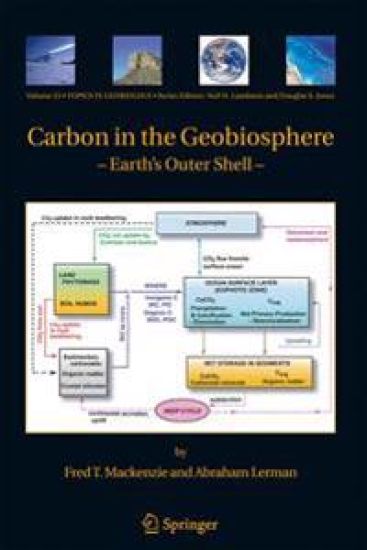
Carbon in the Geobiosphere

Carbon in the Geobiosphere

Fred T. Mackenzie; Abraham Lerman

Springer-Verlag New York Inc.
2006
sidottu
Carbon and carbon dioxide always played an important role in the geobiosphere that is part of the Earth’s outer shell and surface environment. The book’s eleven chapters cover the fundamentals of the biogeochemical behavior of carbon near the Earth’s surface, in the atmosphere, minerals, waters, air-sea exchange, and inorganic and biological processes fractionating the carbon isotopes, and its role in the evolution of inorganic and biogenic sediments, ocean water, the coupling to nutrient nitrogen and phosphorus cycles, and the future of the carbon cycle in the Anthropocene. This book is mainly a reference text for Earth and environmental scientists; it presents an overview of the origins and behavior of the carbon cycle and atmospheric carbon dioxide, and the human effects on them. The book can also be used for a one-semester course at an intermediate to advanced level addressing the behavior of the carbon and related cycles.
Carbon Nanotubes: From Basic Research to Nanotechnology
It is about 15 years that the carbon nanotubes have been discovered by Sumio Iijima in a transmission electron microscope. Since that time, these long hollow cylindrical carbon molecules have revealed being remarkable nanostructures for several aspects. They are composed of just one element, Carbon, and are easily produced by several techniques. A nanotube can bend easily but still is very robust. The nanotubes can be manipulated and contacted to external electrodes. Their diameter is in the nanometer range, whereas their length may exceed several micrometers, if not several millimeters. In diameter, the nanotubes behave like molecules with quantized energy levels, while in length, they behave like a crystal with a continuous distribution of momenta. Depending on its exact atomic structure, a single-wall nanotube –that is to say a nanotube composed of just one rolled-up graphene sheet– may be either a metal or a semiconductor. The nanotubes can carry a large electric current, they are also good thermal conductors. It is not surprising, then, that many applications have been proposed for the nanotubes. At the time of writing, one of their most promising applications is their ability to emit electrons when subjected to an external electric field. Carbon nanotubes can do so in normal vacuum conditions with a reasonable voltage threshold, which make them suitable for cold-cathode devices.
Carbon Nanotubes: From Basic Research to Nanotechnology
It is about 15 years that the carbon nanotubes have been discovered by Sumio Iijima in a transmission electron microscope. Since that time, these long hollow cylindrical carbon molecules have revealed being remarkable nanostructures for several aspects. They are composed of just one element, Carbon, and are easily produced by several techniques. A nanotube can bend easily but still is very robust. The nanotubes can be manipulated and contacted to external electrodes. Their diameter is in the nanometer range, whereas their length may exceed several micrometers, if not several millimeters. In diameter, the nanotubes behave like molecules with quantized energy levels, while in length, they behave like a crystal with a continuous distribution of momenta. Depending on its exact atomic structure, a single-wall nanotube –that is to say a nanotube composed of just one rolled-up graphene sheet– may be either a metal or a semiconductor. The nanotubes can carry a large electric current, they are also good thermal conductors. It is not surprising, then, that many applications have been proposed for the nanotubes. At the time of writing, one of their most promising applications is their ability to emit electrons when subjected to an external electric field. Carbon nanotubes can do so in normal vacuum conditions with a reasonable voltage threshold, which make them suitable for cold-cathode devices.
Carbon Inventory Methods

Carbon Inventory Methods

N.H. Ravindranath; Madelene Ostwald

Springer-Verlag New York Inc.
2007
sidottu
Global awareness of environmental issues has increased on an unprecedented scale. Deforestation, land degradation, desertification, loss of biodiversity, global warming and climate change are some of the environmental issues linked directly to t- restrial ecosystems, both natural and human-managed. Forests, grasslands and c- plands constitute over 63% of the global land area. Terrestrial ecosystems play a critical role in the global carbon cycle. Global rise in demand for food, fodder, fuel and roundwood is increasing the pressure on land-use systems, and conservation and sustainable development of land-use systems are critical for meeting those demands sustainably and stabilizing CO concentration in the atmosphere to miti- 2 gate global climate change. My interest in carbon flows in forest ecosystems was initiated about 15 years ago with the global concern about the contribution of the growing CO emissions 2 to climate change. My first paper about carbon flows was published in 1996 in Climatic Change; since then my interest and the global interest have only increased (R).
Carbon and Nitrogen in the Terrestrial Environment

Carbon and Nitrogen in the Terrestrial Environment

R. Nieder; D.K. Benbi

Springer-Verlag New York Inc.
2008
nidottu
Carbon and Nitrogen in the Terrestrial Environment is a comprehensive, interdisciplinary description of C and N fluxes between the atmosphere and the terrestrial biosphere; issues related to C and N management in different ecosystems and their implications for the environment and global climate change; and the approaches to mitigate emission of greenhouse gases. Drawing upon the most up-to-date books, journals, bulletins, reports, symposia proceedings and internet sources documenting interrelationships between different aspects of C and N cycling in the terrestrial environment, Carbon and Nitrogen in the Terrestrial Environment fills the gap left by most of the currently available books on C and N cycling. They either deal with a single element of an ecosystem, or are related to one or a few selected aspects like soil organic matter (SOM) and agricultural or forest management, emission of greenhouse gases, global climate change or modeling of SOM dynamics.
Carbon Nanomaterials in Clean Energy Hydrogen Systems
The 2007 ARW “Using Carbon Nanomaterials in Clean-Energy Hydrogen Systems” (UCNCEHS’2007) was held in September 22–28, 2007 in the remarkable town Sudak (Crimea, Ukraine) known for its heroic and unusual fate. In the tradition of the earlier conferences, UCNCEHS’2007 meeting served as an multidisciplinary forum for the presentation and discussion of the most recent research on transition to hydrogen-based energy systems, technologies for hydrogen production, storage, utilization, carbon nanomaterials processing and chemical behavior, energy and environmental problems. The aim of UCNCEHS’2007 was to provide the wide overview of the latest scientific results on basic research and technological applications of hydrogen interactions with carbon materials. The active representatives from research/academic organizations and governmental agencies could meet, discuss and present the most recent advances in hydrogen concepts, processes and systems, to evaluate current progress and to exchange academic information, to identify research needs and future development in this important area. This ARW should help further the progress of hydrogen-based science and promote the role of hydrogen and carbon nanomaterials in the energy field.
Carbon Dating,Cold Fusion,and a Curve Ball

Carbon Dating,Cold Fusion,and a Curve Ball

David D. Moon

Trafford Publishing
2004
nidottu
Paleontologists and geologists are interested in the ages of fossils, rocks, and minerals, from which they deduce the ages of geologic strata in the Geologic Column. Scientists make use of radioactive dating methods, such as the radioactive decays of carbon 14, uranium 238, and thorium 232 in fossils and minerals. Accurate age determinations depend on knowing the rate of the radioactive emissions and the relative amounts of initial and product elements in the decay series. However, if an interfering nuclear change took place earlier, the perceived age of the earth deposit would have to be wrong. In 1989, the discovery of cold fusion-the fusion of hydrogen to make helium and energy inside metal electrodes at room temperature-was announced by Drs. Martin Fleischmann and Stanley Pons at the University of Utah. Soon after, cold fusion research also revealed that nuclear transmutations, forming many new elements, occur liberally. Even purposely-added radioactive uranium and thorium in cold fusion-type cells resulted in transmutations, and the disappearance of up to 95 percent of the radioactivity in hours or minutes. In addition, special water pumps, invented in America and Europe, were discovered to generate "excess heat" and possible nuclear effects by intensely agitating water and creating "cavitation bubbles." In Carbon Dating, Cold Fusion, and a Curve Ball, the author postulates interfering nuclear (element) changes occurring in the Earth, and proposes that extensive element transmutations occurred from intense hydrodynamics during the Flood of Noah (Genesis 6-8). If so, it is conceivable much alteration of radioactive elements took place, rendering unreliable the radioactive dating results in most analyses done today. A relatively simple test of this theory is outlined. The test would use a piece of bismuth metal, a tank of water, and a boat's outboard motor. The book is written for the non-scientist, but those trained in the physical sciences or engineering are invited to examine the new hypothesis of Earth's element transmutations and the consequential alteration of dating earth material by radioactive elements.
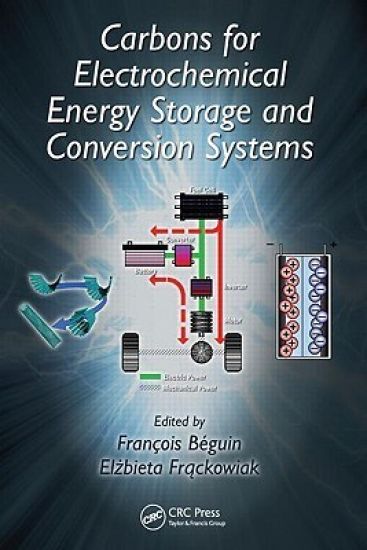
Carbons for Electrochemical Energy Storage and Conversion Systems
As carbons are widely used in energy storage and conversion systems, there is a rapidly growing need for an updated book that describes their physical, chemical, and electrochemical properties. Edited by those responsible for initiating the most progressive conference on Carbon for Energy Storage and Environment Protection (CESEP), this book undoubtedly fills this need. Written in collaboration with prominent scientists in carbon science and its energy-related applications, Carbons for Electrochemical Energy Storage and Conversion Systems provides the most complete and up-to-date coverage available on carbon materials for application in electrochemical energy storage and conversion. The text studies different carbon materials and their detailed physicochemical properties and provides an in-depth review of their wide-ranging applications—including lithium-ion batteries, supercapacitors, fuel cells, and primary cells. Recognizing that most scientists involved with these applications are materials scientists rather than electrochemists, the text begins with a review of electrochemical principles and methods. It then covers the different forms of traditional sp2 carbons, introduces novel techniques for preparing advanced carbons, and describes the main physicochemical properties which control the electrochemical behavior of carbons. The second half of the book focuses on research and provides a wealth of original information on industrial applications.Complete with an abundance of figures, tables, equations, and case studies, this book is the ideal one-stop reference for researchers, engineers, and students working on developing the carbon-based energy storage and conversion systems of tomorrow.