

Kirjahaku
Etsi kirjoja tekijän nimen, kirjan nimen tai ISBN:n perusteella.
1000 tulosta hakusanalla Casey Bell

Abby Kelley returns home from the Greater city of Olympus to find that things in Orchard Village are bad, very bad. The Olympian Guard has taken over village affairs. The Lessers are being worked to the bone in the coldest winter Orchard has seen. Villagers are being dragged away for the slightest indication of what they call "resistance." She needs to keep her head down and her mouth shut. But, it's so hard to do when everything within you screams rebellion.Kyan is coming on strong, trying to convince her to take a chance on him. Shocking news of Crew's activities in Olympus sweeps through the Villages. When Abby is taken away by the Olympian guard, Kyan sends word to Vesuvius for help. But, no one could have predicted their idea of help or what they might expect in return. Who will be left to pick up the pieces of Abby's heart?Resist is the second book in The Harvest Saga by Casey L. Bond. It is highly recommended that you read book one, Reap, before beginning Resist.


Doesn't Play Well With Others
Casey Harvell
Createspace Independent Publishing Platform
2014
nidottu
From Amazon Bestselling and USA Today Recommended Author Casey HarvellDisclaimer: This book is going to be for mature audiences (18+) ONLY due to seriously excessive foul language and minor sex and violence. Selene Warren has it rough. After her mom passes when she's little, she gets stuck with her aunt (a crack-whore.) Life with Selene's aunt lacks any type of love or support. Selene constantly struggles and when she turns fifteen her aunt is diagnosed with H.I.V. It soon becomes apparent that her aunt expects her to take over the family business and Selene runs for dear life. She manages pretty well for a couple years. One day she saves a scruffy looking kid from a window. Before she knows it she adopts a stray of her own. Life seems a bit better until Selene gets stabbed trying to protect the kid.Selene makes it, but discovers the kid is no normal runaway--he's the only son of a VERY rich and prominent family. A new friend comes forward to clear Selene of possible kidnapping charges, but for the life of her Selene can't figure out why the hell a rich kid would rather live on the streets than on a ritzy estate.Alex wants to break down the walls around Selene so badly. Selene's life leaves her with no room to trust anyone. For as long as she can remember she's had to rely on herself. Will Selene be able to escape her degenerate world? Because she doesn't play well with others.

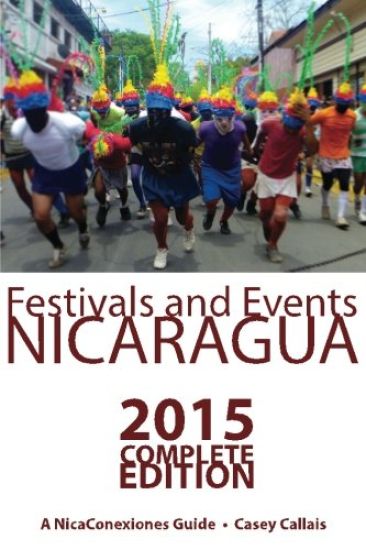
NCX Guide to Festivals and Events in Nicaragua
Casey Callais
Createspace Independent Publishing Platform
2014
nidottu
Afraid of getting stuck on the "Gringo Trail"? You can experience the best of the real Nicaragua if you know when and where to look. The NCX Guide to Festivals and Events is exactly that...your guide to discovering what the other guidebooks leave out. A few highlights: There is one where they dress up their dogs in funny little costumes to be blessed by the priest at the cathedral. Then there is the one where the beat of African drums, chanting and dancing goes on until the daylight hours. Then there is the one where eight-foot tall women dance with their short, big-headed suitors singing satirical rhymes about the audience. And of course, the one where the devils descend upon the city is not to be missed. Nicaragua is so rich in festivals that you can always find something fascinating going on if you know where to look. Most travelers, however, miss what could be the highlight of their Nicaraguan adventure since even the best travel guides go into little detail about the festivals and events. In this country the festivals are the pulse of the culture and the people. You haven't seen Nicaragua until you have experienced the parades, the fireworks, the food and the alegr a that surrounds these events. Don't plan a trip without including a few days to see the local festivities. And who knows, maybe you will see me there


Sons of Pirates: Conquered by the Caribbean coast of Nicaragua
Casey Callais
Createspace Independent Publishing Platform
2014
nidottu
Longlisted for the 2019 PEN/ESPN Literary Sports Writing Award "Raw and poetic...lean and ferocious." --The New York Times "I swim for every chance to get wasted--after every meet, every weekend, every travel trip. This is what I look forward to and what I tell no one: the burn of it down my throat, to my soul curled up in my lungs, the sharpest pain all over it--it seizes and stretches, becoming alive again, and is the only thing that makes sense." At fifteen, Casey Legler is already one of the fastest swimmers in the world. She is also an alcoholic, isolated from her family, and incapable of forming lasting connections with those around her. Driven to compete at the highest levels, sent far away from home to train with the best coaches and teams, she finds herself increasingly alone and alienated, living a life of cheap hotels and chlorine-worn skin, anonymous sexual encounters and escalating drug use. Even at what should be a moment of triumph--competing at age sixteen in the 1996 Olympics--she is an outsider looking in, procuring drugs for Olympians she hardly knows, and losing her race after setting a new world record in the qualifying heats. After submitting to years of numbing training in France and the United States, Casey can see no way out of the sinister loneliness that has swelled and festered inside her. Yet wondrously, when it is almost too late, she discovers a small light within herself, and senses a point of calm within the whirlwind of her life. In searing, evocative, visceral prose, Casey gives language to loneliness in this startling story of survival, defiance, and of the embers that still burn when everything else in us goes dark.

"A memoir for our times." --Michael Stipe "A coming-of-age drama captured through poetic prose and convincing honesty." --Kirkus Reviews "I swim for every chance to get wasted--after every meet, every weekend, every travel trip. This is what I look forward to and what I tell no one: the burn of it down my throat, to my soul curled up in my lungs, the sharpest pain all over it--it seizes and stretches, becoming alive again, and is the only thing that makes sense." At fifteen, Casey Legler is already one of the fastest swimmers in the world. She is also an alcoholic, isolated from her family, and incapable of forming lasting connections with those around her. Driven to compete at the highest levels, sent far away from home to train with the best coaches and teams, she finds herself increasingly alone and alienated, living a life of cheap hotels and chlorine-worn skin, anonymous sexual encounters and escalating drug use. Even at what should be a moment of triumph--competing at age sixteen in the 1996 Olympics--she is an outsider looking in, procuring drugs for Olympians she hardly knows, and losing her race after setting a new world record in the qualifying heats. After submitting to years of numbing training in France and the United States, Casey can see no way out of the sinister loneliness that has swelled and festered inside her. Yet wondrously, when it is almost too late, she discovers a small light within herself, and senses a point of calm within the whirlwind of her life. In searing, evocative, visceral prose, Casey gives language to loneliness in this startling story of survival, defiance, and of the embers that still burn when everything else in us goes dark.
This book is open access and available on www.bloomsburycollections.com. It is funded by Knowledge Unlatched.In Hitchcock’s Appetites, Casey McKittrick offers the first book-length study of the relationship between Hitchcock’s body size and his cinema. Whereas most critics and biographers of the great director are content to consign his large figure and larger appetite to colorful anecdotes of his private life, McKittrick argues that our understanding of Hitchcock’s films, his creative process, and his artistic mind are incomplete without considering his lived experience as a fat man.Using archival research of his publicity, script collaboration, and personal communications with his producers, in tandem with close textual readings of his films, feminist critique, and theories of embodiment, Hitchcock’s Appetites produces a new and compelling profile of Hitchcock's creative life, and a fuller, more nuanced account of his auteurism.

This book is open access and available on www.bloomsburycollections.com. It is funded by Knowledge Unlatched.In Hitchcock’s Appetites, Casey McKittrick offers the first book-length study of the relationship between Hitchcock’s body size and his cinema. Whereas most critics and biographers of the great director are content to consign his large figure and larger appetite to colorful anecdotes of his private life, McKittrick argues that our understanding of Hitchcock’s films, his creative process, and his artistic mind are incomplete without considering his lived experience as a fat man.Using archival research of his publicity, script collaboration, and personal communications with his producers, in tandem with close textual readings of his films, feminist critique, and theories of embodiment, Hitchcock’s Appetites produces a new and compelling profile of Hitchcock's creative life, and a fuller, more nuanced account of his auteurism.

I've Got Worms and You Should Too!
Casey D. McCarty
Createspace Independent Publishing Platform
2014
nidottu

How to Perform the Ultimate Local SEO Audit
Casey Meraz
Createspace Independent Publishing Platform
2014
nidottu
Ranking in Google's local results can be a difficult task. There are a lot of best practices to follow. If you're not doing the best in every area then your competition has a better chance of beating you in the rankings. That is why I developed The Ultimate Local SEO Audit. This book is your blueprint of every line item you need to review and fix on your website, your local listing, and even off page ranking factors. This book was written with a simple easy to use format which will show you what problems you're addressing, the desired outcome, and how to do it. It's written in a step by step guide that also corresponds to a Google Doc spreadsheet which will allow you to easily hit the ground running with an audit. Instead of focusing on the pie in the sky this is a practical book and covers specifically the areas you have control over. See What People Are Saying About The Book "Amazingly awesome, ultimately complete. Wow Casey, great work I'm sure this will be used over and over again by many." - Linda Buquet, Owner of Local Search Forum "Wow. Comprehensive resource. Great for business owners that do their own seo. Thanks for all of the hard work put in." - Evan Guthrie The 8 Phases We Cover in this Book Phase 1 Google My Business Page Optimization Phase 2: Website and landing page optimization Phase 3: Citations audit Phase 4: Organic penalty analysis and link audit Phase 5: Reviews Analysis Phase 6: Social Audit Phase 7: Competition Analysis Phase 8: Developing an on-going strategy Which Results Will This Help You With This book is specifically geared towards Google local results (Previously known as Google Places, Google Plus Local, etc.). This book is based off Casey Meraz's Moz.com guide tilted the same.
In the late nineteenth century, Latin American exports boomed. From Chihuahua to Patagonia, producers sent industrial fibers, tropical fruits, and staple goods across oceans to satisfy the ever-increasing demand from foreign markets. In southern Mexico's Soconusco district, the coffee trade would transform rural life. A regional history of the Soconusco as well as a study in commodity capitalism, From the Grounds Up places indigenous and mestizo villagers, migrant workers, and local politicians at the center of our understanding of the export boom. An isolated, impoverished backwater for most of the nineteenth century, by 1920, the Soconusco had transformed into a small but vibrant node in the web of global commerce. Alongside plantation owners and foreign investors, a dense but little-explored web of small-time producers, shopowners, and laborers played key roles in the rapid expansion of export production. Their deep engagement with rural development challenges the standard top-down narrative of market integration led by economic elites allied with a strong state. Here, Casey Marina Lurtz argues that the export boom owed its success to a diverse body of players whose choices had profound impacts on Latin America's export-driven economy during the first era of globalization.
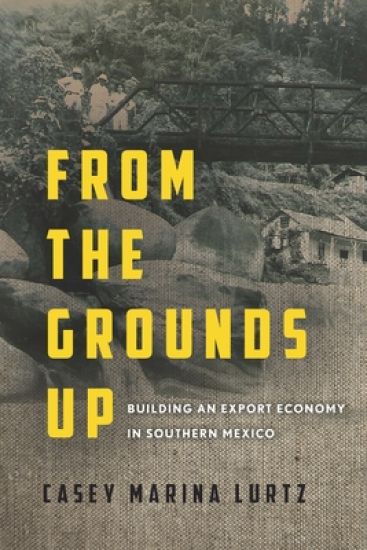
In the late nineteenth century, Latin American exports boomed. From Chihuahua to Patagonia, producers sent industrial fibers, tropical fruits, and staple goods across oceans to satisfy the ever-increasing demand from foreign markets. In southern Mexico's Soconusco district, the coffee trade would transform rural life. A regional history of the Soconusco as well as a study in commodity capitalism, From the Grounds Up places indigenous and mestizo villagers, migrant workers, and local politicians at the center of our understanding of the export boom. An isolated, impoverished backwater for most of the nineteenth century, by 1920, the Soconusco had transformed into a small but vibrant node in the web of global commerce. Alongside plantation owners and foreign investors, a dense but little-explored web of small-time producers, shopowners, and laborers played key roles in the rapid expansion of export production. Their deep engagement with rural development challenges the standard top-down narrative of market integration led by economic elites allied with a strong state. Here, Casey Marina Lurtz argues that the export boom owed its success to a diverse body of players whose choices had profound impacts on Latin America's export-driven economy during the first era of globalization.
In 2019, after decades of ecological damage from oil, Waorani people took to the streets of Amazonian Ecuador to protest drilling on their ancestral lands. Working with international activists, lawyers, and other Indigenous groups, they successfully sued the government for selling oil concessions without prior consent. Placing their struggle for territorial autonomy in the global spotlight, this unprecedented legal victory for environmental rights by an Indigenous people reflected the new forms of collaboration emerging in contemporary Amazonia. Translating Worlds, Defending Land explores how Waorani collaborations, whether with environmentalists or academic researchers, bring about new possibilities, challenges, and imaginative horizons. Based on fieldwork over a period of twenty-five years, Casey High interrogates what these engagements mean for Indigenous communities and how they offer critical reflection on collaboration as a concept, method, and practice. The alliances, misunderstandings, and conflicts that emerge in these contexts challenge the assumption that productive collaborations reflect—or require—shared purposes, generating important implications for an engaged anthropology open to reconsidering what constitutes ethnographic knowledge and who it is for. As some young Waorani adults become not just community leaders or environmental citizens, but also skilled researchers and ethnographers, translating between Indigenous understandings of land and the Western language conservation, they create a powerful new voice in international environmental politics.
In 2019, after decades of ecological damage from oil, Waorani people took to the streets of Amazonian Ecuador to protest drilling on their ancestral lands. Working with international activists, lawyers, and other Indigenous groups, they successfully sued the government for selling oil concessions without prior consent. Placing their struggle for territorial autonomy in the global spotlight, this unprecedented legal victory for environmental rights by an Indigenous people reflected the new forms of collaboration emerging in contemporary Amazonia. Translating Worlds, Defending Land explores how Waorani collaborations, whether with environmentalists or academic researchers, bring about new possibilities, challenges, and imaginative horizons. Based on fieldwork over a period of twenty-five years, Casey High interrogates what these engagements mean for Indigenous communities and how they offer critical reflection on collaboration as a concept, method, and practice. The alliances, misunderstandings, and conflicts that emerge in these contexts challenge the assumption that productive collaborations reflect—or require—shared purposes, generating important implications for an engaged anthropology open to reconsidering what constitutes ethnographic knowledge and who it is for. As some young Waorani adults become not just community leaders or environmental citizens, but also skilled researchers and ethnographers, translating between Indigenous understandings of land and the Western language conservation, they create a powerful new voice in international environmental politics.
International stabilization interventions in so-called fragile states have failed everywhere they have been tried. The United Nation's Multidimensional Integrated Stabilization Mission in Mali, for example, recently withdrew at the request of Mali's military government. It left conditions of even greater instability than when the mission was deployed a decade earlier. Far from an outlier, the failure of this mission exposes flaws in the commonsense notion that territorial governance is a necessary foundation for global security. McNeill historicizes and politicizes this assumption, showing how the modern equation of security with territorial control has displaced a diversity of approaches to ordering and securing collective life. In Mali and the broader Sahel, security conditions are shaped by arid ecologies, which have produced distinctive ways of organizing authority, populations, and resources, oriented toward mobility, pluralism, and flexible boundaries. Drawing on historical and anthropological research—as well as data from more than a hundred interviews conducted in Mali, Niger, and the headquarters of AFRICOM—this book situates contemporary dynamics in the Sahel not as disruptions on the margins of international order but as indicators of core problematics shaping security. In the face of these challenges, McNeill models alternative, non-territorial practices of political order and collective security that are highly relevant to rethinking security more broadly, in the Sahel and beyond.
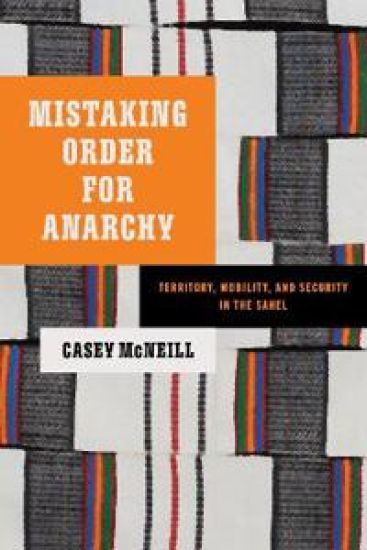
International stabilization interventions in so-called fragile states have failed everywhere they have been tried. The United Nation's Multidimensional Integrated Stabilization Mission in Mali, for example, recently withdrew at the request of Mali's military government. It left conditions of even greater instability than when the mission was deployed a decade earlier. Far from an outlier, the failure of this mission exposes flaws in the commonsense notion that territorial governance is a necessary foundation for global security. McNeill historicizes and politicizes this assumption, showing how the modern equation of security with territorial control has displaced a diversity of approaches to ordering and securing collective life. In Mali and the broader Sahel, security conditions are shaped by arid ecologies, which have produced distinctive ways of organizing authority, populations, and resources, oriented toward mobility, pluralism, and flexible boundaries. Drawing on historical and anthropological research—as well as data from more than a hundred interviews conducted in Mali, Niger, and the headquarters of AFRICOM—this book situates contemporary dynamics in the Sahel not as disruptions on the margins of international order but as indicators of core problematics shaping security. In the face of these challenges, McNeill models alternative, non-territorial practices of political order and collective security that are highly relevant to rethinking security more broadly, in the Sahel and beyond.