
Kirjahaku
Etsi kirjoja tekijän nimen, kirjan nimen tai ISBN:n perusteella.
1000 tulosta hakusanalla Colonel A J D Biddle





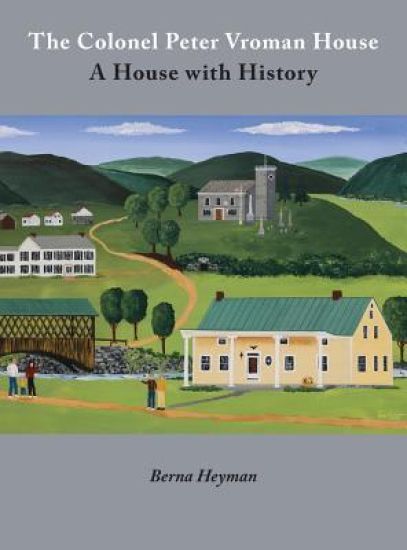
The Colonel Peter Vroman house of Schoharie, New York reflects the history of its times - from the Mohawk Iroquois who first inhabited the land to Dutch slaveholders, from the Revolutionary War patriot Colonel Peter Vroman to millers establishing saw and grain mills, from an enterprising widow building an antiques business to a folk artist creating the on-site Easter Egg Museum, each lends a voice for telling the story of this house and of this country. Learn about shoes hidden in walls, mysterious markings in the cellar, an unrequited love-triangle, and even murder. Follow the growth of the country through the changes to the house, both inside and outside, through numerous maps and photographs. See the house from cellar to attic and learn how it has changed. Enjoy this beautifully illustrated, well-researched book about this historic house and gain insight into living with history.

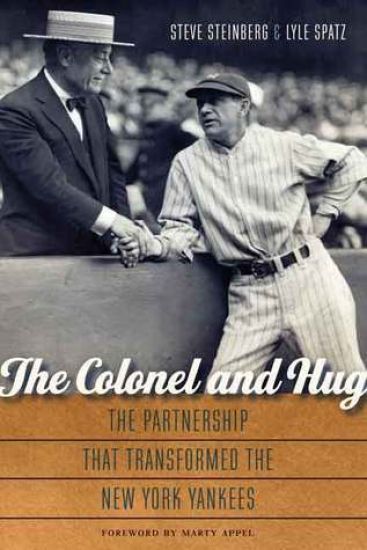
The Colonel and Hug
Steve Steinberg; Lyle Spatz; Marty Appel
University of Nebraska Press
2015
sidottu
From the team’s inception in 1903, the New York Yankees were a floundering group that played as second-class citizens to the New York Giants. The team was purchased in 1915 by Jacob Ruppert and his partner, Til Huston. Three years later, when Ruppert hired Miller Huggins as manager, the unlikely partnership of the two figures began, one that set into motion the Yankees’ run as the dominant baseball franchise of the 1920s and the rest of the twentieth century, capturing six American League pennants with Huggins at the helm and four more during Ruppert’s lifetime. The Yankees’ success was driven by Ruppert’s executive style and enduring financial commitment, combined with Huggins’s philosophy of continual improvement and personnel development. The Colonel and Hug tells the story of how these two men transformed the Yankees in their rise to dominance. It also tells the larger story of America’s gradual move from neutrality to entry into World War I and the emergence and impact of Prohibition on American society. This story tells of the end of the Deadball Era and the rise of the Lively Ball Era, a gambling scandal, and the collapse of baseball’s governing structure-and the significant role the Yankees played in it all. While the hitting of Babe Ruth and Lou Gehrig won many games for New York, Ruppert and Huggins institutionalized winning for the Yankees.
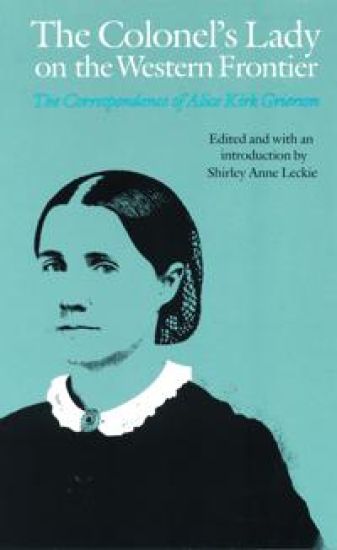
The modern woman who tries to juggle private and public roles with equilibrium will discover a spiritual ancestor in Alice Kirk Grierson. The colonel's lady spent most of her life at army outposts on the nineteenth-century western frontier, where she faced the problems of raising a large family while fulfilling the duties of a commanding officer's wife. Fortunately for history, she left a large and extraordinarily candid correspondence, which has now been edited by Shirley Anne Leckie. Alice was the wife of Benjamin B. Grierson, a major general in the Civil War who won fame for a raid that contributed to the fall of Vicksburg. Her letters begin in 1866, when her husband reentered the army as colonel of the legendary "buffalo soldiers" of the Tenth Cavalry, and end with her death in 1888. During these years she chronicles the criticism experienced by her husband in commanding one of the army's two black mounted regiments and the frustration when he is repeatedly passed over for promotion, in part because he advocated a more humane Indian policy. All the while her position requires her to assume heavy responsibilities as a hostess. Her letters are just as unflinching in describing the daily hard-ships of raising a family at frontier posts like Forts Riley, Gibson, Sill, Concho, Davis, and Grant, where two of her seven children died young and two suffered from manic-depressive psychosis. They are extraordinary for their insight into nineteenth-century attitudes toward birth control, childbearing, marital roles, race relations, and mental illness.
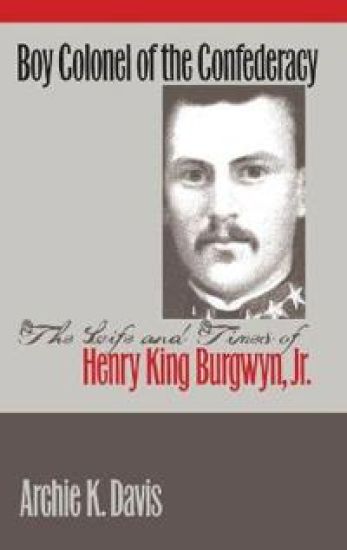
Boy Colonel of the Confederacy
The University of North Carolina Press
1998
nidottu
Henry King Burgwyn, Jr. (1841-63), one of the youngest colonels in the Confederate Army, died at the age of twenty-one while leading the twenty-sixth North Carolina regiment into action at the battle of Gettysburg. In this sensitive biography, originally published by UNC Press in 1985, Archie Davis provides a revealing portrait of the young man's character and a striking example of a soldier who selflessly fulfilled his duty. Drawing on Burgwyn's own letters and diary, Davis also offers a fascinating glimpse into North Carolina society during the antebellum period and the Civil War. |A life-and-times biography of Henry King Burgwyn, Jr., the young Confederate hero from North Carolina who was killed at Gettysburg.
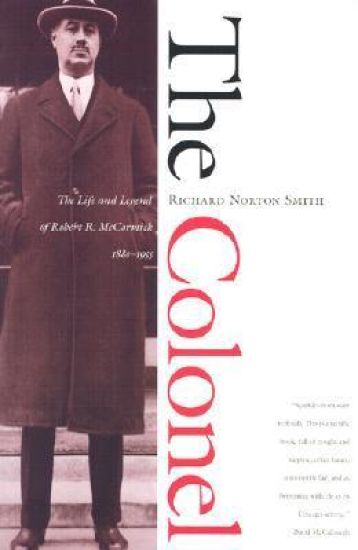
As editor-publisher of the ""Chicago Tribune"", Robert R. McCormick came to personify his city. Drawing on McCormack's personal papers and years of research, Robert Norton Smith has written the definitive life of the towering figure known as The Colonel.
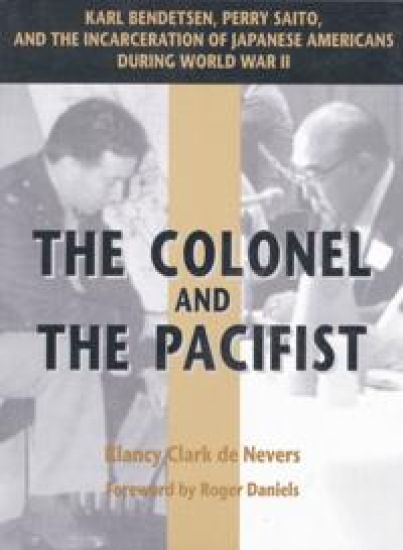
Executive Order 9066. In February 1942, ten weeks after the Japanese attack on Pearl Harbor, President Franklin D. Roosevelt put his signature to a piece of paper that allowed the forced removal of Americans of Japanese ancestry from their West Coast homes, and their incarceration in makeshift camps. Those are the facts. But two faces emerge from behind these facts: Karl R. Bendetsen, the Army major who was promoted to full colonel and placed in charge of the evacuation after formulating the concept of 'military necessity, ' and who penned the order Roosevelt signed, and Perry H. Saito, a young college student, future Methodist minister, and former neighbor from Bendetsen's hometown of Aberdeen, Washington who was incarcerated in Tule Lake Relocation Camp.The Colonel and the Pacifist tells the story of two men caught up in one of the most infamous episodes in American history. While they never met, Bendetsen and Saito's lives touched tangentially--from their common hometown to their eventual testimony during the 1981 hearings of the Commission on the Wartime Relocation and Internment of Civilians. In weaving together these contrasting stories, Klancy Clark de Nevers not only exposes unknown or little known aspects of World War II history, she also explores larger issues of racism and war that resonate through the years and ring eerily familiar to our post-9/11 ears.

The entertaining story of a boy who apprentices with a legendary Mississippi River gambler - but later finds himself seduced by the power and wealth of a corrupt Delta planter family. When his nefarious gambling skills are applied to the persecution of oppressed tenant farmers and other vulnerable people, his life becomes a tragedy.
Charles W. Chesnutt's "The Colonel's Dream" offers a poignant exploration of Southern life in the Reconstruction Era. This powerful work delves into the challenges faced by Civil War veterans returning to a society grappling with the aftermath of conflict and the complexities of social reform. Through a lens of racial prejudice and deeply ingrained societal norms, Chesnutt crafts a narrative that resonates with enduring themes of hope, disillusionment, and the struggle for equality. "The Colonel's Dream" provides a glimpse into a pivotal period in American history, examining the efforts to rebuild a nation fractured by war and grappling with issues that continue to echo through the years. A vital contribution to both historical fiction and African American literature, this meticulously prepared edition allows readers to engage with Chesnutt's insightful commentary on American society and the human condition.This work has been selected by scholars as being culturally important, and is part of the knowledge base of civilization as we know it.This work is in the public domain in the United States of America, and possibly other nations. Within the United States, you may freely copy and distribute this work, as no entity (individual or corporate) has a copyright on the body of the work.Scholars believe, and we concur, that this work is important enough to be preserved, reproduced, and made generally available to the public. We appreciate your support of the preservation process, and thank you for being an important part of keeping this knowledge alive and relevant.