"Speak softly and carry a big stick". Many have heard this quote from former president Teddy Roosevelt. On the street, carrying a big stick is not enough. You must know how and have the will to use that big stick. This training manual will teach you how to use a stick. In Combative Martial Arts (CMA) weapons are divided into four categories: blunt, edged/pointed, flexible and projectile. The purpose of this training manual is to provide you with information on how to finish off an attacker when you are armed with a stick. Every self-defense practitioner must be familiar with streetwise weapons. While traditional weapons such as the sword or nunchakus may be interesting, it is highly unlikely that you will actually use them in an attack. The weapons of modern society include sticks, knives, chains and guns. These are the weapons that today's martial artist must become proficient in.
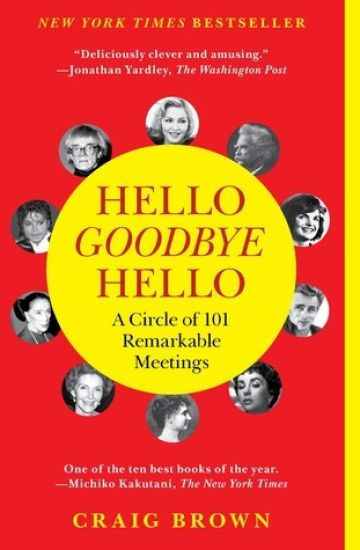
From one of England's wittiest writers, a "captivating, glittering, engaging, entertaining confection" (Michiko Kakutani, The New York Times) of 101 unlikely encounters between pairs of historical figures from Salvador Dali and Sigmund Freud to Marilyn Monroe and Frank Lloyd Wright. IMAGINE THESE UNLIKELY--BUT TRUE--ENCOUNTERS: Martha Graham and Madonna Igor Stravinsky and Walt Disney Frank Lloyd Wright and Marilyn Monroe Marilyn Monroe and Nikita Khrushchev President Richard M. Nixon and Elvis Presley Harpo Marx and George Bernard Shaw Salvador Dali and Sigmund Freud Groucho Marx and T. S. Eliot BRILLIANT IN CONCEPTION AND DIZZYING IN EXECUTION, Hello Goodbye Hello is a daisy chain of 101 fascinating true encounters, chance meetings, and disastrous collisions between the celebrated and the gifted, the famous and the infamous. Witty and wicked, Hello Goodbye Hello is the perfect example that truth is stranger than fiction (and infinitely more enjoyable).
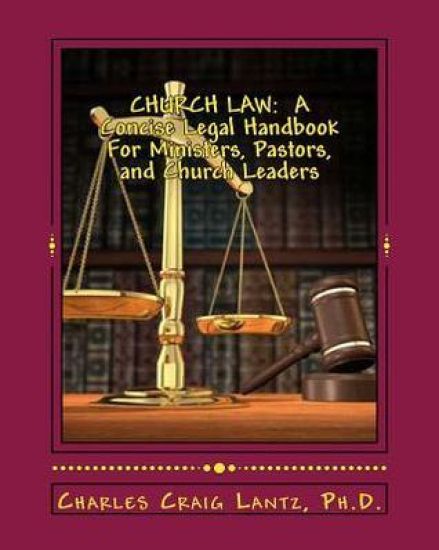
It is imperative in the day and age in which we live (2024) that Christian leaders understand the law as it relates to Pastors, Churches, and non-profit religious organizations. Christian Leaders must have an understanding of the laws affecting Pastors, and why they are important for Church boards and ministers to know. Craig Lantz, PhD uses court cases to help define and explain the legal distinction of ministerial status and its implications for Pastors and Church boards. This brief and concise handbook on Church Law addresses clergy employment contracts, compensation, termination, legal privileges and conditions of ministers, and the legal authority of ministers on behalf of the Church. Also, the more common theories of clergy legal liability are examined. The laws of today are more complex than they ever have been, and lawyers are in the business of making "BIG BUCKS." They do this because, unfortunately, many Pastors and Church leaders are ignorant about the law. There are NOW more legal problems and lawsuits against Churches than in any period of history. Therefore, it is imperative that ministers and leaders are aware of legal issues, and potential problems that can come their way if they are not careful in handling Church members, non-members, and counseling situations, in particular. Church leaders must become aware of the potential legal problems that can result from relationships with parishioners, as well as legal problems with employees. Pastor, beware of the dangers that are lurking in the world of Lawyers, Politicians, Judges, local county and state governments, as some have been corrupted. Every Pastor, Full-Time Church Leader, and Christian Minister needs to purchase a copy of this concise handbook on Church Law.
Does entropy really increase no matter what we do? Can light pass through a Big Bang? What is certain about the Heisenberg uncertainty principle? Many laws of physics are formulated in terms of differential equations, and the questions above are about the nature of their solutions. This book puts together the three main aspects of the topic of partial differential equations, namely theory, phenomenology, and applications, from a contemporary point of view. In addition to the three principal examples of the wave equation, the heat equation, and Laplace's equation, the book has chapters on dispersion and the Schrodinger equation, nonlinear hyperbolic conservation laws, and shock waves.The book covers material for an introductory course that is aimed at beginning graduate or advanced undergraduate level students. Readers should be conversant with multivariate calculus and linear algebra. They are also expected to have taken an introductory level course in analysis. Each chapter includes a comprehensive set of exercises, and most chapters have additional projects, which are intended to give students opportunities for more in-depth and open-ended study of solutions of partial differential equations and their properties.