Kirjojen hintavertailu. Mukana 11 244 527 kirjaa ja 12 kauppaa.

Kirjahaku

Etsi kirjoja tekijän nimen, kirjan nimen tai ISBN:n perusteella.

1000 tulosta hakusanalla DEVIN MADSON

Devil Delivered and Other Tales

Devil Delivered and Other Tales

Steven Erikson

Transworld Publishers Ltd
2014
pokkari
In the breakaway Lakota Nation, in the heart of a land blistered beneath an ozone hole the size of the Great Plains of North America, a lone anthropologist wanders the deadlands, recording observations that threaten to bring the world's powers to their knees.
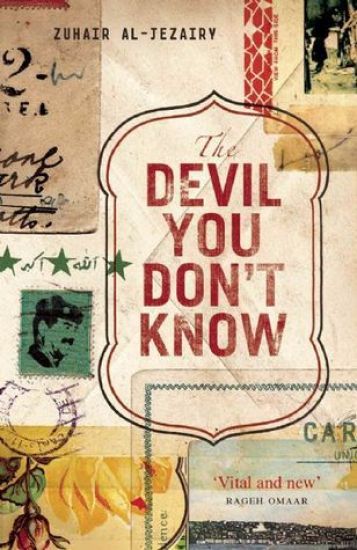
Devil You Don't Know

Devil You Don't Know

Zuhair Al-Jezairy

Saqi Books
2009
nidottu
In 1979, journalist Zuhair al-Jezairy fled Iraq and certain death after openly criticising Saddam's regime. Twenty-five years later he is back, and cautiously celebrating the toppling of the hated Ba'ath Party. As editor of a newspaper, he breaks the Oil for Food scandal, disclosing the names of Arab and Westerners who were involved. He then sets up a television company and travels all over Iraq, documenting the country's descent into sectarianism and hopeless violence, soon becoming a target himself. Al-Jezairy's first-hand accounts of the looting of Baghdad, the destruction of government buildings, and indiscriminate bombings are a searing, personal and unique account of Iraq after Saddam Hussein.
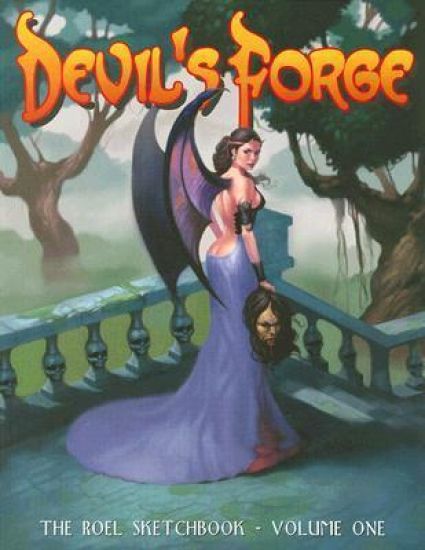
Devil's Forge

Devil's Forge

Roel Wielinga

S Q Publications,us
2005
pokkari
Spanning the spectrum of fantasy illustration, Roel Wielinga can create images of dark magic, or gleaming visions of a cybernetic future. A long-time contributor to the Sirius line of comics, Roel's finally assembled an all-new collection of his finest work. Devil's Forge features Roel's unique point of view, including his glorious female creations and mystical new worlds of wonder.
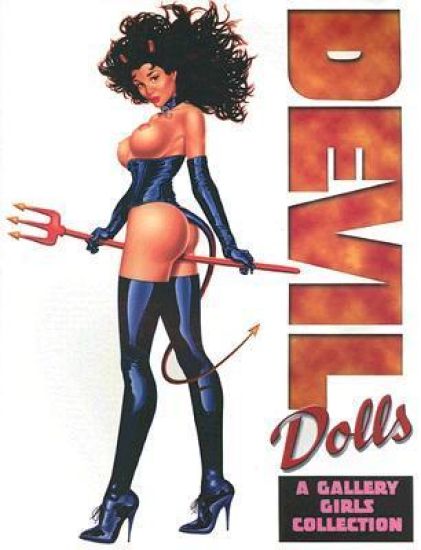
Devil Dolls

Devil Dolls

Sal Quartuccio

S Q Publications,US
2006
nidottu
Hot chicks are one thing, but these honeys are super-heated! Molten mounds of mouth-watering badness who will drag you down to the lowest circles of hell, just for the fun of it! If you are the type who can resist anything but temptation -- boy are you in trouble! Satan's sirens, as seen by such sinners as Arantza, Colucci, Meriggi, Cuevas, DeSimone, Sosa, Mitch Byrd and many more! Just keep telling yourself -- Devil Dolls -- they're bad for you!
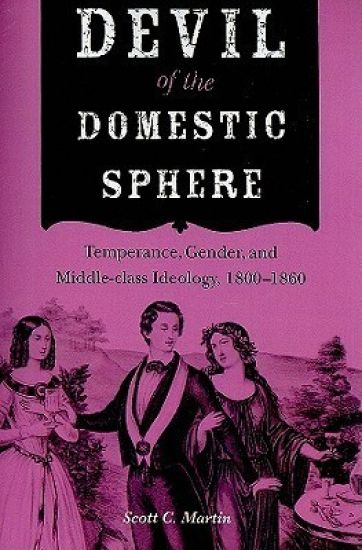
Devil of the Domestic Sphere

Devil of the Domestic Sphere

Martin Scott C.

Northern Illinois University Press
2008
sidottu
Drink, in the minds of antebellum temperance reformers, represented the threat of an increasingly urban, industrial world. Contrasting the drunkards' lack of restraint with their own thrift and sobriety, these members of the emerging middle class lay claim to respectability, virtue, and moral leadership. As they sought to legitimate their own authority, reformers also employed temperance literature to propagate middle-class ideas about the nature of women and their role as guardians of the home.Stories of women as innocent victims and loving saviors filled temperance literature. Ministers, novelists, and journalists portrayed wives beaten by drunken husbands; poets and songwriters extolled mothers and sisters who rescued men from demon drink. Yet a strand of misogyny also ran through temperance ideology. Denunciation of women as causes of intemperance and snares for men and celebration of women's victimization often coexisted with a more positive assessment of women's role in the emerging middle class. Unless a woman remained vigilant, she too might succumb to drink, and reformers had very little sympathy for such a fallen angel.By examining the contradictory images of women employed by the antebellum temperance movement, Scott Martin reveals the reformers' commitment not only to social betterment but also to middle-class interests and a particular gender ideology. Martin explores the reasons why more men than women drank, the ways in which society dealt with women who neglected familial and social obligations to become drunkards, and the consequences of women's failure to eradicate male drunkenness."Devil of the Domestic Sphere", the newest addition to NIU Press's "Drugs and Alcohol Series", will be of interest to American historians and historians of women and gender.
Devil of the Domestic Sphere

Devil of the Domestic Sphere

Scott C. Martin

Northern Illinois University Press
2010
pokkari
Drink, in the minds of antebellum temperance reformers, represented the threat of an increasingly urban, industrial world. Contrasting the drunkards' lack of restraint with their own thrift and sobriety, these members of the emerging middle class lay claim to respectability, virtue, and moral leadership. As they sought to legitimate their own authority, reformers also employed temperance literature to propagate middle-class ideas about the nature of women and their role as guardians of the home. Stories of women as innocent victims and loving saviors filled temperance literature. Ministers, novelists, and journalists portrayed wives beaten by drunken husbands; poets and songwriters extolled mothers and sisters who rescued men from demon drink. Yet a strand of misogyny also ran through temperance ideology. Denunciation of women as causes of intemperance and snares for men, and celebration of women's victimization often coexisted with a more positive assessment of women's role in the emerging middle class. Unless a woman remained vigilant, she too might succumb to drink, and reformers had very little sympathy for such a fallen angel. By examining the contradictory images of women employed by the antebellum temperance movement, Scott Martin reveals the reformers' commitment not only to social betterment but also to middle-class interests and a particular gender ideology. Martin explores the reasons why more men than women drank, the ways in which society dealt with women who neglected familial and social obligations to become drunkards, and the consequences of women's failure to eradicate male drunkenness.
Devil's Advocate

Devil's Advocate

Donald Freed

Broadway Play Publishing
2011
nidottu
DEVIL'S ADVOCATE captures an agonizing struggle between General Manuel Noriega and Archbishop Laboa on Christmas Eve, Panama, 1989. "... there are plenty of interpersonal fireworks exploding between the two characters who bring this two-act work alive. But the biggest explosions are reserved for the U.S. military, as this production is set during the Yanqui invasion of Panama in 1989, the so-called 'Operation Just Cause.' That duo of aforementioned characters is Archbishop Jose Sebastian Laboa and General Manuel Antonio Noriega ... the main force generating conflict in DEVIL'S ADVOCATE is none other than politics. Imperialism, covert actions, narco-trafficking, gun running, terrorism, torture, psyops, money laundering, the Panama Canal, the Contras, Fidel, George H W Bush (hell's hottest seat is reserved for this evil genius of mediocrity and his satanic son), et al, form the complex backdrop to a fairly simple plot. During Bush's invasion of Panama, Noriega flees to the Papal Nuncio, the archbishop's residence, to seek - in the immortal words of Quasimodo - sanctuary. There, 'Pineapple Face' (as the pockmarked Noriega was derisively called) confesses his 'sins' to Laboa, who - as the Vatican's Grand Inquisitor - served, literally, as the eponymous 'Devil's Advocate.'" -Ed Rampell, Hollywood Progressive
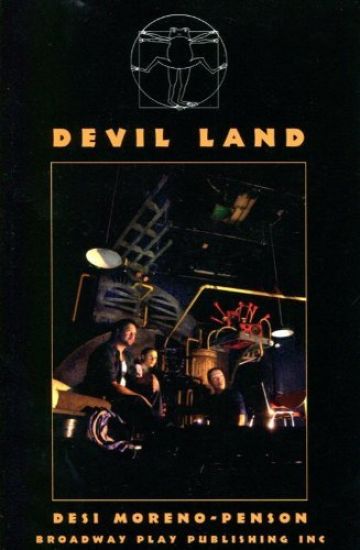
Devil Land

Devil Land

Desi Moreno-Penson

Broadway Play Publishing
2011
nidottu
A childless, Latino couple kidnap a young girl in order to create a family, but the little girl has ideas of her own, and when her imaginary friend, the Grinch, comes to life to help her, the couple ends up with far more than they bargained for. A dark, gothic fairy tale for the contemporary world. "New York theatergoers are mostly godless heathens, right? So how is a playwright to evoke genuine otherworldly chills in her audience? Desi Moreno-Penson's new drama, DEVIL LAND, taps into every Gothamite's primal fears by invoking the one all-powerful figure who inspires both terror and awe: the super ... this creepy drama starts off as a more or less ordinary abduction story. The childless Bronx super Americo and his straitlaced, religious wife, Beatriz, kidnap an eccentric 12-year-old neighbor and imprison her in their building's boiler room. Below the surface antics of Americo's growing lecherousness and Beatriz's punitive religiosity, however, an eerier narrative unfolds. The captive child calls upon her 'imaginary' playmate the Grinch and the ancient spirits of the Ta no Amerindians (her Puerto Rican ancestors) to keep her safe and to uncover the couple's many mysteries - like what happened to their real child. Spooky and compelling ... several interludes narrated in Seuss-like rhymed couplets are weirdly effective, the Ta no mythology is handled surely and suggestively, and the play's insistence that we make superstitions as well as sense of the world around us, even today, is spot on. You may never want to check on the boiler again - and anyway, isn't that a job for the super?" -Jessica Branch, Time Out New York "Desi Moreno-Penson's DEVIL LAND may be the scariest new play of the season. It's a modern-day gothic horror story; a thriller whose psychological elements are well-enough fleshed out to be both credible and authentically disturbing. It's a unique evening of theater ..." -Martin Denton, NYTheatre.com
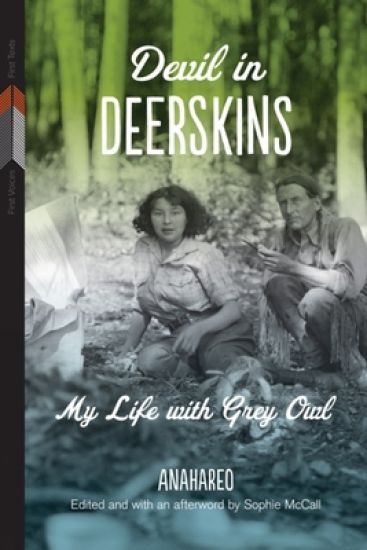
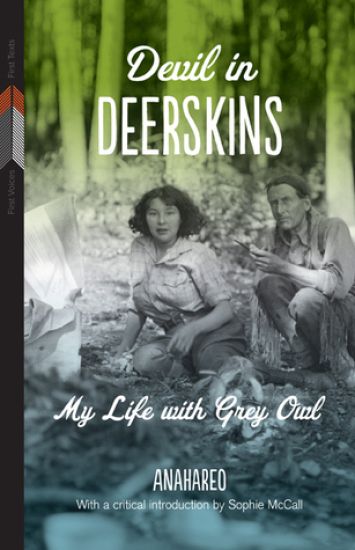
Devil in Deerskins

Devil in Deerskins

Anahareo; Sophie McCall

University of Manitoba Press
2014
sidottu
Anahareo (1906-1985) was a Mohawk writer, environmentalist, and activist. She was also the wife of Grey Owl, aka Archie Belaney, the internationally celebrated writer and speaker who claimed to be of Scottish and Apache descent, but whose true ancestry as a white Englishman only became known after his death.Devil in Deerskins is Anahareo's autobiography up to and including her marriage to Grey Owl. In vivid prose she captures their extensive travels through the bush and their work towards environmental and wildlife protection. Here we see the daily life of an extraordinary Mohawk woman whose independence, intellect and moral conviction had direct influence on Grey Owl's conversion from trapper to conservationist. Though first published in 1972, Devil in Deerskins's observations on indigeneity, culture, and land speak directly to contemporary audiences.Devil in Deerskins is the first book in the First Voices, First Texts series. This new edition includes forewords by Anahareo's daughters, Katherine Swartile and Anne Gaskell, an afterword by Sophie McCall, and reintroduces readers to a very important but largely forgotten text by one of Canada's most talented Aboriginal writers.
Devil in Deerskins

Devil in Deerskins

Anahareo; Sophie McCall

University of Manitoba Press
2014
nidottu
Anahareo (1906-1985) was a Mohawk writer, environmentalist, and activist. She was also the wife of Grey Owl, aka Archie Belaney, the internationally celebrated writer and speaker who claimed to be of Scottish and Apache descent, but whose true ancestry as a white Englishman only became known after his death.Devil in Deerskins is Anahareo's autobiography up to and including her marriage to Grey Owl. In vivid prose she captures their extensive travels through the bush and their work towards environmental and wildlife protection. Here we see the daily life of an extraordinary Mohawk woman whose independence, intellect and moral conviction had direct influence on Grey Owl's conversion from trapper to conservationist. Though first published in 1972, Devil in Deerskins's observations on indigeneity, culture, and land speak directly to contemporary audiences.Devil in Deerskins is the first book in the First Voices, First Texts series. This new edition includes forewords by Anahareo's daughters, Katherine Swartile and Anne Gaskell, an afterword by Sophie McCall, and reintroduces readers to a very important but largely forgotten text by one of Canada's most talented Aboriginal writers.
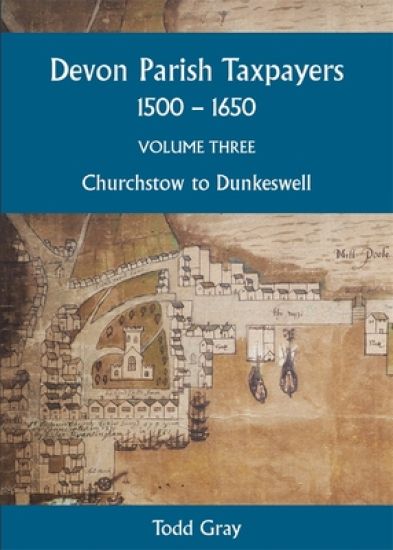
Devon Parish Taxpayers, 1500-1650: Volume Three
112 tax lists for Devon for the period from 1500 to 1650. Tax lists are a key means of understanding parish life in the 1500s and early 1600s. This collection of 112 records for towns and villages such as Crediton and Dartmouth is published here for the first time. It reveals those individuals who were the bedrock of their societies and helps us in understanding how local society worked in this period. It is through the study of these documents that we can unravel how differently each parish was organised in the sixteenth and early seventeenth centuries and see how people took part in parish life. The name lists also provide rich material for family and local historians.
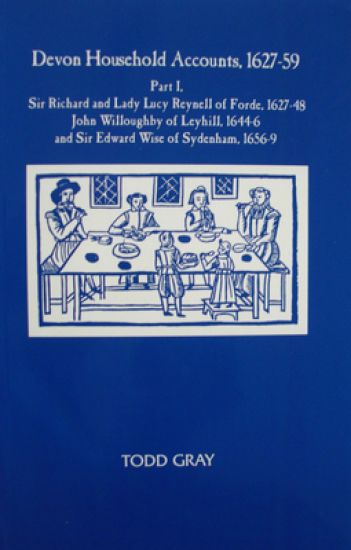
Devon Household Accounts, 1627-59, Part I

Devon Household Accounts, 1627-59, Part I

Devon Cornwall Record Society
1995
pokkari
These records, of three gentry families from east, west and south Devon, are remarkable for their richness and diversity and provide a unique insight into seventeenth-century life. They illustrate every aspect of the running of the household including the duties of the servants, payments to visiting musicians, purchases of clothing, building accounts and consumption of provisions. In particular the volume includes the kitchen account for Sydenham detailingthe gentry diet, including the importing of wine, the making of venison, woodcock, salmon, quince, lumber and turkey pies, and the purchase of all provisions. The seasons of the year are clearly seen in the accounts including lists of guests for meals at Christmas through Twelfth Night.
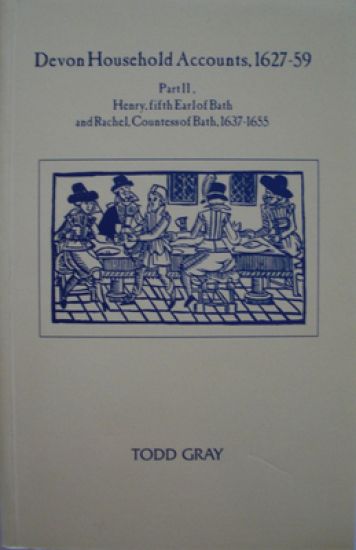
Devon Household Accounts 1627-59, Part II

Devon Household Accounts 1627-59, Part II

Devon Cornwall Record Society
1996
pokkari
This comprises the household accounts of the only noble family then resident in Devon. Remarkable for their richness and diversity, the collection of documents has not been previously published and will considerably add to our understanding of the county's social history in the seventeenth century. The rare survival of parallel London and provincial accounts allows invaluable comparisons and analysis which will be of wide appeal. The accounts recorded thehousehold's very fabric from the servants' financial particulars (including their wages, clothing and diet) to minute details of such purchases as furniture, silver, musical instruments and pictures. There are also recurring entries for the planting of the extensive terraced garden and unusual entries such as the purchase of an organ from Gloucester and the construction of the Great Coach. The continual movement of the Earl and Countess between Devon and London is shown and this is of added significance given that the Earl was the county's leading Royalist and the accounts cover the entire Civil War period. There are accounts for the Earl's diet in 1642 while he was imprisoned in the Tower of London and the volume also includes the Countess' personal account book in which she recorded their Civil War involvement.
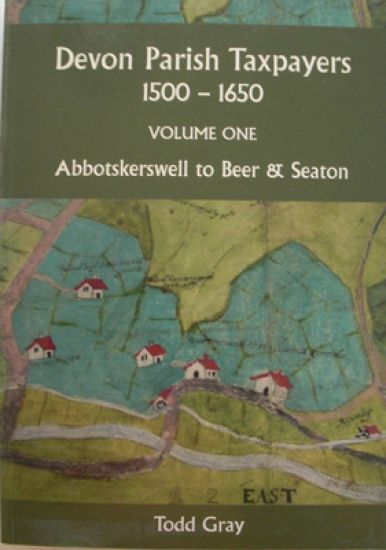
Devon Parish Taxpayers, 1500-1650: Volume One
The documents printed in this volume comprise parish tax records for eighteen parishes across Devon. These 26 church rates, 1 clerk rate, 13 Easter books, 5 military rates and 21 poor rates not only show the range of taxes payablein the county but also show how differently they were organised from one parish to another. The documents have been drawn from archives in Devon, London and Somerset and have not been previously published. This series will provide details on thousands of Devonians who are otherwise unrecorded.
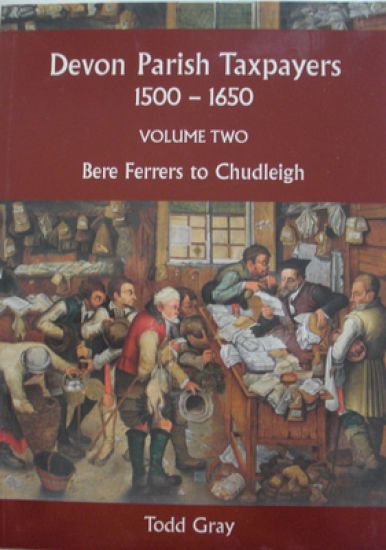
Devon Parish Taxpayers, 1500-1650: Volume Two
These Devon parish tax records provide details on thousands of Devonians who are otherwise unrecorded. The documents printed in this volume comprise parish tax records for parishes across Devon. These rates not only show the range of taxes payable in the county but also show how differently they were organised from one parish to another. The documents have been drawn from archives in Devon, London and Somerset and have not been previously published. This series will provide details on thousands of Devonians who are otherwise unrecorded.
Devon Maps and Map-makers

Devon Maps and Map-makers

Mary R. Ravenhill

Devon Cornwall Record Society
2002
pokkari
This carto-bibliography of over 1300 Devon manuscript maps published in two volumes contains details not only of the maps themselves, extracted from 30 separate repositories in addition to some in private hands, but also biographical information on the surveyors who made them, over a third of whom have not appeared in any national cartographic reference book. There is also an Introduction which explains the significance of these, mostly large-scale, Devonmaps and how they fit into the national cartographic picture. The detailed list of maps is arranged in alphabetical order of parish for ease of reference and there is a Personal Names index. There are coloured illustrations of some of the maps and the two volumes will be presented in a slipcase. The volumes will be an indispensable reference tool for all interested in the social history, the landscape and archaeology of Devon.