This is the second selection of old photographs of Ludlow in the Archive Photographs Series. This new collection of over 200 evocative images traces some of the changes that have taken place in and around this vibrant community over the last century. The history of Ludlow is examined throughout the decades, from the beginning of the twentieth century up until the present day.The reader can see the progression of the history of the town, the changes that have taken place in transport and industry, the shops and streets that have changed over the years, and the experiences of external events such as two world wars that have helped shape and change the nature of the town. This second selection is a collaboration by the original author, David LLoyd, and photographer Gareth Thomas. Each image is accompanied by supporting text providing a wealth of local colour and historical detail.This fascinating collection will re-awaken memories among older residents, while showing the young, the face of the area as it used to be.
There have been numerous mines and drifts in the Llynfi Valley, with the earliest deep mine being the Garth, sunk in 1864, with the last, St John's, sunk in 1908. This book tells the story in words and pictures of the coal industry in Maesteg and the rest of the Llynfi valley.
William Paulet, first Marquis of Winchester, was one of the most remarkable and influential men of sixteenth-century England. Born in Wiltshire in 1475, he lived to the advanced age of 97, during which time he held the posts of Lord Treasurer, Master of the King's Wards, Controller of the Household, Lord Chamberlain, Speaker of the House of Lords, and President of the Council. In recognition of his services, Edward VI promoted him to the Marquisate of Winchester in 1551, cementing his position amongst the nation's elite. Providing for the first time a full length account of Paulet's life and his extended role at the heart of Tudor government, this book will be welcomed by scholars of sixteenth-century England as an invaluable aid to better understanding the period. Taking a broadly chronological approach, the book presents the main features of his life against the turbulent background of mid-sixteenth-century history. As well as demonstrating how he managed to hold office under three monarchs - Edward VI, Mary I and Elizabeth I - with radically different religious policies, this book considers Paulet's considerable impact on the economic, political and ecclesiastical landscape of Tudor England.
Master of the macabre David Lubar is back with Check Out the Library Weenies, his ninth collection of Weenies Stories. Here are thirty more scary stories for the middle grade audience--perfect for both avid and reluctant young readers who like a few chills and a lot of laughs. Don't be a weenie. Read these stories. If you dare "Fans will be shivering and laughing...evilly." --Kirkus Reviews on Strikeout of the Bleacher Weenies "With its mix of humor and chills, this collection is a sure bet for fans of R. L. Stine's Goosebumps series and reluctant readers." --Booklist on Wipeout of the Wireless Weenies "Whoever thinks the short story is dead, or that kids don't like short stories, hasn't talked to any real live kids and hasn't read the latest in this popular series." --School Library Journal on Attack of the Vampire Weenies Weenies Stories#1 In the Land of the Lawn Weenies and Other Misadventures#2 Invasion of the Road Weenies and Other Warped and Creepy Tales#3 The Curse of the Campfire Weenies and Other Warped and Creepy Tales#4 The Battle of the Red Hot Pepper Weenies and Other Warped and Creepy Tales#5 Attack of the Vampire Weenies and Other Warped and Creepy Tales#6 Beware the Ninja Weenies and Other Warped and Creepy Tales#7 Wipeout of the Wireless Weenies and Other Warped and Creepy Tales#8 Strikeout of the Bleacher Weenies and Other Warped and Creepy Tales#9 Check Out the Library Weenies and Other Warped and Creepy Tales
From the New York Times bestselling author of My Paris Kitchen and L'Appart, a deliciously funny, offbeat, and irreverent look at the city of lights, cheese, chocolate, and other confections.Like so many others, David Lebovitz dreamed about living in Paris ever since he first visited the city and after a nearly two-decade career as a pastry chef and cookbook author, he finally moved to Paris to start a new life. Having crammed all his worldly belongings into three suitcases, he arrived, hopes high, at his new apartment in the lively Bastille neighborhood. But he soon discovered it's a different world en France. From learning the ironclad rules of social conduct to the mysteries of men's footwear, from shopkeepers who work so hard not to sell you anything to the etiquette of working the right way around the cheese plate, here is David's story of how he came to fall in love with--and even understand--this glorious, yet sometimes maddening, city. When did he realize he had morphed into un vrai parisien? It might have been when he found himself considering a purchase of men's dress socks with cartoon characters on them. Or perhaps the time he went to a bank with 135 euros in hand to make a 134-euro payment, was told the bank had no change that day, and thought it was completely normal. Or when he found himself dressing up to take out the garbage because he had come to accept that in Paris appearances and image mean everything. Once you stop laughing, the more than fifty original recipes, for dishes both savory and sweet, such as Pork Loin with Brown Sugar-Bourbon Glaze, Braised Turkey in Beaujolais Nouveau with Prunes, Bacon and Bleu Cheese Cake, Chocolate-Coconut Marshmallows, Chocolate Spice Bread, Lemon-Glazed Madeleines, and Mocha-Cr me Fra che Cake, will have you running to the kitchen for your own taste of Parisian living.
Northern Lights Against POPs tells the many-faceted scientific, policy, legal, and advocacy story that led to the Stockholm convention. Unique in its perspective, scope, and breadth, it reveals the key links among environmental and health science, international politics, advocacy, law, and global negotiations. Never before have public health concerns articulated by northern Indigenous peoples in Canada and throughout the circumpolar Arctic had such a direct impact on global policy-making. Authors show how research on POPs (persistent organic pollutants) in the Arctic from the mid-1980s influenced international negotiations and analyze the potential for the convention to be effective. Contributors include elected representatives, researchers, civil servants, Indigenous people who participated in the negotiations, and scientists who provided the compelling Arctic data that prompted the United Nations Environment Programme to sponsor negotiations. Contributors include David Anderson (Minister of the Environment, Canada); Nigel Bankes (University of Calgary); John Buccini (Consultant, former chair of the Global POPs Negotiations); Sheila Watt-Cloutier (Inuit Circumpolar Conference-Canada); Barry Commoner, Paul Woods Bartlett, Holger Eisl, Kimberly Couchot (Center for the Biology of Natural Systems, Queens College, City University of New York); Eric Dewailly (Laval University); David Downie (Director of Educational Partnerships, Columbia Earth Institute, Columbia University, New York); Terry Fenge (Inuit Circumpolar Conference-Canada); Henry Huntington (Consultant, Anchorage) and Michelle Sparck (Circumpolar Conservation Union, Washington, D.C.) ; Harriet Kuhnlein, Laurie Chan (Centre for Indigenous Peoples' Nutrition and Environment, McGill University), and Olivier Receveur (formerly Centre for Indigenous Peoples' Nutrition and Environment, McGill University); Lars-Otto Reiersen (Arctic Monitoring and Assessment Programme Secretariat,Oslo); Henrik Selin (Massachusetts Institute of Technology); David Stone, Russell Shearer (Northern Contaminants Program, Department of Indian Affairs and Northern Development, Canada); Klaus Topfer (Executive Director, United Nations Environment Programme).
Northern Lights Against POPs tells the many-faceted scientific, policy, legal, and advocacy story that led to the Stockholm convention. Unique in its perspective, scope, and breadth, it reveals the key links among environmental and health science, international politics, advocacy, law, and global negotiations. Never before have public health concerns articulated by northern Indigenous peoples in Canada and throughout the circumpolar Arctic had such a direct impact on global policy-making. Authors show how research on POPs (persistent organic pollutants) in the Arctic from the mid-1980s influenced international negotiations and analyze the potential for the convention to be effective. Contributors include elected representatives, researchers, civil servants, Indigenous people who participated in the negotiations, and scientists who provided the compelling Arctic data that prompted the United Nations Environment Programme to sponsor negotiations. Contributors include David Anderson (Minister of the Environment, Canada); Nigel Bankes (University of Calgary); John Buccini (Consultant, former chair of the Global POPs Negotiations); Sheila Watt-Cloutier (Inuit Circumpolar Conference-Canada); Barry Commoner, Paul Woods Bartlett, Holger Eisl, Kimberly Couchot (Center for the Biology of Natural Systems, Queens College, City University of New York); Eric Dewailly (Laval University); David Downie (Director of Educational Partnerships, Columbia Earth Institute, Columbia University, New York); Terry Fenge (Inuit Circumpolar Conference-Canada); Henry Huntington (Consultant, Anchorage) and Michelle Sparck (Circumpolar Conservation Union, Washington, D.C.) ; Harriet Kuhnlein, Laurie Chan (Centre for Indigenous Peoples' Nutrition and Environment, McGill University), and Olivier Receveur (formerly Centre for Indigenous Peoples' Nutrition and Environment, McGill University); Lars-Otto Reiersen (Arctic Monitoring and Assessment Programme Secretariat,Oslo); Henrik Selin (Massachusetts Institute of Technology); David Stone, Russell Shearer (Northern Contaminants Program, Department of Indian Affairs and Northern Development, Canada); Klaus Topfer (Executive Director, United Nations Environment Programme).
People have believed in the existence of life after death throughout human history and in all regions of the world. Mere belief, however, does not make it true. What is the empirical evidence for life after death? Has any significant research been conducted, and if so, what conclusions does it suggest? In fact there exists a large body of research on topics relevant to the question of life after death. This book objectively examines that research, drawing together the observations of social science regarding such phenomena as reincarnation, near-death experiences, deathbed visions, cases of possession by dead spirits, and apparitions of the deceased. It considers possibilities including survival of consciousness and survival of personality, and reflects on the logical problems inherent in any model of postmortem survival. An extensive bibliography lists hundreds of studies of life-after-death phenomena.
Eastern Air Lines began in 1926 when aviation pioneer Harold Pitcairn started the first carrier air mail route from New York to Atlanta under his company, Pitcairn Aviation. Clement Keys of National Air Transport bought the company in 1929, changed the name to Eastern Air Transport and began passenger service the next year on daily round trips between New York and Richmond. The growing airline was purchased by General Motors and became Eastern Air Lines in 1934. World War I flying ace Edward V. Rickenbacker purchased the airline four years later and led it to become by the 1950s the most profitable airline in the United States. Former astronaut Frank Borman became president of Eastern in 1975 and tried to manage the airline through deregulation, labor union conflict, and heavy debt, ending with the sale of Eastern to Frank Lorenzo and Texas Air in 1986. The airline entered bankruptcy in March 1989 and ended service in less than two years. This detailed history follows Eastern from start to finish, studying such corporate decision-making as aircraft purchases and route expansions, as well as the personalities that shaped the airline throughout its history.
This volume is just what any pastor needs when looking for something special to spice up a Sunday sermon - it's full of imaginative and inspirational meditations that breathe new life into scripture texts from Cycle C of the Revised Common Lectionary. Leininger gives readers a new perspective on a passage from each week's assigned readings with a thought-provoking reflection that puts in the context of modern life. This is much more than just a source of stimulating sermon illustrations - it's also a treasure chest of devotional reading that will make any reader pause and reflect on God's wonderful hand at work in our daily activities. It's a must-have resource for any church library. Some of the intriguing chapters are: - The Speed Bump on the Road to Bethlehem - Silly Goose - Love Your Enemy? Are You Kidding, Lord? - Sonny Moneybags - The Judas Gene - The Forgiveness Business - Trouble in the Parsonage - Pax Christi or Pox Christi? - The Locust Years ...and many more David E. Leininger had planned be a "pastor out to pasture" and retire from active ministry at the end of 2008, but God had other plans. Instead of chasing little white balls around a proverbial pasture, he is now the interim pastor of Dorchester Presbyterian Church in Summerville, South Carolina. He has previously served congregations in Pennsylvania, Florida, Georgia, and the Carolinas. A graduate of Lutheran Theological Southern Seminary (M.Div) and Erskine Theological Seminary (D.Min.), Leininger is the author of six books: A Color-Blind Church; God of Justice: A Look at the Ten Commandments in the 21st Century; As We Believe, So We Behave: Living the Apostles' Creed; and three volumes of Lectionary Tales for the Pulpit. He has also been a contributing writer for the online services StoryShare and The Immediate Word (www.sermonsuite.com).
In our age, it's difficult to know what it means to be a man. From internal struggles with fear and distraction to external pressures to hold back essential parts of our masculinity, we often find ourselves in a position of defensiveness, tiptoeing around as we try to do the right and avoid the wrong. This is not an external problem. It's a heart problem. And the condition of a man's heart changes everything.God calls us to more. We were meant to live fulfilling lives driven by purpose and passion. We were meant to be lionhearted. In this energetic and inspiring book, David and Brandon Lindell of James River Church show you how to shift from operating from a place of uncertainty to actively creating the future you desire, free of struggles and external pressures that hold you back. It's time to stop living defeated, discouraged, dejected, and disheartened and harness the power you already have to live focused, fulfilled, and fearless. This action-oriented guide will get you there.
In our age, it's difficult to know what it means to be a man. From internal struggles with fear and distraction to external pressures to hold back essential parts of our masculinity, we often find ourselves in a position of defensiveness, tiptoeing around as we try to do the right and avoid the wrong. This is not an external problem. It's a heart problem. And the condition of a man's heart changes everything.God calls us to more. We were meant to live fulfilling lives driven by purpose and passion. We were meant to be lionhearted. In this energetic and inspiring book, David and Brandon Lindell of James River Church show you how to shift from operating from a place of uncertainty to actively creating the future you desire, free of struggles and external pressures that hold you back. It's time to stop living defeated, discouraged, dejected, and disheartened and harness the power you already have to live focused, fulfilled, and fearless. This action-oriented guide will get you there.
In 1999, responding to international concerns about the sexual exploitation of children, the Japanese Diet voted unanimously to ban child prostitution and child pornography. Two years later, in the wake of 9/11, Junichiro Koizumi's cabinet radically shifted government counterterrorism policy toward new military solutions, and away from an earlier emphasis on law enforcement. Although they seem unrelated, these two policies reveal the unintended consequences of attempts to enforce international norms at the national level. In Think Global, Fear Local, David Leheny posits that when states abide by international agreements to clamp down on transnational crime and security concerns, they respond not to an amorphous international problem but rather to more deeply held and proximate fears. Although opponents of child prostitution and pornography were primarily concerned about the victimization of children in poor nations by wealthy foreigners, the Japanese law has been largely used to crack down on "compensated dating," in which middle-class Japanese schoolgirls date and sometimes have sex with adults. Many Japanese policymakers viewed these girls as villains, and subsequent legal developments have aimed to constrain teenage sexual activities as well as to punish predatory adults. Likewise, following changes in the country's counterterrorism policy, some Japanese leaders have redefined a host of other threats—especially from North Korea—as "terrorist" menaces requiring a more robust and active Japanese military. Drawing from sources as diverse as parliamentary debate records and contemporary film and literature, Leheny uses these two very different cases to argue that international norms can serve as political tools, allowing states to enhance their coercive authority.
In 1999, responding to international concerns about the sexual exploitation of children, the Japanese Diet voted unanimously to ban child prostitution and child pornography. Two years later, in the wake of 9/11, Junichiro Koizumi's cabinet radically shifted government counterterrorism policy toward new military solutions, and away from an earlier emphasis on law enforcement. Although they seem unrelated, these two policies reveal the unintended consequences of attempts to enforce international norms at the national level. In Think Global, Fear Local, David Leheny posits that when states abide by international agreements to clamp down on transnational crime and security concerns, they respond not to an amorphous international problem but rather to more deeply held and proximate fears. Although opponents of child prostitution and pornography were primarily concerned about the victimization of children in poor nations by wealthy foreigners, the Japanese law has been largely used to crack down on "compensated dating," in which middle-class Japanese schoolgirls date and sometimes have sex with adults. Many Japanese policymakers viewed these girls as villains, and subsequent legal developments have aimed to constrain teenage sexual activities as well as to punish predatory adults. Likewise, following changes in the country's counterterrorism policy, some Japanese leaders have redefined a host of other threats—especially from North Korea—as "terrorist" menaces requiring a more robust and active Japanese military. Drawing from sources as diverse as parliamentary debate records and contemporary film and literature, Leheny uses these two very different cases to argue that international norms can serve as political tools, allowing states to enhance their coercive authority.
Offering an extraordinary window on centuries of dialogue between the Bible and literature, this superb, unprecedented, and award-winning reference work is designed to help the modern reader understand how biblical motifs, concepts, names, quotations and allusions have been transmitted through exegetical tradition and used by authors of English literature from the Middle Ages to the present. The book includes several hundred encyclopedic articles (more than a million words) written by a distinguished international roster of more than 160 contributors representing the disciplines of biblical studies, theology, patristics, and literary studies.
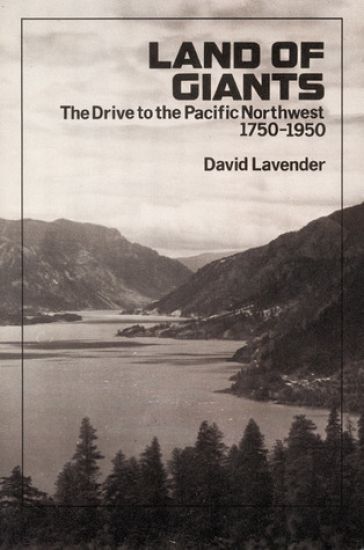
The exploration and conquest of the Pacific Northwest is the dominant theme of Land of Giants, a book which (in the words of William O. Douglas) "gives one a sense of participation in moulding the manifest destiny of America." English and Spanish seadogs seeking a northwest passage to the Orient were the first comers; then, following Bering's explorations, Russian fur traders descended on the Aleutians. In turn, the Lewis and Clark expedition, the activities of the great fur companies, and "Oregon fever" spurred on overland traffic westward; and as gold silver, and copper drew thousands more into the new land, railroads and steamship lines grew up to serve the mushrooming settlements. Land of Giants tells also of the tragic squeeze play on the Indians, the rise of the fishing and lumber industries, the development of modern power and reclamation projects, and the struggles of the conservationists to preserve natural resources and wild life. "Reading Land of Giants, we can believe that history trod here, that issues existed, that men schemed and dreamed and struggled, and so the present came to be."—A. B. Guthrie Jr., Saturday Review of Literature.A well-known Western historian, David Lavender is the author of more than twenty books, among them Bent's Fort, One Man's West, and most recently California: A Bicentennial History and Winner Take All: The Trans-Canada Canoe Trail.
In Let Me Be Free, David Lavender tells the tragic story of the Nez Perce struggle against annihilation. Encroaching settlers and violent disputes resulted in the Nez Perce War of 1877, a desperate attempt by Chief Joseph and his small band of Nez Perce Indians from the Wallowa Mountains of Oregon to elude strong forces of U.S. Cavalry and civilian volunteers and escape to Canada.