Kirjojen hintavertailu. Mukana 11 244 527 kirjaa ja 12 kauppaa.

Kirjahaku

Etsi kirjoja tekijän nimen, kirjan nimen tai ISBN:n perusteella.

1000 tulosta hakusanalla Elizabeth A. Cook

Concerning the Holy Ghost's Interpretation of J. Crew Catalogues
This visionary and innovative novel explores the intersections of representation, desire, prophecy, evangelism, and American consumerism, as it tracks the narrative contained in each photo spread of a J. Crew catalogue. The chorus of voices, the models, the photographer, the copywriter, as well its main consumer/observer--a US Senator's wife who is obsessed with breeding and bringing a golden calf from an American farm to Israel to bring on the apocalyptic end times--tell the tale of a world beginning to spin on a different axis.Elizabeth A.I. Powell is the author of The Republic of Self a New Issues First Book in Poetry Prize winner. Her second book of poems, Willy Loman's Reckless Daughter: Living Truthfully Under Imaginary Circumstances was a 2016 "Books We Love" in The New Yorker, a Small Press Best Seller, and won the 2015 Anhinga Robert Dana Prize.
Roger And Out

Roger And Out

Elizabeth A Gardener

Retired
2022
pokkari
"I'm Eleanor, and perhaps I should explain why I'm lying on your driveway poking a broom under your car..."Every day brings new experiences and new people to Eleanor and her loyal friend Joan. From the dishonest solicitor and his co-conspirator, to the deranged former girlfriend of another acquaintance who attempts to set the police on them, via a full cast of sleepwalking vicars, soffit-obsessed, gin-soaked former headmistresses and flatulent wolfhounds. Share Eleanor's journey in this delightful comic tale.
Tumors of the Intestines

Tumors of the Intestines

Elizabeth A. Montgomery; Rhonda K. Yantiss

American Registry Of Pathology
2017
sidottu
While many areas of intestinal tumour pathology are without controversy, the classification and nomenclature for appendiceal tumours remain a subject of debate. This volume offers information on the various divergent viewpoints where they exist for this topic and others.
Instructional Rounds in Education

Instructional Rounds in Education

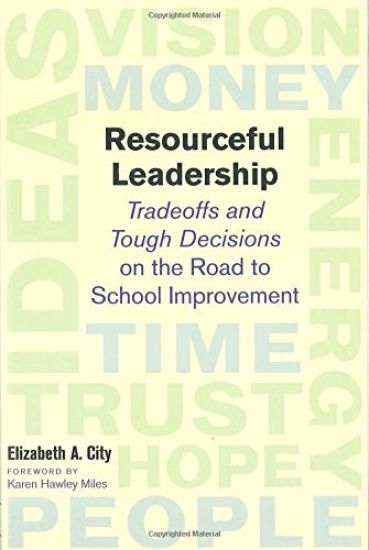
Elizabeth A. City; Richard Elmore; Sarah Fiarman; Lee Teitel

Harvard Educational Publishing Group
2009
nidottu
Walk into any school in America and you will see adults who care deeply about their students and are doing the best they can every day to help students learn. But you will also see a high degree of variability among classrooms—much higher than in most other industrialized countries. Today we are asking schools to do something they have never done before—educate all students to high levels—yet we don’t know how to do that in every classroom for every child. This book is intended to help education leaders and practitioners develop a shared understanding of what high-quality instruction looks like and what schools and districts need to do to support it. Inspired by the medical-rounds model used by physicians, the authors have pioneered a new form of professional learning known as instructional rounds networks. Through this process, educators develop a shared practice of observing, discussing, and analyzing learning and teaching.
Instructional Rounds in Education

Instructional Rounds in Education

Elizabeth A. City; Richard Elmore; Sarah Fiarman; Lee Teitel

Harvard Educational Publishing Group
2009
sidottu
Walk into any school in America and you will see adults who care deeply about their students and are doing the best they can every day to help students learn. But you will also see a high degree of variability among classrooms—much higher than in most other industrialized countries. Today we are asking schools to do something they have never done before—educate all students to high levels—yet we don’t know how to do that in every classroom for every child. This book is intended to help education leaders and practitioners develop a shared understanding of what high-quality instruction looks like and what schools and districts need to do to support it. Inspired by the medical-rounds model used by physicians, the authors have pioneered a new form of professional learning known as instructional rounds networks. Through this process, educators develop a shared practice of observing, discussing, and analyzing learning and teaching.
Look Again

Look Again

Elizabeth A. Trembley

Street Noise Books
2022
nidottu
“an inventive and introspective memoir . . . crafted with equal parts mystery, honesty, and empathy.” —Publishers WeeklyOnce, years ago, while walking her dogs in the woods, Elizabeth found a dead body. Trauma can make truth hard to find. Have you ever experienced a terror, grief, or confusion so great that when you try to share it you can only find shattered images floating in darkness? You try over and over, but can’t tell the story, to yourself or to anyone else. Look Again presents us with six variations of the same event, seen through the different lenses caused by other life revelations. It explores the fragmenting nature of trauma by tracing the convoluted evolution of the author’s story, a process often experienced by trauma sufferers and their loved ones.
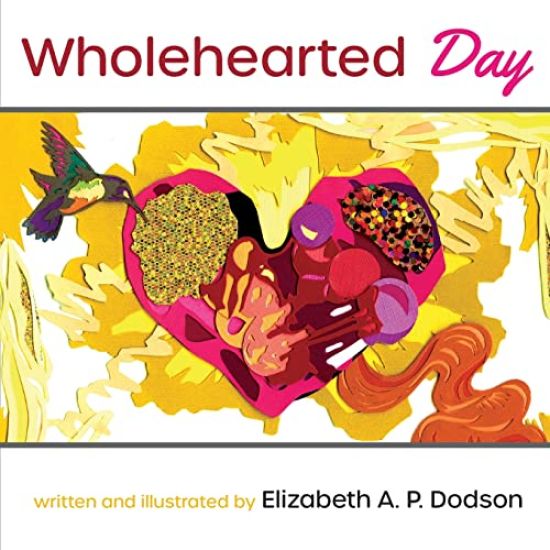
Wholehearted Day

Wholehearted Day

Elizabeth A P Dodson

Belle Isle Books
2022
sidottu
Take a journey through Wholehearted Day, a book that dually comforts guardians and children who face separation. Explore why we work and what it means to be apart. Dive deeper into concepts of curiosity, security, development-of-self, and contribution to society. Observe how small daily actions can create wonder-filled experiences with a person you greatly hold Let this tool curate a moment in time, a space, in which you can snuggle together to speak beautiful words, investigate intricate papercutting illustrations, and be reassured that your efforts are as important as your bond with each other. Discover hearts, symbols, and animals along the way 
Wholehearted Day

Wholehearted Day

Elizabeth A P Dodson

Belle Isle Books
2022
pokkari
Take a journey through Wholehearted Day, a book that dually comforts guardians and children who face separation. Explore why we work and what it means to be apart. Dive deeper into concepts of curiosity, security, development-of-self, and contribution to society. Observe how small daily actions can create wonder-filled experiences with a person you greatly hold Let this tool curate a moment in time, a space, in which you can snuggle together to speak beautiful words, investigate intricate papercutting illustrations, and be reassured that your efforts are as important as your bond with each other. Discover hearts, symbols, and animals along the way 
Intertextual Borrowing between 1 Peter and Hebrews

Intertextual Borrowing between 1 Peter and Hebrews

Elizabeth a Myers

Pistos Ktistes Publishing LLC
2020
sidottu
OVERVIEW: The literary relationship between 1 Peter and Hebrews has long been a topic of interest in New Testament studies. The presence of numerous verbal and conceptual parallels between the two books has raised intriguing questions about the nature of the intertextual relationship. Can this phenomenon be explained as mere coincidence or as independent reflections of a common milieu? Or might this be a case of literary borrowing by one of the authors? If so, who borrowed from whom? Scholars largely have acknowledged that 1 Peter and Hebrews exhibit a remarkable degree of parallelism, and even that one of the writings may have been significantly influenced in some way by the other. Nonetheless, there has been little support for the idea that the literary parallels between 1 Peter and Hebrews are the result of intertextual borrowing. Most NT scholars attribute the similarities to indirect sources of influence. However, the research methods employed in the past have proved neither comprehensive nor systematic, and the results are inconclusive. In this book, Elizabeth Myers presents a comprehensive systematic analysis of the literary parallels between 1 Peter and Hebrews that not only rectifies methodological shortfalls of previous studies, but also reveals the probable nature of the intertextual relationship. Through the rigorous application of an innovative assessment methodology which applies probability theory to specific features of the parallel texts, Myers clearly demonstrates that literary dependence between 1 Peter and Hebrews is highly probable and that the author of Hebrews is far more likely to be the borrower of parallel material. Thus Myers concludes with high confidence that the author of Hebrews very likely knew and used 1 Peter while crafting the epistle to the Hebrews. Such a conclusion raises important new questions about these two NT books, the answers to which may have far-reaching implications for exegetical study of both documents. KEY FEATURES: This book presents a practical application of the assessment methodology defined in "Probability of Intertextual Borrowing: A Methodology for Determining the Likelihood of Literary Dependence and the Direction of Borrowing between New Testament Books" by Elizabeth A. Myers (Pistos Ktistes Publishing LLC, 2020). It includes a brief survey of the history of scholarly opinion regarding the literary relationship between Hebrews and 1 Peter. In preparation for analysis, Myers first identifies a comprehensive list of literary parallels between 1 Peter and Hebrews, each of which satisfies specific pre-defined selection criteria for inclusion in the probability analysis. The book then clearly explains the procedure for applying the methodology, walks through the probability analysis with each successive parallel, and ultimately demonstrates a high probability that the author of Hebrews used 1 Peter as a source. The result establishes a basis from which to launch further research in related areas of study pertaining to 1 Peter and Hebrews. It helps delimit the proper historical context with respect to the range of dates during which the books could have been written; it provides justification for interpreting parallel passages in light of one another, as Hebrews most likely reflects the author's interpretation of 1 Peter; and it raises intertextual borrowing as an important consideration for evaluating variant readings in the Greek manuscript traditions of 1 Peter and Hebrews, as well as for identifying the particular sources of common quotations from the Old Testament. The front matter includes a list of contents, a list of 63 figures, a list of 41 tables, and a list of abbreviations. The back matter includes appendices with tables of supporting data from the analysis, a list of works cited, an extensive index of Scripture and other ancient sources, and an index of modern authors.
Intertextual Borrowing between 1 Peter and Hebrews

Intertextual Borrowing between 1 Peter and Hebrews

Elizabeth a Myers

Pistos Ktistes Publishing LLC
2020
pokkari
OVERVIEW The literary relationship between 1 Peter and Hebrews has long been a topic of interest in New Testament studies. The presence of numerous verbal and conceptual parallels between the two books has raised intriguing questions about the nature of the intertextual relationship. Can this phenomenon be explained as mere coincidence or as independent reflections of a common milieu? Or might this be a case of literary borrowing by one of the authors? If so, who borrowed from whom? Scholars largely have acknowledged that 1 Peter and Hebrews exhibit a remarkable degree of parallelism, and even that one of the writings may have been significantly influenced in some way by the other. Nonetheless, there has been little support for the idea that the literary parallels between 1 Peter and Hebrews are the result of intertextual borrowing. Most NT scholars attribute the similarities to indirect sources of influence. However, the research methods employed in the past have proved neither comprehensive nor systematic, and the results are inconclusive. In this book, Elizabeth Myers presents a comprehensive systematic analysis of the literary parallels between 1 Peter and Hebrews that not only rectifies methodological shortfalls of previous studies, but also reveals the probable nature of the intertextual relationship. Through the rigorous application of an innovative assessment methodology which applies probability theory to specific features of the parallel texts, Myers clearly demonstrates that literary dependence between 1 Peter and Hebrews is highly probable and that the author of Hebrews is far more likely to be the borrower of parallel material. Thus Myers concludes with high confidence that the author of Hebrews very likely knew and used 1 Peter while crafting the epistle to the Hebrews. Such a conclusion raises important new questions about these two NT books, the answers to which may have far-reaching implications for exegetical study of both documents. KEY FEATURES This book presents a practical application of the assessment methodology defined in "Probability of Intertextual Borrowing: A Methodology for Determining the Likelihood of Literary Dependence and the Direction of Borrowing between New Testament Books" by Elizabeth A. Myers (Pistos Ktistes Publishing LLC, 2020). It includes a brief survey of the history of scholarly opinion regarding the literary relationship between Hebrews and 1 Peter. In preparation for analysis, Myers first identifies a comprehensive list of literary parallels between 1 Peter and Hebrews, each of which satisfies specific pre-defined selection criteria for inclusion in the probability analysis. The book then clearly explains the procedure for applying the methodology, walks through the probability analysis with each successive parallel, and ultimately demonstrates a high probability that the author of Hebrews used 1 Peter as a source. The result establishes a basis from which to launch further research in related areas of study pertaining to 1 Peter and Hebrews. It helps delimit the proper historical context with respect to the range of dates during which the books could have been written; it provides justification for interpreting parallel passages in light of one another, as Hebrews most likely reflects the author's interpretation of 1 Peter; and it raises intertextual borrowing as an important consideration for evaluating variant readings in the Greek manuscript traditions of 1 Peter and Hebrews, as well as for identifying the particular sources of common quotations from the Old Testament. The front matter includes a list of contents, a list of 63 figures, a list of 41 tables, and a list of abbreviations. The back matter includes appendices with tables of supporting data from the analysis, a list of works cited, an extensive index of Scripture and other ancient sources, and an index of modern authors.
Authorship of 1 Peter and Hebrews

Authorship of 1 Peter and Hebrews

Elizabeth a Myers

Pistos Ktistes Publishing LLC
2020
pokkari
OVERVIEW: Who wrote the books of the New Testament? Does it matter? Some might argue that the identity of the authors is irrelevant in light of divine inspiration that is believed to underlie the biblical writings. In truth, however, questions concerning authorship are vitally important for biblical studies today. Assumptions made about the human authors influence, not only the perceived authenticity and authority of the writings, but also interpretation of the texts. Historical-critical methods of NT interpretation rely largely on the historical context from which the author writes, which is difficult to ascertain for books of uncertain authorship. Conclusive answers to questions of authorship, however, often are elusive. Authorship of Hebrews, in fact, is one of the greatest mysteries of the NT, and although apostolic authorship of 1 Peter was largely uncontested throughout the Christian era, recent studies claiming pseudonymous authorship have posed serious challenges to the traditional view. In this book, Elizabeth Myers offers a fresh perspective on authorship of 1 Peter and Hebrews by taking a new approach that allows important new evidence to emerge. Myers first demonstrates that the author of Hebrews very likely knew and used the letter 1 Peter while crafting the epistle to the Hebrews. The matter of authorship then comes to light by examining the relationship between the Hebrews author and his/her sources. Focusing on why the author used 1 Peter as a source and how the author came to be acquainted with the letter, Myers discovers new evidence which not only shows that the author of Hebrews understands 1 Peter as having been authored by the apostle, but also reveals a striking portrait of the elusive Hebrews author which narrows the large field of proposed authors to just one credible candidate. KEY FEATURES: Authorship of 1 Peter is illuminated by focusing on why the Hebrews author chose to use 1 Peter as a source. Hebrews bears witness to the authorship of 1 Peter through a trail of literary clues about how the author regards his/her sources, which leads to the conclusion that the author most likely understands 1 Peter as authentically apostolic. Authorship of Hebrews is addressed by focusing on how the author came to be acquainted with 1 Peter. This includes testing the hypothesis that the author was among the original recipients of 1 Peter. Hypothesis testing involves the use of detailed multi-faceted profiles of the original receiving community of 1 Peter, the original receiving community of Hebrews, and the author of Hebrews. Analysis shows that the hypothesis is not only plausible, but very likely. The author's identity is illuminated through construction of an identity profile that considers his/her status as an original recipient of 1 Peter, as well as his/her understanding of appropriated sources. The identity profile reveals distinguishing features of the author's lifetime and lifespan, educational background, vocation, geographic location when defining events occurred, and community affiliation, as well as the agent responsible for the author's evangelization and some important restrictions. The identity profile is used to evaluate 15 proposed candidates for fitness to be the author of Hebrews. The outcome delimits the proper historical context for exegetical study of 1 Peter and Hebrews. It narrows the range of dates during which the books could have been written and identifies the likely provenance, intended destination, and original recipients of both books. The front matter includes a list of contents, a list of 21 figures, a list of 44 tables, and a list of abbreviations. The back matter includes appendices with tables of supporting data from the analyses, a list of works cited, an index of Scripture and other ancient sources, and an index of modern authors.
Beyond Equivalence: Reconceptualizing Interpreting Performance Assessment

Beyond Equivalence: Reconceptualizing Interpreting Performance Assessment

Elizabeth A. Winston; Robert G. Lee; Christine Monikowski

GALLAUDET UNIVERSITY PRESS
2023
nidottu
There is a longstanding need for valid, reliable measurements of interpreting competence. Although rubrics and checklists are commonly used in both academic and employment settings, a review of available rubrics indicates that many do not focus on interpreting performance. Traditional metrics for sign language interpreting often conflate language proficiency with interpreting proficiency. Conflating fundamental aspects of language in use--vocabulary, grammar, and prosody-- with fundamental aspects of interpretation--content, intent, and monitoring--compromises the valid assessment of interpreting proficiency. Beyond Equivalence: Reconceptualizing Interpreting Performance Assessment argues for a shift toward more nuanced and evidence-based conceptualizations of interpreting, communication, and meaning to improve the creation and use of rubrics for assessment in interpreter education, certification, and professional development. This inaugural volume in the Currents series introduces a rubric and accompanying scale, which can be used to assess both simultaneous and consecutive interpreting performance in terms of both process and product, in both signed and spoken language interpreting, and in a variety of settings. Beyond Equivalence offers an appreciation of the multivarious nature of meaning in the interpreting process and presents a new paradigm for the measurement of interpreting proficiency.