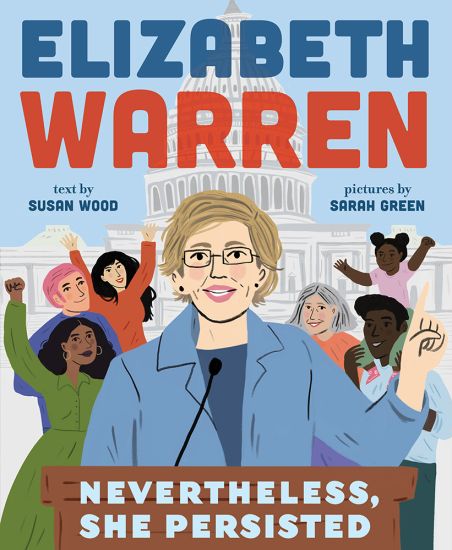
Elizabeth Warren shares the incredible story of the first female senator of Massachusetts. Elizabeth came from a struggling middle-class family in Oklahoma City. After a heart attack put Elizabeth’s father out of work, she helped out by babysitting, waitressing, and sewing, all while shining as a star member of her school’s debate team. Debate taught Elizabeth how to fight with her words, a skill that eventually won her a state championship and a college scholarship. As a lawyer and law professor, Elizabeth learned why it was so difficult for working-class families like her own to advance economically, and today she continues to fight (with her words) for the poor and middle-class in her role as a senator. Releasing in time for the 2018 election season, Elizabeth Warren emphasizes the importance of being outspoken—of using your words to fight for both yourself and for those who need your help.
"Elizabeth Singer Rowe and the Development of the English Novel" is the first in-depth study of Rowe's prose fiction. A four-volume collection of her work was a bestseller for a hundred years after its publication, but today Rowe is a largely unrecognized figure in the history of the novel. Although her poetry was appreciated by poets such as Alexander Pope for its metrical craftsmanship, beauty, and imagery, by the time of her death in 1737 she was better known for her fiction. According to Paula R. Backscheider, Rowe's major focus in her novels was on creating characters who were seeking a harmonious, contented life, often in the face of considerable social pressure. This quest would become the plotline in a large number of works in the second half of the eighteenth century, and it continues to be a major theme today in novels by women. Backscheider relates Rowe's work to popular fiction written by earlier writers as well as by her contemporaries. Rowe had a lasting influence on major movements, including the politeness (or gentility) movement, the reading revolution, and the Bluestocking society. The author reveals new information about each of these movements, and Elizabeth Singer Rowe emerges as an important innovator. Her influence resulted in new types of novel writing, philosophies, and lifestyles for women. Backscheider looks to archival materials, literary analysis, biographical evidence, and a configuration of cultural and feminist theories to prove her groundbreaking argument.