Kirjojen hintavertailu. Mukana 12 083 983 kirjaa ja 12 kauppaa.

Kirjahaku

Etsi kirjoja tekijän nimen, kirjan nimen tai ISBN:n perusteella.

1000 tulosta hakusanalla Ellen Fitzgerald

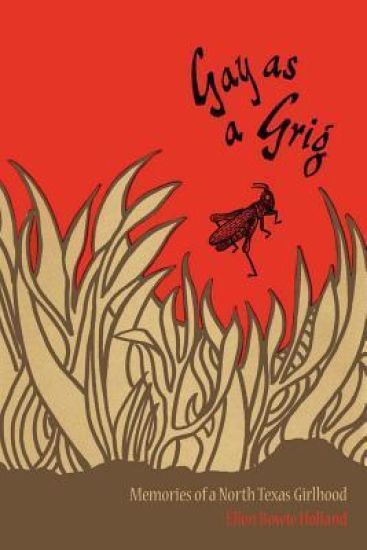
Gay As a Grig

Gay As a Grig

Ellen Bowie Holland

University of Texas Press
1963
nidottu
Ellen Bowie Holland grew up in a house at Weatherford, Texas, that had the "motherly look of a large and gallant hen hovering over too many chicks" and that was inhabited by a "lively, warm-hearted family." This book is her record of the "whole world of little things which enriched young lives" in her small town.Blessed with a discerning and sympathetic eye, she had much happiness to remember and record, and she employs a charming combination of nostalgia and comedy as she brings to life again these bygone days. Her childhood experiences are illuminated by the wisdom of maturity, and the whole is infused with a deft humor, developed through her skilled use of fantasy and through her ability to laugh at the pretensions of the Victorian life she saw.Holland's book also is memorable as a record of her unforgettable parents:"Mother was born on Columbus Day, and she and Columbus had a lot in common. She liked to discover things for herself and nothing pleased her more than to nicely finish off a job that she had been told could not be done" . . . "She wasn't geared for solitary musing. Like a salmon at spawning time she liked to swim upstream against rushing waters and bash into boulders" . . . "Mother's pattern of neatness reached out in all directions" . . . "Mother, sheathed like an armadillo" . . ."Father, silk-hatted, or swallow-tailed, distinguished almost beyond belief" . . . "I never heard him raise his voice or laugh aloud" . . . "Father was not witty but he had an absolutely delightful sense of nonsense. His humor came smoothly upon the scene" . . .Throughout the book the reader shares the author's consciousness of the vast distance between her own childhood and that of the grandchildren to whom the book is dedicated-a distance created by rapid technological change."From my window I look over an air-conditioned city and I see jets streaking across the sky and occasionally I hear one of them breaking the sound barrier" . . . "When I really want to awe myself I think about the fact that only one generation ago Mother saw friendly or marauding Indians roaming these same acres" . . . "Those of my age have come into a span of years where living conditions of all kinds have changed so abruptly, where obsolescence sets in so rapidly, that there is little in common between our infancy and our present."
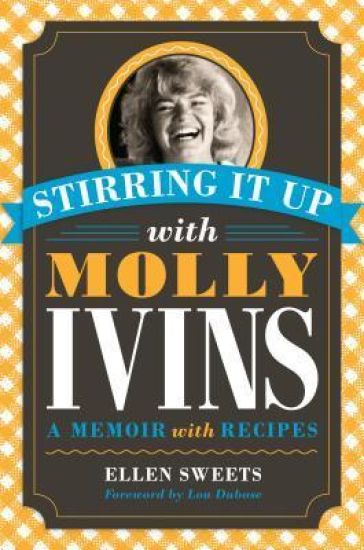
Stirring It Up with Molly Ivins

Stirring It Up with Molly Ivins

Ellen Sweets

University of Texas Press
2013
nidottu
You probably knew Molly Ivins as an unabashed civil libertarian who used her rapier wit and good ole Texas horse sense to excoriate political figures she deemed unworthy of our trust and respect. But did you also know that Molly was one helluva cook? And we're not just talking chili and chicken-fried steak, either. Molly Ivins honed her culinary skills on visits to France-often returning with perfected techniques for saumon en papillote or delectable clafouti aux cerises. Friends who had the privilege of sharing Molly's table got not only a heaping helping of her insights into the political shenanigans of the day, but also a mouth-watering meal, prepared from scratch with the finest ingredients and assembled with the same meticulous attention to detail that Molly devoted to skewering a political recalcitrant.In Stirring It Up with Molly Ivins, her longtime friend, fellow reporter, and frequent sous-chef Ellen Sweets takes us into the kitchen with Molly and introduces us to the private woman behind the public figure. She serves up her own and others' favorite stories about Ivins as she recalls the fabulous meals they shared, complete with recipes for thirty-five of Molly's signature dishes. These stories reveal a woman who was even more fascinating and complex than the "professional Texan" she enjoyed playing in public. Friends who ate with Molly knew a cultured woman who was a fluent French speaker, voracious reader, rugged outdoors aficionado, music lover, loyal and loving friend, and surrogate mom to many of her friends' children, as well as to her super-spoiled poodle. They also came to revere the courageous woman who refused to let cancer stop her from doing what she wanted, when she wanted. This is the Molly you'll be delighted to meet in Stirring It Up with Molly Ivins.
Medicine and the Saints

Medicine and the Saints

Ellen J. Amster

University of Texas Press
2013
nidottu
The colonial encounter between France and Morocco took place not only in the political realm but also in the realm of medicine. Because the body politic and the physical body are intimately linked, French efforts to colonize Morocco took place in and through the body. Starting from this original premise, Medicine and the Saints traces a history of colonial embodiment in Morocco through a series of medical encounters between the Islamic sultanate of Morocco and the Republic of France from 1877 to 1956.Drawing on a wealth of primary sources in both French and Arabic, Ellen Amster investigates the positivist ambitions of French colonial doctors, sociologists, philologists, and historians; the social history of the encounters and transformations occasioned by French medical interventions; and the ways in which Moroccan nationalists ultimately appropriated a French model of modernity to invent the independent nation-state. Each chapter of the book addresses a different problem in the history of medicine: international espionage and a doctor’s murder; disease and revolt in Moroccan cities; a battle for authority between doctors and Muslim midwives; and the search for national identity in the welfare state. This research reveals how Moroccans ingested and digested French science and used it to create a nationalist movement and Islamist politics, and to understand disease and health. In the colonial encounter, the Muslim body became a seat of subjectivity, the place from which individuals contested and redefined the political.
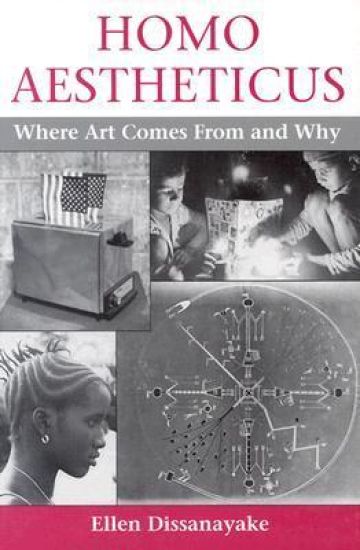
Homo Aestheticus

Homo Aestheticus

Ellen Dissanayake

UNIVERSITY OF WASHINGTON PRESS
1995
sidottu
"Dissanayake argues that art was central to human evolutionary adaptation and that the aesthetic faculty is a basic psychological component of every human being. In her view, art is intimately linked to the origins of religious practices and to ceremonies of birth, death, transition, and transcendence. Drawing on her years in Sri Lanka, Nigeria, and Papua New Guinea, she gives examples of painting, song, dance, and drama as behaviors that enable participants to grasp and reinforce what is important to their cognitive world."—Publishers Weekly"Homo Aestheticus offers a wealth of original and critical thinking. It will inform and irritate specialist, student, and lay reader alike."—American AnthropologistA thoughtful, elegant, and provocative analysis of aesthetic behavior in the development of our species—one that acknowledges its roots in the work of prior thinkers while opening new vistas for those yet to come. If you're reading just one book on art anthropology this year, make it hers."—Anthropology and Humanism
Walking the High Desert

Walking the High Desert

Ellen Waterston

University of Washington Press
2020
pokkari
Former high desert rancher Ellen Waterston writes of a wild, essentially roadless, starkly beautiful part of the American West. Following the recently created 750-mile Oregon Desert Trail, she embarks on a creative and inquisitive exploration, introducing readers to a "trusting, naïve, earnest, stubbly, grumpy old man of a desert" that is grappling with issues at the forefront of national, if not global, concern: public land use, grazing rights for livestock, protection of sacred Indigenous ground, water rights, and protection of habitat for endangered species.Blending travel writing with memoir and history, Waterston profiles a wide range of people who call the high desert home and offers fresh perspectives on nationally reported regional conflicts such as the Malheur Wildlife Refuge occupation. Walking the High Desert invites readers—wherever they may be—to consider their own beliefs, identities, and surroundings through the optic of the high desert of southeastern Oregon.
Jacob Lawrence

Jacob Lawrence

Ellen Harkins Wheat

University of Washington Press
1990
pokkari
For nearly five decades, Jacob Lawrence has been widely regarded as America’s most important black artist. His work is known throughout the world for its depiction of the black American experience from the Civil War to the civil rights movement and beyond. But Lawrence’s paintings are more than a chronicle of this history. He has created a uniquely American vision that affirms the place of all individuals in our society and honors the struggle for independence. Jacob Lawrence has given us powerful, lasting images which, when seen as a whole, constitute a narrative of epic proportions.This major book celebrates the creative genius of Jacob Lawrence. It is the most comprehensive survey ever made of his work and traces his developments as an artists as well as places his work within the tradition of American modernism. In this context it examines for the first time works he has completed since 1974, when he was honored with a retrospective at the Whitney Museum of Art.The paintings reproduced here illustrate a broad array of moods and subjects. Representing each of the artist’s significant periods, they range from fond portraits of Harlem street life in the 1930s to angry depictions of racial injustice during the 1960s, from images of people working in harmony to bleak depictions of civilization shattered by nuclear war. Yet together they reveal an essential unity in Lawrence’s work. His distinctive cubist-expressionist style and his basic humanist credo remain intact throughout fifty years of changing artistic fashion.The artist’s life encompasses a broad spectrum of experience that formed the character of three American generations. He was raised in the Depression, and his first art training was through social programs under FDR’s New Deal. In the late 1930s he was employed as a painter by the WPA, then served in the Coast Guard in World War II.From the start of his career, he achieved success and recognition in the competitive world of New York artists and galleries, all the time maintaining a powerful representational style that went counter to prevailing forces of Abstract Expressionism.Ellen Wheat examines Jacob Lawrence’s life as an integrated whole. She discusses the cultural and political grounding of 1930s Harlem, effects on artists of the Depression and New Deal, art in New York, all in relations to Lawrence’s long-standing commitment to depicting the history of black Americans and to the narrative series format he adopted to convey it. Among other subjects, he has dealt with Toussaint L’Ouverture, Harriet Tubman, the community of Harlem, the American South, Nigeria, civil rights, and John Brown. Wheat also documents and analyzes developments in the artist’s technique and style in relation to the work of some of his teachers and peers (Charles Alston, Claude McKay, Romare Bearden) and those who influenced his work (Orozco, Albers, Grosz, Giotto).Throughout these pages Lawrence speaks of his work and development in the first person. The author draws on her numerous interviews with the artist since 1982, as well as other sources. This chronological overview of Lawrence’s career is enhanced by over 150 illustrations of his work, 85 in color, and a generous selection of photos that place him in his studio, in the art world at large, and among his friends and colleagues.
What Is Art for?

What Is Art for?

Ellen Dissanayake

University of Washington Press
1990
pokkari
Every human society displays some form of behavior that can be called "art," and in most societies other than our own the arts play an integral part in social life. Those who wish to understand art in its broadest sense, as a universal human endowment, need to go beyond modern Western elitist notions that disregard other cultures and ignore the human species' four-million-year evolutionary history.This book offers a new and unprecedentedly comprehensive theory of the evolutionary significance of art. Art, meaning not only visual art, but music, poetic language, dance, and performance, is for the first time regarded from a biobehavioral or ethical viewpoint. It is shown to be a biological necessity in human existence and fundamental characteristic of the human species.In this provocative study, Ellen Dissanayake examines art along with play and ritual as human behaviors that "make special," and proposes that making special is an inherited tendency as intrinsic to the human species as speech and toolmaking. She claims that the arts evolved as means of making socially important activities memorable and pleasurable, and thus have been essential to human survival.Avoiding simplism and reductionism, this original synthetic approach permits a fresh look at old questions about the origins, nature, purpose, and value of art. It crosses disciplinary boundaries and integrates a number of divers fields: human ethology; evolutionary biology; the psychology and philosophy of art; physical and cultural anthropology; "primitive" and prehistoric art; Western cultural history; and children's art. The final chapter, "From Tradition to Aestheticism," explores some of the ways in which modern Western society has diverged from other societies--particularly the type of society in which human beings evolved--and considers the effects of the aberrance on our art and our attitudes toward art.This book is addressed to readers who have a concerned interest in the arts or in human nature and the state of modern society.
Homo Aestheticus

Homo Aestheticus

Ellen Dissanayake

University of Washington Press
1995
pokkari
"Dissanayake argues that art was central to human evolutionary adaptation and that the aesthetic faculty is a basic psychological component of every human being. In her view, art is intimately linked to the origins of religious practices and to ceremonies of birth, death, transition, and transcendence. Drawing on her years in Sri Lanka, Nigeria, and Papua New Guinea, she gives examples of painting, song, dance, and drama as behaviors that enable participants to grasp and reinforce what is important to their cognitive world."—Publishers Weekly"Homo Aestheticus offers a wealth of original and critical thinking. It will inform and irritate specialist, student, and lay reader alike."—American AnthropologistA thoughtful, elegant, and provocative analysis of aesthetic behavior in the development of our species—one that acknowledges its roots in the work of prior thinkers while opening new vistas for those yet to come. If you're reading just one book on art anthropology this year, make it hers."—Anthropology and Humanism
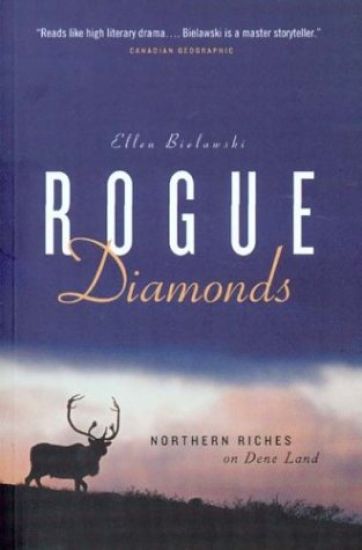
Rogue Diamonds

Rogue Diamonds

Ellen Bielawski

University of Washington Press
2004
pokkari
When geologist Chuck Fipke discovered diamonds on the Barren Grounds near Yellowknife in Canada's Arctic, international mining companies almost immediately began to stake claims to the minerals: pure "ice" diamonds untainted by bloodshed and war.These diamond lands are home to the Dene, Native peoples who have hunted, fished, and lived on these grounds since time immemorial. To mine these lands required the agreement of the First Nations, the Inuit, the mining company, and two levels of government. Ellen Bielawski was part of the negotiation team that painstakingly put together a deal to satisfy all involved, and Rogue Diamonds is her provocative and insightful telling of this intense time. From closed-door meetings in town to sacred ceremonies on the land, Bielawski weaves a thought-provoking story.
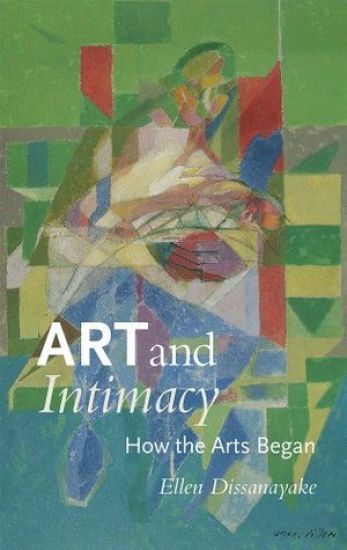
Art and Intimacy

Art and Intimacy

Ellen Dissanayake

University of Washington Press
2012
pokkari
To Ellen Dissanayake, the arts are biologically evolved propensities of human nature: their fundamental features helped early humans adapt to their environment and reproduce themselves successfully over generations. In Art and Intimacy she argues for the joint evolutionary origin of art and intimacy, what we commonly call love.It all begins with the human trait of birthing immature and helpless infants. To ensure that mothers find their demanding babies worth caring for, humans evolved to be lovable and to attune themselves to others from the moment of birth. The ways in which mother and infant respond to each other are rhythmically patterned vocalizations and exaggerated face and body movements that Dissanayake calls rhythms and sensory modes.Rhythms and modes also give rise to the arts. Because humans are born predisposed to respond to and use rhythmic-modal signals, societies everywhere have elaborated them further as music, mime, dance, and display, in rituals which instill and reinforce valued cultural beliefs. Just as rhythms and modes coordinate and unify the mother-infant pair, in ceremonies they coordinate and unify members of a group.Today we humans live in environments very different from those of our ancestors. They used ceremonies (the arts) to address matters of serious concern, such as health, prosperity, and fecundity, that affected their survival. Now we tend to dismiss the arts, to see them as superfluous, only for an elite. But if we are biologically predisposed to participate in artlike behavior, then we actually need the arts. Even -- or perhaps especially -- in our fast-paced, sophisticated modern lives, the arts encourage us to show that we care about important things.
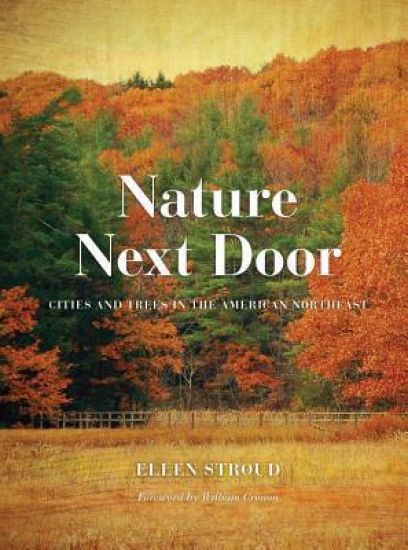
Nature Next Door

Nature Next Door

Ellen Stroud; William Cronon

University of Washington Press
2013
pokkari
The once denuded northeastern United States is now a region of trees. Nature Next Door argues that the growth of cities, the construction of parks, the transformation of farming, the boom in tourism, and changes in the timber industry have together brought about a return of northeastern forests. Although historians and historical actors alike have seen urban and rural areas as distinct, they are in fact intertwined, and the dichotomies of farm and forest, agriculture and industry, and nature and culture break down when the focus is on the history of Northeastern woods. Cities, trees, mills, rivers, houses, and farms are all part of a single transformed regional landscape.In an examination of the cities and forests of the northeastern United States-with particular attention to the woods of Maine, New Hampshire, Pennsylvania, and Vermont-Ellen Stroud shows how urbanization processes there fostered a period of recovery for forests, with cities not merely consumers of nature but creators as well. Interactions between city and hinterland in the twentieth century Northeast created a new wildness of metropolitan nature: a reforested landscape intricately entangled with the region's cities and towns.
Art and Intimacy

Art and Intimacy

Ellen Dissanayake

University of Washington Press
2015
sidottu
To Ellen Dissanayake, the arts are biologically evolved propensities of human nature: their fundamental features helped early humans adapt to their environment and reproduce themselves successfully over generations. In Art and Intimacy she argues for the joint evolutionary origin of art and intimacy, what we commonly call love.It all begins with the human trait of birthing immature and helpless infants. To ensure that mothers find their demanding babies worth caring for, humans evolved to be lovable and to attune themselves to others from the moment of birth. The ways in which mother and infant respond to each other are rhythmically patterned vocalizations and exaggerated face and body movements that Dissanayake calls rhythms and sensory modes.Rhythms and modes also give rise to the arts. Because humans are born predisposed to respond to and use rhythmic-modal signals, societies everywhere have elaborated them further as music, mime, dance, and display, in rituals which instill and reinforce valued cultural beliefs. Just as rhythms and modes coordinate and unify the mother-infant pair, in ceremonies they coordinate and unify members of a group.Today we humans live in environments very different from those of our ancestors. They used ceremonies (the arts) to address matters of serious concern, such as health, prosperity, and fecundity, that affected their survival. Now we tend to dismiss the arts, to see them as superfluous, only for an elite. But if we are biologically predisposed to participate in artlike behavior, then we actually need the arts. Even -- or perhaps especially -- in our fast-paced, sophisticated modern lives, the arts encourage us to show that we care about important things.
Nature Next Door

Nature Next Door

Ellen Stroud; William Cronon

University of Washington Press
2015
sidottu
The once denuded northeastern United States is now a region of trees. Nature Next Door argues that the growth of cities, the construction of parks, the transformation of farming, the boom in tourism, and changes in the timber industry have together brought about a return of northeastern forests. Although historians and historical actors alike have seen urban and rural areas as distinct, they are in fact intertwined, and the dichotomies of farm and forest, agriculture and industry, and nature and culture break down when the focus is on the history of Northeastern woods. Cities, trees, mills, rivers, houses, and farms are all part of a single transformed regional landscape.In an examination of the cities and forests of the northeastern United States-with particular attention to the woods of Maine, New Hampshire, Pennsylvania, and Vermont-Ellen Stroud shows how urbanization processes there fostered a period of recovery for forests, with cities not merely consumers of nature but creators as well. Interactions between city and hinterland in the twentieth century Northeast created a new wildness of metropolitan nature: a reforested landscape intricately entangled with the region's cities and towns.
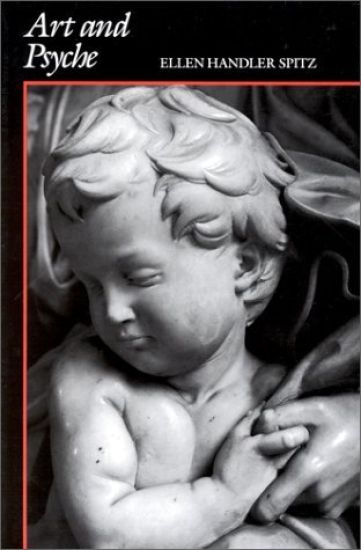
Art and Psyche

Art and Psyche

Ellen Handler Spitz

Yale University Press
1989
pokkari
In this provocative, closely argued book, Ellen Handler Spitz explores three principal psychoanalytic approaches to art. The first considers the relations between an artist’s life and work; the second focuses on the work of art itself; and the third encompasses the intricate relations between a work of art and its audience or beholders. To illustrate her theoretical discussion, Spitz draws on a variety of art forms, including painting, sculpture, literature, music, and dance. “No one who is concerned with the psychoanalytic study of art can afford to neglect [this book]; no one who cares about the art of psychoanalysis should ignore it.”—Aaron H. Esman, M.D., Journal of the American Psychoanalytic Association “This book … should prove fascinating to all who are concerned with works of art as expressions of the human mind and heart.”—Shehira Davezac, Hospital and Community Psychiatry “This book is highly recommended to all who enjoy the multiple applications of analytic thought to extend our senses.”—Jay Lefer, Journal of the American Academy of Psychoanalysis Ellen Handler Spitz holds degrees in art history, aesthetics, and education from Barnard College, Harvard University, and Columbia University. She was trained as a special candidate at the Center for Psychoanalytic Training and Research, Columbia University.
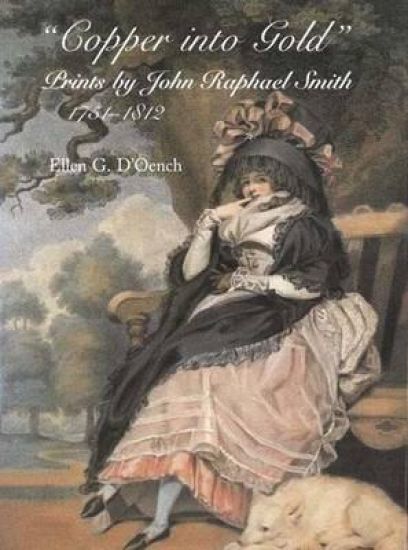
Copper into Gold

Copper into Gold

Ellen G. D´Oench

Yale University Press
1999
sidottu
A highly important figure in the late eighteenth-century British art world, John Raphael Smith was the most robust and prolific printmaker of his time. Smith not only produced nearly 400 prints—about 130 of his own design and the others by such noted British artists as Joshua Reynolds, George Romney, and Joseph Wright of Derby—he was also appointed "Mezzotinto Engraver" to the Prince of Wales and became an impresario of the print-publishing trade. This book is the first full-length study for nearly a hundred years of Smith’s remarkable career in printmaking. Ellen D’Oench investigates how Smith conducted his engraving and publishing business and what his prints, drawings, and paintings reveal about the culture and morality of the society that viewed them. She includes a chronological catalogue raisonné with newly discovered works, an inventory of his firm’s publications, and a catalogue of prints reproduced from his own original work. Along with full biographical information on Smith and his activities as an artist and publisher, D’Oench pays close attention to the contemporary art market, its operation, and the placement of Smith’s products within it. She details Smith’s fascination with female genre subjects and his use of printed images to both exploit and critique his culture’s manners and morals. Historians of paintings and prints, social and cultural historians, and scholars of women’s history will all find in this book an array of delightful illustrations and interesting material. Published for the Paul Mellon Center for Studies in British Art
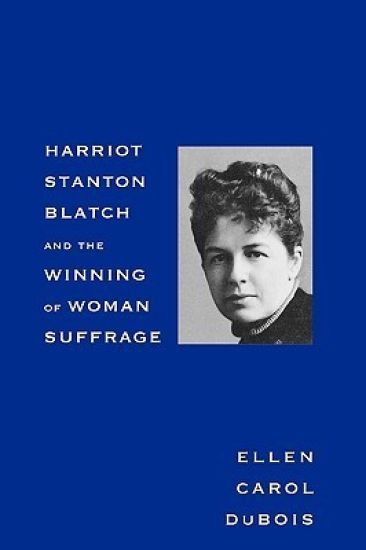
Harriot Stanton Blatch and the Winning of Woman Suffrage

Harriot Stanton Blatch and the Winning of Woman Suffrage

Ellen Carol DuBois

Yale University Press
1999
pokkari
Harriot Stanton Blatch (1856-1940), daughter of the famous suffragist Elizabeth Cady Stanton, played an essential role in the winning of woman suffrage in the United States. This powerfully written book is both a biography of Harriot Blatch and a new appraisal of the winning and aftermath of the American woman suffrage movement.Harriot Blatch’s dedication to the realization of woman suffrage, marked by a concern for social justice and human liberty, closely paralleled that of her mother. However, says Ellen DuBois, Blatch was also very much her own woman. For almost two decades, she put an ocean’s distance between her mother and herself, marrying an Englishman, raising a daughter in England, and absorbing the new political currents of Fabian socialism that helped her see the possibilities of a modern women’s rights movement. After her mother’s death in 1902, Blatch returned to the United States. There she expanded suffragism’s class basis, encouraged a more lively activist style, and brought a genuine political sensibility to the movement. And though she devoted herself to enfranchisement, she also envisioned feminism going further to encompass economic power and independence for women as well. DuBois tells the story of Blatch’s life and work, in the process reinterpreting the history and politics of the American suffrage movement and the consequences for women’s freedom.
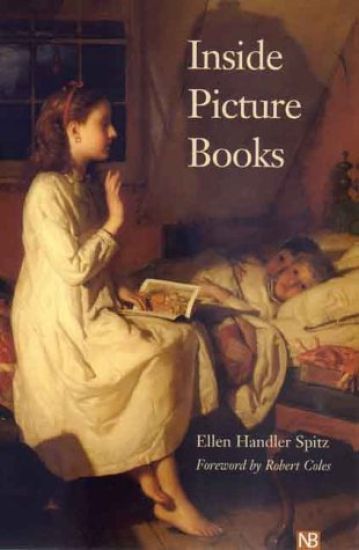
Inside Picture Books

Inside Picture Books

Ellen Handler Spitz

Yale University Press
2000
pokkari
Mention a name from a beloved childhood picture book—Madeline, Corduroy, Peter Rabbit, Max and his “wild things”—and most adults can recollect a bright image, fragments of a story, the timbre of a certain reading voice, the sensation of being held, and best of all being together with someone and enveloped in fantasy. Why do picture book images shown to us as young children linger in our minds? How do picture books shape our lives early on and even later into adulthood? This book takes up such questions. It explores the profound impact of the experience of reading to children. Ellen Handler Spitz reveals how classic picture books transmit psychological wisdom, convey moral lessons, shape tastes, and implant subtle prejudices.Each chapter of the book discusses well-known children’s books—Goodnight Moon, Babar, Little Black Sambo, to name a few—that deal with a theme of importance to young children. These include bedtime, separation, loss, and death; curiosity, disobedience, and punishment; and identity and self-acceptance. Focusing on the relationship between a child and an adult reader, Spitz explains the notion of “conversational reading” and emphasizes the mutual benefits of dialogue and intimacy. This book not only gives parents, grandparents, teachers, therapists, and scholars a new understanding of the meaning of picture books, it also empowers adults to interpret and choose future cultural experiences for their children.
Virtual Rivers

Virtual Rivers

Ellen Wohl

Yale University Press
2011
pokkari
Sparsely settled mountain areas of the world, such as Colorado’s Front Range, give an impression of wild, untouched, and unchanging nature. Yet in many cases mountain rivers that appear to be pristine natural systems actually have been impaired as a result of human activities. In this timely and accessible book, Ellen Wohl documents two hundred years of land-use patterns on the Front Range and their wide-ranging effects on river ecosystems. If we hope to manage river resources effectively and preserve functioning river ecosystems, the author warns, we must recognize how beaver trapping, placer mining, timber harvesting, flow regulation, road and railroad construction, recreation, cattle grazing, and other human activities have impaired rivers--and continue to do so. The rivers of the Colorado Front Range are representative of mountain rivers throughout the world: land-use patterns affecting their form and function are little-recognized or -understood. This book fills an important gap with a clear and comprehensive explanation of how rivers are changed by human activity and includes a generous selection of striking historical and contemporary photographs, maps, and diagrams.
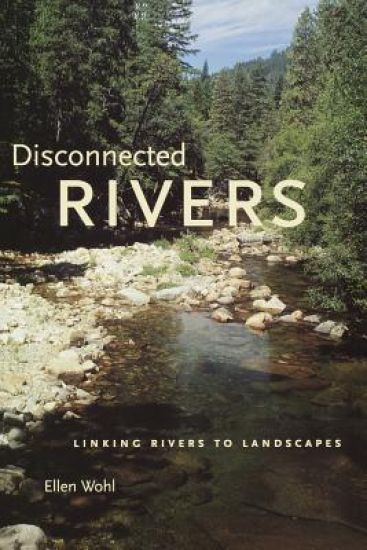
Disconnected Rivers

Disconnected Rivers

Ellen Wohl

Yale University Press
2012
pokkari
This important and accessible book surveys the history and present condition of river systems across the United States, showing how human activities have impoverished our rivers and impaired the connections between river worlds and other ecosystems.Ellen Wohl begins by introducing the basic physical, chemical, and biological processes operating in rivers. She then addresses changes in rivers resulting from settlement and expansion, describes the growth of federal involvement in managing rivers, and examines the recent efforts to rehabilitate and conserve river ecosystems. In each chapter she focuses on a specific regional case study and describes what happens to a particular river organism—a bird, North America’s largest salamander, the paddlefish, and the American alligator—when people interfere with natural processes.
Sincerity after Communism

Sincerity after Communism

Ellen Rutten

Yale University Press
2017
sidottu
A compelling study of “new sincerity” as a powerful cultural practice, born in perestroika-era Russia, and how it interconnects with global social and media flows The global cultural practice of a “new sincerity” in literature, media, art, design, fashion, film, and architecture grew steadily in the wake of the Soviet collapse. Cultural historian Ellen Rutten traces the rise and proliferation of a new rhetoric of sincere social expression characterized by complex blends of unabashed honesty, playfulness, and irony. Insightful and thought provoking, Rutten’s masterful study of a sweeping cultural trend with roots in late Soviet Russia addresses postsocialist, postmodern, and postdigital questions of selfhood. The author explores how and why a uniquely Russian artistic and social philosophy was shaped by “cultural memory, commodification, and mediatization,” and how, under Putin, “new sincerity” talk merges with transnational pleas to “revive sincerity.” This essential study stands squarely at the intersection of the history of emotions, media studies, and post-Soviet studies to shed light on a new cultural reality—one that is profoundly affecting creative thought, artistic expression, and lifestyle virtually everywhere.