Kirjojen hintavertailu. Mukana 11 699 587 kirjaa ja 12 kauppaa.

Kirjahaku

Etsi kirjoja tekijän nimen, kirjan nimen tai ISBN:n perusteella.

1000 tulosta hakusanalla Ernest T. Stringer

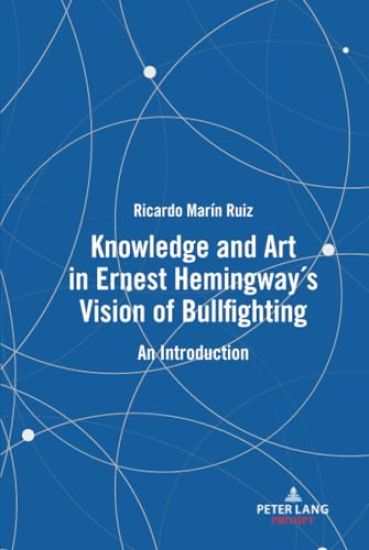
Knowledge and Art in Ernest Hemingway’s Vision of Bullfighting
The literary legacy of Ernest Hemingway is irredeemably linked to modern art and bullfighting. The American writer found in impressionism and cubism different pictorial techniques that he translated into narrative art. Bullfighting was one of the thematic cornerstones of his work and left an indelible print on his way of understanding life and death. The book connects these two important elements in Hemingway´s work, showing how he underlined certain aspects of bullfighting through the use of narrative strategies inspired in modern art. In this sense, it may be argued that Hemingway represents the fiesta almost using brushstrokes instead of words. The book also deals with one key element in his portrait of bullfighting, knowledge, and this in a twofold sense: on the one hand, shedding light on how Hemingway started to understand this tradition, and, on the other, revealing its condition of source of prestige and survival
The Diaries of Sir Ernest Mason Satow, 1861-1869
PUBLISHED BY EUREKA PRESS, TOKYO, AND DISTRIBUTED BY ROUTLEDGE OUTSIDE JAPAN.The scholar and diplomat Sir Ernest Satow was the best-known Westerner who lived in Meiji Japan. Although he rose to become British Minister to Japan, the most interesting part of his career was the start of it, when he witnessed, and in a small way influenced, the fall of the bakufu and the Meiji Restoration. He wrote an account of this in a memoir called A Diplomat in Japan in 1921, which was based on the diaries transcribed in this volume. These diaries, hitherto unpublished, reveal the original material from which he crafted his memoir, as well as the material (about one-third of the diaries in total) he omitted. In various respects, the memoir is a sanitized account, written partly in Bangkok in the 1880s, and completed in retirement at the urging of younger relatives. In A Diplomat in Japan, Satow comes across as an assured young statesman, who, with his excellent Japanese and ability to make contact with the key players, was able to perceive the direction that the turbulent and confused events he witnessed was taking. In the diaries, he is a little less assured and not quite so percipient and interspersed with tales of meeting the likes of Saigo Takamori and Sakamoto Ryoma, are stories such as that of the paternity claim against him by a Japanese woman in Nagasaki. The part of the diaries relating to Satow’s stay in China (Shanghai and Peking from January to August 1862) has never before been transcribed or published, and is the most interesting part on a human level. It was an environment in which Satow, aged just 18, was forced to grow up fast, and we see him and his fellow student interpreters behaving badly on numerous occasions. Yet we also see the breadth of his intellect in the books he was reading and his informed interest in everything he saw around him. The editors have added extensive annotations and explanations to these diaries, making this book an indispensable reference work for students of bakumatsu Japan, and indeed anybody who wants to understand the story of how a very young, very clever, but rather awkward Englishman could have penetrated the very highest levels of the Japanese hierarchy to witness the transformation of the country from a feudal, inward-looking society to one that would become a major industrialized power to shock the world.
The Diaries of Sir Ernest Mason Satow, 1906-1911 (ES 1 vol.)
The scholar and diplomat Sir Ernest Satow was the best-known Westerner who lived in Meiji Japan. Although he rose to become British Minister to Japan, the most interesting part of his career was the start of it, when he witnessed, and in a small way influenced, the fall of the Bakufu and the Meiji Restoration. He wrote an account of this in a memoir called A Diplomat in Japan, published in 1921.Satow was, however, both Japanophile and Sinophile. In 1906 at the age of 63 he was ready to retire, although he would have accepted a return to Tokyo if it had been offered. The Peking post had been a demanding job with long and arduous hours. He chose to reside at Beaumont House, Ottery St. Mary, near Exeter partly because it reminded him of family holidays in nearby Sidmouth, and partly to distance himself from London and the Foreign Office. Though he was not offered another post, the Foreign Office appointed him one of Britain’s representatives at the Second Hague Peace Conference in 1907. He was careful not to discuss his service with journalists, and gave the Rede lecture at Cambridge in 1908 on an historical subject, the career of the Austrian diplomat Hübner. Satow’s participation at the Hague helped to launch his second career in retirement as a specialist in international law, which was very much tempered with history in his case. Satow found time post-retirement to join in local activities such as magistrate, at both local and county levels. He put down deep roots in the Ottery community and was buried in the churchyard. He often saw old Japan friends and his English family came to stay frequently. He was careful of his health, and went for frequent walks with his dog, and took holidays when he could. The editor has added extensive annotations and explanations to these diaries, making this book an indispensable reference work for students of Satow’s life and times, as well as a snapshot album of rural England just after the turn of the century.
The Diaries of Sir Ernest Mason Satow, 1870-1883
PUBLISHED BY EUREKA PRESS, TOKYO, AND DISTRIBUTED BY ROUTLEDGE OUTSIDE JAPAN.The scholar and diplomat Sir Ernest Satow was the best-known Westerner who lived in Meiji Japan. Although he rose to become British Minister to Japan, the most interesting part of his career was the start of it, when he witnessed, and in a small way influenced, the fall of the Bakufu and the Meiji Restoration. This volume of his diaries continues the story up to the time when Satow leaves Japan for subsequent appointments in Bangkok, Montevideo and Tangier, before returning to Tokyo as Envoy Extraordinary and Minister Plenipotentiary in 1895. Although the years 1870-1883 were an interlude between the exciting years of the Bakumatsu and the promotion to Consul General in Bangkok, they give much detail of Satow’s journeys under difficult conditions including appalling weather in the interior of Japan, and a firsthand account of the Satsuma Rebellion which was beginning as Satow returned to Japan from Europe in January 1877. There is also an account of a visit to Korea in late 1878, and of the visit to Japan of the British royal princes Arthur and George in 1881. His two leaves in Europe reflect his cultural interests, though Japan is mentioned only occasionally. The editor has added extensive annotations and explanations to these diaries, making this book an indispensable reference work for students of early Meiji Japan, and indeed anybody who wants to understand the story of how a very young, very clever, but rather awkward Englishman could have penetrated the very highest levels of the Japanese hierarchy to witness the transformation of the country from a feudal, inward-looking society to one that would become a major industrialized power to shock the world.

The Diaries of Sir Ernest Mason Satow, 1900-1906 (ES 2 vols.)
The scholar and diplomat Sir Ernest Satow was the best-known Westerner who lived in Meiji Japan. Although he rose to become British Minister to Japan and China, the most interesting part of his career was the start of it, when he witnessed, and in a small way influenced, the fall of the Bakufu and the Meiji Restoration. He wrote an account of this in a memoir called A Diplomat in Japan, published in 1921.While Satow’s appointment as Minister to Tokyo in 1895 was understandable in terms of his background and skills, he was not the obvious choice for the Beijing (Peking) Embassy in 1900. He was also well aware that the China post would be more challenging, given Britain’s large commercial interests in the country, the large number of British residents and their dominance at the treaty ports. Satow arrived in China in late September 1900. After a brief stop in Shanghai, he moved up to Peking and began work. He was at first unable to present his credentials as minister, because the allies considered themselves at war with the court. So from September 1900 until January 1902 he was technically not the British minister but rather the British High Commissioner for negotiations leading to the settlement of claims arising from the Boxer uprising. Many issues of substance are to be found in these diaries: the negotiations for the Boxer Protocol of 1901, the status of the Peking Legation Quarter, the stationing of foreign troops in China for protection purposes, and the Chinese indemnity etc. Later Russo-Japanese tension over the Russian presence in Manchuria, and the Russo-Japanese War of 1904-05, receive much attention. Other important issues included missionary matters, railways and railway concessions, the Chinese Imperial Maritime Customs, and the British China Consular Service. The editor has added extensive annotations and explanations to these diaries, making this book an indispensable reference work for students of China at the start of the 20th century. For this edition Satow’s separate diary for the cottage at Ku-miao-tsun has also been included and annotated.