Kirjojen hintavertailu. Mukana 11 583 050 kirjaa ja 12 kauppaa.

Kirjahaku

Etsi kirjoja tekijän nimen, kirjan nimen tai ISBN:n perusteella.

1000 tulosta hakusanalla Ernst Probst

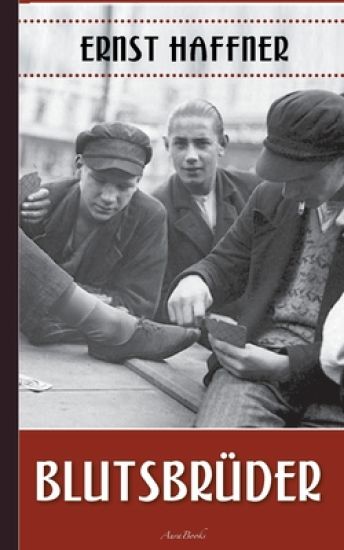
Ernst Haffner

Ernst Haffner

Ernst Haffner

Books on Demand
2021
pokkari
Ernst Haffner: Blutsbr der Neu lektorierte 2021er-Ausgabe, mit Fu noten Berlin, Anfang der 30er Jahre, kurz vor der Macht bernahme durch die Nazis: Auf den Stra en und Hinterh fen der Stadt sammeln sich Cliquen obdachloser Teenager und junger M nner, die auf dem nackten Pflaster der Gro stadt gestrandet sind. Sie kommen aus kaputten Familien, mit alkoholkranken M ttern, pr gelnden V tern, oder sind aus den ber chtigten F rsorgeanstalten geflohen. Eine schwere Wirtschaftskrise hat das Land im Griff, die Arbeitslosigkeit ist gewaltig. Die meist noch Minderj hrigen halten sich mit Gelegenheitsjobs, Kleinkriminalit t, manchmal auch mit Prostitution ber Wasser. Was die Jungs zusammenschwei t und am Leben h lt, ist ihre Gruppe, ihre Gang, die Blutsbr der. - Es ist die andere, unbekannte Seite der Medaille der in Literatur und Film oft als mond n und dekadent gezeichneten Goldenen Zwanziger.
Ernst Pasqué - Stimme & Feder

Ernst Pasqué - Stimme & Feder

Richard Weber-Laux

BoD - Books on Demand
2024
pokkari
"Was h lt uns frisch und jung? Arbeit und Erinnerung." Tauchen Sie ein in die faszinierende Welt von Ernst Pasqu , dem Multitalent der Bergstra e, dessen Wirken bis in die Gegenwart reicht. In "Ernst Pasqu - Stimme & Feder" entf hrt Sie Richard Weber-Laux auf eine inspirierende Reise durch das Leben eines Mannes, dessen Schaffen als Baritons nger und Schriftsteller die Musikwelt des 19. Jahrhunderts pr gte. Mit akribisch recherchierten, lebendigen Details und einer Hommage an Pasqu s Erbe, das pers nliche Briefe, Erz hlungen, Romane, M rchen und ber 60 Opern umfasst, l dt dieses Buch nicht nur Musikwissenschaftler und Geschichtsinteressierte ein, sondern auch all jene, die den Spuren eines gro en Ehrenb rgers - im wahrsten Sinne des Wortes, denn es gibt eine Wanderkarte - folgen m chten. Entdecken Sie die M rchenwelt von Ernst Pasqu , die Sch nheit und Tiefe seiner Leidenschaft f r Musik und was das bis heute mit der Bergstra e zu tun hat.
Ernst Specker Selecta

Ernst Specker Selecta

Gerhard Jäger; Hans Läuchli; Bruno Scarpellini; Volker Strassen

Birkhauser Verlag AG
1990
sidottu
Ernst Specker has made decisive contributions towards shaping direc­ tions in topology, algebra, mathematical logic, combinatorics and algorith­ mic over the last 40 years. We have derived great pleasure from marking his seventieth birthday by editing the majority of his scientific publications, and thus making his work available in a unified form to the mathematical community. In order to convey an idea of the richness of his personality, we have also included one of his sermons. Of course, the publication of these Selecta can pay tribute only to the writings of Ernst Specker. It cannot adequately express his originality and wisdom as a person nor the fascination he exercises over his students, colleagues and friends. We can do no better than to quote from Hao Wang in the 'Festschrift' Logic and Algorithmic I: Specker was ill for an extended period before completing his formal education. He had the leisure to think over many things. This experi­ ence may have helped cultivating his superiority as a person. In terms of traditional Chinese categories, I would say there is a taoist trait in him in the sense of being more detached, less competitive, and more under­ standing. I believe he has a better sense of what is important in life and arranges his life better than most logicians. We are grateful to Birkhauser Verlag for the production of this Selecta volume. Our special thanks go to Jonas Meon for sharing with us his intimate knowledge of his friend Ernst Specker.
Ernst Wilhelm Nay (German Edition)

Ernst Wilhelm Nay (German Edition)

Magdalene Claesges

Hatje Cantz
2012
sidottu
The three-volume catalogue raisonné of the works on paper by E. W. Nay (1902–1968) will provide art historians, art dealers, and every art lover with a long-awaited chance to survey Nay’s oeuvre and gain an understanding of his art.With more than six thousand watercolors, gouaches, and drawings, Nay’s works on paper far outnumber his oil paintings. He was an indefatigable artist who persistently put down on paper his ideas about form and color. The sheaves embody a “journal” of his work and allow the reader to draw conclusions about his work methods. While they document the processes behind his artistic activities and research, these works are at the same time autonomous creations. They impressively elucidate the artist’s ambition and development.
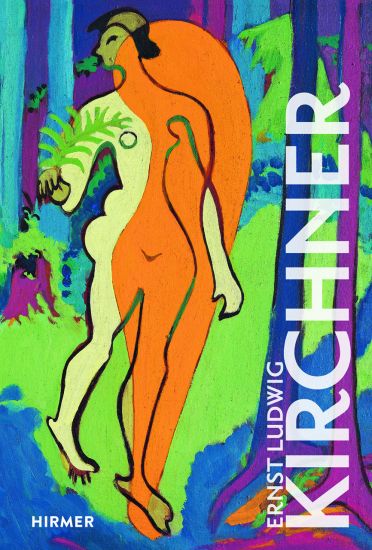
Ernst Ludwig Kirchner

Ernst Ludwig Kirchner

Thorsten Sadowsky

Hirmer Verlag
2018
sidottu
Ernst Ludwig Kirchner (1880 – 1938) is one of the most important artist personalities of the twentieth century; many of his works have become icons of Expressionism. Vacillating between self - doubt and egocentricity, the artist created an incomparably mult i - faceted oeuvre with a remarkable instinct for the trends and imbalances of his time. Kirchner was the driving force behind and the most radical member of the artists’ association “Die Brücke”. He embarked on a promising career which reached a first zeni th in the expressive works of his Berlin years. His ecstatic creative impulse was the result of one of the “loneliest times of my life, in which an agonising restlessness constantly drove me out by night and day.” Even after Kirchner had found a new home i n Davos in 1917, his life continued to be full of tension and marked by phases of mental instability and unbroken creative energy. Anxious to ensure the correct reception of his works, during these years Kirchner invented the art critic Louis de Marsalle a nd published reviews of his own works under this pseudonym. This colourful and fascinating artist personality is presented by Thorsten Sadowsky, the author of this volume, in a knowledgeable and lucid manner through examples of his works and the stations of his life
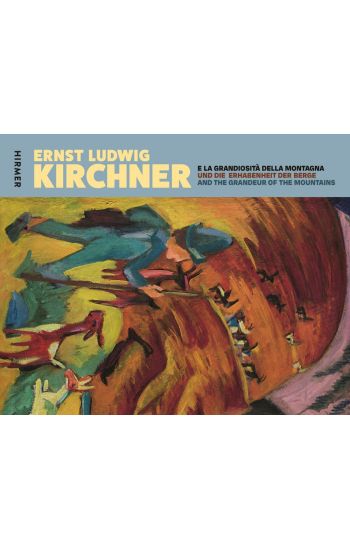
Ernst Ludwig Kirchner

Ernst Ludwig Kirchner

Gaia Regazzoni Jäggli

Hirmer Verlag
2021
sidottu
Ernst Ludwig Kirchner spent his last years between 1917 and 1938 recovering from a mental breakdown in Davos. The overwhelming impression of the Alps moved him to create colourful, visionary landscapes and paint the daily lives of the peasants. The publication shows vividly the significance of the mountain world as inspiration for Kirchner’s late works. After the artistic caesura during the years of the First World War, Kirchner regained new creative powers in Davos. Over a period of some twenty years he achieved a radical re-invention of his art. Starting from the painting Returning Herd of Goats from 1920 in the Fondazione Gabriele e Anna Braglia and by means of selected works from the Kirchner Museum Davos, the volume traces the artistic and personal development that Kirchner underwent as a result of his experience of the Alpine landscape and its inhabitants. Exhibition: Lugano | Fondazione Gabriele e Anna Braglia Languages: English, Italian, German
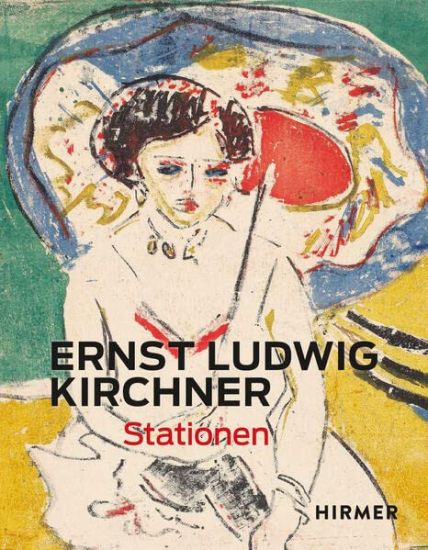
Ernst Ludwig Kirchner: Stationen
Wie schlagen sich Kirchners Lebensstationen, geographische Ver nderungen und neue Motivgruppen in seinem Werk nieder? Der reich bebilderte Band veranschaulicht den engen Zusammenhang von Orts- und Themenwechsel in seinem Oeuvre: Dresden als Impuls der Freiheit f r die k nstlerische Entwicklung des jungen Kirchner und Berlin als Inspiration f r seine ber hmten Stra enszenen, Fehmarn als Idylle einer Sehnsucht nach Einheit von Mensch und Natur, der erste Weltkrieg als Phase von Krise und Sanatoriumsaufenthalten und schlie lich Davos als neue Lebenswelt.
Ernst Platner (1744-1818)
ABHANDLUNGEN Werner Euler: Commercium mentis et corporis? Ernst Platners medizinische Anthropologie in der Kritik von Marcus Herz und Immanuel Kant Hans-Peter Nowitzki: Platner und die Wolffsche Philosophietradition Gideon Stiening: Platners Aufkl rung. Das Theorem der angeborenen Ideen zwischen Anthropologie, Erkenntnistheorie und Metaphysik Udo Thiel: Das "Gef hl Ich." Ernst Platner zwischen Empirischer Psychologie und Transzendentalphilosophie Falk Wunderlich: Ernst Platners Auseinandersetzung mit David Hume Temilo van Zantwijk: Platner, Kant und der Skeptizismus Jutta Heinz: "Eben so viel feine Beobachtungsgabe, als philosophischen Scharfsinn." Anthropologische Charakteristik in Platners Philosophischen Aphorismen Michael Ansel: Ernst Platner und die Popularphilosophie Simone De Angelis: Unbewu te Perzeptivit t und metaphysisches Bed rfnis. Ernst Platners Auseinandersetzung mit Haller in den Quaestiones physiologicae (1794) Udo Roth: "Es giebt eine gewisse Gattung des Wahnsinns, .] n mlich den verborgenen." Ernst Platner als Forensiker Alessandro Lazzari: Platner und Reinhold ber das Vergn gen Martin Bondeli: ber eine "Entdeckung" in der Psychologie. Reinholds Auseinandersetzung mit Platners Bemerkungen zur Geschichte des Seelenbegriffs Hans-Peter Nowitzki: Curriculum Vitae. Fundst cke und Nachtr ge zur Biographie Ernst Platners KURZBIOGRAPHIE Guido Naschert: Johann Georg Sulzer (1720-1779) DISKUSSION Volker Dieringer: Kants Theodizee-Aufsatz im Spiegel neuerer Arbeiten. Ein Forschungsbericht
Ernst Cassirers Phänomenologie der Wahrnehmung
Auf die Frage "Was ist Wahrnehmung und welche Rolle spielt sie f r die Objektivit t der Erfahrung?" h tte Ernst Cassirer vermutlich schlicht geantwortet: "Wahrnehmung ist eine erste Form objektiver Erfahrung." Tobias Endres macht es sich zur Aufgabe, Cassirers "Philosophie der symbolischen Formen" einer Neu- und Gesamtinterpretation zu unterziehen und sie als eine "Ph nomenologie der Wahrnehmung" auszulegen. In Auseinandersetzung mit klassischen und gegenw rtigen Wahrnehmungstheorien wie der Sinnesdatentheorie, dem Disjunktivismus oder dem Enaktivismus gelingt es dem Autor, die Aktualit t und Originalit t solch einer ph nomenologischen Wahrnehmungstheorie aufzuzeigen.
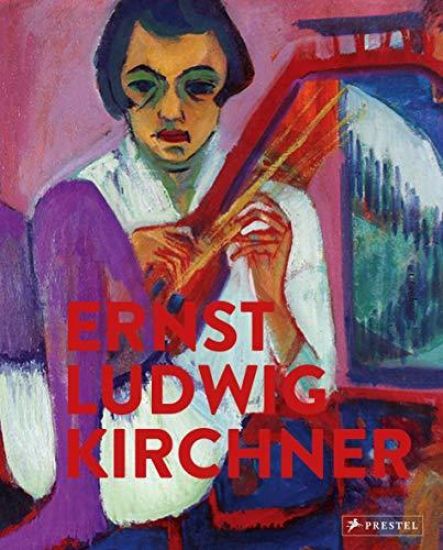
Ernst Ludwig Kirchner
Throughout Ernst Ludwig Kirchner’s career, one unifying theme emerges—the search for what he saw as unadulterated and primal. This volume explores the far-reaching influence of non-western art on Kirchner's oeuvre and the importance of his life in Davos, Switzerland, where he found a temporary peace despite the impending threat of censorship by the Nazis. Throughout the chapters of this book are reproductions of Kirchner’s paintings as well as his sculptures, woodcuts, sketches, drawings, textiles, carvings, and furniture. Archival material in the form of letters and diary entries offer an unprecedented look into the artist’s creative process. This study of one of the most talented and influential German Expressionist painters draws compelling conclusions about the influence of the imaginary on his work.
Ernst Ludwig Kirchner

Ernst Ludwig Kirchner

Ronald S. Lauder; Renee Price

Prestel
2019
sidottu
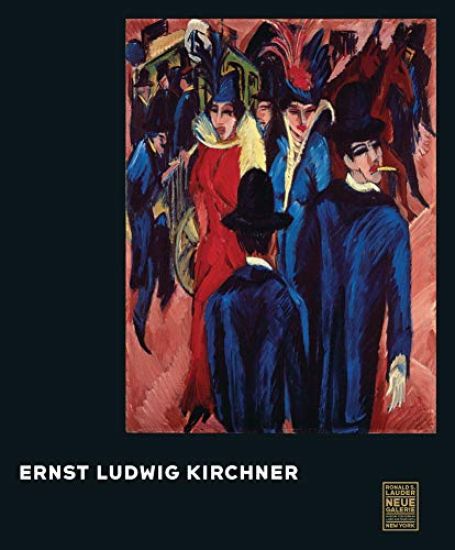
Throughout his career, Ernst Ludwig Kirchner employed a highly inventive and original use of colour. He favoured novel applications of paint in unusual matte finishes. For Kirchner, colour was of primary importance, coupled with technique and style. He was one of the leading Expressionist painters of the time and was one of the founding members of the Brücke. In his deeply personal depictions, he focused on the places where he lived and worked and his close friends and associates. This book, accompanying a major exhibition at the Neue Galerie New York, provides a visual survey of Kirchner’s oeuvre and offers an in-depth analysis of different aspects of the artist’s output. Essays by leading experts examine Kirchner’s approach to colour, his interest in the decorative arts, how electric light affected his treatment of colour, the impact of Nietzsche on his work, and how he was profoundly changed by World War I. This book includes illustrations of nearly 40 paintings, 30 prints, as well as drawings, sketchbooks, photographs, and decorative work.
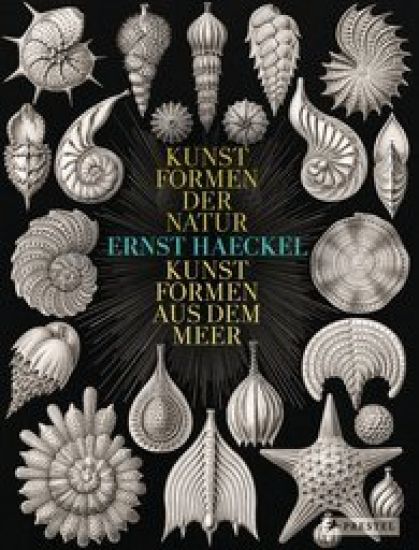
Ernst Haeckel: Art Forms in Nature: 22 Pull-Out Posters
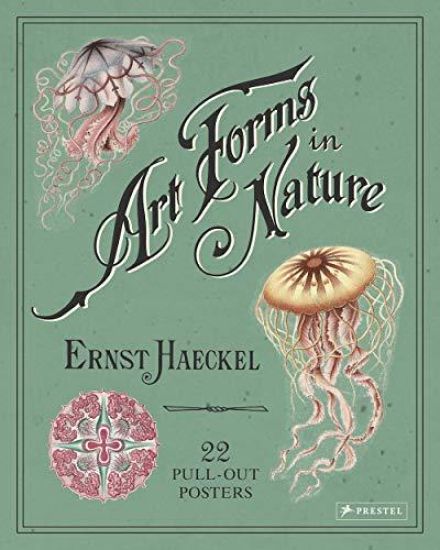
Perfect for display or close observation, the posters in this elegantly produced collection of Ernst Haeckel's exquisite illustrations of natural forms demonstrate his exceptional artistry. Biologist, physician, philosopher, and artist, Ernst Haeckel was also a prescient observer of the natural world. His highly detailed and expertly rendered illustrations, first published at the turn of the 20th century, are not only beautiful works of art, but also have scientific underpinnings. Now available as a series of large format posters sumptuously printed and suitable for framing, Haeckel's most elaborate and captivating works illustrate his fundamental notion of the unity of all living things. From otherworldly radiolaria to psychedelic sea anemones, Haeckel's science and artistry continue to provide inspiration for 21st-century illustrators, architects, graphic designers, and anyone interested in exploring nature's perfect geometry.
Ernst Haas

Ernst Haas

Phillip Prodger; Alex Haas

Prestel
2020
sidottu
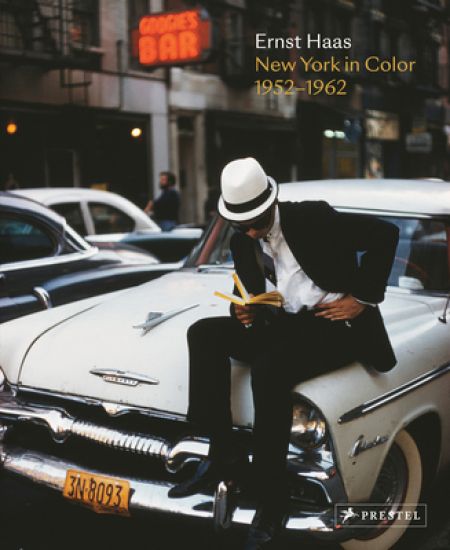
Ernst Haas’s color works reveal the photographer’s remarkable genius and remind us on every page why we love New York. When Haas moved from Vienna to New York City in 1951, he left behind a war-torn continent and a career producing black-and-white images. For Haas, the new medium of color photography was the only way to capture a city pulsing with energy and humanity. These images demonstrate Haas’s tremendous virtuosity and confidence with Kodachrome film and the technical challenges of color printing. Unparalleled in their depth and richness of color, brimming with lyricism and dramatic tension, these images reveal a photographer at the height of his career.
Ernst Haas

Ernst Haas

Paul Lowe

Prestel
2022
sidottu
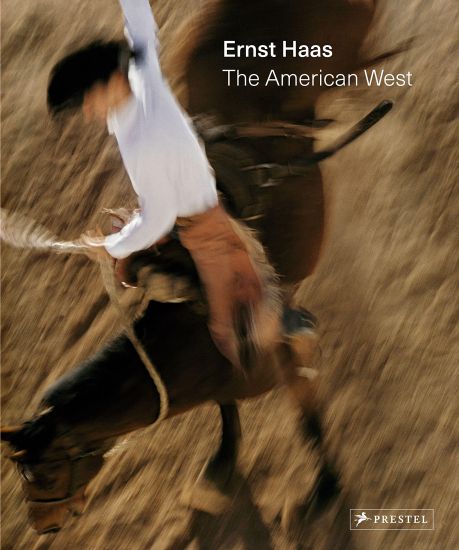
The photographer behind Life magazine’s first ever all-color photographic essay, Ernst Haas made—and captured—history as an early adopter of Kodachrome film. The Austrian-born artist had already established himself as a black and white photographer when he moved to America in 1951. But as a member of the renowned Magnum agency, he transformed the genre with his color-saturated images, the perfect medium for capturing America’s geographic and cultural landscapes. From desert storms, Route 66 gas stations, and Las Vegas neon to rolling prairie, dilapidated farms, small-town parades, and city sidewalks, Haas’ perfectly composed images, contain a distinct pictorial language, suffused with poetry, pattern, and light. At the same time his pictures communicate a journalist’s point of view, whether the subject is rural poverty, suburban comfort, or the myth of the American West. This remarkable book offers a vision of America that feels both poignantly distant and reassuringly familiar.