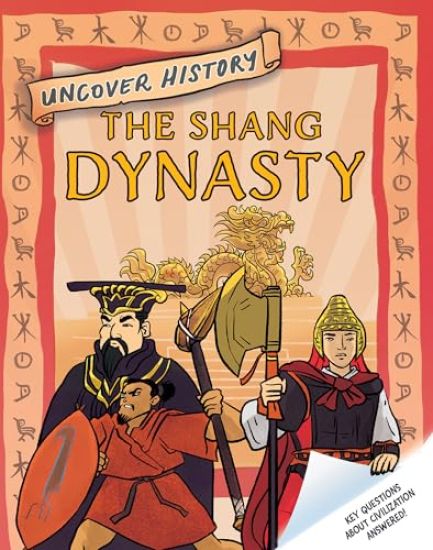
The Shang Dynasty was founded around 1600 BCE and lasted over 600 years From their home situated along the Yellow River Valley in China, the Shang Dynasty was led by around 29 different kings during this period. Discover how people during the Shang Dynasty lived each day, what jobs they had, how they traded, and learn how their many kings led their people through this colorful book. Readers will learn more about how people wrote and even how the Shang people fought wars throughout their long history.
The Shang Dynasty was founded around 1600 BCE and lasted over 600 years From their home situated along the Yellow River Valley in China, the Shang Dynasty was led by around 29 different kings during this period. Discover how people during the Shang Dynasty lived each day, what jobs they had, how they traded, and learn how their many kings led their people through this colorful book. Readers will learn more about how people wrote and even how the Shang people fought wars throughout their long history.
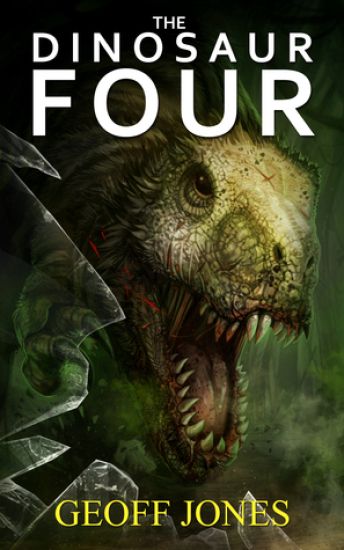
They came for the coffee and wound up in the Cretaceous. A ticking sound fills the air as Tim MacGregor enters The Daily Edition Caf , hoping to meet his new girlfriend for coffee. Moments later, a chunk of building is transported 67 million years back in time, along with everyone inside. Ten unlikely companions find themselves in a world of dinosaurs and prehistoric reptiles. Several survivors compete for leadership as they search for a way home, while one member of the group plots to keep them all trapped in the past...
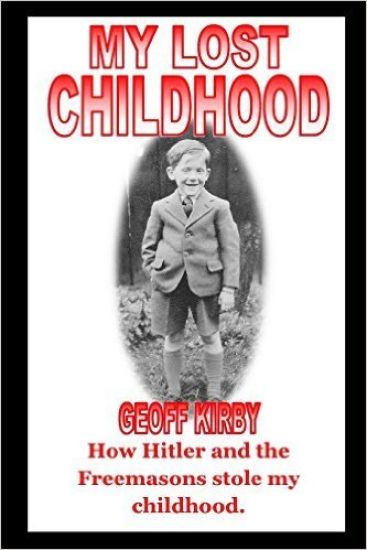
Geoff Kirby's 'Lost Childhood' started two weeks after the start of World War 2. He lived in North London throughout 'The Blitz' and later bombardment with 'Doodlebugs' and V2 missiles. On several occasions he was close to death; never more so than when his home was destroyed. But - his teddy bear survived being buried in rubble Geoff's parents organised a social club to build community spirit during the war. His father was a fancy dress fan. To see him dressed as a 'Hawaiian Maiden' wearing a flimsy grass skirt and a bra made of two saucepan lids and string whilst Luftwaffe bombs were dropping all around enthused his family and neighbours to be optimistic and cheerful.After the war there was no respite from misery as the terrible winter of 1947 very nearly bought wide scale famine to Britain with the expectation of over one million starved bodies needing to be stored in warehouses.Geoff's father died in 1949 and the worst possible outcome ensued when he was promptly locked up in an abusive boarding school run by Freemasons. The grotesque teachers beat pupils as young as eight with cricket bats, bullied them mercilessly for their physical deformities and even made them eat their own vomit. Geoff's life greatly improved in 1953 - the year of the Queen's coronation. This is Geoff's story of misery, happiness and survival in London in the 1940s and early 1950s.
"The Palm Springs Tales: Book Two: Down Mexico Way" is the second volume of a planned trilogy. Book One is a murder mystery and black comedy and Book Two begins a year after the climactic events that ended Book One. In the first chapter Beverly Pickle who is the narrator and principal character in Book One, awakes to find a gunny sack containing a decomposing head on his patio. Book Two is populated by many of the characters from Book One but also introduces some new ones. They include "Coco", an eighty five year old post operative transgendered showgirl who began life as "Bernie"; "Vivien", a drag queen from Mississippi; "Nigel", an overweight and over wrought Englishman with a speech impediment; "Pablo" or "el Loco", a very nasty Mexican drug lord; Tony, the very handsome half brother of Pablo and "Max", the gay head of a DEA unit. While the main plot ultimately relates back to Beverly's gruesome discovery and concerns a war between drug cartels, the story includes digressions involving different characters including a difficult and embarrassing side effect from Viagra, a disastrous finale at a performance of geriatric showgirls and a poolside barbeque gone terribly wrong. This is a funny romp with a dark side. It shows the lives and travails of some of Palm Springs more eccentric residents and follows in the footsteps of Armistead Maupin, Del Shores and Joe Keenan.
For Magicians Only... Geoff's THIRD set of lecture notes contains some KILLER, and surprisingly-easy-to-do, COMMERCIAL material. Something for absolutely EVERYBODY (from close-up to stage performers) at ALL skill levels: cards, coins, newspaper, rocks and LOTS of miscellaneous ideas & tips to improve what you already do and to make your performing life MUCH easier.Skill level required for most of the tricks: beginner to intermediate. There are NO second deals, one-handed top palms, multiple-coin classic palms or pipe dreams of ANY kind here. All effects are direct from Geoff's strolling, parlour and stage repertoires and are no nonsense, do-able, real-world workers that appear to be much harder than they really are I can assure you that magicians of all skill levels will have fun playing with the moves and ideas in these notes.This title can also fall under the following categories: Crafts & Hobbies, Education, Language Arts & Disciplines, Mathematics, Performing Arts, Psychology, Reference, Study Aids, Self-HelpYou can see performance videos of many of the effects at http: //GWilliamsMagic.wix.com/Videos
This book contains 15 amazing, easy-to-do close-up magic tricks: - make George Washington's face change VISUALLY on a dollar bill - have coins mysteriously travel from one hand to another - make a rubber band disappear right at your fingertips - do some truly astounding card tricks - link paper clips and a rubber band together INSTANTLY (while you're not even touching them) - see through solid cups All of the tricks use common items you have around the house: playing cards, coins, rubber bands, dollar bills, toothpicks and paper clips.Now you can have hours of fun performing some really amazing magic tricks for your friends and family This title can also fall under the following categories: Crafts & Hobbies, Education, Language Arts & Disciplines, Mathematics, Performing Arts, Psychology, Reference, Study Aids, Self-Hel
Everyone knows the extent of their crime...but only one man knows where they are.September 1975. Jim Miller and John Bellord, two wealthy men ofimpeccable character, fly to France and disappear without a trace.A blackmailed bishop, forgery, faked suicides, a multimillion pound fraud and many lives ruined as police, Interpol, the media and a psychic investigator join in a fruitless search for the two outlaws. Only Geoff Green knows where they are. He plans and executes their escape and finally gives them up following their hideaway year on remote Priest Island surviving a sub zero winter.This is his account of what they did, how they did it, and why heconfessed all. It is not only a crime adventure, but a personal story of total trust in a mesmerising mentor and his philosophy of life.
NO ADULT SUPERVISION is an updated compilation of Geoff's first two sets of lecture notes: "The Lecture Your Mother Never Gave You" and "The Lecture Your Father Never Gave You."Updated with lots of new text and illustrations, this book is filled with outstanding tricks, illusions, sleights and advice.Just a few of the highlights include: -- THE "I HATE DAVID COPPERFIELD" TRICK: Based on "Close-Up Illusion" by Larry Jennings, a card VISIBLY MELTS through another. The visuals here go WAY BEYOND the original.-- JUST A BIT MORE ULTIMATE THAN JOHN MENDOZA'S "ULTIMATE TORN & RESTORED CARD" You're clean at the first and clean at the end. As a bonus, it's SUPER EASY to do even though the card is SIGNED ON BOTH SIDES -- MIRACLE COIN VANISH: This gets GASPS from spectators. Looks like real magic.-- DEVASTATION: This might just be the BEST impromptu card trick ON THE PLANET Tom Daugherty's totally impossible card location that'll DEVASTATE your audience. Note: there's NOT ONE SLEIGHT in the entire trick Worth the price of this book MANY TIMES over.-- READY 2 LINK: A technique that makes the get-ready for Dan Harlan's Impromptu Linking Rubberbands SUPER EASY and TOTALLY INVISIBLE -- SHUFFLING STYLES FROM AROUND THE WORLD: A card is located after a series of shuffling demonstrations. Includes A TEACH-IN on the marvelous "Sybil" flourish cut (thanks to Chris Kenner) which is taught with a 5-card packet for ease of learning.-- 3CP: A wonderfully visual 3-coin production that is NOWHERE NEAR as hard as it looks.-- 4-WAY COINCIDENCE: A reworking of a stunning prediction routine by John Murray from "Card Cavalcade 3." Uses a borrowed, thoroughly-shuffled deck. There's only one real "move" (which is laughably simple).-- TWO OPENERS: A bottle production for stage or parlour (or even close-up).-- CARD IN POCKET: Al Koran's classic made even EASIER. Card palming made fun And LOTS, LOTS MORE 135 pages, 44 amazing tricks and sleights, 176 illustrations."I would like to say that I am a voracious reader of magic literature, reading hundreds of titles each year, and have found more usable material in your lecture notes than in any single source in recent memory."-- Christopher K."Got the set of notes in the mail yesterday. WOW I've been in magic for many years and rarely do I get excited about a lecture, but MAN, these notes are GREAT "-- Tommy J.You can see performance videos of many of the effects at GWilliamsMagic.wix.com/Videos
As the Second World War draws to a conclusion, Marek Poljovka, Mayor of Krupka, is faced with a problem. Krupka, a sleepy central European market town, is nominally under the control of the Third Reich. So far Marek has managed to maintain cordial relations with the occupying forces, personified by the urbane and charming Hauptmann Kristian Kreissl and his superior officer, the heroic and partially disabled war hero, Colonel Malz. Now that the tide of war is so clearly turning, Marek does not want his cooperation with the Germans to be construed as collaboration, the consequences of which he would prefer not to think about. Marek's efforts to handle the increasingly tricky situation are hardly assisted by the colourful local population, ranging from curse-happy witches through dim-witted partisans to plainly insane river pirates. Can Marek cope? Can he keep his dignity? Can he avoid being tied to a lamp post and shot?
Although Habermas has written about the cultural role of literature and about literary works, he has not systematically articulated a literary-critical method as a component of either communicative reason or post-metaphysical thinking. Habermas and Literature brings Habermasian concepts and categories into contact with aesthetic and cultural theories in and around the Frankfurt School, and beyond. Its central claim is that Habermas’ contribution to literary and cultural criticism is the concept of literary rationality and the notion that literature performs a key role in the formation of the modern social imaginary. Habermas and Literature maintains that literary works have “two faces” – discursive intervention in the public sphere and personal integration of imaginative disclosures – that depend upon two modalities of literary reception: critique and identification. It develops the resulting literary theory through detailed discussion of the theories advanced by Habermas, followed in each case by synthetic and reconstructive argumentation that brings the framework of communicative reason into dialogue with literary methods, aesthetic theories and psychoanalytic categories. It does so through close engagement with debates around aesthetic rationality, world disclosure, social imaginaries, post-secular society and the utopian demand for happiness articulated by artworks. In the process, the Habermasian position is critically reconstructed when necessary, with reference to psychoanalytic and literary theories, and tested, in relation to demanding fiction and popular works.
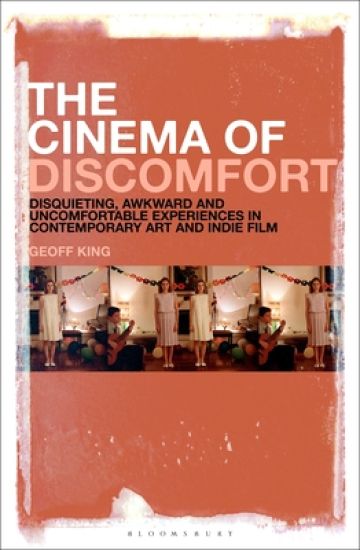
How do we understand types of cinema that offer experiences of discomfort, awkwardness or disquieting uncertainty? This book examines a number of examples of such work at the heart of contemporary art and indie film. While the commercial mainstream tends to offer comforting viewing experiences – or moments of discomfort that exist largely to be overcome – The Cinema of Discomfort analyses films in which discomfort is offered in a sustained manner. Cinema of this kind confronts us with material such as distinctly uncomfortable sexual encounters. It invites us into uncertain relationships with awkward and sometimes unlikable characters. It presents us with challenging behaviour or what are presented as uncomfortable realities. It often refuses information on which to base judgments. More discomfortingly, cinema of this kind tends to provoke uncertainty at the level of what emotional responses we are encouraged to have towards difficult, sometimes controversial, characters or events. The Cinema of Discomfort examines a number of case-studies, including Palindromes by Todd Solondz (US) and Dogtooth from Yorgos Lanthimos (Greece), along with other examples from Austria, Sweden, the UK, the US and Germany. Offering close textual analysis of the manner in which discomfort is generated, it also asks how we should understand the appeal of such work to certain viewers and how the existence of films of this kind can be explained, as products of both their socio-cultural context and the more particular institutional realms of art and indie film.
Although Habermas has written about the cultural role of literature and about literary works, he has not systematically articulated a literary-critical method as a component of either communicative reason or post-metaphysical thinking. Habermas and Literature brings Habermasian concepts and categories into contact with aesthetic and cultural theories in and around the Frankfurt School, and beyond. Its central claim is that Habermas’ contribution to literary and cultural criticism is the concept of literary rationality and the notion that literature performs a key role in the formation of the modern social imaginary. Habermas and Literature maintains that literary works have “two faces” – discursive intervention in the public sphere and personal integration of imaginative disclosures – that depend upon two modalities of literary reception: critique and identification. It develops the resulting literary theory through detailed discussion of the theories advanced by Habermas, followed in each case by synthetic and reconstructive argumentation that brings the framework of communicative reason into dialogue with literary methods, aesthetic theories and psychoanalytic categories. It does so through close engagement with debates around aesthetic rationality, world disclosure, social imaginaries, post-secular society and the utopian demand for happiness articulated by artworks. In the process, the Habermasian position is critically reconstructed when necessary, with reference to psychoanalytic and literary theories, and tested, in relation to demanding fiction and popular works.
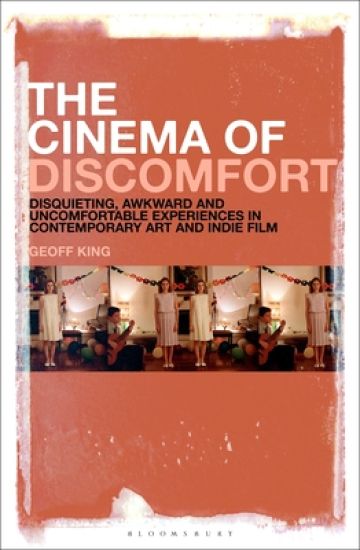
How do we understand types of cinema that offer experiences of discomfort, awkwardness or disquieting uncertainty? This book examines a number of examples of such work at the heart of contemporary art and indie film. While the commercial mainstream tends to offer comforting viewing experiences – or moments of discomfort that exist largely to be overcome – The Cinema of Discomfort analyses films in which discomfort is offered in a sustained manner. Cinema of this kind confronts us with material such as distinctly uncomfortable sexual encounters. It invites us into uncertain relationships with awkward and sometimes unlikable characters. It presents us with challenging behaviour or what are presented as uncomfortable realities. It often refuses information on which to base judgments. More discomfortingly, cinema of this kind tends to provoke uncertainty at the level of what emotional responses we are encouraged to have towards difficult, sometimes controversial, characters or events. The Cinema of Discomfort examines a number of case-studies, including Palindromes by Todd Solondz (US) and Dogtooth from Yorgos Lanthimos (Greece), along with other examples from Austria, Sweden, the UK, the US and Germany. Offering close textual analysis of the manner in which discomfort is generated, it also asks how we should understand the appeal of such work to certain viewers and how the existence of films of this kind can be explained, as products of both their socio-cultural context and the more particular institutional realms of art and indie film.
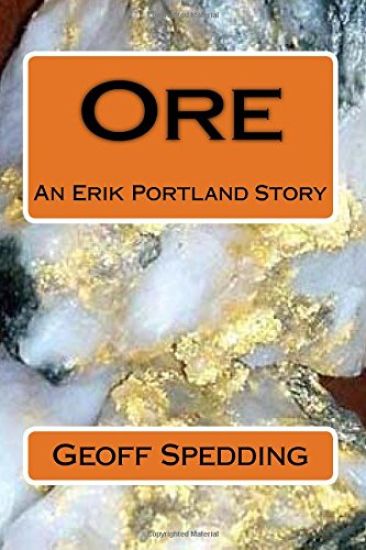
"Ore" is the third novel by Geoff Spedding set in Ulf, a little former gold-mining and timber-milling town in the hill country of Victoria, Australia. The main character of all three books is Erik Portland, a retired church pastor who ministers in an independent congregation in Ulf. In the first book, "Ulf" he becomes involed in, and solves, the mystery of a teenage girl who had been missing for fifteen years. In "Ash", the second novel, he solves the mystery surrounding the violent death of a young fire fighter during a wild fire which roars through teh village. In "Ore", Erik Portland is fishing in his favourite mountain stream when he makes a discovery which leads him on a hunt for gold in the high country above the village of Ulf. A new member of Erik's family is a small dog which becomes his companion as he searches the hills. Burglary, domestic violence, death threats and the re-emergence of a vengeful villain interrupt his seeking the golden treasure and there are times when his life is in jeopardy. Many of the characters from the first two books reappear in "Ore" to assist Erik Portland in his quest for gold and aid him when his life and property are endangered.