Kirjojen hintavertailu. Mukana 11 717 486 kirjaa ja 12 kauppaa.

Kirjahaku

Etsi kirjoja tekijän nimen, kirjan nimen tai ISBN:n perusteella.

1000 tulosta hakusanalla Georg Forster

Hans-Georg Gadamer

Hans-Georg Gadamer

Jean Grondin

Yale University Press
2011
pokkari
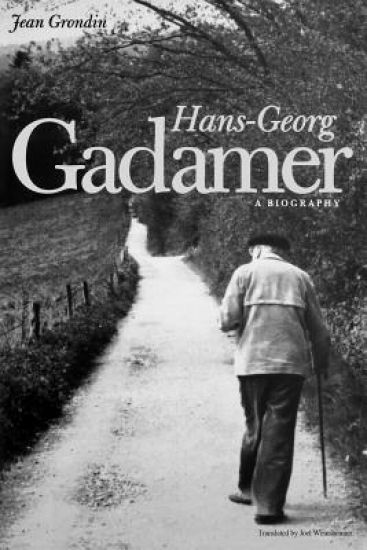
The first English-language biography of one of the leading intellectuals of the twentieth century Hans-Georg Gadamer (1900–2002) was one of the greatest philosophers of our era. He was also at the center of some of the century’s darkest, most complex historical events, for he chose to remain in his native Germany in the 1930s, neither supporting Hitler nor actively opposing him, but negotiating instead an “unpolitical” position that allowed him to continue his philosophical work. In this magisterial book, Jean Grondin appraises Gadamer’s life and achievement. Drawing on countless interviews with Gadamer and his contemporaries, Gadamer’s personal correspondence, and extensive archival research, Grondin traces Gadamer’s life as an academician and the development of his ideas, placing them in the context of his times. He sheds light on the genesis and accomplishment of Gadamer’s major opus, Truth and Method, the bible of modern-day hermeneutics. And he addresses the question of Gadamer’s attitude and actions amid the catastrophe of Nazi Germany, painting a balanced portrait of a scholar who tried to preserve German culture and tradition in the face of an invasive menace.
Hans-Georg Gadamer

Hans-Georg Gadamer

Karl Simms

Routledge
2015
sidottu
Hans-Georg Gadamer’s theory of hermeneutics is one of the most important modern theories of interpretation and understanding, and at its heart is the experience of reading literature. In this clear and comprehensive guide to Gadamer’s thought, Karl Simms:presents an overview of Gadamer’s life and works, outlining his importance to hermeneutic theory and its place in literary studiesexplains and puts into context his key ideas, including ‘dialogue’, ‘phronesis’, ‘play’, ‘tradition’, and ‘horizon’shows how Gadamer’s ideas have been influential in the interpretation of literary textsexplains Gadamer’s debates with key contemporaries and successors, such as Habermas, Ricoeur and Derridaprovides detailed suggestions for further reading.With a significance that crosses disciplinary boundaries from cultural studies, literary theory and philosophy through to history, music and fine arts, Gadamer’s pioneering work on hermeneutic theory remains of crucial importance to the study of texts in the humanities.
Hans-Georg Gadamer

Hans-Georg Gadamer

Karl Simms

Routledge
2015
nidottu
Hans-Georg Gadamer’s theory of hermeneutics is one of the most important modern theories of interpretation and understanding, and at its heart is the experience of reading literature. In this clear and comprehensive guide to Gadamer’s thought, Karl Simms:presents an overview of Gadamer’s life and works, outlining his importance to hermeneutic theory and its place in literary studiesexplains and puts into context his key ideas, including ‘dialogue’, ‘phronesis’, ‘play’, ‘tradition’, and ‘horizon’shows how Gadamer’s ideas have been influential in the interpretation of literary textsexplains Gadamer’s debates with key contemporaries and successors, such as Habermas, Ricoeur and Derridaprovides detailed suggestions for further reading.With a significance that crosses disciplinary boundaries from cultural studies, literary theory and philosophy through to history, music and fine arts, Gadamer’s pioneering work on hermeneutic theory remains of crucial importance to the study of texts in the humanities.

Hans-Georg Gadamer on Education, Poetry, and History
In these essays, appearing for the first time in English, Gadamer addresses practical questions about recent politics in Europe, about education and university reform, and about the role of poetry in the modern world. This book also includes a series of interviews that the editors conducted in 1986. Gadamer elaborates on his experiences in education and politics, touching on the collapse of the Weimar Republic, the early Frankfurt School, Heidegger and the Nazis, university life in East Germany, and the prospects for Europe in the coming years.Hans-Georg Gadamer was probably Heidegger's leading interpreter in Germany, and in the 1950s and 1960s he became the world's leading exponent of hermeneutics. His hermeneutical theory explains how it is that ancient art and philosophy still speak to us today. His influential idea of the "fusion of horizons" also shows how it is that we understand what is remote form our own culture.