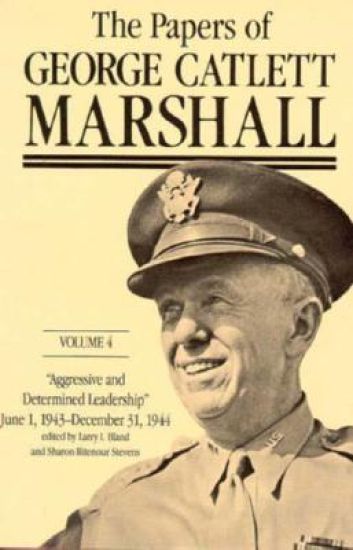
Army Chief of Staff George C. Marshall's Pentagon office was the nerve center for United States ground and air forces during World War II. This fourth volume of The Papers of George Catlett Marshall covers the nineteen months that constituted the heart of American participation in the war, a period during which Marshall was operating at the peak of his abilities as a politician, strategist, and coordinator. Marshall was undoubtedly disappointed in late 1943 not to be chosen Supreme Allied Commander in Europe-a job that would have been granted to him had he demanded it. But many people, including President Roosevelt, considered him too important to America's war effort and to the alliance to move him out of Washington, D.C. As the documents in this volume demonstrate, Marshall directed great energy at maintaining and strengthening the crucial Anglo-American alliance through his participation in the great wartime decision-making conferences at Quebec, Cairo, and Teheran, and through his perseverance over strategic direction. This volume also reveals Marshall's efforts to maintain the alliances of army and navy services, ground and air forces, regular and reserve components, home front and combat theaters, military and civilian, and Pentagon and Congress. Army personnel increased to eight million by the end of these nineteen months, and Marshall moved vigorously to complete the creation, training, and transportation of combat units. He continually faced problems of logistics and shipping, research and development, finding exceptionally able leaders, and supplying support personnel. All the while, Marshall was planning for the postwar military by advocating Universal Military Training and a unified Department of Defense. "You are doing a grand job," he told General Eisenhower at the end of 1944, "go on and give them hell." The same might have been said of Marshall himself.
The two years covered in the fifth volume of The Papers of George Catlett Marshall were among the most momentous in the life of Army Chief of Staff George C. Marshall-and in the course of the twentieth century. A year of transitions for Marshall, 1945 witnessed the final assault on Nazi Germany and the use of atomic weapons against Japan. Allied forces under the command of Marshall's protege, Dwight D. Eisenhower, had contained Hitler's Ardennes offensive at the beginning of the year and launched the final drive to smash the German regime. The war against Japan seemed far from over, however, and Marshall was deeply involved in planning for the massive and difficult redeployment of troops and materials from Europe to the Pacific. The debate with the U.S. Navy over supreme command of the invasion of Japan continued through the first six months of the year until Marshall secured Douglas A. MacArthur's appointment. In May and June, the chief of staff was involved in the decision to use the new atom bomb. Military-related political problems continued to consume much of Marshall's time as the Second World War drew to a close, although he was only peripherally involved in the Big Three conferences at Yalta and Potsdam. Instead, demobilization and readying U.S. Army ground and air forces for the postwar era were Marshall's chief concerns. He pressed for a unified military department against navy opposition and also lobbied incessantly for universal military training for all physically fit eighteen-year-old males as the key element in the nation's military readiness and deterrent value. After the fighting ceased, Marshall expected to retire, having served on active duty since 1902, but President Truman kept him in office until late November 1945. The day after his retirement, the president asked him to go to China to mediate in that country's increasingly violent civil war. Despite his initial success in negotiating a cease-fire between the Nationalists and Communists, irreconcilable differences soon led to renewed fighting. Marshall's continued hopes for achieving a political compromise, along with knowledge that his mission was the only hope for avoiding a disaster in China, kept him in the country until early 1947. He returned to the United States only when the president announced that General Marshall would join his cabinet as secretary of state.From The Papers of George Catlett Marshall "The one great element in continuing the success of an offensive is maintaining the momentum. This was lost last fall when shortages caused by the limitation of port facilities made it impossible for us to get sufficient supplies to the armies to continue their sweep into Germany when they approached the German border. Once additional ports had been captured and reopened there was a shortage of rail and transportation facilities with which to get supplies forward. Now the port facilities and the interior supply lines are adequate. Subject to the worldwide shortage of both cargo and personnel shipping, there is no foreseeable shortage which will be imposed by physical events in the field."-Speech to the Overseas Press Club, March 1, 1945 "Today we celebrate a great victory, a day of solemn thanksgiving. My admiration and gratitude go first to those who have fallen, and to the men of the American armies of the air and ground whose complete devotion to duty and indomitable courage have overcome the enemy and every conceivable obstacle in achieving this historic victory."-Marshall V-E Day Radio Address, May 8, 1945 "Just a few months ago the world was completely convinced of the strength and courage of the United States. Now they see us falling back into our familiar peacetime habits. They witness the tremendous enthusiasm with which we mount demobilization and reconversion, but they see as yet no concrete evidence that we are determined to hold what we have won-permanently. Are we already at this early date inviting that same international disrespect that prevailed before this war? Are we throwing away today what a million Americans died or were mutilated to achieve? Are we already shirking the responsibility of the victory?"-Speech to the New York Herald Tribune Forum, October 29, 1945
During his lifetime, George Grant influenced a broad cross-section of Canadians, urging them to think more deeply about matters of social justice and individual responsibility. He wrote on subjects as diverse as technology, abortion, Canadian politics and nationalism, and the war in Vietnam, and was claimed equally by rightist and leftist causes. Now, more than a decade after his death, George Grant's writings continue to stimulate, challenge, and inspire. Grant's legacy includes six books and more than two hundred articles, as well as numerous broadcast transcripts, extensive correspondence, and a wealth of unpublished lectures, essays, and notes. In this volume, Arthur Davis has collected all the important material from the 1950s when Grant did his first teaching and writing at Dalhousie University. Through this projected eight-volume series, Grant's published and unpublished writings, including his complete correspondence, will be brought together for the first time. The texts are annotated, and each volume includes an introduction to the period that it covers. The series will not only make it possible to see the whole pattern of Grant's thought, but will also invite a reconsideration of the nature and importance of his work. George Grant is one of the most important Canadian philosophers of the later twentieth century, and his collected writings are a significant contribution to Canadian political thought and Canadian history.
In this autobiography of his early life (1800-1834), George Bentham, nephew of the great Utilitarian philosopher Jeremy Bentham, offers a lively depiction of the times, both in England and on the Continent, particularly of post-Napoleonic France, where he lived with his family for twelve years. Returning to London as his uncle Jeremy's assistant, he recounts his experiences in this role and his encounters with many of the leading, and the rising, figures of the day, such as Alexander von Humboldt and John Stuart Mill. An emerging figure himself in the field of botany - where he would prove to be one of the great taxonomists of the century - George Bentham worked creatively for the scientific societies he joined, activity that culminated in his becoming an unofficial ambassodor-at-large at scientific congresses in Europe in the 1830s, which he describes in enthusiastic detail. The text of the manuscript, preserved in the Archives of the Royal Botanic Gardens, Kew, is published here for the first time, with an introduction providing historical context, explanatory notes, and indexes of plant names and of persons and works mentioned. A fascinating story in itself, this autobiography provides a new resource for Utilitarian studies and for historians of science.
George Grant (1918-1988) is widely regarded as one of Canada's most influential philosophers and political theorists. His best-known work, Lament for a Nation (1965), presented a radical reinterpretation of Canadian history and inspired a surge of nationalist sentiment across the country. Along with Grant's other books, it addressed the major cultural shifts and dilemmas of our age, and introduced several generations of students to the basic questions of political philosophy. This study aims to guide the reader toward a clearer understanding of Grant's thought. Focusing on his six short books and some of his most significant articles and speeches, Hugh Donald Forbes provides both an introduction to and an overview of Grant's career and his many contributions to the fields of political science, philosophy, religion, and Canadian studies. Throughout Forbes sheds light on some of Grant's more contradictory and complex ideas, and provides an assessment of his impact on the Canadian political and cultural landscape. Forbes also relates Grant's work to that of three disparate and controversial European thinkers - Martin Heidegger, Leo Strauss, and Simone Weil - providing contexts and comparisons outside of the strictly Canadian framework in which he is normally situated. Comprehensive and lucidly written, George Grant: A Guide to His Thought is an invaluable resource for students, general readers, and academic specialists alike.
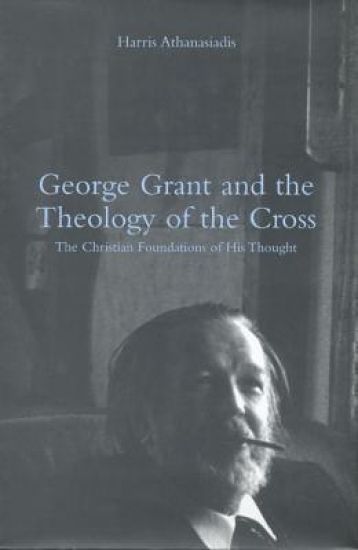
George Grant is considered by many to be Canada's foremost political philosopher. But while his sweeping criticisms of technological globalization may be well known, the religious passion that informed his thought has been largely obscured from public view. In this book, Harris Athanasiadis shows Grant to be not just a philosopher but a mystic, not just an intellectual but a man of faith. Although Grant did not write about his faith to any great extent, he claimed that it was the inspirational centre of everything he thought and wrote. As this book reveals, beneath the philosophical, social, political, ethical, national, and moral issues that Grant tackled throughout his career was a fundamental concern with theodicy - the problem of faith in God in a world of conflict, suffering, and tragedy. Athanasiadis argues that Grant's thinking was driven by a passion to see God in spite of all that might contradict such a vision. He illustrates Grant's profound engagement with what Luther described as 'the theology of the cross,' and goes on to show how this theological orientation developed significance for Grant as he struggled with various thinkers and intellectual movements. One of his most important influences was the philosopher/activist/mystic Simone Weil, who helped Grant find language through which to articulate a theology of the cross within a twentieth-century secular North American context. This book explicates the theology that drove Grant's intellectual quest, thus providing a key to his essentially mystical nature. The author makes a compelling case that the philosopher was at heart a theologian.
George Grant's mystique as a public philosopher is due in part to the seemingly contradictory political stances he took through the years. His opposition to the Vietnam war and his linking of liberalism with technological progress and imperialism brought him favour among the political left during the 1960s. Then, in the following decade, his opposition to abortion earned him allies on the political right, despite his rejection of limitless capitalist growth and free trade with the US. This collection of original essays reveals the complex philosophic, artistic, and religious sources underlying Grant's public positions of nationalism, pacifism, and conservatism. The collection begins with Grant's previously unpublished writing on Céline. This is a bold and vigorous Grant, writing on a topic about which he is passionate and deeply informed. Grant's own work is followed by two pieces that explore his devotion to Céline, Nietzsche, Heidegger, Weil, and Strauss also receive special attention here. Many of the essays draw on manuscripts and notes left unpublished by Grant, thus contributing new perspectives to the ongoing discussion of his work. The focus of this book is the unknown George Grant, namely, the philosophic, religious, and artistic inspiration behind his well-known public positions. Here we discover the great modern thinkers who animated Grant, and whose writings occupied him for much of his life.
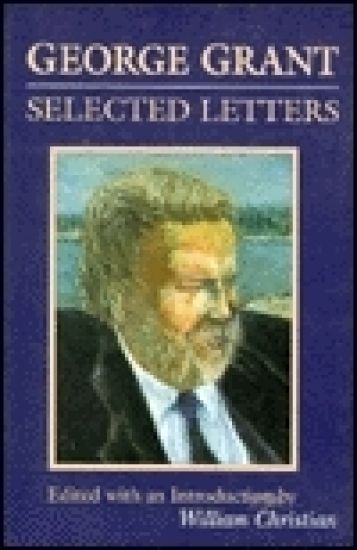
George Grant was one of Canada's foremost political and religious thinkers. In his published writings, Grant was a careful and guarded writer, but in his letters he was frank and spontaneous, expressing ideas and opinions that he hesitated to convey in print. Grant's letters are remarkable for their continuity – about twelve hundred letters survive from 1923 to his death in 1988 – and for their quality. For more than fifty years, he favoured his correspondents with his observations about international relations, Canadian politics, religion, literature, and philosophy. William Christian has selected some three hundred letters, postcards, telegrams, and journal entries which reveal much about Grant – both the troubled man and the daring thinker. His correspondence begins with the letters from his early years at Upper Canada College and his undergraduate days at Queen's University, followed by letters from London during the Second World War, when he struggled with the conflict between his pacifism and his sense of duty. The middle section includes letters that describe his life at Dalhousie in the 1950s, his resignation from York University, and his hopes to create in the department of religion at McMaster University a kind of fifth column that would preserve a university within the multiversities he thought had taken over higher education in Canada. The later letters feature his remorseless attacks on what he felt were the perfidies of Trudeau during his long tenure as prime minister.
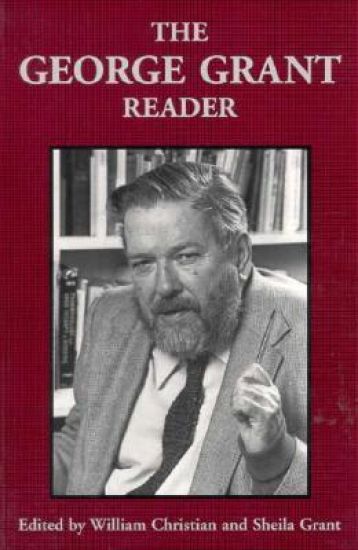
Called the most forceful voice of philosophic radicalism that Canada has so far produced, George Grant was a prolific writer, engaged by subjects ranging from Canadian politics to ancient philosophy. The George Grant Reader is the first book to bring together in one volume a comprehensive selection of his work, allowing readers to sample the whole range of his interests. The reader includes selections from all phases of Grant's career, beginning with The Empire: Yes or No? (1945) and ending with an article on Heidegger, left unfinished at the time of his death in 1988. Forty-six essays, grouped into six sections, encompass his views on politics, morality, philosophy, education, technology, faith, and love. Also featured are Grant's writings on those who most influenced his thought, ranging from St Augustine to Karl Marx and Simone Weil. A number of his more disturbing essays are also included such as his controversial writings on abortion. The editors' substantial introduction places the articles in the wider context of Grant's life and thought. This long-overdue collection contains classic works, little-known masterpieces, and previously unpublished material. The volume is an ideal starting point for those who have never read Grant as well as an indispensable reference for Grant specialists.
George Grant (1918-1988) is widely regarded as one of Canada's most influential philosophers and political theorists. His best-known work, Lament for a Nation (1965), presented a radical reinterpretation of Canadian history and inspired a surge of nationalist sentiment across the country. Along with Grant's other books, it addressed the major cultural shifts and dilemmas of our age, and introduced several generations of students to the basic questions of political philosophy. This study aims to guide the reader toward a clearer understanding of Grant's thought. Focusing on his six short books and some of his most significant articles and speeches, Hugh Donald Forbes provides both an introduction to and an overview of Grant's career and his many contributions to the fields of political science, philosophy, religion, and Canadian studies. Throughout Forbes sheds light on some of Grant's more contradictory and complex ideas, and provides an assessment of his impact on the Canadian political and cultural landscape. Forbes also relates Grant's work to that of three disparate and controversial European thinkers - Martin Heidegger, Leo Strauss, and Simone Weil - providing contexts and comparisons outside of the strictly Canadian framework in which he is normally situated. Comprehensive and lucidly written, George Grant: A Guide to His Thought is an invaluable resource for students, general readers, and academic specialists alike.
In George Washington's Expense Account -- the best-selling expense account in history -- Kitman shows how Washington brilliantly turned his noble gesture of refusing payment for his services as commander in chief of the Continental Army into an opportunity to indulge his insatiable lust for fine food and drink, extravagant clothing, and lavish accommodations. In a close analysis of the document that financed our Revolution, Kitman uncovers more scandals than you can shake a Nixon Cabinet member at -- and serves each up with verve and wit.
It began with George M ller--rebellious, absorbed in the world and its pleasures.It became George M ller--miraculously transformed by the power of Christ, daring to dream a dream and to trust God to bring it to pass.In jail by age sixteen, few people would have believed that George M ller would become a great hero of the faith. He and his wife cared for over 10,000 orphans. Discover the incredible true story of the man of faith whose missionary work was built on prayer and who still inspires us today. Taking his biographical details and putting them in an exciting novel form, this short book will stir your heart, move you to greater faith, and lead you to worship the God who answers prayer.
It was to George Bell, an English bishop, that Dietrich Bonhoeffer sent his last words before he was executed at the Flossenburgconcentration camp in April 1945. Why he did so becomes clear from Andrew Chandler's new biography of George Kennedy Allen Bell (1883-1958).As he traces the arc of Bell's life, Chandler shows how his story reshapes our perspective on Bonhoeffer's life and times. In addition to serving as Bishop of Chichester, Bell was an internationalist and ecumenical leader, one of the great Christian humanists of the twentieth century, a tenacious critic of the obliteration bombing of enemy cities during World War II, and a key ally of those who struggled for years to resist Hitler in Germany itself. This inspiring biography raises important questions that still haunt the moral imagination today: When should the word of protest be spoken? When should nations go to war, and how should they fight? What are our obligations to the victims of dictators and international conflict?
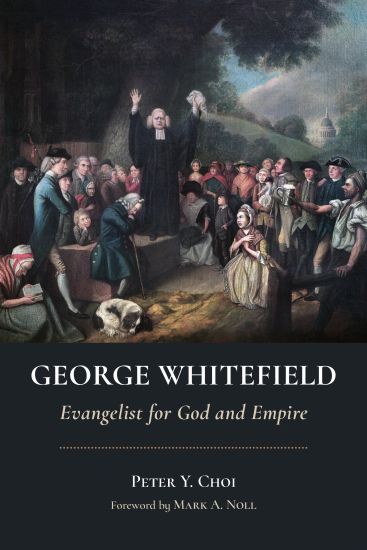
Narrates the drama of a famous preacher's entire career in his historical context. George Whitefield (1714-1770) is remembered as a spirited revivalist, a catalyst for the Great Awakening, and a founder of the evangelical movement in America. But Whitefield was also a citizen of the British Empire who used his political savvy and theological creativity to champion the cause of imperial expansion. In this religious biography of "the Grand Itinerant," Peter Choi reexamines the Great Awakening and its relationship to a fast-growing British Empire in the context of a dramatic human story. Choi shows that as the British Empire and the Great Awakening evolved, so did Whitefield and his influence. Rather than focusing on his early preaching career, as many books do, Choi follows the trajectory of Whitefield's whole life, including his relation-ships to Britain, the American colonies, slavery, war, and higher education. George Whitefield: Evangelist for God and Empire tells the fascinating, multifaceted life story of Whitefield both as revivalist preacher and subject of the British Empire.
The Revolutionary War is ordinarily presented as a conflict exclusively between colonists and the British, fought along the northern Atlantic seacoast. George Washington's War on Native America recounts the tragic events on the forgotten western front of the American Revolution—a war fought against and ultimately won by Native America. Although history texts often erroneously present the Natives, primarily the Iroquois League and the Ohio Union, as "allies" (or lackeys) of the British, Native America was in fact working from its own agenda: to prevent settlers from invading the Old Northwest. Throughout the war, the unwavering goal of the Revolutionary Army, under George Washington, and its associated settler militias was to break the power of the Iroquois League, which had successfully held off invasion for the preceding two centuries, and the newly formed Ohio Union. To destroy the Natives who stood in the way of land seizure, Washington authorized a series of rampages intended to destroy the League and the Union by starvation. As a result, uncounted thousands of Natives perished from New York and Pennsylvania to Ohio. Barbara Alice Mann tells how, in the wake of the massive assaults, Native America nonetheless won the war in the West and managed to maintain control of the land west and north of the Allegheny–Ohio River systems.
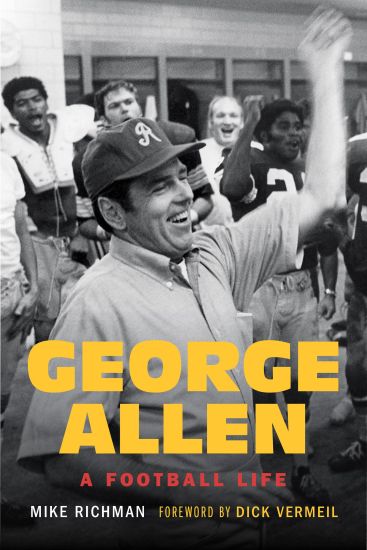
George Allen was a fascinating and eccentric figure in the world of football coaching. His remarkable career spanned six decades, from the late 1940s until his sudden death in 1990 at the age of seventy-three. Although he never won a Super Bowl, he never had a losing season as an NFL head coach and was inducted into the Pro Football Hall of Fame in 2002. In George Allen: A Football Life, Mike Richman captures the life and accomplishments of one of the most successful NFL coaches of all time and one of the greatest innovators in the game. A player’s coach, Allen was a tremendous motivator and game strategist, as well as a defensive mastermind, and is credited with making special teams a critical focus in an era in which they were an afterthought. He had a keen eye for talent and pulled off masterful trades, often for veteran players who were viewed to be past their prime, who then had great seasons and made his teams much better. In addition to his coaching feats, Allen had an idiosyncratic and controversial personality. His life revolved around football 24-7. One of his quirks was to minimize chewing time by consuming soft foods, giving himself more time to prepare for games and study opponents. He lived and breathed football; he compared losing to death. Allen had contentious relationships with the owners of the two NFL teams for which he was the head coach, the Washington Redskins and Los Angeles Rams. Richman explores why he was fired by those teams and whether he was blackballed from coaching again in the NFL. Based on detailed research and interviews with family, former players, and coaches, George Allen is the definitive biography of the football coach who lived to win, loved a good challenge, and left a lasting legacy on pro football history.
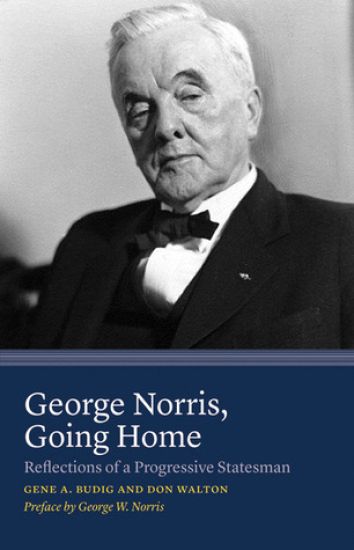
After forty years of congressional service, five terms in the House and five in the Senate, George William Norris (1861–1944) was going home to Nebraska. Norris had lost the 1942 Senate race and felt the defeat keenly. But as his train rolled westward, he was forcefully reminded of what his legislative efforts had wrought, from the Tennessee Valley Authority (TVA) to the Rural Electrification Act (REA), which brought power to the land unfolding before him. It is here that authors Gene A. Budig and Don Walton begin their journey with this great statesman, perhaps the last progressive Republican, a tireless champion of “public power” and the common man.This book carries readers back through Norris’s career and accomplishments: the establishment of the TVA and the REA as well as the Twentieth Amendment to the Constitution and the shaping of Nebraska’s unique unicameral legislature. Norris recalls the battles he waged, one of which landed him in John F. Kennedy’s Profiles in Courage, and the alliances he formed with leading political figures of his day, from Fiorello La Guardia to Franklin D. Roosevelt. The result is a contemporary perspective on a man who fiercely defended the public interest and followed his convictions to the lasting benefit of his state and his country.
South Dakota senator George McGovern’s 1972 presidential bid was one of the most memorable campaigns in American political history. Despite McGovern’s landslide loss to the incumbent Richard Nixon, McGovern’s campaign attracted widespread grassroots support, and his campaign posters represent a landmark in the history of U.S. campaign memorabilia in terms of the sheer number and quality of posters produced in support of the candidate. Like Barack Obama’s run for the presidency in 2008, McGovern’s campaign stoked the imagination of the artistic community. World-famous artists-including Andy Warhol, Alexander Calder, Larry Rivers, Sam Francis, Thomas W. Benton, Sister Corita, and Paul Davis-produced posters in support of McGovern that captured a generation’s efforts to bring about major political change. George McGovern and the Democratic Insurgents, with nearly three hundred stunning images, provides an illustrated journey through the protest and psychedelic rock posters of the 1960s, the posters of Eugene McCarthy’s 1968 presidential campaign, the poster explosion of George McGovern’s 1972 campaign, and the best campaign posters from 1976 to 2012. A historical examination of the graphic precedents for this politicized art form, Hal Elliott Wert’s collection offers readers a singular insight into artistic invention and activism in the United States.