Kirjojen hintavertailu. Mukana 12 016 292 kirjaa ja 12 kauppaa.

Kirjahaku

Etsi kirjoja tekijän nimen, kirjan nimen tai ISBN:n perusteella.

1000 tulosta hakusanalla George Shepard

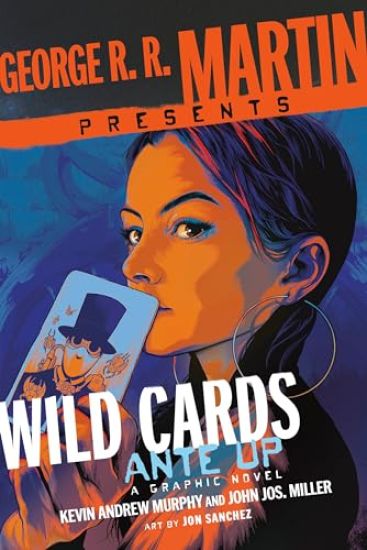
George R. R. Martin Presents Ante Up: A Wild Cards Graphic Novel

George R. R. Martin Presents Ante Up: A Wild Cards Graphic Novel

Kevin Andrew Murphy; John Jos. Miller

RANDOM HOUSE USA INC
2025
sidottu
A young ace must unmask a modern-day Robin Hood in this original graphic novel set in George R. R. Martin's shared-world universe, Wild Cards. An alien virus ravages the world, with effects as random as a hand of cards. Those infected either draw the black queen and die, draw an ace and receive superpowers, or draw the joker and become bizarrely mutated. Rosa Garza--an ace whose powers center around her family's loter a deck--has arrived in New York City to help her dying grandmother. But what should have been a quiet time of recovery is instead interrupted by a series of eccentric robberies perpetrated by a mysterious ace known only as Professor Daedalus, who has the power to create and animate impossible automatons. And these automatons are stealing from the rich to give to the poor and needy--in particular, to the underfunded clinic where Rosa's abuela is being treated. With police scrutiny falling hard on her, Rosa must discover Daedalus's identity and halt his crime spree before she herself is arrested--or becomes the automatons' next victim.
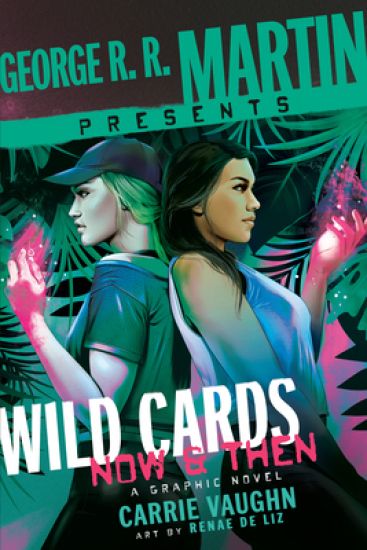
George R. R. Martin Presents Wild Cards: Now and Then

George R. R. Martin Presents Wild Cards: Now and Then

Carrie Vaughn; Renae De Liz

RANDOM HOUSE USA INC
2023
sidottu
Two heroes revisit a traumatic incident from their past--and learn hard truths in the present--in this original graphic novel set in the Wild Cards universe, where an alien virus mutates some and grants superpowers to others, created by the #1 New York Times bestselling author of A Game of Thrones. In 1946, an alien virus ravaged the world, its results as random as a hand of cards. Those infected either draw the black queen and die, draw an ace and receive superpowers, or draw the joker and are bizarrely mutated. Over a year ago, the U.N.'s Committee for Extraordinary Interventions sent ace heroes Ana Cortez and Kate Brandt--Earth Witch and Curveball--to Brazil to investigate Aurora Mission, a charity that claimed to provide education and medical care for those affected by the Wild Card virus. But local ace and activist Gabriel Silva reported abuses. Ana and Kate helped him get to the truth, which turned out to be far more sinister than anyone expected. Ana and Kate thought that case was closed, but now a Brazilian official has questions. Did they do the right thing or overreach their authority? The case amply demonstrates that, even in a world of incredible powers, there will always be victims. Written by New York Times bestselling author Carrie Vaughn with art by Eisner-nominated creator Renae De Liz, this dynamic story gives readers a new look into the Wild Cards universe, and shows how even those with great powers have their limits.
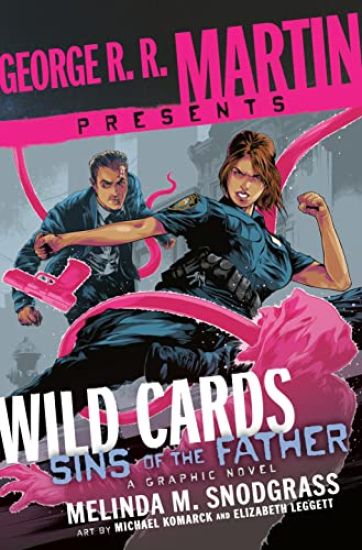
George R. R. Martin Presents Wild Cards: Sins of the Father

George R. R. Martin Presents Wild Cards: Sins of the Father

Melinda M. Snodgrass

RANDOM HOUSE USA INC
2023
sidottu
A cop on the trail of a bizarre murder uncovers a hidden conspiracy--and shocking secrets about his late father--in this original graphic novel set in George R. R. Martin's shared-world universe, Wild Cards. In 1946, an alien virus ravaged the world, its results as random as a hand of cards. From that fateful moment to the present day, those infected either draw the black queen and die, draw an ace and receive superpowers, or draw the joker and are bizarrely mutated. Today, Aces, Jokers, and uninfected humans live in relative peace. Francis "Franny" Black is an uninfected human cop, trying to police a world filled with people with the extraordinary powers that he lacks. Newly--and some would say too suddenly--promoted to detective, he has been working out of Wild Card Central, the precinct in Jokertown where the bulk of the virus victims fell in 1946. Franny's father was one of the heroes of the precinct, killed in the line of duty, and Franny is finding it hard to fill his dead father's shoes. That is, until he's given a particularly insidious case and starts uncovering long-buried secrets that his father might have died to protect. Illustrated in a gorgeous, cinematic style by Michael Komarck and Elizabeth Leggett, this unique graphic novel is a visual feast certain to delight.
George Eliot's Pulse

George Eliot's Pulse

Neil Hertz

Stanford University Press
2003
sidottu
Ranging over all George Eliot's fiction and drawing as well on her letters, essays, and translations, in this book the distinguished critic Neil Hertz documents Eliot's lifelong questioning of the nature of authorship and of what it might mean, in the language of one of her early letters, for her "not simply to be, but to utter." Pursuing oddities of diction and figuration, of plotting and characterization, Hertz finds everywhere in Eliot's works passages of high mimetic realism that ask to be read as allegories of writing or as characters whose actions and destinies can only be understood if they are seen as disguised surrogates of their author. Each essay begins with an intriguing or problematic bit of language, then moves about within a particular work of fiction or criss-cross to other writings of Eliot's as well as to works by philosophers, psychoanalysts, and literary theorists.
George Eliot's Pulse

George Eliot's Pulse

Neil Hertz

Stanford University Press
2003
pokkari
Ranging over all George Eliot's fiction and drawing as well on her letters, essays, and translations, in this book the distinguished critic Neil Hertz documents Eliot's lifelong questioning of the nature of authorship and of what it might mean, in the language of one of her early letters, for her "not simply to be, but to utter." Pursuing oddities of diction and figuration, of plotting and characterization, Hertz finds everywhere in Eliot's works passages of high mimetic realism that ask to be read as allegories of writing or as characters whose actions and destinies can only be understood if they are seen as disguised surrogates of their author. Each essay begins with an intriguing or problematic bit of language, then moves about within a particular work of fiction or criss-cross to other writings of Eliot's as well as to works by philosophers, psychoanalysts, and literary theorists.
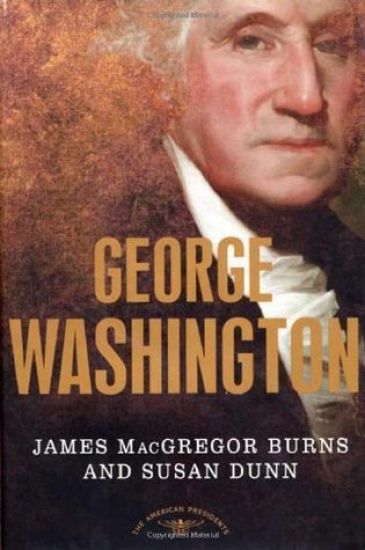
George Washington

George Washington

James M. Burns; Susan Dunn

Times Books
2004
sidottu
The acclaimed authors of The Three Roosevelts redefine the special qualifications and contributions of America's first president, tracing his accomplishments as a Revolutionary War hero and first citizen of a young republic and explaining how his decisions as president established precedents for the future governing of America. 35,000 first printing.
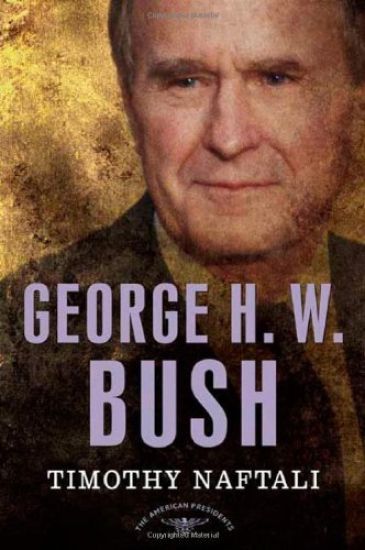
George H.W. Bush

George H.W. Bush

Timothy Naftali

Times Books
2007
sidottu
The judicious statesman who won victories abroad but suffered defeat at home, whose wisdom and demeanor served America well at a critical timeGeorge Bush was a throwback to a different era. A patrician figure not known for eloquence, Bush dismissed ideology as "the vision thing." Yet, as Timothy Naftali argues, no one of his generation was better prepared for the challenges facing the United States as the Cold War ended. Bush wisely encouraged the liberalization of the Soviet system and skillfully orchestrated the reunification of Germany. And following Iraq's invasion of Kuwait in 1990, he united the global community to defeat Saddam Hussein. At home, Bush reasserted fiscal discipline after the excesses of the Reagan years. It was ultimately his political awkwardness that cost Bush a second term. His toughest decisions widened fractures in the Republican Party, and with his party divided, Bush lost his bid for reelection in 1992. In a final irony, the conservatives who scorned him would return to power eight years later, under his son and namesake, with the result that the elder George Bush would see his reputation soar.
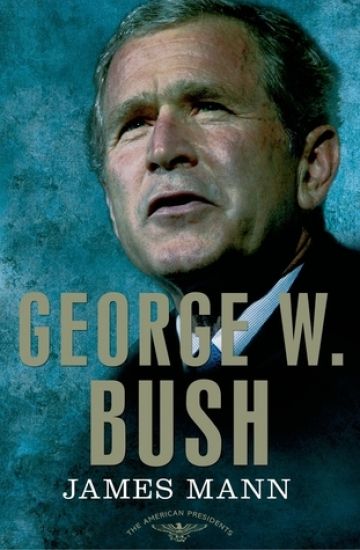
George W Bush

George W Bush

James Mann

Henry Holt Company Inc
2015
sidottu
George W. Bush stirred powerful feelings on both sides of the aisle. Republicans viewed him as a resolute leader who guided America through the worst terrorist attack in its history and retaliated in Afghanistan and Iraq, while Democrats saw him as an overmatched president, subservient to his advisers, who led America into two open-ended and inconclusive wars that sapped the nation's resources and diminished its stature. When Bush left office amid a growing financial crisis, both parties were eager to move on. In this assessment of the nation's forty-third president, the veteran national security journalist James Mann looks beyond the partisan debate to shed light on why George W. Bush made the decisions that shaped his presidency and how the internal debates and fissures within his administration played out in such a charged atmosphere. He shows how and why Bush, despite his political talents, became a polarizing figure in both domestic and foreign affairs, and he examines how Bush's most consequential actions-Iraq, the tax cuts, the war on terror-came about and how they could shape America's course at home and abroad for decades. With a broad perspective and deep knowledge gleaned from years of reporting, Mann's history of this tumultuous presidency points the way to a more complete understanding of George W. Bush and his times.
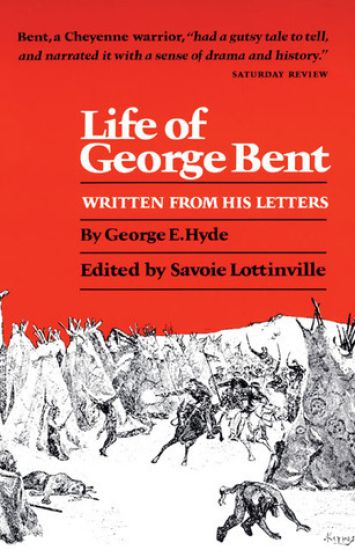
Life of George Bent

Life of George Bent

George E. Hyde

University of Oklahoma Press
1968
nidottu
George Bent, the son of William Bent, one of the founders of Bent's Fort on the Arkansas near present La Junta, Colorado, and Owl Woman, a Cheyenne, began exchanging letters in 1905 with George E. Hyde of Omaha concerning life at the fort, his experiences with his Cheyenne kinsmen, and the events which finally led to the military suppression of the Indians on the southern Great Plains. This correspondence, which continued to the eve of Bent's death in 1918, is the source of the narrative here published, the narrator being Bent himself.Almost ninety years have elapsed since the day in 1930 when Mr. Hyde found it impossible to market the finished manuscript of the Bent life down to 1866. (The Depression had set in some months before.) He accordingly sold that portion of the manuscript to the Denver Public Library, retaining his working copy, which carries down to 1875. The account therefore embraces the most stirring period, not only of Bent's own life, but of life on the Plains and into the Rockies. It has never before been published.It is not often that an eyewitness of great events in the West tells his own story. But Bent's narrative, aside from the extent of its chronology (1826 to 1875), has very special significance as an inside view of Cheyenne life and action after the Sand Creek Massacre of 1864, which cost so many of the lives of Bent's friends and relatives. It is hardly probable that we shall achieve a more authentic view of what happened, as the Cheyennes, Arapahos, and Sioux saw it.
General George Crook

General George Crook

George Crook

University of Oklahoma Press
1986
nidottu
General George Crook was one Civil War general who didn't win his reputation east of the Mississippi River. To him, the Civil War was just an interlude. Before and after this great conflict, Crook was an Indian fighter.Crook fought the greatest of the Indian chieftains; served at frontier posts from the Columbia River to the Rio Grande, from Illinois to the Pacific. Yet he was as good at defending Indians as he was at fighting them. Crook understood and sympathized with them. He spoke plainly and often against injustices in the treatment of the Indian. And when he died, Red Cloud, chief of the Sioux, gave him his epitaph: ""He, at least, had never lied to us.""General George Crook: His Autobiography first came into print when Martin F. Schmitt, working in the archives of the Army War College in Washington, made the startling rediscovery of the Crook papers, which had been presented to the library of the War College by the widow of Walter S. Schuyler, one-time aid to General Crook. The existence of the autobiography had apparently not been previously suspected by any writer on the West, not even by the General's friend, Captain John G. Bourke, who wrote the only existing sketch of his life.A West Point graduate of 1852, General Crook spent his entire military career, with the exception of the four Civil War years, 1861 to 1865, on the frontier. His life paralleled western expansion during the latter half of the nineteenth century. In 1890, at the time of this death, he was commanding general of the Department of the Missouri, the largest and most active of all frontier commands. The Rogue River and Yakima wars in the eighteen fifties, Paiute pacification in the late sixties, the Apache campaigns of the seventies and eighties - all found Crook actively involved, fighting, counseling and making peace with the Indians.His Civil War experiences, while not uniformly successful or profitable, brought him into close contact with the great military figures of the day. He was a favorite of Grant's and a close associate of Sheridan, who had been in his class at West Point. His blunt, sometimes caustic opinions of his associates and the conduct of campaigns are new and often refreshing.General Crook's autobiography covers the period from Crook's graduation from West Point in 1852 to June 18, 1876, the day after the famous Battle of the Rosebud. The editor has supplemented it with other material, some from the Crook diaries and letters and contemporary clippings, on the other years of the General's life.
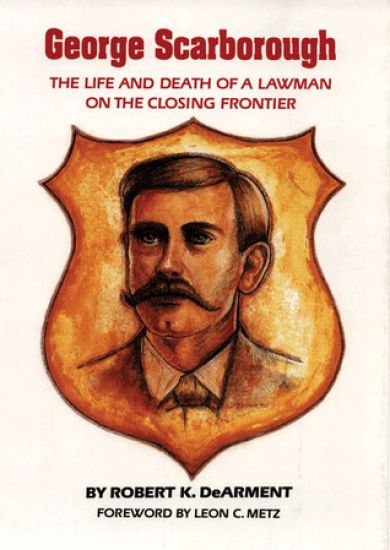
George Scarborough

George Scarborough

Robert K. DeArment

University of Oklahoma Press
1996
nidottu
Now, for the first time, Robert K. DeArment has told the full story of George Scarborough's life, illuminating his activity as a lawman during the final part of the nineteenth century and his controversial killings while wearing the badge-he was tried for murder on three occasions and acquitted each time.
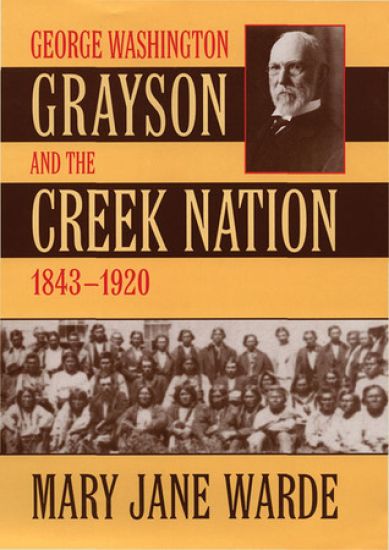
George Washington Grayson and the Creek Nation, 1843-1920

George Washington Grayson and the Creek Nation, 1843-1920

Mary Jane Warde

University of Oklahoma Press
1999
sidottu
A confederate soldier, pioneer merchant, rancher, newspaper publisher, and town builder, George Washington Grayson also served for six decades as a leader of the Creek Nation. His life paralleled the most tumultuous events in Creek Indian and Oklahoma history, from the aftermath of the Trail of Tears through World War I.As a diplomat representing the Creek people, Grayson worked to shape Indian policy. As a cultural broker, he explained its ramifications to his people. A self-described progressive who advocated English education, constitutional government, and economic development, Grayson also was an Indian nationalist who appreciated traditional values. When the Creeks faced allotment and loss of sovereignty, Grayson sought ways to accommodate change without sacrificing Indian identity.Mary Jane Warde bases her portrait of Grayson on a wealth of primary and secondary sources, including the extensive writings of Grayson himself.
George Miksch Sutton

George Miksch Sutton

Jerome A. Jackson

University of Oklahoma Press
2007
sidottu
The first biography of the distinguished ornithologistGeorge Miksch Sutton (1898-1982) is revered by bird lovers everywhere for his beautiful paintings. A Victorian gentleman, adventurer, and raconteur, he was trained in the sciences but felt equally at home in the arts.Jerome Jackson, a friend and colleague of Sutton, draws on extant correspondence, interviews, and personal knowledge to offer a portrait of the artist that will surprise those who knew him only in his later years. Capturing a superb ornithologist who worked under the most inhospitable conditions, from the arctic to the tropics, Jackson shows us a person who guarded his privacy and struggled with uncertainty.Jackson depicts a Renaissance man whose life was, more than a search for birds, a quest for knowledge through science and art in the service of humanity. Tracing Sutton's roots through two generations, Jackson reveals what set him apart from other ornithologists and bird artists. Focusing on Sutton's formative years - how he acquired his love of birds at an early age and how that love guided his life - Jackson then relates Sutton's adventures in the Arctic, Mexico, Oklahoma, and elsewhere.Jackson's account fills in details missing from Sutton's autobiography, Bird Student. Gracing the book are fifty reproductions of Sutton's art - twenty-eight in full color - including early, unpublished, or obscure works along with non-avian subjects.
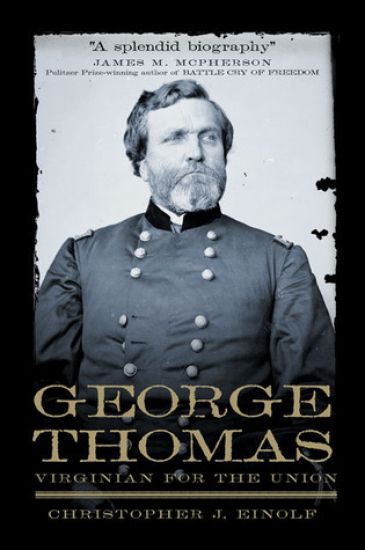
George Thomas

George Thomas

Christopher J. Einolf

University of Oklahoma Press
2010
nidottu
One of the North's greatest generals - the Rock of ChickamaugaMost Southerners in the U.S. Army resigned their commissions to join the Confederacy in 1861. But at least one son of a distinguished, slaveholding Virginia family remained loyal to the Union. George H. Thomas fought for the North and secured key victories at Chickamauga and Nashville. Thomas's wartime experiences transformed him from a slaveholder to a defender of civil rights.Remembered as the ""Rock of Chickamauga,"" Thomas became one of the most prominent Union generals and was even considered for overall command of the Union Army in Virginia. Yet he has been eclipsed by such names as Grant, Sherman, and Sheridan.Offering vivid accounts of combat, Einolf depicts the fighting from Thomas's perspective to allow a unique look at the real experience of decision making on the battlefield. He examines the general's recurring confrontations with the Union high command to make a strong case for Thomas's integrity and competence, even as he exposes Thomas's shortcomings and poor decisions. The result is a more balanced, nuanced picture than has previously been available.Probing Thomas's personal character, Einolf reveals how a son of the South could oppose the views of friends and family. George Thomas: Virginian for the Union offers a fresh appraisal of an important career and lends new insight into the inner conflicts of the Civil War.
George Crook

George Crook

Paul Magid

University of Oklahoma Press
2014
nidottu
Renowned for his prominent role in the Apache and Sioux wars, General George Crook (1828-90) was considered by William Tecumseh Sherman to be his greatest Indian-fighting general. Although Crook was feared by Indian opponents on the battlefield, in defeat the tribes found him a true friend and advocate who earned their trust and friendship when he spoke out in their defense against political corruption and greed.Paul Magid's detailed and engaging narrative focuses on Crook's early years through the end of the Civil War. Magid begins with Crook's boyhood on the Ohio frontier and his education at West Point, then recounts his nine years' military service in California during the height of the Gold Rush. It was in the Far West that Crook acquired the experience and skills essential to his success as an Indian fighter.This is primarily an account of Crook's dramatic and sometimes controversial role in the Civil War, in which he was involved on three fronts, in West Virginia, Tennessee, and Virginia. Crook saw action during the battle of Antietam and played important roles in two major offensives in the Shenandoah Valley and in the Chattanooga and Appomattox campaigns. His courage, leadership, and tactical skills won him the respect and admiration of his commanding officers, including Generals Grant and Sheridan. He soon rose to the rank of major general and received four brevet promotions for bravery and meritorious service. Along the way, he led both infantry and cavalry, pioneered innovations in guerrilla warfare, conducted raids deep into enemy territory, and endured a kidnapping by Confederate partisans.George Crook offers insight into the influences that later would make this general both a nemesis of the Indian tribes and their ardent advocate, and it illuminates the personality of this most enigmatic and eccentric of army officers.
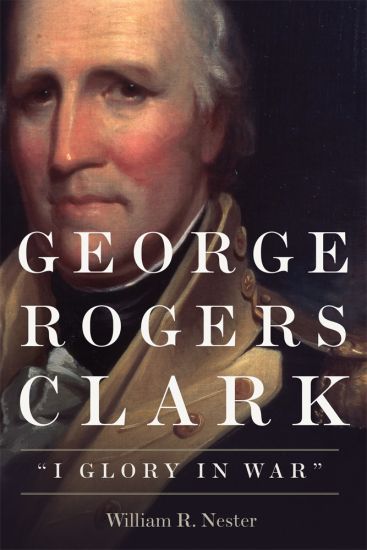
George Rogers Clark

George Rogers Clark

William R. Nester

University of Oklahoma Press
2018
nidottu
George Rogers Clark (1752-1818) led four victorious campaigns against the Indians and British in the Ohio Valley during the American Revolution, but his most astonishing coup was recapturing Fort Sackville in 1779, when he was only twenty-six. For eighteen days, in the dead of winter, Clark and his troops marched through bone-chilling nights to reach the fort. With a deft mix of guile and violence, Clark led his men to triumph, without losing a single soldier. Although historians have ranked him among the greatest rebel commanders, Clark's name is all but forgotten today. William R. Nester resurrects the story of Clark's triumphs and his downfall in this, the first full biography of the man in more than fifty years.Nester attributes Clark's successes to his drive and daring, good luck, charisma, and intellect. Born of a distinguished Virginia family, Clark wielded an acute understanding of human nature, both as a commander and as a diplomat. His interest in the natural world was an inspiration to lifelong friend Thomas Jefferson, who asked him in 1784 to lead a cross-country expedition to the Pacific and back. Clark turned Jefferson down. Two decades later, his youngest brother, William, would become the Clark celebrated as a member of the Corps of Discovery.By the beginning of the nineteenth century, though, George Rogers Clark may not have been fit to command any expedition. After the revolution, he raged against the government and pledged fealty to other nations, leading to his arrest under the Sedition Act.The inner demons that fueled Clark's anger also drove him to excessive drinking. He died at the age of sixty-five, bitter, crippled, and alcoholic. He was, Nester shows, a self-destructive hero: a volatile, multidimensional man whose glorying in war ultimately engaged him in conflicts far removed from the battlefield and against himself.
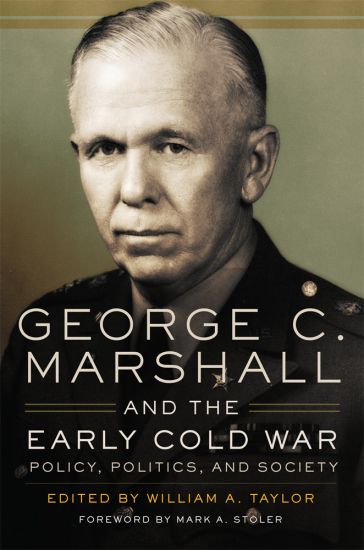
George C. Marshall and the Early Cold War

George C. Marshall and the Early Cold War

Mark A. Stoler

University of Oklahoma Press
2020
nidottu
Though best known for his central part in the American war effort from 1939 to 1945, George C. Marshall's critical role in the early Cold War was probably at least as important in shaping the policies and politics of the postwar western world - and in cementing his place as a pivotal figure in twentieth-century American history. This book places Marshall squarely at the center of the story of the American century by examining his tenure in key policymaking positions during this period, including army chief of staff, special presidential envoy to China, secretary of state, and secretary of defense, among others.George C. Marshall and the Early Cold War brings together a diverse and accomplished group of scholars - including military, diplomatic, and institutional historians - to explore how Marshall, Time magazine's 'Man of the Year' in both 1943 and 1947 and the 1953 Nobel Peace Prize winner, molded debates on all the major issues of his day, such as universal military training, China's civil war, an independent air force, the National Security Act of 1947, nuclear weapons, European Recovery Program, North Atlantic Treaty, Korean War, and racial integration of the U.S. military. With a focus on Marshall's public service at the intersection of American policy, politics, and society, the authors provide a comprehensive historical account of his central role in shaping America during a tumultuous yet formative period in the nation's history. Their work fills a void in the scholarship of American military history and American history generally, providing context for the consideration of broader questions about American power and the place of the military within American society.
George Washington Grayson and the Creek Nation, 1843-1920

George Washington Grayson and the Creek Nation, 1843-1920

Mary Jane Warde

University of Oklahoma Press
2021
nidottu
A confederate soldier, pioneer merchant, rancher, newspaper publisher, and town builder, George Washington Grayson also served for six decades as a leader of the Creek Nation. His life paralleled the most tumultuous events in Creek Indian and Oklahoma history, from the aftermath of the Trail of Tears through World War I.As a diplomat representing the Creek people, Grayson worked to shape Indian policy. As a cultural broker, he explained its ramifications to his people. A self-described progressive who advocated English education, constitutional government, and economic development, Grayson also was an Indian nationalist who appreciated traditional values. When the Creeks faced allotment and loss of sovereignty, Grayson sought ways to accommodate change without sacrificing Indian identity.Mary Jane Warde bases her portrait of Grayson on a wealth of primary and secondary sources, including the extensive writings of Grayson himself.
George Hearst

George Hearst

Matthew Bernstein

University of Oklahoma Press
2021
sidottu
Rising from a Missouri boyhood and meager prospecting success to owning the most productive copper, silver, and gold mines in the world and being elected a United States senator, George Hearst (1820-91) spent decades veering between the heights of prosperity and the depths of financial ruin. In George Hearst: Silver King of the Gilded Age, Matthew Bernstein captures Hearst’s ascent, casting light on his actions during the Civil War, his tempestuous marriage to his cousin Phoebe, his role as disciplinarian and doting father to future media magnate William Randolph Hearst, and his devious methods of building the greatest mining empire in the West. Whether driving a pack of mules laden with silver from the Comstock Lode to San Francisco, bribing jurors in Pioche and Deadwood, or unearthing bonanzas in Utah and Montana Territories, Hearst’s cunning, energy, and industry were always evident, along with occasional glimmers of the villainy ascribed to him in the television series Deadwood. In this first full-length biography, George Hearst emerges in all his human dimensions and historical significance-an ambitious, complex, flawed, and quintessentially American character.