Title: Mary Price; or, the Memoirs of a servant-maid ... Illustrated with fifty-two engravings by F. Gilbert.Publisher: British Library, Historical Print EditionsThe British Library is the national library of the United Kingdom. It is one of the world's largest research libraries holding over 150 million items in all known languages and formats: books, journals, newspapers, sound recordings, patents, maps, stamps, prints and much more. Its collections include around 14 million books, along with substantial additional collections of manuscripts and historical items dating back as far as 300 BC.The FICTION & PROSE LITERATURE collection includes books from the British Library digitised by Microsoft. The collection provides readers with a perspective of the world from some of the 18th and 19th century's most talented writers. Written for a range of audiences, these works are a treasure for any curious reader looking to see the world through the eyes of ages past. Beyond the main body of works the collection also includes song-books, comedy, and works of satire. ++++The below data was compiled from various identification fields in the bibliographic record of this title. This data is provided as an additional tool in helping to insure edition identification: ++++ British Library Reynolds, George W. M.; Gilbert, Frederick; 1852, 53. 8 . 12623.k.3.
Title: Mary Price; or, the Memoirs of a servant-maid ... Illustrated with fifty-two engravings by F. Gilbert.Publisher: British Library, Historical Print EditionsThe British Library is the national library of the United Kingdom. It is one of the world's largest research libraries holding over 150 million items in all known languages and formats: books, journals, newspapers, sound recordings, patents, maps, stamps, prints and much more. Its collections include around 14 million books, along with substantial additional collections of manuscripts and historical items dating back as far as 300 BC.The FICTION & PROSE LITERATURE collection includes books from the British Library digitised by Microsoft. The collection provides readers with a perspective of the world from some of the 18th and 19th century's most talented writers. Written for a range of audiences, these works are a treasure for any curious reader looking to see the world through the eyes of ages past. Beyond the main body of works the collection also includes song-books, comedy, and works of satire. ++++The below data was compiled from various identification fields in the bibliographic record of this title. This data is provided as an additional tool in helping to insure edition identification: ++++ British Library Reynolds, George W. M.; Gilbert, Frederick; 1852, 53. 8 . 12623.k.3.
Title: The Hand of Destiny; or, the Life of Marianne ... Translated by Sir Gilbert Campbell, Bart.Publisher: British Library, Historical Print EditionsThe British Library is the national library of the United Kingdom. It is one of the world's largest research libraries holding over 150 million items in all known languages and formats: books, journals, newspapers, sound recordings, patents, maps, stamps, prints and much more. Its collections include around 14 million books, along with substantial additional collections of manuscripts and historical items dating back as far as 300 BC.The NOVELS OF THE 18th & 19th CENTURIES collection includes books from the British Library digitised by Microsoft. The collection includes major and minor works from a period which saw the development and triumph of the English novel. These classics were written for a range of audiences and will engage any reading enthusiast. ++++The below data was compiled from various identification fields in the bibliographic record of this title. This data is provided as an additional tool in helping to insure edition identification: ++++ British Library Carlet de Chamblain de Marivaux, Pierre; Campbell, Gilbert Edward; 1889.]. 160 p.; 8 . 12623.f.24.
The 18th century was a wealth of knowledge, exploration and rapidly growing technology and expanding record-keeping made possible by advances in the printing press. In its determination to preserve the century of revolution, Gale initiated a revolution of its own: digitization of epic proportions to preserve these invaluable works in the largest archive of its kind. Now for the first time these high-quality digital copies of original 18th century manuscripts are available in print, making them highly accessible to libraries, undergraduate students, and independent scholars.The Age of Enlightenment profoundly enriched religious and philosophical understanding and continues to influence present-day thinking. Works collected here include masterpieces by David Hume, Immanuel Kant, and Jean-Jacques Rousseau, as well as religious sermons and moral debates on the issues of the day, such as the slave trade. The Age of Reason saw conflict between Protestantism and Catholicism transformed into one between faith and logic -- a debate that continues in the twenty-first century.++++The below data was compiled from various identification fields in the bibliographic record of this title. This data is provided as an additional tool in helping to insure edition identification: ++++British LibraryT082760Anonymous. By Edward Goldney, senior. Drop-head title. The printer is possibly Edward Goldney, junior. In: Edward Goldney's 'Infallible remedies', London, 1770]. London, 1770?]. 16p., plates: port.; 8
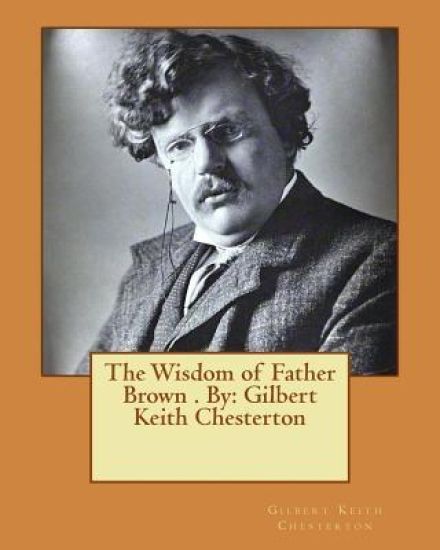
Father Brown is a fictional Roman Catholic priest and amateur sleuth created in the early 20th century by English novelist G. K. Chesterton. Father Brown is featured in a series of short stories where he solves mysteries and crimes using his intuition and keen understanding of human nature. The character was loosely based by Chesterton on Father John O'Connor (1870-1952), a parish priest in Bradford, who was involved in Chesterton's conversion to Catholicism in 1922.Chesterton portrays Father Brown as a short, stumpy Roman Catholic priest, with shapeless clothes, a large umbrella, and an uncanny insight into human evil. In "The Head of Caesar" he is "formerly priest of Cobhole in Essex, and now working in London". He makes his first appearance in the story "The Blue Cross" and continues to appear throughout five volumes of short stories, often assisted in his crime-solving by the reformed criminal M. Hercule Flambeau.
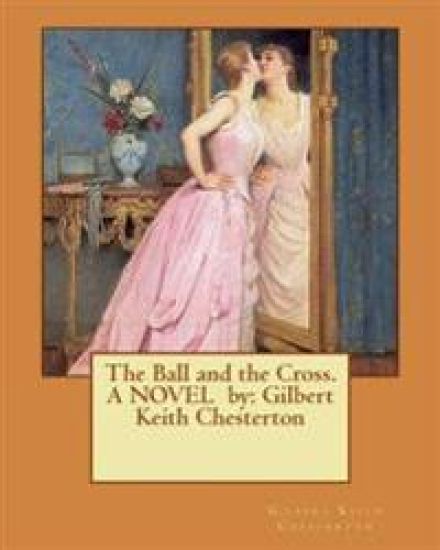
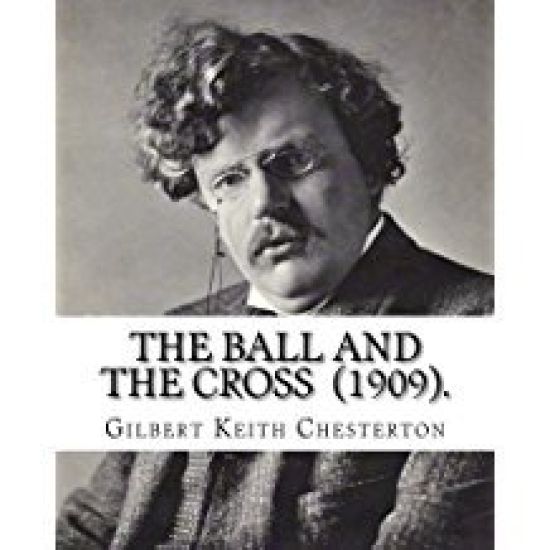
The Ball and the Cross is a novel by G. K. Chesterton. The title refers to a more worldly and rationalist worldview, represented by a ball or sphere, and the cross representing Christianity. The first chapters of the book were serialized from 1905 to 1906 with the completed work published in 1909. The novel's beginning involves debates about rationalism and religion between a Professor Lucifer and a monk named Michael. A part of this section was quoted in Pope John Paul I's Illustrissimi letter to G. K. Chesterton.Much of the rest of the book concerns the dueling, figurative and somewhat more literal, of a Jacobite Catholic named Maclan and an atheist Socialist named Turnbull.Lynette Hunter has argued that the novel is more sympathetic to Maclan, but does indicate Maclan is also presented as in some ways too extreme.Turnbull, as well, is presented in a sympathetic light: both duelists are ready to fight for and die for their antagonistic opinions and, in doing so, develop a certain partnership that evolves into a friendship. The real antagonist is the world outside, which desperately tries to prevent from happening a duel over "mere religion" (a subject both duelists judge of utmost importance). Gilbert Keith Chesterton, KC*SG (29 May 1874 - 14 June 1936), better known as G. K. Chesterton, was an English writer, poet, philosopher, dramatist, journalist, orator, lay theologian, biographer, and literary and art critic. Chesterton is often referred to as the "prince of paradox".Time magazine has observed of his writing style: "Whenever possible Chesterton made his points with popular sayings, proverbs, allegories-first carefully turning them inside out." Chesterton is well known for his fictional priest-detective Father Brown, and for his reasoned apologetics. Even some of those who disagree with him have recognised the wide appeal of such works as Orthodoxy and The Everlasting Man. Chesterton, as a political thinker, cast aspersions on both Progressivism and Conservatism, saying, "The whole modern world has divided itself into Conservatives and Progressives. The business of Progressives is to go on making mistakes. The business of the Conservatives is to prevent the mistakes from being corrected."Chesterton routinely referred to himself as an "orthodox" Christian, and came to identify this position more and more with Catholicism, eventually converting to Catholicism from High Church Anglicanism. George Bernard Shaw, Chesterton's "friendly enemy" according to Time, said of him, "He was a man of colossal genius."Biographers have identified him as a successor to such Victorian authors as Matthew Arnold, Thomas Carlyle, Cardinal John Henry Newman, and John Ruskin. Chesterton was born in Campden Hill in Kensington, London, the son of Marie Louise, n e Grosjean, and Edward Chesterton.He was baptised at the age of one month into the Church of England, though his family themselves were irregularly practising Unitarians.According to his autobiography, as a young man Chesterton became fascinated with the occult and, along with his brother Cecil, experimented with Ouija boards.Chesterton was educated at St Paul's School, then attended the Slade School of Art to become an illustrator. The Slade is a department of University College London, where Chesterton also took classes in literature, but did not complete a degree in either subject.

![A Biographical Sketch of the Rev. Joseph Gilbert by His Widow [A. Gilbert]. With Recollections of the Discourses of His Closing Years by One of His Sons](/covers/9781023810418.jpg)
![A Biographical Sketch of the Rev. Joseph Gilbert by His Widow [A. Gilbert]. With Recollections of the Discourses of His Closing Years by One of His Sons](/covers/9781023815208.jpg)