Observera att förlaget som ger ut denna produkt baserar innehållet i sina produkter på fria källor som Wikipedia. Boken är med stor sannolikhet endast ett utdrag ur dessa informationskällor, alltså inte en vanlig bok i den bemärkelsen.
His Message Would Be Heard Around The WorldNo one guessed he would change the world. A simple country farm boy once prayed that God would use him…and prayed…and prayed. And God did use him, beyond what he ever imagined. He grew into a man who would lead millions of people to Christ, a man who would be known as the greatest evangelist of our time. Come read the story of Billy Graham and follow his life from his days as a boy, who wasn’t so great in school, to a man who would teach the world the greatest lesson of all: how to know and live for Christ.
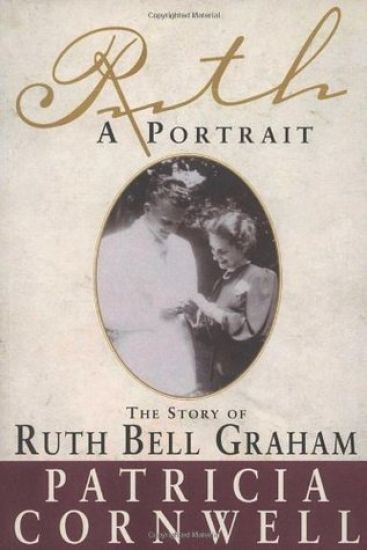
Ruth Bell Graham is known as the wife of evangelist Billy Graham. It was Ruth who influenced Billy, as his most trusted life-partner. In Ruth, a Portrait, we meet this fascinating and remarkable woman. Brimming with anecdotes, this is a breathtaking journey, with stops at many of this century's epoch-making events. The childhood years of the future Mrs. Billy Graham were spent light-years away--in the China of the 1920s and 1930s. The daughter of medical missionaries, she and her family were caught in a crucible of unspeakable hardship; in addition to pestilence and plague, there was the unstable political and military turmoil surrounding the Nationalist government, the Communists, and the Japanese invaders. These hazardous realities shaped Ruth Bell and her family, a family inured to difficulties, but buoyed up by their deep belief in God's abiding will. Virtually raised by the Grahams, the author is a repository of Ruth Bell Graham's stories and has seen firsthand the spirit of this courageous woman. Patricia Cornwell not only gives readers a full, rounded, and intimate portrait of Ruth Bell Graham, but also insight into the life of the Graham family and particularly Billy Graham.
When the University of Arizona announced plans to build observatories on Mt. Graham, atop the Pinaleno Mountains, the construction was seen as a potential threat to an isolated species found only on this sky island. The Mt. Graham red squirrel was declared endangered? by the US Fish and Wildlife Service. Legal action required the university to provide funds for research and monitoring the Mt Graham red squirrel. This book is derived from a symposium on the Mt. Graham red squirrel and offers a comprehensive picture of the ecology of this red squirrel and the impacts on its mountain home. Forty contributors detail studies conducted to understand the natural history of the creature and the challenges and changing ecological conditions on Mt. Graham. Each chapter tells a unique story that contributes to the mosaic of natural history knowledge about the endangered Mt. Graham red squirrel. They reflect diverse viewpoints on the problems of conserving the habitats and populations of the squirrel, showing how it was complicated by perspectives ranging from Native Americans? concern over traditional lands to astronomers hope for a better view of space, and by issues ranging from forestry practices to climate change. Studies of such factors as squirrel middens, seed hoarding, and nest sites provide definitive research on the animal.Ongoing censuses continue to track the squirrel's population trends, and both Forest Service and Arizona Department of Transportation activities continue to be scrutinized by interested parties to determine their impact. This book represents an authoritative overview of this still-endangered species and its habitat.
This work has been selected by scholars as being culturally important and is part of the knowledge base of civilization as we know it.This work is in the public domain in the United States of America, and possibly other nations. Within the United States, you may freely copy and distribute this work, as no entity (individual or corporate) has a copyright on the body of the work.Scholars believe, and we concur, that this work is important enough to be preserved, reproduced, and made generally available to the public. To ensure a quality reading experience, this work has been proofread and republished using a format that seamlessly blends the original graphical elements with text in an easy-to-read typeface.We appreciate your support of the preservation process, and thank you for being an important part of keeping this knowledge alive and relevant.
This work has been selected by scholars as being culturally important and is part of the knowledge base of civilization as we know it.This work is in the public domain in the United States of America, and possibly other nations. Within the United States, you may freely copy and distribute this work, as no entity (individual or corporate) has a copyright on the body of the work.Scholars believe, and we concur, that this work is important enough to be preserved, reproduced, and made generally available to the public. To ensure a quality reading experience, this work has been proofread and republished using a format that seamlessly blends the original graphical elements with text in an easy-to-read typeface.We appreciate your support of the preservation process, and thank you for being an important part of keeping this knowledge alive and relevant.
Title: The Campaign of 1870-71. Operations of the German Engineers and "Technical Troops" during the Franco-German War of 1870-71. ... Translated from the German by ... G. Graham. ... With ... Maps.Publisher: British Library, Historical Print EditionsThe British Library is the national library of the United Kingdom. It is one of the world's largest research libraries holding over 150 million items in all known languages and formats: books, journals, newspapers, sound recordings, patents, maps, stamps, prints and much more. Its collections include around 14 million books, along with substantial additional collections of manuscripts and historical items dating back as far as 300 BC.The MILITARY HISTORY & WARFARE collection includes books from the British Library digitised by Microsoft. This series offers titles on warfare from ancient to modern times. It includes detailed accounts of campaigns, battles, weapons, as well as the soldiers and commanders who devised, initiated, and supported war efforts throughout history. Specific analyses discuss the impact of war on societies, cultures, economies, and changing international relationships. ++++The below data was compiled from various identification fields in the bibliographic record of this title. This data is provided as an additional tool in helping to insure edition identification: ++++ British Library Goetze, Adolph; Graham, George C.B.; 1875. 8 . 9078.ff.26.
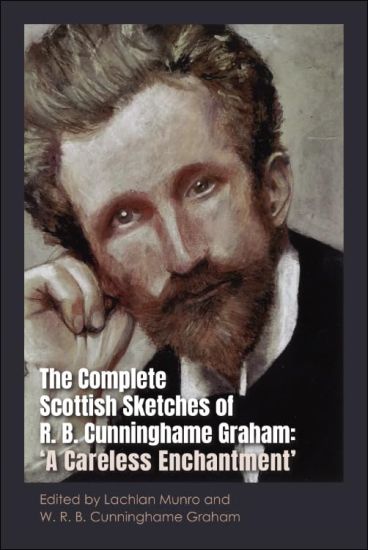
Cunninghame Graham was a famous and hugely influential figure in late 19th and early 20th century Scottish politics and literature. He published 34 books during his lifetime, equally divided between histories (mostly of South America), and anthologies of his impressionistic sketches of South America, Morocco, and Scotland, the large majority of which had been published previously in literary magazines between 1896 and 1933. For the first time, the editors have compiled his entire Scottish oeuvre chronologically, into one volume, and set them in their historical and social contexts, which explores and contextualises the works themselves, and traces Graham's development as a much-admired literary artist and social documentarist. One of the editors is a Cunninghame Graham family member, and the family historian, who has provided insights and peculiar details, unavailable to previous biographers, which hopefully provides added depth and understanding to Graham's works.
Cunninghame Graham was a famous and hugely influential figure in late 19th and early 20th century Scottish politics and literature. He published 34 books during his lifetime, equally divided between histories (mostly of South America), and anthologies of his impressionistic sketches of South America, Morocco, and Scotland, the large majority of which had been published previously in literary magazines between 1896 and 1933. For the first time, the editors have compiled his entire Scottish oeuvre chronologically, into one volume, and set them in their historical and social contexts, which explores and contextualises the works themselves, and traces Graham's development as a much-admired literary artist and social documentarist. One of the editors is a Cunninghame Graham family member, and the family historian, who has provided insights and peculiar details, unavailable to previous biographers, which hopefully provides added depth and understanding to Graham's works.
Why is so stunningly puzzling about the science project of Graham Kin Steim, the child cement scientist? What makes a zombie tooth fairy a double, and sometimes a triple fairy?
With a frightening capacity for extreme violence, Tyneside protection hardman Viv Graham struck fear into the hearts of his enemies, yet his benevolence to local charities and schemes to keep kids away from drugs and crime was well known. A legend in his own lifetime, he was the ultimate maverick troubleshooter whose size and ability to fight enabled him to live just as he wishes, never forgetting the deprived community he came from, who in times of need, considered him the fourth emergency service. Teeside drugs enforcer Lee Duffy had half his foot shot off in an assassination attempt and his skull beaten with a crowbar, yet his streetwise instinct remained unmatched. Proud to be known as Viv's arch enemy, Lee was feared and respected in equal measure and wanted to get out of the game for the sake of his family, but was so deeply involved that there was only one way he would ever leave...With unprecedented access to friends, family members and associates, Stephen Richards dispels many of the myths surrounding these legendary figures to create the ultimate biography of Britain's deadliest rivals.
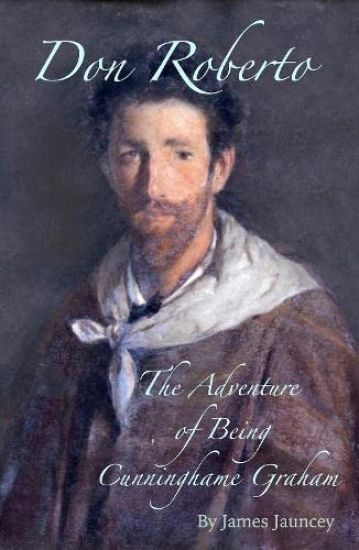
‘A combination of all that is best in memoir, biography and history.’ – Caroline Moorehead 'In this remarkable book... Jauncey has performed the great service of reminding us of a wonderful figure from Scotland’s recent history.' – Alexander McCall Smith It would be impossible to invent Don Roberto today – a fantastic combination of Don Quixote and Sir Gawain, Indiana Jones and the Lone Ranger. He was so multi-faceted, so complex, that every chapter in his story reveals some new and contradictory aspect of his personality. He is best known as the co-founder, with Keir Hardie, of the Scottish Labour Party, and later as the founding president of the Scottish National Party. But in a long and extraordinary life he was many other things besides.
The work of memory researchers Alan Baddeley and Graham Hitch is a prime example of the ways in which good critical thinkers approach questions and the problems they raise. In the 1960s, researchers into human memory began to understand memory as comprising not one, but two systems. The first was a short-term system handling information for mere seconds. The second was a long-term system capable of managing information indefinitely. They also discovered, however, that short-term memory was not simply a ‘filing cabinet,’ as many had thought, but was actively working on cognitive – or mental – tasks. This is how the phrase “working memory” developed. The hypothesis remained unproven, however, presenting Baddeley and Hitch with the problem of working out how to produce definitive evidence that short term memory was a working system that actively manipulated and processed information. They responded by designing a series of ten experiments aimed at showing just this – presenting the results in their 1974 article, ‘Working memory.’ The research was a masterpiece of problem-solving that proved revelatory. The authors not only generated new solutions and made sound decisions between alternative possibilities – they also showed that short-term memory is indeed an active system responsible for information processing and managing, while also influencing attention, reasoning, reading comprehension and learning.While their work has since been refined by others, Baddeley and Hitch’s problem-solving approach helped to create the dominant understanding of working memory that underpins psychological research throughout the world today.