
Kirjahaku
Etsi kirjoja tekijän nimen, kirjan nimen tai ISBN:n perusteella.
1000 tulosta hakusanalla Graham Greene

Help Out House: Graham's Chronicles
Jeff Hawksworth
Createspace Independent Publishing Platform
2013
nidottu

Conversations with Graham Swift
University Press of Mississippi
2020
sidottu
Conversations with Graham Swift is the first collection of interviews conducted with the author of the Booker Prize-winning novel Last Orders. Beginning in 1985 with Swift's arrival in New York to promote Waterland and concluding with an interview from 2016 that appeared in the Sydney Morning Herald, the collection spans Swift's more than thirty-five-year career as a writer. The volume also includes interviews first printed in English as well as translated from the French or Spanish and covers a wide range of formats, from lengthier interviews published in standard academic journals, to those for radio, newspapers, and, more recently, podcasts. In these interviews, Graham Swift (b. 1949) offers insights into his life and career, including his friendships with other contemporary writers like Ted Hughes and the group of celebrated novelists who emerged in Britain during the eighties. With remarkable clarity, Swift discusses the themes of his novels and short stories: death, love, history, parent-child relationships, the power of the imagination, the role of storytelling, and the consequences of knowing. He also notes the influences, literary and personal, that have helped shape his writing career. While quite ordinary in his life and daily habits, Swift reveals his penetrating intellect and rich imagination-an imagination that can craft some of the most engaging and formally complex stories in the language.

Conversations with Graham Swift
University Press of Mississippi
2020
pokkari
Conversations with Graham Swift is the first collection of interviews conducted with the author of the Booker Prize-winning novel Last Orders. Beginning in 1985 with Swift's arrival in New York to promote Waterland and concluding with an interview from 2016 that appeared in the Sydney Morning Herald, the collection spans Swift's more than thirty-five-year career as a writer. The volume also includes interviews first printed in English as well as translated from the French or Spanish and covers a wide range of formats, from lengthier interviews published in standard academic journals, to those for radio, newspapers, and, more recently, podcasts. In these interviews, Graham Swift (b. 1949) offers insights into his life and career, including his friendships with other contemporary writers like Ted Hughes and the group of celebrated novelists who emerged in Britain during the eighties. With remarkable clarity, Swift discusses the themes of his novels and short stories: death, love, history, parent-child relationships, the power of the imagination, the role of storytelling, and the consequences of knowing. He also notes the influences, literary and personal, that have helped shape his writing career. While quite ordinary in his life and daily habits, Swift reveals his penetrating intellect and rich imagination-an imagination that can craft some of the most engaging and formally complex stories in the language.
Examining Billy Graham's Theology of Evangelism
Thomas P Johnston
Wipf Stock Publishers
2003
sidottu
'Examining Billy Graham's Theology of Evangelism' was written to advance an unbiased understanding of Billy Graham's theology and practice. Theological examination of Graham's sermons revealed four distinct eras in his theology and practice: -The Early-Early Graham (pre-1949) -The Early Graham (1949-1955) -The Middle Graham (1955-1965) -The Later Graham (1965-present) In each of these eras Graham portrayed a discernible and distinct approach to defining evangelism, theological nomenclature, and cooperative strategy. No literature on Billy Graham discusses, in combination, this evolution in Graham's theology and practice. You are invited to take a fresh look at the teaching and practice of this man who has touched millions of lives through the proclamation of the Gospel of Jesus Christ.

Hot Houston Nights: Graham & Isabella
S. N. Garza
Createspace Independent Publishing Platform
2015
nidottu

African American Graham Family of Wayne County Mississippi
James E. Graham Jr
Createspace Independent Publishing Platform
2015
nidottu
PORTRAITS OF AN AMERICAN FAMILY: Years had passed and Peter never thought it could really happen, black men free in America. At age 45, Peter and his wife Maneron had heard the good news. In the year 1863, President Abraham Lincoln signed the Emancipation Proclamation, setting black slaves free. Maneron would shout, "Hallelujah to The Lamb of God Thank you Jesus, we're free "Peter would call a family meeting that night, things were changing. At the meeting were his wife Maneron, His daughter Mona, and his two young sons George and Lonzo "Loringus".

Old Gorgon Graham - More Letters from a Self-Made Merchant to His Son
George Horace Lorimer
White Press
2019
pokkari
This volume contains is the a series of letters between an American self-made millionaire and his son who is just entering the family business. Dating back to the 1890s, the letters contain timeless advice and words of wisdom that are as useful today as when first written. "Old Gorgon Graham - More Letters from a Self-Made Merchant to His Son" is highly recommended for anyone involved in business and not to be missed by young entrepreneurs. George Horace Lorimer (1867-1937) was an American author, journalist, and publisher most famous for being the editor of The Saturday Evening Post between 1899 and 1936. As editor, the paper's circulation rose from a few thousand to over a million. "The Letters from a Self-Made Merchant" was well known during the early 20th century and was the basis for the 1922 film "A Self-made Man" starring William Russell. Many vintage books such as this are becoming increasingly scarce and expensive. We are republishing this volume now in an affordable, modern, high-quality edition complete with the original text and artwork.


Ghent: John Graham's Dream Norfolk, Virginia's Treasure
Amy Waters Yarsinske
History Press Library Editions
2006
sidottu
Ghent, perhaps more than any other Norfolk suburb, has a story to tell that transcends its historic port city lineage, reaching national importance in its planning and execution. Despite changing times and tastes, Ghent's period architecture, tree-lined streets, and attractive waterfront location combine to ensure that Ghent will remain a beloved, integral area of Norfolk for generations.
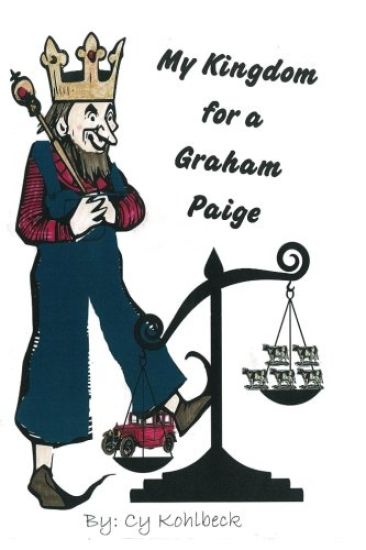
My Kingdom For A Graham Paige
Cy D. Kohlbeck
Createspace Independent Publishing Platform
2017
nidottu
This is mainly about how a person balanced the importance of a new car with his source of income. And lost, thereby creating many serious problems for the whole family. How the family survived is the essence of the separate stories that make up the theme of this non-fiction true epic history lesson.
Examining Billy Graham's Theology of Evangelism
Thomas P Johnston
Wipf Stock Publishers
2003
pokkari
'Examining Billy Graham's Theology of Evangelism' was written to advance an unbiased understanding of Billy Graham's theology and practice. Theological examination of Graham's sermons revealed four distinct eras in his theology and practice: -The Early-Early Graham (pre-1949) -The Early Graham (1949-1955) -The Middle Graham (1955-1965) -The Later Graham (1965-present) In each of these eras Graham portrayed a discernible and distinct approach to defining evangelism, theological nomenclature, and cooperative strategy. No literature on Billy Graham discusses, in combination, this evolution in Graham's theology and practice. You are invited to take a fresh look at the teaching and practice of this man who has touched millions of lives through the proclamation of the Gospel of Jesus Christ.

I don't care how much or how little money you make-I want you to understand that there's only one place in the world where you can live a happy life, and that's inside your income. A family that's living beyond its means is simply a business that's losing money, and it's bound to go smash. -from "V: New York, December 8, 189-" Chicago pork magnate John Graham is a thorough success in business... except when it comes to his ne'er-do-well son Pierrepont, who never seems to need the end of his father's no-nonsense advice on being a boss, being a husband, and being a man. This delightful 1904 book-a sequel to Lorimer's 1901 Letters From a Self-Made Merchant to His Son-is ostensibly a work of fiction, taking the form of exasperated letters from Graham to his would-be prot g , but it's still a genuine source of down-home counsel on how to hire family (carefully), how to drink on the job (don't), when to apologize to a wife (always), and more. American journalist GEORGE HORACE LORIMER (1867-1937) was editor in chief of the Saturday Evening Post from 1899 to 1936, leading the magazine to the heights of its popularity. He is also the author of False Gods (1906).

Moments with Billy Graham
Grace Publishing
2018
pokkari
Personal recollections of special moments people from all walks of life experienced with beloved evangelist Billy Graham. With foreword by daughter Gigi Graham. Contributors: Max Elliot Anderson, Joye Atkinson, Joe Bonsall, Shirley Brosius, Carlene Shuler Brown, Roger Bruner, Penelope Carlevato, Joann Claypoole, Wendy Dellinger, Lola De Maci, Diana Flegal, Gayle Fraser, Tommy Scott Gilmore, III, Mary A. Hake, Lydia E. Harris, Judith Victoria Hensley, Helen L. Hoover, Amanda Hughes, Nancy Johnson, Ann Knowles, Yvonne Lehman, Suzanne Liggitt, Lowell Lytle, Jayme H. Mansfield, Diana Leagh Matthews, Mary E. McQueen, Andrea Merrell, Lynn Mosher, Vicki H. Moss, Patricia Luellen Nicholas, Karen Lynn Nolan, Diane H. Pitts, Kim Peterson, Deborah M. Presnell, Colleen L. Reece, Fred Robinson, Jr., Karen Sawyer, Cindy Sproles, Nate Stevens, Barb Suiter. Audrey Tyler, Beverly Varnado, Debra DuPree Williams. Dr. Rhett H. Wilson, Sr., Ann Brubaker Wirtz

The first comprehensive study of Pulitzer Prize–winning poet Jorie Graham Since her first book appeared in 1980, Jorie Graham has challenged readers with her bold, innovative, and capacious poetry. In the collections that followed, she expanded the scope of the lyric form through her maximalist poetics, her provocative ethical imagination, and, in later years, her environmentalist vision. Graham was awarded the Pulitzer Prize for The Dream of the Unified Field and has served as a chancellor of the Academy of American Poets. As a professor at Harvard University and the University of Iowa Writers' Workshop, Graham has mentored and inspired the next generation of poets. In Understanding Jorie Graham, N. S. Boone situates Graham among post–World War II and contemporary American poets, and he provides a look inside her life and career based on a series of exclusive personal interviews. Boone then traces the development of Graham's themes and style through her collections, providing detailed readings of the most significant poems in Graham's corpus. For scholars, students, and fans of Graham's poetry, the volume provides essential context and insight.
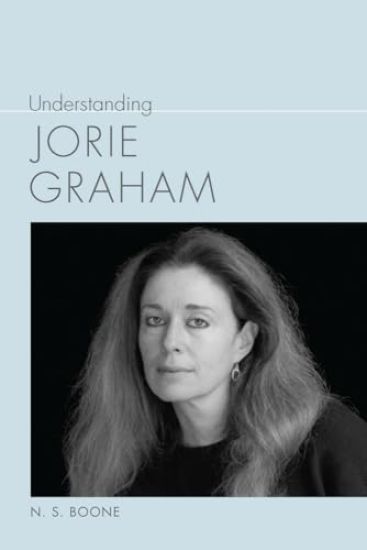
The first comprehensive study of Pulitzer Prize–winning poet Jorie Graham Since her first book appeared in 1980, Jorie Graham has challenged readers with her bold, innovative, and capacious poetry. In the collections that followed, she expanded the scope of the lyric form through her maximalist poetics, her provocative ethical imagination, and, in later years, her environmentalist vision. Graham was awarded the Pulitzer Prize for The Dream of the Unified Field and has served as a chancellor of the Academy of American Poets. As a professor at Harvard University and the University of Iowa Writers' Workshop, Graham has mentored and inspired the next generation of poets. In Understanding Jorie Graham, N. S. Boone situates Graham among post–World War II and contemporary American poets, and he provides a look inside her life and career based on a series of exclusive personal interviews. Boone then traces the development of Graham's themes and style through her collections, providing detailed readings of the most significant poems in Graham's corpus. For scholars, students, and fans of Graham's poetry, the volume provides essential context and insight.
Poppy and Graham's Quest for Tenacity
Sam Goldstein; Robert B Brooks
Archway Publishing
2024
sidottu
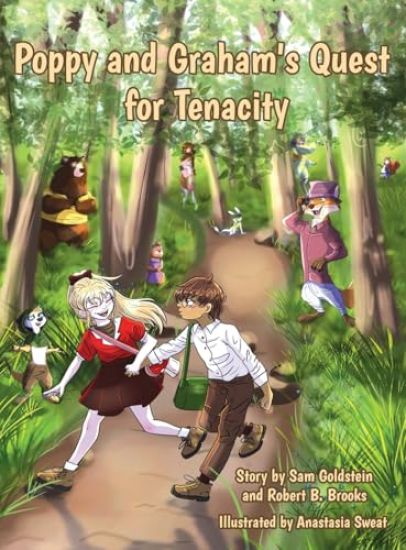
Poppy and Graham's Quest for Tenacity is designed to be an engaging, visually stimulating graphic book that combines the essential elements of storytelling with powerful educational messages. It narrates the adventures of Poppy and Graham, two relatable and spirited characters, who embark on a journey filled with challenges and learning opportunities. Each part of their journey is an allegory designed to teach and reinforce the principles of the seven instincts of tenacity, and resilience. "Poppy and Graham's Quest for Tenacity is engaging and visually appealing. My grandsons, Isaac (9) and Harry (13) learned the value of persistence and goals. The creative artwork captivated them. The book's parental guidelines ensure its message endures. Highly recommended " -Maurice J. Elias, Ph.D., Rutgers University. Co-author, The Joys and Oys of Parenting and Emotionally Intelligent Parenting
Poppy and Graham's Quest for Tenacity
Sam Goldstein; Robert B Brooks
Archway Publishing
2024
pokkari
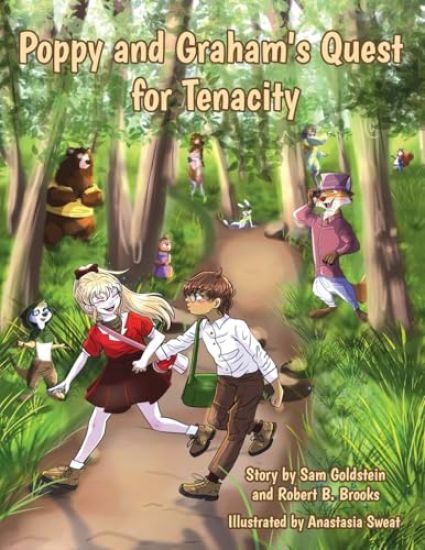
Poppy and Graham's Quest for Tenacity is designed to be an engaging, visually stimulating graphic book that combines the essential elements of storytelling with powerful educational messages. It narrates the adventures of Poppy and Graham, two relatable and spirited characters, who embark on a journey filled with challenges and learning opportunities. Each part of their journey is an allegory designed to teach and reinforce the principles of the seven instincts of tenacity, and resilience. "Poppy and Graham's Quest for Tenacity is engaging and visually appealing. My grandsons, Isaac (9) and Harry (13) learned the value of persistence and goals. The creative artwork captivated them. The book's parental guidelines ensure its message endures. Highly recommended " -Maurice J. Elias, Ph.D., Rutgers University. Co-author, The Joys and Oys of Parenting and Emotionally Intelligent Parenting
The Inspector Graham Mysteries
Grace Dagnall; Alison Golden
Createspace Independent Publishing Platform
2018
pokkari
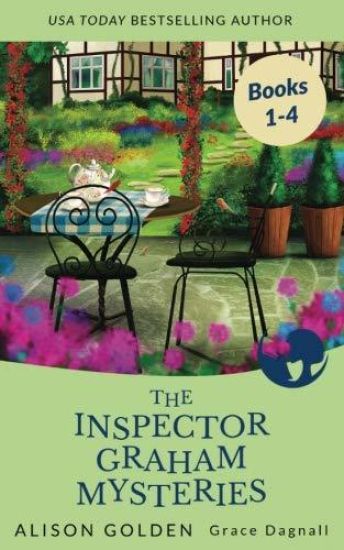
★★★★★ "Solid proof that a book can rely on good storytelling and good writing without needing blood or sex." Have you met Inspector David Graham?Graham is a Detective Inspector with London's Metropolitan police force. He's a career police officer, an educated, reserved, thoughtful, some might say, complex man.He has suffered tragedy in his life that serves to exaggerate his more introspective characteristics and, like many of us, has to look his demons in the eye from time to time and make tough choices.This box set contains the first four mysteries in this bestselling series: The Case of the Screaming Beauty: Detective Inspector Graham is still reeling from a tragedy of his own when he is called in to investigate a murder at the prestigious Lavender Bed and Breakfast. It has a rich, Tudor atmosphere, an enviously manicured lawn... And a deadly problem.The Case of the Hidden Flame: Inspector David Graham is hoping for peace and quiet when he leaves city life behind for a quaint island village - but a suspicious death soon derails his plans. Will eccentric characters, roiling sea undercurrents, and deceptive coincidences unravel to reveal the secrets of his latest mystery?The Case of the Fallen Hero: As he walks around the imposing Orgueil castle, Graham's peaceful life comes to a shuddering halt when he finds a woman kneeling beside the body of a stricken man. Does the castle hold clues to the puzzle?The Case of the Broken Doll: A missing girl. A broken doll. Dark, deviant secrets. What Inspector finds as he investigates will rock the town, stirring memories long buried and forgotten. There are painful truths to face. Can he uncover what happened? Could the missing schoolgirl still be alive?**This murder mystery series contains no profanity or graphic descriptions of sex or violence.**Pick up this special offer (and a cup of tea) before it disappears What Amazon readers are saying: ★★★★★ "Character development was superb."★★★★★ "I literally could not put this book down."★★★★★ "Inspector Graham is right up there with some of the icons of British mysteries."★★★★★ "The scenery description, characterization, and fabulous portrayal of the hotel on the hill are all layered into a great English trifle."★★★★★ "These books certainly have the potential to become a PBS series with the likeable character of Inspector Graham and his fellow officers."★★★★★ "DI Graham is wonderful and his old school way of doing things, charming."★★★★★ "I know I have a winner of a book when I toss and turn at night worrying about how the characters are doing."★★★★★ "I really enjoyed the surprise twists at the end."★★★★★ "Just finished it early this morning What a great story "★★★★★ "Sweet, emotionally honest, with a lot of backbone in the characters and the writing."★★★★★ "The characters feel like old friends."★★★★★ "These books certainly have the potential to become a PBS series with the likable character of Inspector Graham and his fellow officers."★★★★★ "Please never end the series."Start The Inspector Graham Mysteries, a series you won't want to put down
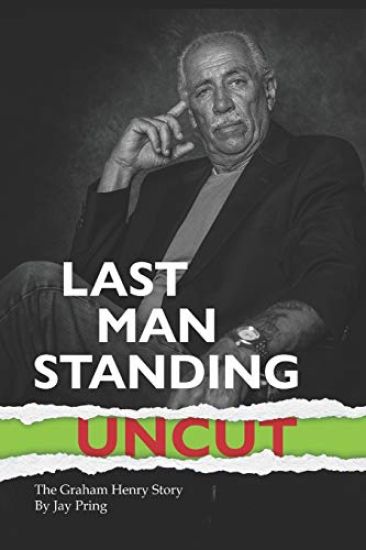
The shocking and brutal life and crimes of one of Australia's most notorious and feared underworld kingpins, Graham 'Abo' Henry. From his violent childhood and rise through the ranks of Sydney's most dangerous men, to his involvement in a Royal Commission into Police Corruption that would bring down a government, this is his compelling and terrifying true story.Angry, belligerent, dangerous beyond compare, Graham Henry built a criminal gang and empire that swept aside all gangs before them in the notorious gang wars of the 1980s and 1990s. From the biggest armed robberies the city had ever known, to the targets drug deals, Henry and his organised crime gang ruled over all, protected by a litany of corrupt and greedy police, politicians and judges. But with millions rolling in, petty jealousies, and perceived slights would see his criminal juggernaut unravel from within, ending in a bloody fight for survival that would tear the underworld apart, and leave it forever changed.