Kirjojen hintavertailu. Mukana 12 390 323 kirjaa ja 12 kauppaa.

Kirjahaku

Etsi kirjoja tekijän nimen, kirjan nimen tai ISBN:n perusteella.

1000 tulosta hakusanalla Gregory Claeys

The Evolutionary Ecology of Plant Disease

The Evolutionary Ecology of Plant Disease

Gregory Gilbert; Ingrid Parker

Oxford University Press
2023
sidottu
Understanding the symbiosis between plants and pathogenic microbes is at the core of effective disease management for crops and managed forests. At the same time, plant-pathogen interactions comprise a wonderfully diverse set of ecological relationships that are powerful and yet so commonplace that they often go unnoticed. Ecologists and evolutionary biologists are increasingly exploring the terrain of plant disease ecology, investigating topics such as how pathogens shape diversity in plant communities, how features of plant-microbe interactions including host range and mutualism/antagonism evolve, and how biological invasions, climate change, and other agents of global change can drive disease emergence. Traditional training in ecology and evolutionary biology seldom provides structured exposure to plant pathology or microbiology, and training in plant pathology rarely offers depth in the theoretical frameworks of evolutionary ecology or includes examples from complex wild ecosystems. This novel textbook seeks to unite the research communities of plant disease ecology and plant pathology by bridging this gap.

The Evolutionary Ecology of Plant Disease

The Evolutionary Ecology of Plant Disease

Gregory Gilbert; Ingrid Parker

Oxford University Press
2023
nidottu
Understanding the symbiosis between plants and pathogenic microbes is at the core of effective disease management for crops and managed forests. At the same time, plant-pathogen interactions comprise a wonderfully diverse set of ecological relationships that are powerful and yet so commonplace that they often go unnoticed. Ecologists and evolutionary biologists are increasingly exploring the terrain of plant disease ecology, investigating topics such as how pathogens shape diversity in plant communities, how features of plant-microbe interactions including host range and mutualism/antagonism evolve, and how biological invasions, climate change, and other agents of global change can drive disease emergence. Traditional training in ecology and evolutionary biology seldom provides structured exposure to plant pathology or microbiology, and training in plant pathology rarely offers depth in the theoretical frameworks of evolutionary ecology or includes examples from complex wild ecosystems. This novel textbook seeks to unite the research communities of plant disease ecology and plant pathology by bridging this gap.
Seven Tales of the Pendulum

Seven Tales of the Pendulum

Gregory L. Baker

Oxford University Press
2017
nidottu
The pendulum is a unique physical system which exhibits remarkably varied and complex behavior under many different conditions. It is also a system which, in its many manifestations, has left a significant imprint on human thought and culture. Using graphs, figures, and narrative to explain scientific ideas and models, Gregory Baker gives a lucid account of the physics of the pendulum, showing the reader how the context of the pendulum progresses over four centuries from that of a simple system of classical physics, to that of a chaotic system, and eventually to that of a modern quantum system. He also describes its fascinating presence in cultural history, from its role in timekeeping and measurements of the earth to its importance as a literary symbol of doom. Seven 'tales', detailing different important facets of the pendulum, show the exciting diversity of the science of the pendulum, and its untold significance in the history of human intellectual development.
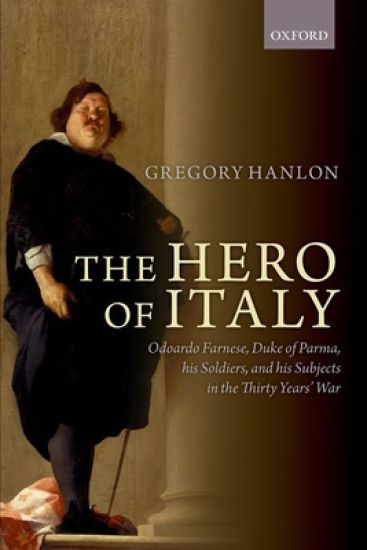
The Hero of Italy

The Hero of Italy

Gregory Hanlon

Oxford University Press
2019
nidottu
The Hero of Italy examines a salient episode in Italy's Thirty Years' War with Spain and France, whereby the young duke Odoardo Farnese of Parma embraced the French alliance, only to experience defeat and occupation after two tumultuous years (1635-1637). Gregory Hanlon stresses the narrative of events unfolding in northern Italy, examining the participation of the little state in these epic European events. The first chapter describes the constitution of Cardinal Richelieu's anti-Habsburg alliance and Odoardo's eagerness to be part of it. A chapter on the Parman professional army, based on an extraordinary collection of company roster-books, sheds light on the identity of over 13,000 individuals, soldier by soldier, the origin and background of their officers, the conditions of their lodgings, and the good state of their equipment. Chapter three follows the first campaign of 1635 alongside French and Savoyard contingents at the failed siege of Valenza, and the logistical difficulties of organizing such large-scale operations. Another chapter examines the financial expedients the duchy adopted to fend off incursions on all its borders in 1636, and how militia contingents on both sides were drawn into the fighting. A final chapter relates the Spanish invasion and occupation which forced duke Odoardo to make a separate peace. The volume includes a detailed assessment of the impact of war on civilians based on parish registers for city and country. The application of the laws of war was largely nullified by widespread starvation, disease and routine sex-selective infanticide. These quantitative analyses, supported by maps and tables, are among the most detailed anywhere in Europe in the era of the Thirty Years' War.
Microeconomics in Words

Microeconomics in Words

Gregory Besharov

Oxford University Press
2024
sidottu
The claims of economists about the successes and failures of markets have enormous influence in public debates, yet the sources of those claims are often unclear. Microeconomics in Words demystifies microeconomic analyses by showing how they depend on simplifying assumptions and ethical judgments that could be made differently. As microeconomics is a model-based discipline, this book addresses what makes outcomes efficient in models of markets, and it questions when market efficiency is desirable. To make the material more accessible and to provide context for the ideas, the book adopts a word-based rather than mathematical approach and uses many examples from literary classics. Starting with the basic model of supply and demand, the book layers on complications of taxes, market failures and their solutions, limitations on correcting them, and transaction costs and institutions. It focuses on both the insights and the limitations of economic analyses - not only what has been formally proven but also what is discussed less formally in seminars and articles. The book then turns to the topics of free trade and controversial markets for cigarettes and transplant organs to show how the tools and concepts that have been developed are used, and not used, in practice.
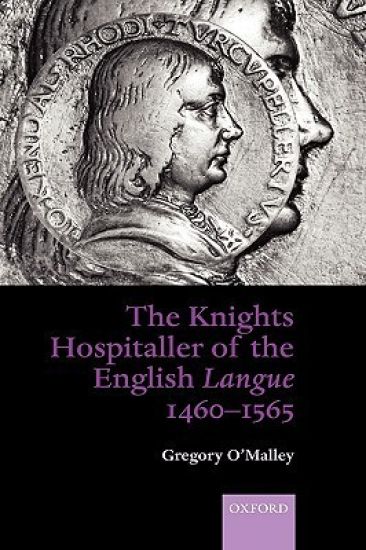
The Knights Hospitaller of the English Langue 1460-1565

The Knights Hospitaller of the English Langue 1460-1565

Gregory O'Malley

Oxford University Press
2005
sidottu
The Knights of St John of Jerusalem, also known as the Hospitallers, were a military religious order, subject to monastic vows and discipline but devoted to the active defence of the Holy Land. After evacuating the Holy Land at the beginning of the fourteenth century, they occupied Rhodes, which they held into the sixteenth century, when their headquarters moved to Malta. Branches of the order existed throughout Europe, and it is the English branch in the fifteenth and sixteenth centuries that is examined here. Among the major subjects researched by O'Malley are the recruitment of members of the Hospital and their family ties; the operation of the order's career structure; the administration of its estates; its provision of spiritual and charitable services; and the publicity and logistical support it provided for the holy war carried on by its headquarters against the Ottoman Turks. It is argued that the English Hospitallers in particular took their military and financial duties to the order very seriously, making a major contribution to the Hospital's operations in the Mediterranean as a result. They were able to do so because they were wealthy, had close family and other ties with gentle and mercantile society, and above all because their activities had royal support. Where this was lacking or ineffective, as in Ireland, the Hospital might become the plaything of local interests eager to exploit its estates, and its wider functions might be neglected. Consequently the heart of the book lies in an extended discussion of the relationship between senior Hospitaller officers and the governing authorities of Britain and Ireland. It is concluded that rulers were generally supportive of the order's activities, but within strict limits, particularly in matters concerning appointments, the size of payments to the east, and the movement and foreign allegiances of senior brethren. When these limits were breached, or at times of political or religious sensitivity such as the 1460s and 1530s, the Hospital's personnel and estates would suffer. In addition, more general areas of historical debate are illuminated such as those concerning the relationship between late medieval societies and the religious orders; 'British' attitudes to Christendom and holy war, and the rights of rulers over their subjects. This is the first such book to be based on archival records in both Britain and Malta, and will make a major contribution to understanding the order's European network, its place in the ordering of Latin Christendom, and in particular its role in late medieval British and Irish society.
Arts and Minds

Arts and Minds

Gregory Currie

Clarendon Press
2004
nidottu
Philosophical questions about the arts go naturally with other kinds of questions about them. Art is sometimes said to be an historical concept. But where in our cultural and biological history did art begin? If art is related to play and imagination, do we find any signs of these things in our nonhuman relatives? Sometimes the other questions look like ones the philosopher of art has to answer. Anyone who thinks that interpretation in the arts is an activity that leaves the intentions of the author behind needs to explain how and why this differs so fundamentally from ordinary conversational interpretation, where the only decent models we have are ones that depend crucially on the recovery of intention. Anyone who thinks that imaginative literature has anything to tell us about time had better have a position on how earlier and later relate to past and future. Anyone who thinks that empathy plays a role in literary engagement had better have a psychologically plausible account of what empathy is. Philosophical questions about the arts also go naturally with other kinds of philosophical questions: we can't think constructively about representation in art without thinking about representation; text, meaning, reference and existence get similarly drawn into the conversation. Some ideas that philosophers of art deal with emerge from other disciplines. In literary theory an enormous amount of attention has been lavished on tracing the sources of unreliability in narrative. Is the result adequate to the details of the particular works we call unreliable? Contemporary film theory is generally hostile to the fiction/documentary distinction. Are there in fact any grounds for this? This book of thirteen connected essays examines questions of all these kinds. It ranges from the semantics of proper names, through the pragmatics of literary and filmic interpretation, to the aesthetic function of stone age implements. Some of the essays have not been published before; some that have are here substantially revised.
Auxiliary Verb Constructions

Auxiliary Verb Constructions

Gregory D.S. Anderson

Oxford University Press
2006
sidottu
This is the most comprehensive survey ever published of auxiliary verb constructions, as in 'he could have been going to drink it' and 'she does eat cheese'. Drawing on a database of over 800 languages Dr Anderson examines their morphosyntactic forms and semantic roles. He investigates and explains the historical changes leading to the cross-linguistic diversity of inflectional patterns, and he presents his results within a new typological framework. The book's impressive range includes data on variation within and across languages and language families. In addition to examining languages in Africa, Europe, and Asia the author presents analyses of languages in Australasia and the Pacific and in North, South, and Meso-America. In doing so he reveals much that is new about the language families of the world and makes an important contribution to the understanding of their nature and evolution. His book will interest scholars and researchers in language typology, historical and comparative linguistics, syntax, and morphology.
Narratives and Narrators

Narratives and Narrators

Gregory Currie

Oxford University Press
2010
sidottu
Narratives are artefacts of a special kind: they are intentionally crafted devices which fulfil their story-telling function by manifesting the intentions of their makers. But narrative itself is too inclusive a category for much more to be said about it than this; we should focus attention instead on the vaguely defined but interesting category of things rich in narrative structure. Such devices offer significant possibilities, not merely for the representation of stories, but for the expression of point of view; they have also played an important role in the evolution of reliable communication. Narratives and narrators argues that much of the pleasure of narrative communication depends on deep-seated and early developing tendencies in human beings to imitation and to joint attention, and imitation turns out to be the key to understanding such important literary techniques as free indirect discourse and character-focused narration. The book also examines irony in narrative, with an emphasis on the idea of the expression of ironic points of view. It looks closely at the idea of character, or robust, situation-independent ways of acting and thinking, as it is represented in narrative. It asks whether scepticism about the notion of character should have us reassess the dramatic and literary tradition which places such emphasis on character.
Sleep problems in Children and Adolescents

Sleep problems in Children and Adolescents

Gregory Stores

Oxford University Press
2008
nidottu
Sleep problems in children and adolescents are very common and often the cause of concern and distress for both the child and the family. They can affect behaviour, learning and sometimes physical health. There are many possible causes for sleep problems, some psychological, others physical, and this book will help you to identify and explain problems in your own child, leading you to the appropriate advice or treatment as necessary. The book starts by explaining the importance and nature of sleep and the changes that occur as your child grows up. It then describes why children may not sleep well at different ages from babyhood to adolescence, the causes of being excessively sleepy during the day, and the types of unusual behaviours or experiences that a child can have at night. The various types of treatment needed for these problems are explained. The later chapters discuss those children who are especially liable to have sleep problems, the ways in which sleep problems may be mistaken for other conditions, the ways in which unsatisfactory sleep can be spotted at home and at school, and how to get help for your child's disturbed sleep. Throughout the book, cases are described to illustrate how children with various sleep disorders have been correctly diagnosed and treated. The book is intended to raise awareness of the importance of children's sleep disorders, as well as their recognition and treatment. It is written mainly for parents but will also be of interest to anyone involved in the care and welfare of children.
Westmoreland's War

Westmoreland's War

Gregory A. Daddis

Oxford University Press Inc
2014
sidottu
General William C. Westmoreland has long been derided for his failed strategy of "attrition" in the Vietnam War. Historians have argued that Westmoreland's strategy placed a premium on high "body counts" through a "big unit war" that relied almost solely on search and destroy missions. Many believe the U.S. Army failed in Vietnam because of Westmoreland's misguided and narrow strategy In a groundbreaking reassessment of American military strategy in Vietnam, Gregory Daddis overturns conventional wisdom and shows how Westmoreland did indeed develop a comprehensive campaign which included counterinsurgency, civic action, and the importance of gaining political support from the South Vietnamese population. Exploring the realities of a large, yet not wholly unconventional environment, Daddis reinterprets the complex political and military battlefields of Vietnam. Without searching for blame, he analyzes how American civil and military leaders developed strategy and how Westmoreland attempted to implement a sweeping strategic vision. Westmoreland's War is a landmark reinterpretation of one of America's most divisive wars, outlining the multiple, interconnected aspects of American military strategy in Vietnam-combat operations, pacification, nation building, and the training of the South Vietnamese armed forces. Daddis offers a critical reassessment of one of the defining moments in American history.
Humans in Nature

Humans in Nature

Gregory E. Kaebnick

Oxford University Press Inc
2014
sidottu
Contemporary debates over issues as wide-ranging as the protection of wildernesses and endangered species, the spread of genetically modified organisms, the emergence of synthetic biology, and the advance of human enhancement, all of which seem to spin into deeper and more baffling questions with every change in the news cycle, often circle back to the same fundamental question: should there be limits to the human alteration of the natural world? A growing number of people view the human capacity to alter natural states of affairs -- from formerly wild spaces and things around us to crops and livestock to our own human nature -- as cause for moral alarm. That reaction raises a number of perplexing philosophical questions, however: Can we identify "natural" states of affairs at all? Does the idea of being morally concerned about the human relationship to nature make any sense? Should such a concern influence public policy and politics, or should government stay strenuously neutral on such matters? Through a study of moral debates about the environment, agricultural biotechnology, synthetic biology, and human enhancement, Gregory E. Kaebnick, a research scholar at The Hastings Center and editor of the Hastings Center Report, argues that concerns about the human alteration of nature can be legitimate and serious, but also that they are complex, contestable, and of limited political force. Kaebnick defends attempts to identify "natural" states of affairs by disentangling the nature/artifact distinction from metaphysical hoariness. Drawing on David Hume, he also defends moral standards for the human relationship to nature, arguing that they, and moral standards generally, should be understood as grounded in what Hume called the "passions." Yet what counts as "natural" can be delineated only roughly, he concludes, and moral standards for interaction with nature are less a matter of obligation than of ideals. Kaebnick also concludes, drawing on an interpretation of the liberal principle of neutrality, that government may support those standards but must be careful not to enforce them. Thus Kaebnick looks for a middle way on debates that have tended toward polarization. "As differences between nature and artifact become steadily less substantial, problems about preservation run to the core of how people can make sense of themselves, of each other, and of our shared world. Kaebnick's solutions are creative and compelling, theoretically elegant and politically practical. Providing distinctive ways forward, when much academic and policy discussion seems exhausted, his book demands wide attention. In return, it inspires hope." - James Nelson, Michigan State University
Brass Baja

Brass Baja

Gregory Booth

OUP India
2017
nidottu
Anyone who has seen a wedding procession in northern India would have heard and seen the band of professional musicians accompanying the procession. Surrounded by bright lamps and dressed in uniforms reminiscent of military finery, these are the men who herald the arrival of the groom. In spite of the singing, dancing, and the ornately clad gathering of family and friends in the procession, it is the band that is often its most noticeable element. This book is a detailed and colourful study of India's wedding bands. It argues that while music performed by the wedding bands helps generate emotions of ecstasy and joy, the bandsmen who play it are in the fringes of the social events they herald. Musically and socially, and by birth and profession, bandsmen at weddings are ascribed low social status. Booth's analysis of bands and bandsmen is rich in symbolism and facts surrounding South Asia's complex and diverse musical history. He explains the band trade as a syncretic component of popular culture constructed during the nineteenth and twentieth centuries in both colonial and independent India. This book tells stories of change witnessed in Indian wedding processions and bands over time. The relationship of musical traditions to the colonial past and India's culture, as also the metaphorical association between musical and cultural changes are also explored.
Protein Structure and Function

Protein Structure and Function

Gregory A. Petsko; Dagmar Ringe

Oxford University Press
2008
nidottu
How does the chemical description of a protein relate to its three-dimensional structure? How does the three-dimensional structure relate to the machinery that brings about a chemical reaction? How does the sequence of a gene encode not only the sequence of a protein but, more importantly, the architecture and function of that protein? Protein Structure and Function provides a clear and critical survey of our current understanding of the structure and function of proteins to answer questions such as these. Opening with a consideration of the link between protein sequence and structure, it goes on to explore the structural basis of protein function and how this function is controlled. Finally, it examines a range of case studies that illuminate the range of roles performed by proteins, and the diverse structures these proteins exhibit. Protein Structure and Function combines articulate prose with striking full colour illustrations, while the unique Primers in Biology modular structure integrates text, illustrations, definitions, and literature references for each topic into one double-page spread, bringing to the student's fingertips all the tools that they need to master that topic. Online Resource Centre The Online Resource Centre features figures from the book available to download, for registered adopters of the book.
The Pendulum

The Pendulum

Gregory L. Baker; James A. Blackburn

Oxford University Press
2008
nidottu
The pendulum: a case study in physics is a unique book in several ways. Firstly, it is a comprehensive quantitative study of one physical system, the pendulum, from the viewpoint of elementary and more advanced classical physics, modern chaotic dynamics, and quantum mechanics. In addition, coupled pendulums and pendulum analogs of superconducting devices are also discussed. Secondly, this book treats the physics of the pendulum within a historical and cultural context, showing, for example, that the pendulum has been intimately connected with studies of the earth's density, the earth's motion, and timekeeping. While primarily a physics book, the work provides significant added interest through the use of relevant cultural and historical vignettes. This approach offers an alternative to the usual modern physics courses. The text is amply illustrated and augmented by exercises at the end of each chapter.
Russia

Russia

Gregory L. Freeze

Oxford University Press
2009
nidottu
The history of Russia - from Kievan Rus to Vladimir Putin Russia: A History cuts through the myths and mystery that have surrounded Russia from its earliest days, with startling revelations from classified archives that until comparatively recently were not even known to exist. A distinguished team of historians has stripped away the propaganda and preconceptions of the past to tell the definitive story of Russia, from tenth-century Kiev and Muscovy through empire and revolution to the fall of Communism and the 'new order' of the 1990s and early 21st century. A compelling story in its own right, it is essential reading for anyone with an interest in Russia and its place in the world. This updated edition now covers the developments in the Putin era in the first decade of the 21st century.
Auxiliary Verb Constructions

Auxiliary Verb Constructions

Gregory D.S. Anderson

Oxford University Press
2009
nidottu
This is the most comprehensive survey ever published of auxiliary verb constructions (as in, for example, 'he could have been going to drink it' and 'she does eat cheese'). Drawing on a database of over 800 languages Dr Anderson examines their morphosyntactic forms and semantic roles, and investigates and explains the historical changes leading to the cross-linguistic diversity of inflectional patterns. He presents his results within a new typological framework. The book's impressive range includes data on variation within and across languages and language families. In addition to examining languages in Africa, Europe, and Asia the author presents analyses of languages in Australasia and the Pacific and in North, South, and Meso-America. In doing so he reveals much that is new about the language families of the world and makes an important contribution to the understanding of their nature and evolution. His book will interest scholars and researchers in language typology, historical and comparative linguistics, syntax, and morphology.
Evidence

Evidence

Gregory Durston

Oxford University Press
2011
nidottu
Evidence: Text & Materials provides a 'one-stop', readily accessible resource for students studying the law of evidence. It offers an exceptionally clear and lucid presentation of the law, effectively introducing and guiding students through this challenging and stimulating subject. Interwoven with the author's incisive explanatory commentary are extracts from key cases, essential articles, and academic books. Exposure to these materials will help the student to develop a truly in-depth undersanding of the key principles of the law of evidence, and a keen awareness of how these principles are applied in modern practice. Particular attention is paid to the major developments and judgments that have transformed this subject in recent years. The author uses clear language throughout, in order to ensure the explanation of the law is as clear as possible . A range of textual features encouragie the reader to engage with the subject. This exciting and innovative book is the ideal companion for students studying evidence on the LLB, LPC or BPTC. Online Resource Centre This book is supported by an Online Resource Centre, which contains the following: - Regular updates to the text - A helpful list of web links - A glossary of key terms - Guidance on answering some of the problem questions posed in the book
Evangelical Free Will

Evangelical Free Will

Gregory Graybill

Oxford University Press
2010
sidottu
If one is saved by faith alone in Jesus Christ, then what is the origin of that faith? Is it a preordained gift of God to elect individuals, or is some measure of human free choice involved? The debate over the relation between election and free will has a central place in the study of Reformation theology. Phillipp Melanchthon's reputation as the intellectual founder of Lutheranism has tended to obscure the differences between the mature doctrinal positions of Melanchthon and Martin Luther on this key issue. Gregory Graybill charts the progression of Melanchthon's position on free will and divine predestination as he shifts from agreement to an important innovation upon Luther's thought. Initially Melanchthon concurred with Luther that the human will is completely bound by sin, and that the choice of faith can flow only from God's unilateral grace. Over time, this understanding caused Melanchthon increasing concern. The problem of its eternal implications for those whom God has not chosen, and its pastoral implications for believers, combined with Melanchthon's own intellectual aversion to paradox and prompted him to continue developing his ideas. Melanchthon came to believe that the human will does play a key role in the origins of a saving faith in Jesus Christ. This was not the Roman Catholic free will of Erasmus, rather it was belief in a limited free will tied to justification by faith alone; an evangelical free will.
Seven Tales of the Pendulum

Seven Tales of the Pendulum

Gregory L. Baker

Oxford University Press
2011
sidottu
The pendulum is a unique physical system which exhibits remarkably varied and complex behavior under many different conditions. It is also a system which, in its many manifestations, has left a significant imprint on human thought and culture. Using graphs, figures, and narrative to explain scientific ideas and models, Gregory Baker gives a lucid account of the physics of the pendulum, showing the reader how the context of the pendulum progresses over four centuries from that of a simple system of classical physics, to that of a chaotic system, and eventually to that of a modern quantum system. He also describes its fascinating presence in cultural history, from its role in timekeeping and measurements of the earth to its importance as a literary symbol of doom. Seven 'tales', detailing different important facets of the pendulum, show the exciting diversity of the science of the pendulum, and its untold significance in the history of human intellectual development.