Kirjojen hintavertailu. Mukana 12 537 195 kirjaa ja 12 kauppaa.

Kirjahaku

Etsi kirjoja tekijän nimen, kirjan nimen tai ISBN:n perusteella.

1000 tulosta hakusanalla H.C. Andersen-

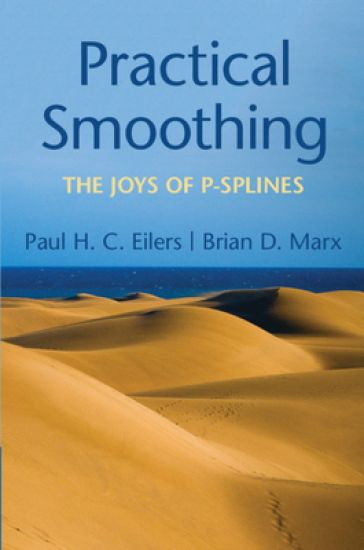
Practical Smoothing

Practical Smoothing

Paul H.C. Eilers; Brian D. Marx

Cambridge University Press
2021
sidottu
This is a practical guide to P-splines, a simple, flexible and powerful tool for smoothing. P-splines combine regression on B-splines with simple, discrete, roughness penalties. They were introduced by the authors in 1996 and have been used in many diverse applications. The regression basis makes it straightforward to handle non-normal data, like in generalized linear models. The authors demonstrate optimal smoothing, using mixed model technology and Bayesian estimation, in addition to classical tools like cross-validation and AIC, covering theory and applications with code in R. Going far beyond simple smoothing, they also show how to use P-splines for regression on signals, varying-coefficient models, quantile and expectile smoothing, and composite links for grouped data. Penalties are the crucial elements of P-splines; with proper modifications they can handle periodic and circular data as well as shape constraints. Combining penalties with tensor products of B-splines extends these attractive properties to multiple dimensions. An appendix offers a systematic comparison to other smoothers.
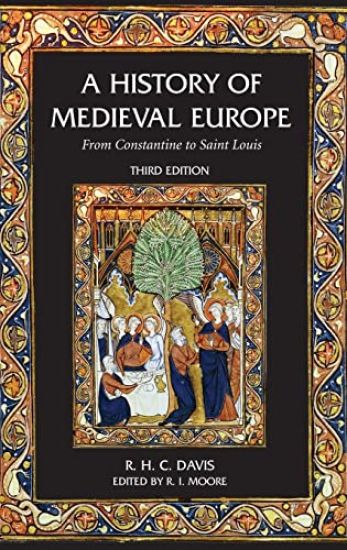
A History of Medieval Europe

A History of Medieval Europe

R.H.C. Davis

Routledge
2015
sidottu
R.C. Davis provided the classic account of the European medieval world; equipping generations of undergraduate and ‘A’ level students with sufficient grasp of the period to debate diverse historical perspectives and reputations. His book has been important grounding for both modernists required to take a course in medieval history, and those who seek to specialise in the medieval period.In updating this classic work to a third edition, the additional author now enables students to see history in action; the diverse viewpoints and important research that has been undertaken since Davis’ second edition, and progressed historical understanding. Each of Davis original chapters now concludes with a ‘new directions and developments’ section by Professor RI Moore, Emeritus of Newcastle University. A key work updated in a method that both enhances subject understanding and sets important research in its wider context. A vital resource, now up-to-date for generations of historians to come.
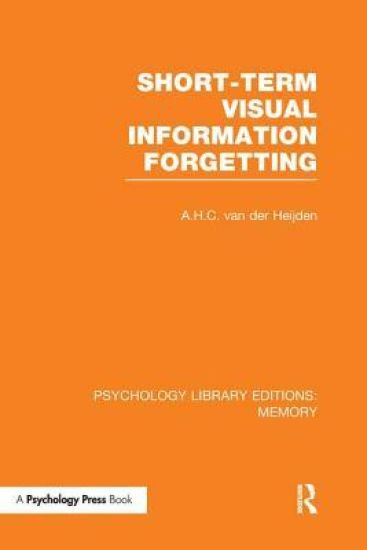
Short-term Visual Information Forgetting (PLE: Memory)

Short-term Visual Information Forgetting (PLE: Memory)

A.H.C. van der Heijden

Psychology Press Ltd
2016
nidottu
When this title was originally published in 1981, the information processing approach to perception and memory was dominant in experimental psychology, and the research reported here had major implications for future development. After exploring the shortcomings of earlier work in this field, the author develops a new model which he shows to be capable of accounting for a variety of experimental data connected with human information processing, visual perception and attention.The central theme which is discussed is how we select relevant and discard irrelevant information. The basic assumption is that all incoming information is identified, that is, it reaches and activates the appropriate lexical entries. A piece of identified information is described as a unit consisting of three distinguishable codes: a visual code, a lexical or semantic code and a motor or action code. Identified information decays fast, so selective attention operates by selecting those units which have to be saved from this rapid decay. In a sense, therefore, the human information processor is described as struggling against forgetting.
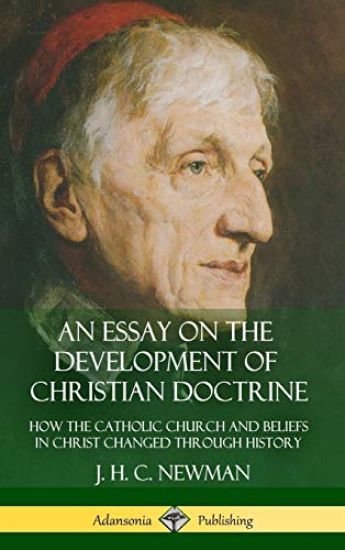
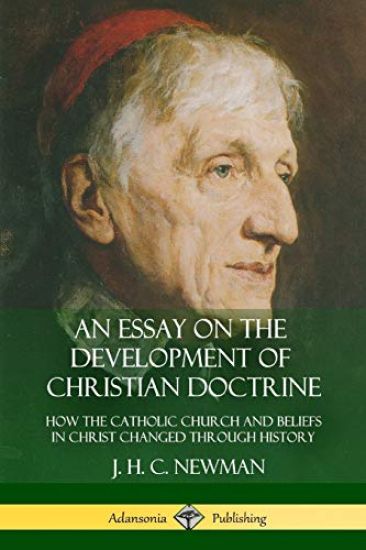
An Essay on the Development of Christian Doctrine
John Henry Newman's treatise on Christian belief stands as one of the finest original works of church history in the nineteenth century. A prolific author, educator and priest, John Henry Newman sought to catalog, examine and improve knowledge and understanding of church doctrine. In this book, he delves deep into the past of the Catholic church and other traditions of Christianity, in order to accurately trace the development of various doctrines. By the nineteenth century, it was no secret that many of the Christian doctrines had been warped or adulterated by corruptions. Often these divergences would appear several centuries after a given doctrine first originated; part of Newman's quest was to determine which doctrines had undergone such corruption, and which had remained untouched over the ages.
An Essay on the Development of Christian Doctrine
John Henry Newman's treatise on Christian belief stands as one of the finest original works of church history in the nineteenth century. A prolific author, educator and priest, John Henry Newman sought to catalog, examine and improve knowledge and understanding of church doctrine. In this book, he delves deep into the past of the Catholic church and other traditions of Christianity, in order to accurately trace the development of various doctrines. By the nineteenth century, it was no secret that many of the Christian doctrines had been warped or adulterated by corruptions. Often these divergences would appear several centuries after a given doctrine first originated; part of Newman's quest was to determine which doctrines had undergone such corruption, and which had remained untouched over the ages.
Paddington to Birkenhead

Paddington to Birkenhead

Michael H C Baker

PEN SWORD BOOKS LTD
2025
sidottu
One of the most diverse, complex and thus most interesting railway routes in the land. It set out as part of Brunel’s Great Western Railway plan to cover the country in Broad Gauge tracks but, faced with competition from its great rival, the London and North Western Railway, the Broad Gauge never got beyond Wolverhampton and eventually succumbed to the four feet, eight and a half inches proponents. However, by then the GWR had established itself as the principal provider of passenger and freight trains between London and Birkenhead, on the west bank of the Mersey, facing, and on occasions, snarling at, the LNWR opposite. Its most powerful locomotives, the Kings, powered its expresses from 1927 until the end of steam as far as Birmingham and Wolverhampton, whilst Stanier Pacifics worked those between Euston and Liverpool Lime Street. The route passes through the manicured fields and hunting country of the Chilterns, then plunges into that was once the deeply industrial, polluted but still productive Black Country, before emerging into Shropshire, now essentially rural but where the Industrial Revolution may be said to have originated. As the line approaches the important junction of picturesque Shrewsbury, possessor of a station built out over the River Severn and the largest traditionally worked signal box in the world, the Welsh mountains appear on the western horizon. The line then enters the Principality before returning to England at Chester, and the final stretch, along the banks of the Mersey, to journey’s end.
A First Course in Probability Models and Statistical Inference

A First Course in Probability Models and Statistical Inference

James H.C. Creighton

Springer-Verlag New York Inc.
2012
nidottu
Welcome to new territory: A course in probability models and statistical inference. The concept of probability is not new to you of course. You've encountered it since childhood in games of chance-card games, for example, or games with dice or coins. And you know about the "90% chance of rain" from weather reports. But once you get beyond simple expressions of probability into more subtle analysis, it's new territory. And very foreign territory it is. You must have encountered reports of statistical results in voter sur­ veys, opinion polls, and other such studies, but how are conclusions from those studies obtained? How can you interview just a few voters the day before an election and still determine fairly closely how HUN­ DREDS of THOUSANDS of voters will vote? That's statistics. You'll find it very interesting during this first course to see how a properly designed statistical study can achieve so much knowledge from such drastically incomplete information. It really is possible-statistics works! But HOW does it work? By the end of this course you'll have understood that and much more. Welcome to the enchanted forest.
Real Analysis via Sequences and Series

Real Analysis via Sequences and Series

Charles H.C. Little; Kee L. Teo; Bruce van Brunt

Springer-Verlag New York Inc.
2016
nidottu
This text gives a rigorous treatment of the foundations of calculus. In contrast to more traditional approaches, infinite sequences and series are placed at the forefront. The approach taken has not only the merit of simplicity, but students are well placed to understand and appreciate more sophisticated concepts in advanced mathematics. The authors mitigate potential difficulties in mastering the material by motivating definitions, results and proofs. Simple examples are provided to illustrate new material and exercises are included at the end of most sections. Noteworthy topics include: an extensive discussion of convergence tests for infinite series, Wallis’s formula and Stirling’s formula, proofs of the irrationality of p and e and a treatment of Newton’s method as a special instance of finding fixed points of iterated functions.