Kirjojen hintavertailu. Mukana 11 342 296 kirjaa ja 12 kauppaa.

Kirjahaku

Etsi kirjoja tekijän nimen, kirjan nimen tai ISBN:n perusteella.

1000 tulosta hakusanalla Hans Claesson

HANS blogs ...(III)

HANS blogs ...(III)

Hans Klawatsch

Avantgarde Verlag
2008
nidottu
Fackellauf für Menschsein ... Und der Autor dachte, der wäre längst gelaufen ... Bekanntlich ist alle Theorie grau, mit den drei Bänden HANS blogs ... ist Theorie nur noch bunt, so gesehen hat das Inferno auch sein Positives! Die Literaturgeschichte kennt kein Werk welches bereits im Vorfeld seiner Veröffentlichung eine derart hohe Aufmerksamkeit nach sich zieht, öfter gelesen und geprüft wird, als das Gesamtwerk von Hans Klawatsch. Noch ehe es in den Buchläden erhältlich ist jagt es um die ganze Welt, sorgt für reichlich Diskussionen und Gesprächsstoff und regt zum Nach- und Umdenken an. Kein Lebensbereich bleibt in diesem Werk unberührt ... Für Hans Klawatsch (1949) ist Rebellion Pflicht! Ketzer und Rebellen schwimmen stets gegen den Strom - als Aufklärer und Lehrer! Das Werk insgesamt gilt als Novität und Weltliteratur von morgen ...
HANS blogs ...(II)

HANS blogs ...(II)

Hans Klawatsch

Avantgarde Verlag
2008
nidottu
HANS blogs ... (II) Die Unschuld des Werdens oder unser Grundrecht auf Dummheit ... Nichts ist stärker als ein Bewusstsein dessen Zeit reif ist ... Nur Genies wenden zerstörerische Energien und dazu sollte der Autor reichlich Gelegenheit erhalten ... Der Weisen Opfer scheint noch immer ihr Leben zu sein - wiederholt sich Geschichte? Der Autor ist fest entschlossen diesen Fatalismus zu durchbrechen, ob es ihm gelingt?
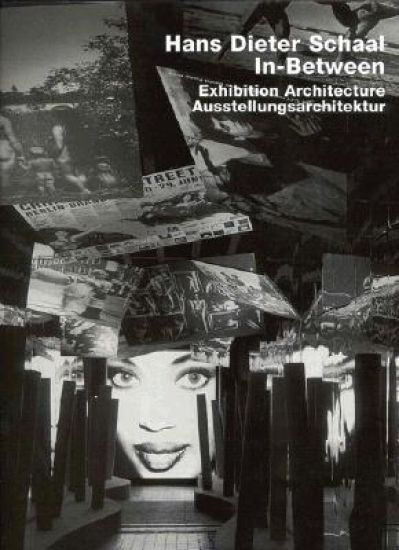
Hans Dieter Schaal

Hans Dieter Schaal

Frank R. Werner

Edition Axel Menges
1998
sidottu
Hans Dieter Schaal is already something of a cultural institution in Germany. Trained as an architect, he always operates outside the "main stream", designing and realizing stage sets, sculptures, cemeteries, parks, squares, spatial installations or book projects, which are often trendsetting in their own field. In the last ten years Schaal has established a focal point that seems to be the sum of all his themes: exhibition architecture. He has provided expansive installations for the broadest possible range of exhibition subjects in such high-volume buildings as the Martin-Gropius-Bau or the Zeughaus in Berlin, the Haus der Geschichte in Bonn, the Kunstvereinsgebäude in Stuttgart, the Deutsches Postmuseum or the Palazzo delle Esposizioni in Rome. His work was never mere exhibition design in these cases. Instead of this he was always concerned to tell spatial stories about the exhibits or their historical background. Of course he was able to draw on his experience in stage-set design here. Admittedly Schaal would not be Schaal, if he were not to use the whole stock of ideas from his decades of lateral thinking or his insatiable search for archetypes and images. On occasions this has meant that Schaal's exhibitions were ad-mired simply of their spatial sensations. It was only the very few people who were prepared to analyse the extraordinarily extensive and complex work more profoundly who found a carefully established subliminal relationship network of selected motifs running through all his exhibition installations like a central theme. Sometimes they come from his own early work, sometimes from literary or cinematic finds, then again from psychological-philosophical footnotes or even private obsessions. Such image particles constitute a thought-edifice perhaps comparable only with Aby Warburg's legendary picture archive which breaks right through the bounds of traditional exhibition architecture. Frank R. Werner has been director of the Institut für Architektur-geschichte und Architekturtheorie at the Bergische Universität in Wuppertal since 1993. He studied painting, architecture and architectural history at the Kunstakademie in Mainz, the Technische Hochschule in Hanover and Stuttgart University.
Hans Dieter Schaal--Stage Designs

Hans Dieter Schaal--Stage Designs

Gottfried Knapp

Edition Axel Menges
2002
sidottu
Text in English and German. Hans Dieter Schaal worked on opera with Ruth Berghaus for ten years, he also created unforgettable stage architecture for the operas of Heinz Werner Henze. Almost all the important European opera houses, for example those in Berlin, Brussels, Stuttgart, Paris, Vienna and Zurich, served as vehicles for his extraordinarily expressive artistic powers, which he used to captivate the public.
Hans Dieter Schaal Work in Progress
Text in English & German. From the 1970s to the present day there is scarcely an architect who has produced such pioneering work as a creative explorer of limits, lateral thinker and stimulating inspirational figure than Hans Dieter Schaal. With a high level of professionalism Schaal has regularly provided us with essential food for thought and hypotheses as an architect, painter, sculptor, draughtsman, designer, garden and stage designer, Utopian, philosopher and author. His work has always been driven not by superficial effects, but by existential statement on what surrounds us in terms of facts and things that are concealed or suppressed. Schaal's artistic statements have elicited responses at home and abroad and have influenced whole generations of younger designers to a considerable extent. Thus Schaal embodies an ideal artistic type that one rarely comes across, known in the Renaissance as uomo universale. As anticipated for some time now, the current volume explores all facets of this complex and fruitful oeuvre, revealing above all its synergetic interrelationships. In addition to this Schaal's thought and action patterns as relevant in terms of art and architectural history are emphasised in this comparative survey of his work, and their efficacy demonstrated. An extensive catalogue of Schaal's work rounds the volume off. Thus the present volume offers an indispensable encyclopaedia of the life's work of one of the truly creative design artists of our day.
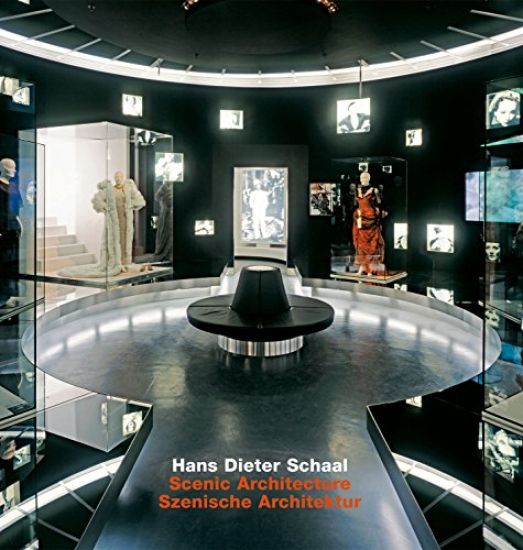
Hans Dieter Schaal. Scenic Architecture
The pioneering character and continuing success of Schaal's scenic compositions for stage sets and exhibitions is significantly due to this field allowing him to take full advantage of his multiple talents. He succeeds equally in the thinking and practical skills of an architect, a painter, a sculptor, a landscape designer, an urban visionary, cineast, and a man of literature, and this allows him to discover, through his space-embracing scenographic installations, unique three-dimensional equivalents for his paper-drawn 'thought spaces' and 'path spaces' or 'thought buildings' from the 1970s. His renowned compendium entitled Architektonische Situationen, published in 1980 and containing, the essence of his early spatial studies, in fact contains within it the seeds of all his later stage set and exhibition configurations. The symbiotic relationship between legendary director Ruth Berghaus and spatial visionary Schaal first began producing history-making stage sets in the early 1980s. Working with Berghaus, Schaal created elementary spatial compositions possessed of great suggestive power for Les Troyens (1983), Wozzeck (1984), Orpheus (1986), Elektra (1986), Moses und Aron (1987), Tristan und Isolde (1988), Lulu (1988), Fierrabras (1988), Ariane et Barbe-Bleue (1991) and Nachtwache (1993), and also working with other directors to do the same for countless other operas and theatre pieces. In creating his installations and their powerful images, Schaal has never solely been concerned with creating suitable illustrations for scene-related plot action. Instead, he always adds something more, as it were, in the form of a boldly independent interpretation. The same is true of his concepts for temporary or permanent ex-hibitions. Before undertaking any of the individual projects on his long list of exhibition projects, Schaal has always researched archive material, historic background, and repercussions, but also the emotional and psychoanalytical implications of the exhibitions' theme and the exhibits concerned, with the meticulousness of a scientific specialist. In works such as his installations for Berlin Berlin (1987) or Prometheus (1998), for the Filmmuseum Berlin (2000), and for the memorials of the former concentration camps Mittelbau-Dora (2006), Bergen-Belsen (2007) or Esterwegen (2011), he always presents his own view of the world, his own view of things. Frank R. Werner studied painting, architecture and architectural history in Mainz, Hanover and Stuttgart. From 1990 to 1994 he was professor of history and theory of architecture at the Staatliche Akademie der Bildenden Künste Stuttgart, from 1994 until his retirement in 2011 he was director of the Institut für Architekturgeschichte und Architekturtheorie at the Bergische Universität in Wuppertal.
Hans-Ulrich von Oertzen
Hans-Ulrich von Oertzen stand im Zentrum der Verschwörung gegen Hitler, ist aber bis heute nahezu unbekannt. Dabei schrieb er im September 1943 mit dem späteren Attentäter Stauffenberg die wichtigen ?Walküre?-Befehle für den Tag X, half Sprengstoff zu besorgen und inspizierte im Juli 1944 von Berlin aus die Einsatzbereitschaft von Truppen. Am 20. Juli 1944 war der neunundzwanzigjährige Oertzen für den wichtigen Wehrkreis Berlin eingeteilt worden. Vom Sitz des Wehrkreiskommandos am Hohenzollerndamm aus kümmerte er sich um die Übergabe von Befehlen und griff bei Problemen ein. Nach dem mißlungenen Attentat auf Hitler wurde der Major festgehalten. Die erste Vernehmung ergab zunächst keinen Hinweis auf eine Mittäterschaft, bis am nächsten Morgen seine wahre Rolle durch einen unglücklichen Zufall ans Licht kam. Oertzen rief noch einmal seine Frau an. Dann steckte er sich eine zuvor deponierte Gewehrsprenggranate in den Mund und zog ab. Im Mittelpunkt dieser ersten biographischen Studie zu Hans-Ulrich von Oertzen steht eine Auswahl von rund 240 Briefen, die er 1942 bis 1944 an seine Frau geschrieben hat. Sie sind außergewöhnliche Zeugnisse einer Liebe, die sich trotz der Wirren des Krieges behaupten kann, Zeugnisse seines Wandels vom begeisterten Militär zu einem desillusionierten und bitter enttäuschten Menschen, aber auch Zeugnisse des festen Glaubens, daß es eine gemeinsame Zukunft gibt. Oertzen heiratete vier Monate vor dem Attentat - ein Zeichen, daß er von dessen Gelingen ausging. Die im vorliegenden Buch publizierten Erinnerungen beschreiben zudem in bislang unbekannter Weise das persönlich enge Verhältnis der Beteiligten am Staatsstreich aus der Heeresgruppe Mitte. ?Wenn man an den militärischen Widerstand denkt, dann fallen einem sofort die Namen Oster, Tresckow, Stauffenberg ein, wobei Oster der Verstand, Tresckow das Herz und Stauffenberg der mutige Arm des Widerstands war. Aber ohne Männer wie Hans-Ulrich von Oertzen wäre das Attentat auf Hitler und seine Planung gar nicht möglich gewesen.? (Philipp Freiherr von Boeselager)
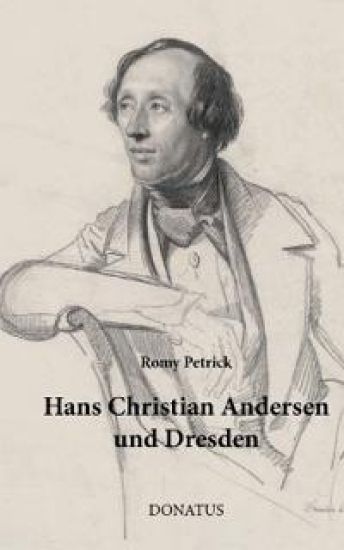
Hans Christian Andersen und Dresden

Hans Christian Andersen und Dresden

Romy Petrick

Donatus Verlag
2025
pokkari
Der d nische M rchendichter Hans Christian Andersen (1805-1875) liebte das Reisen. Bei seinen etwa 30 gr eren Reisen durch Europa weilte er 15 Mal in Dresden und lernte die Stadt sowie ihre Pers nlichkeiten kennen und sch tzen. Besondere Freundschaften verbanden ihn mit dem Maler Johan Christian Clausen Dahl, den Schriftstellern Ludwig Tieck und Theodor Hell, dem Maler und Arzt Carl Gustav Carus, der Pianistin Clara Schumann und der Familie Serre, auf deren Rittergut Maxen er mehrfach zu Gast war. Seine Begegnungen und Erfahrungen, die er in Reiseberichten, Tageb chern und in Briefen festhielt, zeichnen ein buntes Panorama Dresdens im 19. Jahrhundert und zeigen vor allem die pers nlichen Vorlieben und Sichtweisen eines der meist gelesenen Schriftstellern der Welt.