Kirjahaku
Etsi kirjoja tekijän nimen, kirjan nimen tai ISBN:n perusteella.
1000 tulosta hakusanalla Harriet Pyne Grove

The Autobiography of Mrs. Harriet B. Cooke
Antigonos Verlag
2025
sidottu

Letters from a Slave Girl: The Story of Harriet Jacobs
Mary E. Lyons
Atheneum Books for Young Readers
2007
pokkari
A collection of fictional letters retells the life of Harriet Ann Jacobs, a young slave who escaped to the North in the 1840s and became a published author. An ALA Notable Children's Book & ALA Best Book for Young Adults. Reprint.
Uncle Tom's Story of His Life. An Autobiography of the Rev. Josiah Henson (Mrs. Harriet Beecher Stowe's "Uncle Tom") from 1789 to 1876
Josiah Henson; Harriet Beecher Stowe; John Lobb
Antigonos Verlag
2025
nidottu
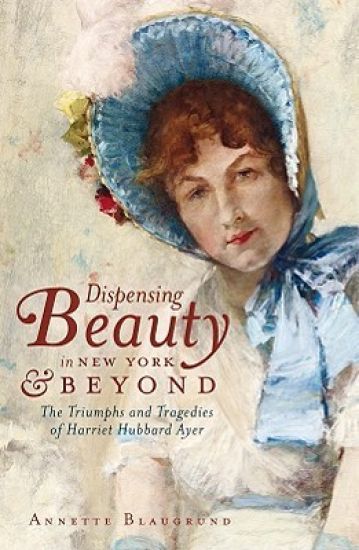
Dispensing Beauty in New York & Beyond: The Triumphs and Tragedies of Harriet Hubbard Ayer
Annette Blaugrund
History Press
2011
nidottu
Harriet Hubbard Ayer moved to New York City by 1883 and established Recamier Preparations, Inc., the earliest cosmetic company owned and operated by a woman. First with her creams and balms and then with her words about women's health and beauty, she influenced several generations of women to look and feel good about themselves. The jealous and vindictive men in her life punished her for her ambition, accomplishments and independence by attempting to steal her lucrative business and seize her children. After she successfully sued them, they had her committed to an insane asylum. Indomitable, this former Chicago socialite reinvented herself as the highest paid newspaperwoman in the United States, editing the women's pages of Joseph Pulitzer's New York World. Her incredible story is presented here as never before.
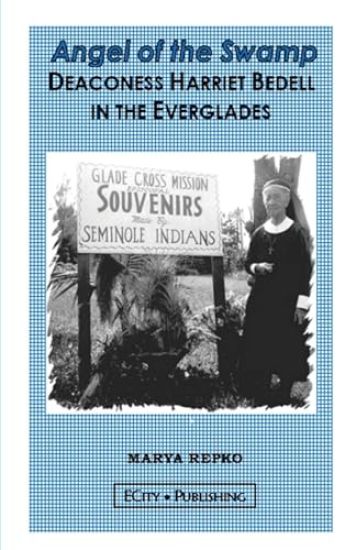
Angel of the Swamp; Deaconess Harriet Bedell in the Everglades
Marya Repko
Ecity Publishing
2022
nidottu
Deaconess Harriet Bedell was a missionary to Native Americans in Oklahoma, Alaska, and the Everglades. She came to Florida in 1933 where she remained active at her little Glade Cross Mission until she was over 85 years old, helping the Seminoles and Miccosukees market their crafts and improve their standard of living. She also touched the lives of local residents around Everglades City and nearby Marco Island.
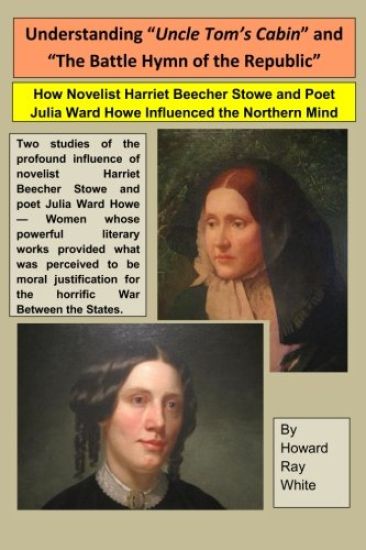
Understanding "Uncle Tom's Cabin" and "The Battle Hymn of the Republic": How Novelist Harriet Beecher Stowe and Poet Julia Ward Howe Influenced the No
Howard Ray White
Howard Ray White
2014
nidottu
The most influential literary contribution to the politics of the northern States during the mid-to-late 1850's - helping incite State Secession and a horrific four-year war that killed 360,000 Federals - was Harriet Beecher Stowe's novel, "Uncle Tom's Cabin," published in 1851-52, just before the onset of "Bleeding Kansas." Likewise, that war's most influential music/poetry contribution - morally justifying, in the minds of many northern States people, the military conquest of the Confederacy and the huge death toll suffered - was Julia Ward Howe's poem "The Battle Hymn of the Republic" (1861), a variation upon the then-recent Federal army camp folk song, "John Brown's Body," which was an intentional mockery of a very popular, traditional South Carolina church revival song, "Say, Brothers," its music and lyrics written by William Steffe a few years earlier. The "Battle Hymn" is handed down to us today as "lyrics by Julia Ward Howe and music by William Steffe." The two essays in this booklet are excerpted from Howard Ray White's four volume history, titled, "Bloodstains, an Epic History of the Politics that Produced and Sustained the American Civil War and the Political Reconstruction that Followed." This booklet and other works by the writer are available as e-books and as paper books on Amazon.com. Search "Howard Ray White". In the mid-1800's women were not to be leaders in politics and religion, but Harriet Beecher Stowe and Julia Ward Howe did just that. Of Harriet, daughter of Lyman Beecher and sister of Henry Ward Beecher, both influential Abolitionists/ministers/educators, Sinclair Lewis would write: "Uncle Tom's Cabin was the first evidence to America that no hurricane can be so disastrous to a country as a ruthlessly humanitarian woman." The same could be equally said of Julia, a close friend of Charles Sumner and, wife of Boston Abolitionist leader Samuel Howe, one of the "Secret Six" financial supporters of the notorious John Brown.

30 Lessons in Love, Leadership and Legacy from Harriet Tubman
Karol V Brown
Brown Tones Publishing
2012
pokkari
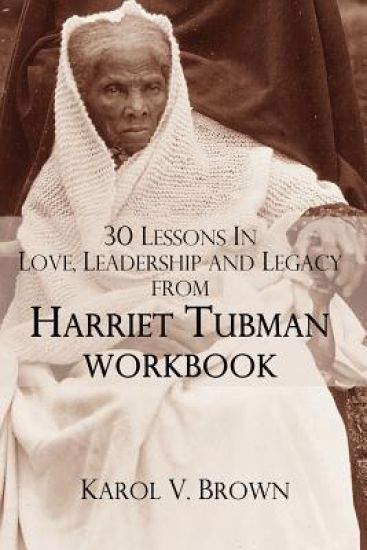
30 Lessons In Love,Leadership, and Legacy from Harriet Tubman, Workbook
Karol V. Brown
Brown Tones Publishing
2012
pokkari
Gardiner G.howland, Isaac Roosevelt And Harriet Roosevelt, Executors, &c. Of James Roosevelt, Deceased Vs. The Union Theological Seminary In The City
John Duer; New York (State) Superior Court (New; James Roosevelt Bayley
Hutson Street Press
2025
sidottu

The Lessons Of A Life, Harriet Martineau (1877)
Florence Fenwick Miller
KESSINGER PUBLISHING, LLC
2010
sidottu
Araminta: An Historical Novel about an American Hero, Harriet Tubman
P. a. Ross
Createspace Independent Publishing Platform
2015
nidottu
"Araminta: A Historical Novel Of An American Heroine, Harriet Tubman.""Araminta," a historical novel, is a fact-based dramatization of Harriet Tubman's life as a slave and her struggles for freedom for herself and others up to and during the Civil War. History is revisited through Harriet's experiences -- successes and failures.
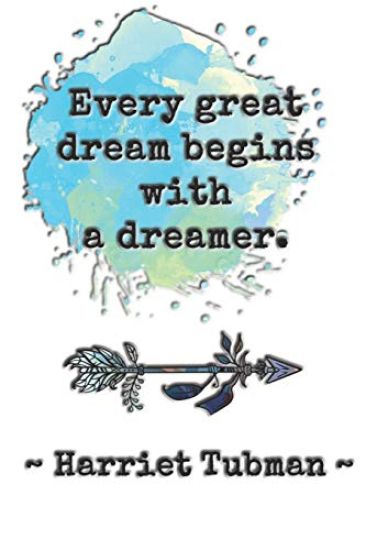
Every great dream begins with a dreamer. Harriet Tubman: Dot grid paper
Sarah Cullen
Independently Published
2019
nidottu
This notebook features a quote by Harriet Tubman, the famed conductor on the Underground Railroad. Adorned with a BoHo-inspired cover the journal has dot grid paper, which is a popular background for doodling and journaling.

Charles Reade, George Meredith and Harriet Martineau as Serial Writers of «Once a Week » (1859-1865)
Shu-Fang Lai
Peter Lang AG
2008
nidottu
The book is about three primary serial contributors to Once a Week during the critical period when it was featured as the rival magazine of Dickens’s All the Year Round. Divergent as their natures were, the three writers – Reade, Meredith and Martineau – took markedly different stands and separated themselves from the popular Dickensian trend in the competitive journalistic world. This study not just uncovers the long neglected Victorian weekly, but also writers of genuine originality and great thinkers. The three often underestimated writers and their serial publications represent cross-sections of the dynamic Victorian journalism. Discoveries of the Dickens’s «rival group» supplement Dickensian studies.
Die Rolle der unabhangigen Frau in der englischen Restaurationskomoedie am Beispiel von Harriet (aus 'The Man of Mode') und Alithea (aus 'The Country Wife')
Michael Treichler
Grin Publishing
2007
nidottu
Studienarbeit aus dem Jahr 2001 im Fachbereich Anglistik - Literatur, Note: sehr gut, Carl von Ossietzky Universitat Oldenburg (Fachbereich Sprach- und Kulturwissenschaften), Veranstaltung: Proseminar Restoration Comedy, Sprache: Deutsch, Abstract: Mit der Auffuhrung neuer Komodien wahrend der englischen Resturation tauchten immer wieder junge weibliche Figuren aus, die auffallend scharfsinnig, klug, wohlhabend, attraktiv und als Resultat all dieser Eigenschaften von Mannern unabhangig waren. Bei zwei dieser Figuren handelt es sich um Harriet aus George Ethereges The Man of Mode (1676) sowie Alithea aus William Wicherleys The Country Wife (1675). Das Hauptaspekt dieser Arbeit wird die Charakterisierung der beiden weiblichen Figuren Harriet und Alithea sein. Dies wird mittels des Vergleiches erfolgen, wobei zunachst Harriet und Alithea anhand einiger Aspekte ihrer Personlichkeiten miteinander verglichen werden. Hierdurch werden diejenigen Charaktereigenschaften beider Figuren deutlich, in denen sie sich in signifikantem Masse unterscheiden. Sowohl Alithea als auch Harriet besitzen in der jeweiligen Komodie eine Antagonistin. Anschliessend an den Vergleich der beiden Frauenfiguren untereinander werden sowohl Harriet als auch Alithea in ihren Handlungs- und Denkweisen mit diesen gegensatzlichen Figuren verglichen. Hierdurch werden weitere Charakterzuge Harriets und Alitheas deutlich werden, die beim Vergleich der beiden unabhangigen Frauenfiguren untereinander nicht hervortraten. Handlungsbedingt wird Harriets Gegenspielerin von Mrs. Loveit dargestellt, da zwischen diesen beiden Frauen ein Interessenskonflikt um die Liebe Dorimants besteht. Die ganzlich unterschiedlichen Personlichkeiten dieser Nebenbuhlerinnen unterstreichen die Signifikanz dieses Gegensatzpaares. Alitheas charakterlicher Gegenpol ist handlungsbedingt keine Gegnerin, sondern erhalt Alitheas standige Unterstutzung. Es handelt sich um Alitheas Schwagerin Mrs. Margery Pinchwife, die als von ihrem Ehe
The Lessons of a Life. Harriet Martineau. A Lecture Delivered Before the Sunday Lecture Society, St. George's Hall, Langham Place, on Sunday Afternoon, 11th March 1877
Florence Fenwick Miller
Antigonos Verlag
2025
nidottu