Kirjojen hintavertailu. Mukana 12 390 323 kirjaa ja 12 kauppaa.

Kirjahaku

Etsi kirjoja tekijän nimen, kirjan nimen tai ISBN:n perusteella.

1000 tulosta hakusanalla Heather Long

Third Worlds

Third Worlds

Heather Deegan

Routledge
1996
sidottu
Third Worlds focuses attention on the relationship between the Middle East and sub-Saharan Africa, examining the alternative Islamic development agenda for Africa which, in part, mirrors that of the the World Bank and the International Monetary Fund. The grouping of the Middle East and Africa within the umbrella term 'Third World', has masked not only the contrasts and contradictions of the two areas but also their cultural and historic similarities. This study exlores: * the contrast between Western and Islamic notions of democracy * the contrast between Western International aid agencies and the Islamic Development Bank * Islamic economics and the potential for reviving the more impoverished African states
Third Worlds

Third Worlds

Heather Deegan

Routledge
1996
nidottu
Third Worlds focuses attention on the relationship between the Middle East and sub-Saharan Africa, examining the alternative Islamic development agenda for Africa which, in part, mirrors that of the the World Bank and the International Monetary Fund. The grouping of the Middle East and Africa within the umbrella term 'Third World', has masked not only the contrasts and contradictions of the two areas but also their cultural and historic similarities. This study exlores: * the contrast between Western and Islamic notions of democracy * the contrast between Western International aid agencies and the Islamic Development Bank * Islamic economics and the potential for reviving the more impoverished African states
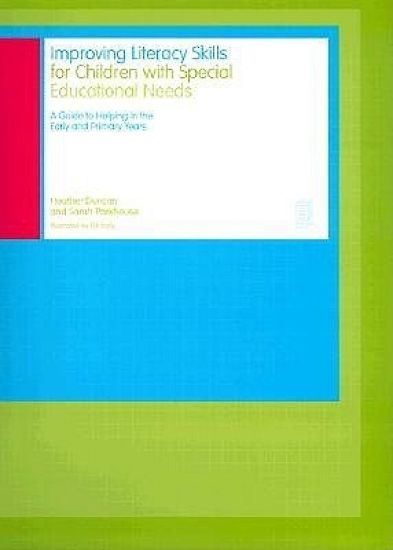
Improving Literacy Skills for Children with Special Educational Needs
This practical book, written by experienced practitioners, will help teachers of pupils with Special Educational Needs assess, record and improve the literacy skills of their pupils. The creation of the National Literacy Strategy and the Literacy Hour has put additional demands upon teachers, particularly those concerned with Special Needs. The book covers all aspects of literacy development through the Early and Primary Years including early skills, reading, phonological skills, writing, spelling and handwriting. This resource pack includes advice and ideas on record keeping with Individual Education Plans, assessing pupils' skills and strategies for future learning. It contains photocopiable checklists and assessment sheets for both teacher and pupil to complete and has clear child-friendly illustrated worksheets throughout. An indispensable resource for all classrooms.
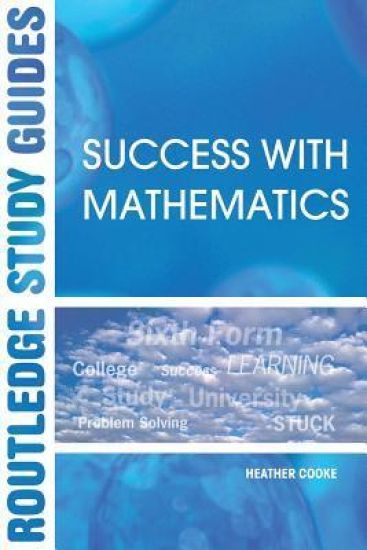
Success with Mathematics

Success with Mathematics

Heather Cooke

Routledge
2002
sidottu
Many students find the leap between school and university level mathematics to be significantly greater than they expected. Success with Mathematics has been devised and written especially in order to help students bridge that gap. It offers clear, practical guidance from experienced teachers of mathematics in higher education on such key issues as:* getting started* ways of studying* assessment* mathematical communication* learning by doing* using ICT* using calculators* what next.After reading this book, students will find themselves better prepared for the change in pace, rigour and abstraction they encounter in degree level mathematics. They will also find themselves able to broaden their learning strategies and improve their self-directed study skills. This book is essential reading for anyone following, or about to undertake, a degree in mathematics, or other degree courses with mathematical content.
Success with Mathematics

Success with Mathematics

Heather Cooke

Routledge
2002
nidottu
Many students find the leap between school and university level mathematics to be significantly greater than they expected. Success with Mathematics has been devised and written especially in order to help students bridge that gap. It offers clear, practical guidance from experienced teachers of mathematics in higher education on such key issues as:* getting started* ways of studying* assessment* mathematical communication* learning by doing* using ICT* using calculators* what next.After reading this book, students will find themselves better prepared for the change in pace, rigour and abstraction they encounter in degree level mathematics. They will also find themselves able to broaden their learning strategies and improve their self-directed study skills. This book is essential reading for anyone following, or about to undertake, a degree in mathematics, or other degree courses with mathematical content.
Africa Today

Africa Today

Heather Deegan

Routledge
2008
sidottu
In the post 9/11 global environment Africa is standing at a crossroads in international affairs as the combined issues of politics, religion and security attract renewed interest. While some countries seem to be moving forward with greater levels of confidence, democracy and stability, others continue to be mired in conflict, poverty and religious/ethnic division. This text focuses on key contemporary issues that the continent faces, providing a comprehensive introduction of current political, religious, developmental and security concerns. Features include: Individual chapters devoted to key issues including health, gender, corruption, religion and the newly emerging problems of human security. Case studies and detailed analysis of topical issues, including: Muslim/Christian clashes: Kano, Northern Nigeria Conflict, Arms and Reconstruction: Darfur and Sierra Leone Comprehensive range of countries discussed including: Zimbabwe, Botswana, Kenya Ethiopia, Uganda, Lesotho, Somalia, Namibia and Madagascar. Fully up-to-date statistics including primary research based on interviews conducted by the author, providing data for both individual countries and the continent as a whole. Boxed descriptions explaining clearly the ideas in important subject areas, such as Islamic law and society By drawing on the author’s empirical research and situating discussion within the context of wider debate, Africa Today is designed both to introduce and to develop a deeper understanding of this rapidly changing continent an essential text for all students of African politics and International Relations.
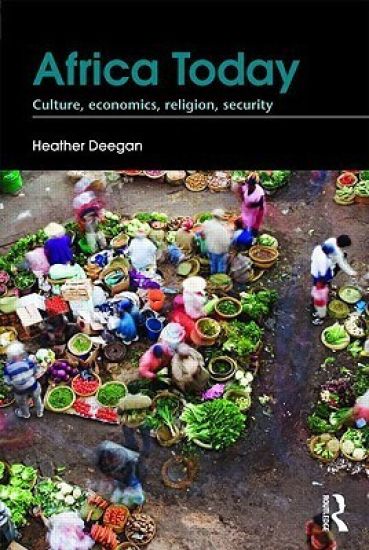
Africa Today

Africa Today

Heather Deegan

Routledge
2008
nidottu
In the post 9/11 global environment Africa is standing at a crossroads in international affairs as the combined issues of politics, religion and security attract renewed interest. While some countries seem to be moving forward with greater levels of confidence, democracy and stability, others continue to be mired in conflict, poverty and religious/ethnic division. This text focuses on key contemporary issues that the continent faces, providing a comprehensive introduction of current political, religious, developmental and security concerns. Features include: Individual chapters devoted to key issues including health, gender, corruption, religion and the newly emerging problems of human security. Case studies and detailed analysis of topical issues, including: Muslim/Christian clashes: Kano, Northern Nigeria Conflict, Arms and Reconstruction: Darfur and Sierra Leone Comprehensive range of countries discussed including: Zimbabwe, Botswana, Kenya Ethiopia, Uganda, Lesotho, Somalia, Namibia and Madagascar. Fully up-to-date statistics including primary research based on interviews conducted by the author, providing data for both individual countries and the continent as a whole. Boxed descriptions explaining clearly the ideas in important subject areas, such as Islamic law and society By drawing on the author’s empirical research and situating discussion within the context of wider debate, Africa Today is designed both to introduce and to develop a deeper understanding of this rapidly changing continent an essential text for all students of African politics and International Relations.

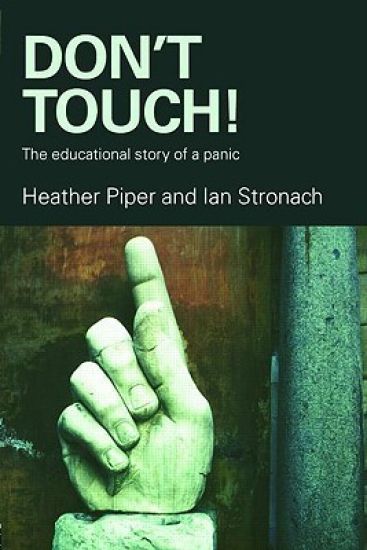
Don't Touch!

Don't Touch!

Heather Piper; Ian Stronach

Routledge
2008
sidottu
This book explores the problems involved in ‘touching’ children in an educational environment. It uses real-life examples taken from groundbreaking research into the mentality of today’s risk culture, and highlights a maddening state of affairs in which ordinary well-meaning professionals feel they cannot offer even very young children basic levels of comforting or affection. This fascinating and long-overdue book examines the ‘no-touch’ pandemic in early years settings, by use of extensive interviews with practitioners, parents and pupils, which: outline the confusion experienced by many in knowing if, when and how to touch and the more recent backlash by those who attempted to buck the trend suggest why this issue is important now (for example, at a time when men are being encouraged to work in early years settings) consider explanations such as panic, risk, society and fear. This book also examines and explains where the law stands on these issues, and keeps its key focus on practice throughout; representing an unsensationalized and sensible approach to an issue that causes so much professional anxiety, and it will be welcomed by the entire teaching profession, child care professionals, along with academics and researchers within education and the social sciences.
Don't Touch!

Don't Touch!

Heather Piper; Ian Stronach

Routledge
2008
nidottu
This book explores the problems involved in ‘touching’ children in an educational environment. It uses real-life examples taken from groundbreaking research into the mentality of today’s risk culture, and highlights a maddening state of affairs in which ordinary well-meaning professionals feel they cannot offer even very young children basic levels of comforting or affection. This fascinating and long-overdue book examines the ‘no-touch’ pandemic in early years settings, by use of extensive interviews with practitioners, parents and pupils, which: outline the confusion experienced by many in knowing if, when and how to touch and the more recent backlash by those who attempted to buck the trend suggest why this issue is important now (for example, at a time when men are being encouraged to work in early years settings) consider explanations such as panic, risk, society and fear. This book also examines and explains where the law stands on these issues, and keeps its key focus on practice throughout; representing an unsensationalized and sensible approach to an issue that causes so much professional anxiety, and it will be welcomed by the entire teaching profession, child care professionals, along with academics and researchers within education and the social sciences.
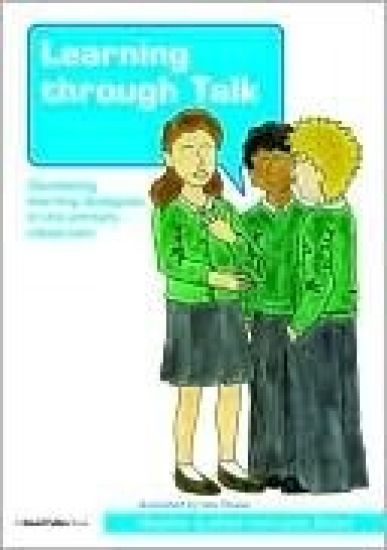
Learning through Talk

Learning through Talk

Heather Luxford; Lizzie Smart

Routledge
2009
nidottu
Learning through Talk is a practical handbook. It is designed to help teachers and others working with five to eleven year olds develop the key skills which will enable their pupils to use talk effectively for learning. The activities within the book encourage thinking and learning across the curriculum and help pupils to improve their communication skills and become independent learners. This book provides: Advice and practical guidance on developing the essential skills of participation, collaboration, positive challenge, resolving differences and reflection A series of motivating and exciting workshop activities Photocopiable resources to support workshops with links to video material on the companion website A practical, blended resource, Learning through Talk helps teachers shift their focus to evaluate the quality of pupils’ talk as an insight into the learning process. The authors present tried and tested methods for reflection, including the use of a video diary room, an example of which is accessible online via the Companion Website.An invaluable guide for both trainee and practising teachers, this book will provide those working with children with a practical framework to improve talk and communication in their classrooms in line with current curriculum developments.
Helping Children Think about Bereavement
Each year, 3,000 children and young people between the ages of 1 and 19, die as a result of illness or accident.Around 5% of children will have experienced the death of a parent by the time they are 16. Statistics indicate that up to 70% of schools have a bereaved pupil in their care at any given time.Helping Children Think about Bereavement provides a four part differentiated story and activities to help normalise death and allow children to develop emotional literacy to talk about it. The author, along with Child Bereavement UK have devised activities and guidance for teachers on how to use the story to develop children’s emotional literacy and prepare them for bereavement, whether it affects them personally or through a friend’s bereavement. This book also offers support for teachers and parents outlining how children’s understanding of death develops and what can be helpful in supporting bereaved children. The story is presented at different levels:for children aged 9-11for children aged 7 -9for children aged 5-7for children who speak English as a Second Languagefor children in Early Years or with Learning DifficultiesDetails surrounding death and its aftermath are not always readily talked about or well handled. When it does happen, children need to be able to express themselves and know that their feelings are a normal part of grieving. This book is an invaluable resource for all key stage one and two teachers, teaching assistants and anyone who is involved in bereavement training.
Helping Children Think about Bereavement
Each year, 3,000 children and young people between the ages of 1 and 19, die as a result of illness or accident.Around 5% of children will have experienced the death of a parent by the time they are 16. Statistics indicate that up to 70% of schools have a bereaved pupil in their care at any given time.Helping Children Think about Bereavement provides a four part differentiated story and activities to help normalise death and allow children to develop emotional literacy to talk about it. The author, along with Child Bereavement UK have devised activities and guidance for teachers on how to use the story to develop children’s emotional literacy and prepare them for bereavement, whether it affects them personally or through a friend’s bereavement. This book also offers support for teachers and parents outlining how children’s understanding of death develops and what can be helpful in supporting bereaved children. The story is presented at different levels:for children aged 9-11for children aged 7 -9for children aged 5-7for children who speak English as a Second Languagefor children in Early Years or with Learning DifficultiesDetails surrounding death and its aftermath are not always readily talked about or well handled. When it does happen, children need to be able to express themselves and know that their feelings are a normal part of grieving. This book is an invaluable resource for all key stage one and two teachers, teaching assistants and anyone who is involved in bereavement training.
Metaphysics and the Representational Fallacy
This book is an investigation into metaphysics: its aims, scope, methodology and practice. Dyke argues that metaphysics should take itself to be concerned with investigating the fundamental nature of reality, and suggests that the ontological significance of language has been grossly exaggerated in the pursuit of that aim.
Parsing the City

Parsing the City

Heather Easterling

Routledge
2014
nidottu
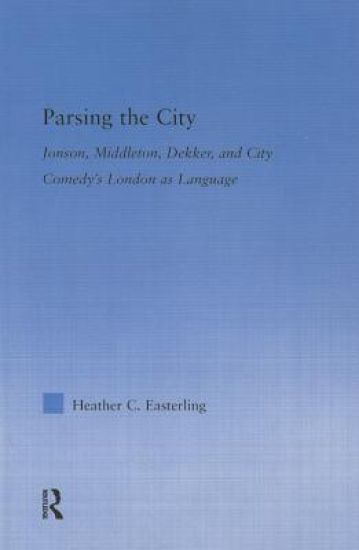
Parsing the City updates our understanding of Jacobean city comedy’s discursive role in its London society. Working with three major plays by Ben Jonson and Thomas Middleton and Thomas Dekker, this book develops an updated reading of Jacobean city comedy as a dramatic subgenre whose engagement with early modern London was centrally linguistic and semiotic-- its plays staging and interrogating the city as a series of languages and language problems.
33 Ways to Help with Spelling

33 Ways to Help with Spelling

Heather Morris; Sue Smith

Routledge
2010
nidottu
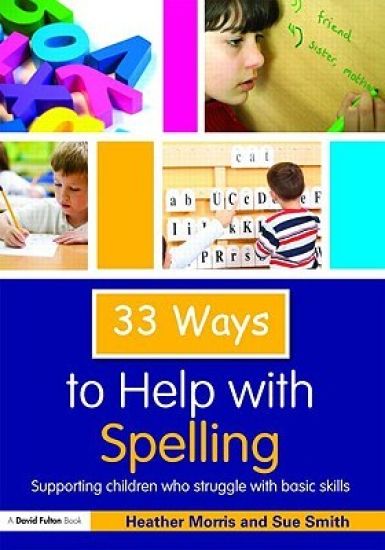
33 Ways to Help with Spelling equips teachers and teaching assistants with a wide range of practical resources to help children who are having difficulties learning the basic skills of spelling. Offering a range of activities and games to engage children and encourage motivation in the classroom, this essential classroom companion provides ready-to-use material that doesn’t need lengthy forward preparation. Activities include auditory and visual mnemonics, phonetics and tactile tasks.These practical and fun ideas incorporate a variety of learning styles, using kinaesthetic and auditory techniques, that put the emphasis on ‘games’ rather than ‘work’. The activities are especially suitable for teaching assistants working with individuals or small groups. The book works step-by-step through practical activities which: keep children motivated and enjoying learning don't require extensive knowledge or experience from the adult are adult-led so children don't have the opportunity to repeat mistakes are grouped into different basic skills, so teachers can choose the activity best suited for the child’s needs have clear, concise and pedagogically sound reasons for the activity include extension activity where appropriate to challenge pupils. Aimed mainly at primary pupils, secondary teachers will also find this book invaluable to use with pupils who are falling behind. The series facilitates good inclusive provision and is a resource from which useful ideas and materials can be taken without having to plough through chapters of theory and research.
Classroom Literacy Games

Classroom Literacy Games

Heather Butler

Routledge
2011
nidottu
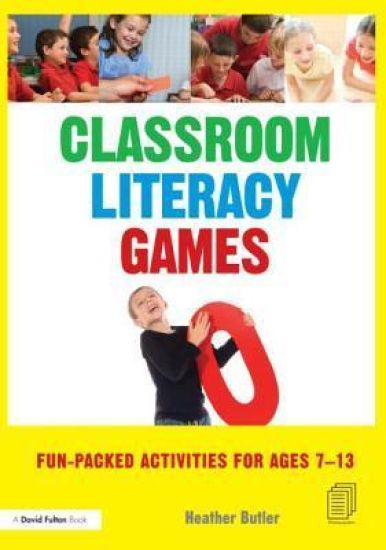
Children enjoyed it so much they didn’t realise they were being worked so hard.Jo Miles, Learning Support Assistant at Manor Farm Community Junior School, Hazlemere, BuckinghamshireGreat speaking and listening activity-setting-up ideas for the Big Write. The games extended the children’s vocabulary. Purposeful learning – love it!Liz Pilgrim, Senior Teacher at Manor Farm Community Junior School, Hazlemere, BuckinghamshireEducational games played in groups or pairs help develop key language and social skills. Based on a range of material to extend vocabulary, punctuation and cross-curricular creativity, Classroom Literacy Games contains original games with suggestions of how to develop writing tasks after playing them. Each game is differentiated four ways and aims to teach literacy (including vocabularly, connectives, openers and punctuation) to higher KS1, KS2 and lower KS3. Printed with dyslexia-friendly fonts, these cross-curricular games are suitable for mixed-ability classrooms, small groups or one-to-one teaching situations. As either photocopiable resources to be used in the classroom or as homework activities, these games will create situations to generate creative writing and for the children to create their own games. They can also be used for EAL, guided reading and weekly Big Write exercises.With minimal preparation time required and a vast number of games, these user-friendly, pick-up-and-go activities will be of interest to any practicing primary and lower KS3 teacher.
Competitive Elections and Democracy in America
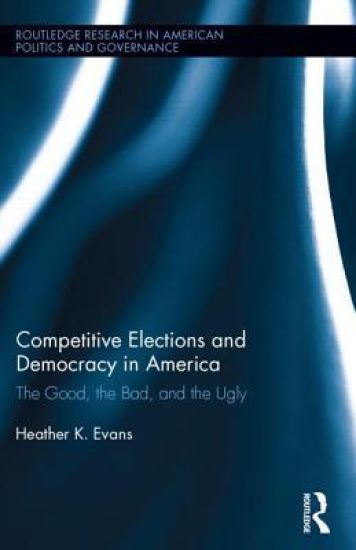
Competition seems to be an inevitable part of present-day elections in the United States. However, recent publications have debated whether we should encourage or discourage competitive elections. In Competitive Elections and Democracy in America, Heather Evans closely examines the debate over competition in elections and questions whether or not they are beneficial for democracy in the US. Evans clearly lays out the basis of the debate over competition and defines what exactly constitutes a competitive election. She then uses an innovative data set that she assembled to analyze the 2006-2010 congressional elections, testing whether the competitiveness of an election affects citizens’ political knowledge, political interest, and opinions of Congress, their representatives, and the governmental system as a whole. She subsequently evaluates the positive effects that competitive elections have on constituencies, and in turn gives equal weight to the negative effects. An examination of the effects "ugly" campaigns have on voters is also incorporated, relevant to today’s oft-used "mud-slinging" campaign tactics. Evans concludes with a thoughtful and analytical assessment of whether competition is valuable for elections, and how to increase competition if it indeed has merit for political campaigns.Through the book’s analyses, Evans demonstrates that competitive elections do have lasting effects on voters that go beyond just the length of a campaign. Her research reinforces the vital role that political competition plays in modern democracies, and offers a careful evaluation of how and why competitive elections affect citizens in the US.
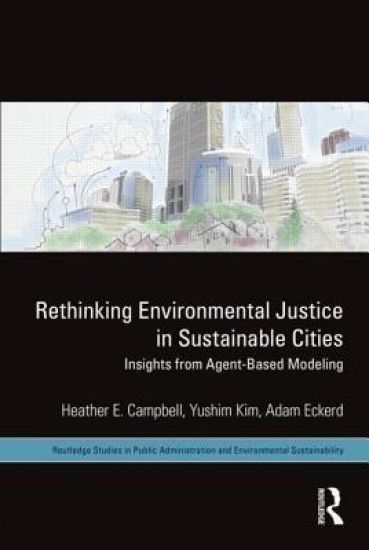
Rethinking Environmental Justice in Sustainable Cities

Rethinking Environmental Justice in Sustainable Cities

Heather E. Campbell; Yushim Kim; Adam M. Eckerd

Routledge
2015
sidottu
As the study of environmental policy and justice becomes increasingly significant in today’s global climate, standard statistical approaches to gathering data have become less helpful at generating new insights and possibilities. None of the conventional frameworks easily allow for the empirical modeling of the interactions of all the actors involved, or for the emergence of outcomes unintended by the actors. The existing frameworks account for the "what," but not for the "why."Heather E. Campbell, Yushim Kim, and Adam Eckerd bring an innovative perspective to environmental justice research. Their approach adjusts the narrower questions often asked in the study of environmental justice, expanding to broader investigations of how and why environmental inequities occur. Using agent-based modeling (ABM), they study the interactions and interdependencies among different agents such as firms, residents, and government institutions. Through simulation, the authors test underlying assumptions in environmental justice and discover ways to modify existing theories to better explain why environmental injustice occurs. Furthermore, they use ABM to generate empirically testable hypotheses, which they employ to check if their simulated findings are supported in the real world using real data.The pioneering research on environmental justice in this text will have effects on the field of environmental policy as a whole. For social science and policy researchers, this book explores how to employ new and experimental methods of inquiry on challenging social problems, and for the field of environmental justice, the authors demonstrate how ABM helps illuminate the complex social and policy interactions that lead to both environmental justice and injustice.
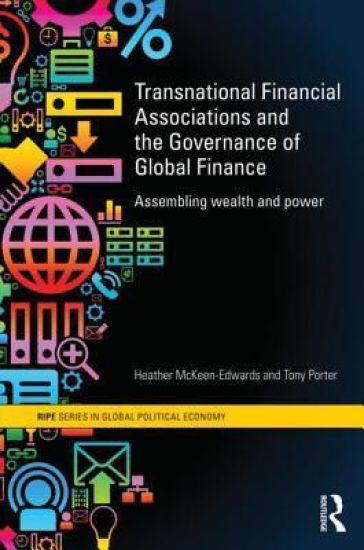
Transnational Financial Associations and the Governance of Global Finance
The role of business in global governance is now widely recognized, but exploration of its role in global financial governance has been more haphazard than systematic. This book provides the first comprehensive analysis of the role of transnational financial associations (TFAs) in the organization of global finance.This book develops three theoretical themes of assemblage, functionality, and power as enrolment. These themes challenge approaches that treat financial power as emanating from a single location or force. Whilst existing approaches tend to treat TFAs as irrelevant or as merely transmitting power originating elsewhere, this book argues that power must be created by painstakingly assembling actors, networks, and objects that are often quite autonomous and working at cross purposes to one another—a process in which TFAs play a central role. The book explores these themes in chapters examining the roles of TFAs in interacting with public authorities, constructing global financial markets, and creating financial communities. The authors additionally analyse the roles of TFAs in the European Union, in the Global South, and in promoting goals other than profitability, including Islamic finance, microfinancing, savings banks and cooperatives. Making a distinctive contribution to our understanding of global finance and global governance, Transnational Financial Associations and the Governance of Global Finance is an important book for students and scholars of international political economy, finance, global governance and international relations.
Transnational Financial Associations and the Governance of Global Finance
The role of business in global governance is now widely recognized, but exploration of its role in global financial governance has been more haphazard than systematic. This book provides the first comprehensive analysis of the role of transnational financial associations (TFAs) in the organization of global finance.This book develops three theoretical themes of assemblage, functionality, and power as enrolment. These themes challenge approaches that treat financial power as emanating from a single location or force. Whilst existing approaches tend to treat TFAs as irrelevant or as merely transmitting power originating elsewhere, this book argues that power must be created by painstakingly assembling actors, networks, and objects that are often quite autonomous and working at cross purposes to one another—a process in which TFAs play a central role. The book explores these themes in chapters examining the roles of TFAs in interacting with public authorities, constructing global financial markets, and creating financial communities. The authors additionally analyse the roles of TFAs in the European Union, in the Global South, and in promoting goals other than profitability, including Islamic finance, microfinancing, savings banks and cooperatives. Making a distinctive contribution to our understanding of global finance and global governance, Transnational Financial Associations and the Governance of Global Finance is an important book for students and scholars of international political economy, finance, global governance and international relations.