Are you a hero or a villain? Pick your path in this action-packed, illustrated origin story where the reader - yes, that means YOU - gets the power of invisibility and must decide, choice by choice, whether to use their abilities for good or evil. Your ordinary morning in the park quickly turns extraordinary when you stumble upon a strange device that can turn you invisible with the press of a button Now it's up to you to decide how to use the power: Will you look into the device's terrifying and inhuman origins to see how you can use your abilities to help the planet? Will you team up with the ones who created the device and use your newfound ability to gain power and influence over everyone in your path? Or will you make the wrong choice and meet an ill-fated end? Follow the choices, pick your path, and disappear to help find your destiny. This looks like a job for Super You
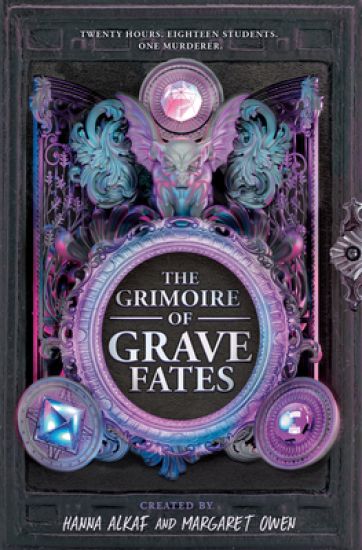
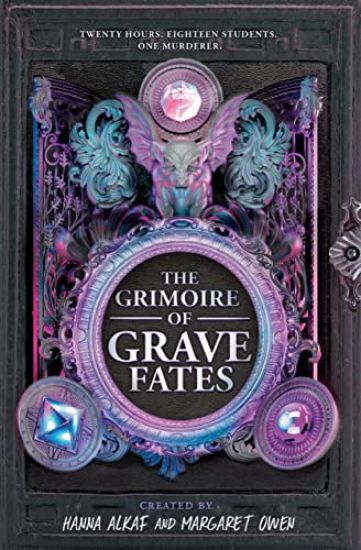
Crack open your spell book and enter the world of the illustrious Galileo Academy for the Extraordinary. There's been a murder on campus, and it's up to the students of Galileo to solve it. Follow 18 authors and 18 students as they puzzle out the clues and find the guilty party. Professor of Magical History Septimius Dropwort has just been murdered, and now everyone at the Galileo Academy for the Extraordinary is a suspect. A prestigious school for young magicians, the Galileo Academy has recently undergone a comprehensive overhaul, reinventing itself as a roaming academy in which students of all cultures and identities are celebrated. In this new Galileo, every pupil is welcome--but there are some who aren't so happy with the recent changes. That includes everyone's least favorite professor, Septimius Dropwort, a stodgy old man known for his harsh rules and harsher punishments. But when the professor's body is discovered on school grounds with a mysterious note clenched in his lifeless hand, the Academy's students must solve the murder themselves, because everyone's a suspect. Told from more than a dozen alternating and diverse perspectives, The Grimoire of Grave Fates follows Galileo's best and brightest young magicians as they race to discover the truth behind Dropwort's mysterious death. Each one of them is confident that only they have the skills needed to unravel the web of secrets hidden within Galileo's halls. But they're about to discover that even for straight-A students, magic doesn't always play by the rules. . . . Contributors include: Cam Montgomery, Darcie Little Badger, Hafsah Faizal, Jessica Lewis, Julian Winters, Karuna Riazi, Kat Cho, Kayla Whaley, Kwame Mbalia, L. L. McKinney, Marieke Nijkamp, Mason Deaver, Natasha D az, Preeti Chhibber, Randy Ribay, Tehlor Kay Mejia, Victoria Lee, and Yamile Saied M ndez
Crack open your spell book and enter the world of the illustrious Galileo Academy for the Extraordinary. There's been a murder on campus, and it's up to the students of Galileo to solve it. Follow 18 authors and 18 students as they puzzle out the clues and find the guilty party. Professor of Magical History Septimius Dropwort has just been murdered, and now everyone at the Galileo Academy for the Extraordinary is a suspect. A prestigious school for young magicians, the Galileo Academy reinvented itself as a place in which students of all cultures and identities are celebrated. In this new Galileo, every pupil is welcome--but there are some who aren't so happy with the recent changes. That includes everyone's least favorite professor, Septimius Dropwort, a stodgy old man known for his harsh rules and harsher punishments. But when the professor's body is discovered on school grounds with a mysterious note clenched in his lifeless hand, the Academy's students must solve the murder themselves, because everyone's a suspect. Told from more than a dozen alternating and diverse perspectives, The Grimoire of Grave Fates follows Galileo's best and brightest young magicians as they race to discover the truth behind Dropwort's mysterious death. But they're about to discover that even for straight-A students, magic doesn't always play by the rules. . . . Contributors include: Cam Montgomery, Darcie Little Badger, Hafsah Faizal, Jessica Lewis, Julian Winters, Karuna Riazi, Kat Cho, Kayla Whaley, Kwame Mbalia, L. L. McKinney, Marieke Nijkamp, Mason Deaver, Natasha D az, Preeti Chhibber, Randy Ribay, Tehlor Kay Mejia, Victoria Lee, and Yamile Saied M ndez
SWISH Cheer courtside for a Muslim teen as she joins an all-girls, hijab-wearing basketball team and learns that she's much more than a score. This energetic graphic novel is inspired by a true story Aliya is new to Wisconsin, and everything feels different than Florida. The Islamic school is bigger, the city is colder, and her new basketball team is...well, they stink. Aliya's still excited to have teammates (although the team's captain, Noura, isn't really Aliya's biggest fan), and their new coach really understands basketball (even if she doesn't know much about being Muslim). This season should be a blast...if they could just start to win. As they strengthen their skills on the court, Aliya and the Peace Academy team discover that it takes more than talent to be great--it's teamwork and self-confidence that defines true success. For fans of The Crossover and Roller Girl, this graphic novel goes big with humor and heart as it explores culture and perceptions, fitting in and standing out, and finding yourself, both on and off the court.
SWISH Cheer courtside for a Muslim teen as she joins an all-girls, hijab-wearing basketball team and learns that she's much more than a score. This energetic graphic novel is inspired by a true story Aliya is new to Wisconsin, and everything feels different than Florida. The Islamic school is bigger, the city is colder, and her new basketball team is...well, they stink. Aliya's still excited to have teammates (although the team's captain, Noura, isn't really Aliya's biggest fan), and their new coach really understands basketball (even if she doesn't know much about being Muslim). This season should be a blast...if they could just start to win. As they strengthen their skills on the court, Aliya and the Peace Academy team discover that it takes more than talent to be great--it's teamwork and self-confidence that defines true success. For fans of The Crossover and Roller Girl, this graphic novel goes big with humor and heart as it explores culture and perceptions, fitting in and standing out, and finding yourself, both on and off the court.
A BELLETRIST BOOK CLUB PICK "Halperin's radiant second novel walks the fine line between the longing for couplehood and the torture of codependency. . . . Let the rapturous intimacy and gut-churning ups and downs begin " --Leigh Haber, The New York Times Book Review "I read this book in three days and canceled plans to finish it. It is heart-wrenching and relatable in so many ways." --Emma Roberts By the award-winning author of Something Wild, a gripping portrait of a tumultuous, consuming relationship between a young woman and a recovering addict When Leah Kempler meets Charlie Nelson in line at the grocery store, their attraction is immediate and intense. Charlie, with his big feelings and grand proclamations of love, captivates her completely. But there are peculiarities of his life--he's older than her but lives with his parents; he meets up with a friend at odd hours of the night; he sleeps a lot and always seems to be coming down with something. He confesses that he's a recovering heroin addict, but he promises Leah that he's never going to use again. Leah's friends and family are concerned. As she finds herself getting deeper into an isolated relationship, one of manipulation and denial, the truth about Charlie feels as blurry as their time together. Even when Charlie's behavior becomes increasingly erratic, when he starts to make Leah feel unsafe, she can't help but feel that what exists between them is destined. Charlie is wide open, boyish, and unbearably handsome. The bounds of Leah's own pain--and love--are so deep that she can't see him spiraling into self-destruction. Hanna Halperin writes with aching vulnerability and intimacy, sharply attuned to Leah's desire for an all-consuming, compulsive connection. I Could Live Here Forever exposes the chasm between perception and truth to tell an intoxicating story of one woman's relationship with an addict, the accompanying swirl of compassion and codependence, and her enduring search for love and wholeness.
"Halperin's radiant second novel walks the fine line between the longing for couplehood and the torture of codependency. . . . Let the rapturous intimacy and gut-churning ups and downs begin " --Leigh Haber, The New York Times Book Review By the award-winning author of Something Wild, a gripping portrait of a tumultuous, consuming relationship between a young woman and a recovering addict When Leah Kempler meets Charlie Nelson in line at the grocery store, their attraction is immediate and intense. Charlie, with his big feelings and grand proclamations of love, captivates her completely. But there are peculiarities of his life--he's older than her but lives with his parents; he meets up with a friend at odd hours of the night; he sleeps a lot and always seems to be coming down with something. He confesses that he's a recovering heroin addict, but he promises Leah that he's never going to use again. Leah's friends and family are concerned. As she finds herself getting deeper into an isolated relationship, one of manipulation and denial, the truth about Charlie feels as blurry as their time together. Even when Charlie's behavior becomes increasingly erratic, when he starts to make Leah feel unsafe, she can't help but feel that what exists between them is destined. Charlie is wide open, boyish, and unbearably handsome. The bounds of Leah's own pain--and love--are so deep that she can't see him spiraling into self-destruction. Hanna Halperin writes with aching vulnerability and intimacy, sharply attuned to Leah's desire for an all-consuming, compulsive connection. I Could Live Here Forever exposes the chasm between perception and truth to tell an intoxicating story of one woman's relationship with an addict, the accompanying swirl of compassion and codependence, and her enduring search for love and wholeness.
SWISH Cheer courtside for a Muslim teen in this graphic novel--inspired by a true story--as she joins an all-girls, hijab-wearing basketball team and learns that she's much more than a score. Aliya is new to Wisconsin, and everything feels different than Florida. The Islamic school is bigger, the city is colder, and her new basketball team is... well, they stink. Aliya's still excited to have teammates (although Noura's not really Aliya's biggest fan) and their new coach really understands basketball (even if she doesn't know much about being Muslim.) This season should be a blast...if they could just start to win. Join Aliya and the Peace Academy on a headline-making season where they strengthen their skills and their Muslim identities--all while discovering that it takes more than talent to be great, and that teamwork and self-confidence can define true success. For fans of The Crossover and Roller Girl, this graphic novel goes big with humor and heart as it explores culture and perceptions, fitting in and standing out, and finding yourself, both on and off the court.
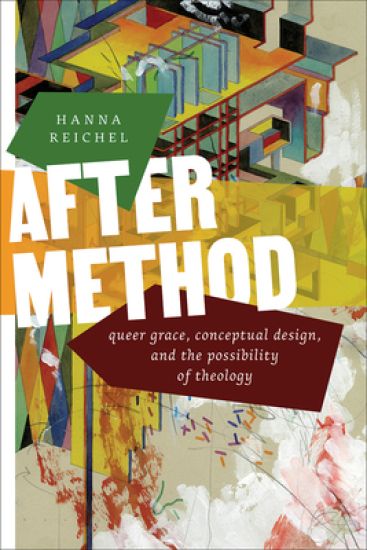
After Method assumes the impossibility of doing theology right–and moves beyond it. Organized as a conversation in two voices—with systematic-theological commitments represented by Karl Barth and constructive-theological commitments represented by Marcella Althaus-Reid—this book calls the redemptive potential of any methodological program into question. Indeed, the search for a full and complete theological account of reality has only further fragmented theological discourse. Thus, Hanna Reichel argues that method cannot “save” us—but that does not mean that we cannot do better. After Method harnesses the best insights systematic and constructive theologies have to offer in their mutual critique and gestures toward a “better” theology. Utilizing architectural metaphor, Reichel pulls from systematic and constructive approaches to develop an understanding of theological work as conceptual design, responsibly ordering and structuring given materials for a purpose. This necessitates a more realistic adaptation to reality for theology, expanding its standards to encompass the experiences and perceptions of people and speaking the truth available to it. The honesty, humility, and solidarity generated through the failure of method liberates theology to a more playful and tentative cruising of different approaches and redirects its attention to “misfits” and outsiders. Equally demanding and self-relativizing, the resultant ethos is better able to do justice to the reality of the world and the reality of God than doctrinal orthodoxy or methodological orthopraxy.
In this book, the distinguished scholar Hanna Batatu presents a comprehensive analysis of the recent social, economic, and political evolution of Syria's peasantry, the segment of society from which the current holders of political power stem. Batatu focuses mainly on the twentieth century and, in particular, on the Ba'th movement, the structures of power after the military coup d'etat of 1963, and the era of ivfiz al-Asad, Syria's first ruler of peasant extraction. Without seeking to prove any single theory about Syrian life, he offers a uniquely rich and detailed account of how power was transferred from one demographic group to another and how that power is maintained today. Batatu begins by examining social differences among Syria's peasants and the evolution of their mode of life and economic circumstances. He then scrutinizes the peasants' forms of consciousness, organization, and behavior in Ottoman and Mandate times and prior to the Ba'thists' rise to power. He explores the rural aspects of Ba'thism and shows that it was not a single force but a plurality of interrelated groups--prominent among them the descendants of the lesser rural notables--with different social goals and mental horizons. The book also provides a perceptive account of President Asad, his personality and conduct, and the characteristics and power structures of his regime. Batatu draws throughout on a wide range of socioeconomic and biographical information and on personal interviews with Syrian peasants and political leaders, offering invaluable insights into the complexities of a country and a regime that have long been poorly understood by outsiders.
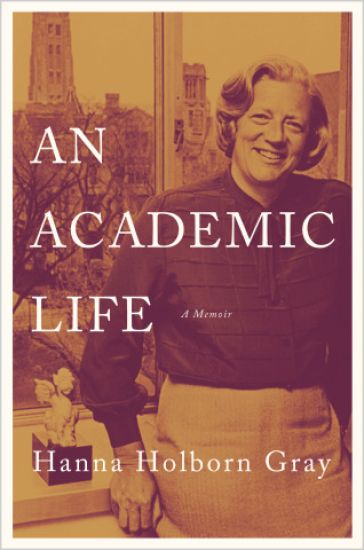
A compelling memoir by the first woman president of a major American universityHanna Holborn Gray has lived her entire life in the world of higher education. The daughter of academics, she fled Hitler's Germany with her parents in the 1930s, emigrating to New Haven, where her father was a professor at Yale University. She has studied and taught at some of the world's most prestigious universities. She was the first woman to serve as provost of Yale. In 1978, she became the first woman president of a major research university when she was appointed to lead the University of Chicago, a position she held for fifteen years. In 1991, Gray was awarded the Presidential Medal of Freedom, the nation's highest civilian honor, in recognition of her extraordinary contributions to education.An Academic Life is a candid self-portrait by one of academia's most respected trailblazers. Gray describes what it was like to grow up as a child of refugee parents, and reflects on the changing status of women in the academic world. She discusses the migration of intellectuals from Nazi-held Europe and the transformative role these exiles played in American higher education—and how the émigré experience in America transformed their own lives and work. She sheds light on the character of university communities, how they are structured and administered, and the balance they seek between tradition and innovation, teaching and research, and undergraduate and professional learning.An Academic Life speaks to the fundamental issues of purpose, academic freedom, and governance that arise time and again in higher education, and that pose sharp challenges to the independence and scholarly integrity of each new generation.
A revolutionary new paradigm for understanding addictionWhy do people with addiction use drugs self-destructively? Why don’t they quit out of self-concern? Why does the rat in the experiment, alone in a cage, press the lever again and again for cocaine—to the point of death? In this pathbreaking book, Hanna Pickard proposes a new paradigm for understanding the puzzle of addiction. For too long, our thinking has been hostage to a false dichotomy: either addiction is a brain disease, or it is a moral failing. Pickard argues that it is neither, and that both models stifle addiction research and fail people who need help.Drawing on her expertise as an academic philosopher and her clinical work in a therapeutic community, Pickard explores the meaning of drugs for people with addiction and the diverse factors that keep them using despite the costs. People use drugs to cope with suffering—but also to self-harm, or even to die. Some identify as “addicts," while others are in denial or struggle with cravings and self-control. Social, cultural, and economic circumstances are crucial to explaining addiction—but brain pathology may also matter. By integrating addiction science with philosophy, clinical practice, and the psychology and voices of people with addiction themselves, Pickard shows why there is no one-size-fits-all theory or ethics of addiction. The result is a heterogeneous and humanistic paradigm for understanding and treating addiction, and a fresh way of thinking about responsibility, blame, and relationships with people who use drugs.
Reptilia is an exploration of the dark erotic feminine through the lens of myth, quantum physics, and the colonial nature of semiotics. With bold approaches that seek to unravel the nature of patriarchal realities, Hanna Tawater's poetry captures the fury of modern female rage encased in the unblinking demeanor of the serpent. The text echoes across time, space, thought, and phylum, and transports the reader to a place where you will always find the apex to be cold-blooded.Chelsea Hodson, author of Tonight I'm Someone Else, says, "These are poems of transformation--birds become reptiles, snakes become women, time becomes skin, the Ouroboros becomes itself. 'Between the idea / and reality / you were my favorite moment, ' one of the poems reads, and, with this, the changes themselves become journeys worthy of our attention. Reptilia is bold, smart, and engrossing."Rios De La Luz, author of Itza, says, "Tawater's poetry is an eruption of lavish imagery and an undeniably erotic aura. Her poems feel mythological and ancient, like a new sensuous language mixing the scientific with the magic of the serpent."Janice Lee, author of The Sky Isn't Blue, says, "Hanna Tawater's Reptilia is a vibratory, phosphorescent text that understands how subtle differences in a physical or linguistic configuration might result in a new way of seeing, that is, where does monstrosity stem from, how is fear manifested, how is power created in the sorrow of a creature's eyes, the coldness of its blood, the still-beating serpent's heart when removed from its body to be consumed by another. How close and how far are we to each other. An uncanny, haunting, and singular work."Juliet Escoria, author of Witch Hunt, says, "Reading Reptilia feels like slowly opening a Pandora's box of sorts, as though by doing you are unearthing something ancient and alluring and powerful and wicked. These are not poems but spells, and with them Hanna Tawater establishes herself as writer who demands not just to be read, but reckoned with."
Hanna Massad was a poor Greek Orthodox kid born and raised amidst the injustice and violence of Palestine's Gaza Strip. He hungered for the God he didn't know and learned to love unconditionally the people who hated him. Pastor from Gaza is about the fires of persecution, the balm of forgiveness and the God who walks beside us through the flames.
Like other classical Greek tragedies, Sophocles' Philoctetes is an extraordinarily timely and timeless play. Dramatising the efforts of people who had wronged him to bring the play's hero, Philoctetes, to join the Greek forces in their war against Troy, it traces the moral and emotional development of the young Neoptolemos as he struggles between the values of honesty and deceit, honour and expedience. This is an introduction to the play for students and lay readers. The well focused chapters on Greek theatre and performance, the mythical background, and the literary, intellectual, and political context in which the play was written and first performed illuminate the issues with which the play grapples. Its persuasive analyses of the characters and plot shed light on the play's complexities and ambiguities. All in all, the book makes Sophocles' great play more accessible, enjoyable, and meaningful to modern readers who want to know more about the world of classical Greek tragedy.