Kirjojen hintavertailu. Mukana 11 244 527 kirjaa ja 12 kauppaa.

Kirjahaku

Etsi kirjoja tekijän nimen, kirjan nimen tai ISBN:n perusteella.

1000 tulosta hakusanalla Henry Kitchell Webster

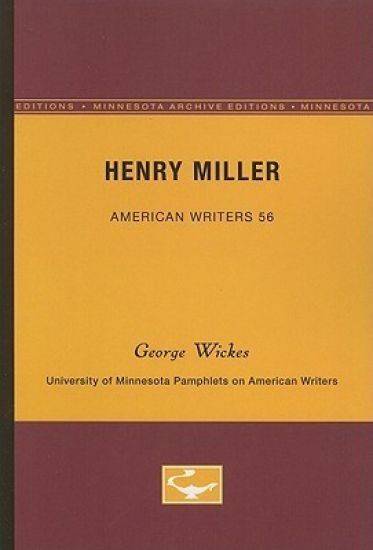
Henry Miller - American Writers 56

Henry Miller - American Writers 56

Wickes George

UNIVERSITY OF MINNESOTA PRESS
1966
nidottu
Henry Miller - American Writers 56 was first published in 1966. Minnesota Archive Editions uses digital technology to make long-unavailable books once again accessible, and are published unaltered from the original University of Minnesota Press editions.
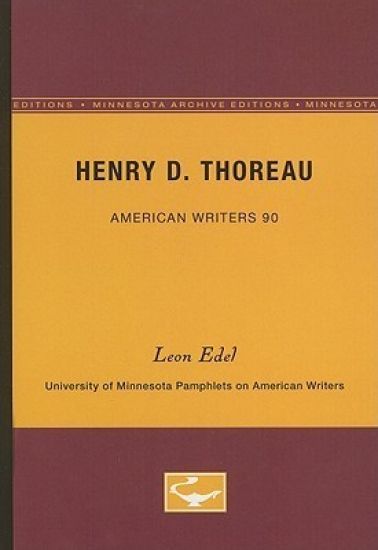
Henry D. Thoreau - American Writers 90

Henry D. Thoreau - American Writers 90

Edel Leon

UNIVERSITY OF MINNESOTA PRESS
1970
nidottu
Henry D. Thoreau - American Writers 90 was first published in 1970. Minnesota Archive Editions uses digital technology to make long-unavailable books once again accessible, and are published unaltered from the original University of Minnesota Press editions.
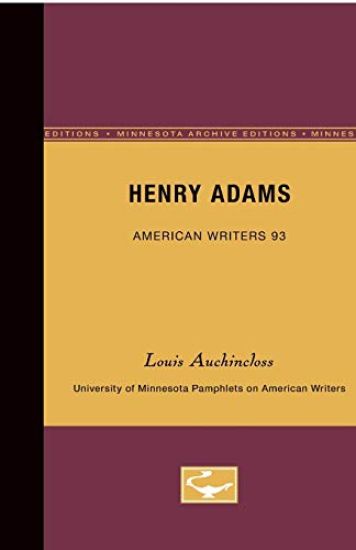
Henry Adams - American Writers 93

Henry Adams - American Writers 93

UNIVERSITY OF MINNESOTA PRESS
1971
nidottu
Henry Adams - American Writers 93 was first published in 1971. Minnesota Archive Editions uses digital technology to make long-unavailable books once again accessible, and are published unaltered from the original University of Minnesota Press editions.
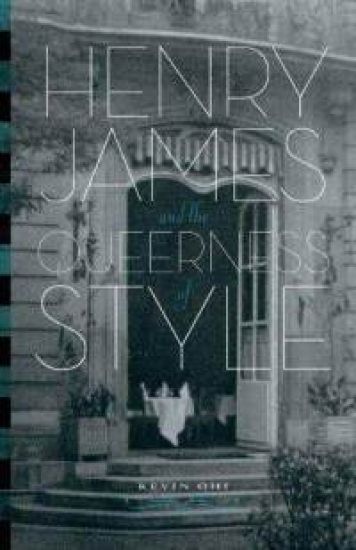
Henry James and the Queerness of Style

Henry James and the Queerness of Style

Kevin Ohi

University of Minnesota Press
2011
nidottu
Kevin Ohi begins this energetic book with the proposition that to read Henry James-particularly the late texts-is to confront the queer potential of style and the traces it leaves on the literary life. In contrast to other recent critics, Ohi asserts that James’s queerness is to be found neither in the homoerotic thematics of the texts, however startlingly explicit, nor in the suggestions of same-sex desire in the author’s biography, however undeniable, but in his style. For Ohi, there are many elements in the style that make James’s writing queer. But if there is a thematic marker, Ohi shows through his careful engagements with these texts, it is belatedness. The recurrent concern with belatedness, Ohi explains, should be understood not psychologically but stylistically, not as confessing the sad predicament of being out of sync with one’s life but as revealing the consequences of style’s refashioning of experience. Belatedness marks life’s encounter with style, and it describes an experience not of deprivation but of the rich potentiality of the literary work that James calls “freedom.” In Ohi’s reading, belatedness is the indicator not of sublimation or repression, nor of authorial self-sacrifice, but of the potentiality of the literary-and hence of the queerness of style. Presenting original readings of a series of late Jamesian texts, the book also represents an exciting possibility for queer theory and literary studies in the future: a renewed attention to literary form and a new sounding-energized by literary questions of style and form-of the theoretical implications of queerness.
Henry William Ravenel, 1814-1887

Henry William Ravenel, 1814-1887

Tamara Miner Haygood

The University of Alabama Press
1987
sidottu
"Provides an engaging and illuminating view of the culture of the South and the study of natural history. . . . Ravenel's achievements, Haygood argues, refute Clement Eaton's contention that slavery stifled creative thought; they also modify the more extravagant claim for southern equality with northern science made in Thomas Cary Johnson's "Scientific Interests in the Old South" (1936)." "American Historical Review" "Convincingly argues for the importance of these middle years to understanding American science and vividly illustrates the effect of the Civil War on science. . . . Ravenel, a geographically isolated planter with a college degree but no scientific training, managed to serve as one of America's leading mycologists, despite continual financial and medical problems and the disruption of the Civil War. This lively account of his life and work is at once inspiring and tragic." "Journal of the History of Biology""A thoroughly enjoyable biography of one of the important American naturalists, botanists, and mycologists of the 1800s. . . . Truly an outstanding contribution to the history of American science." "Brittonia""
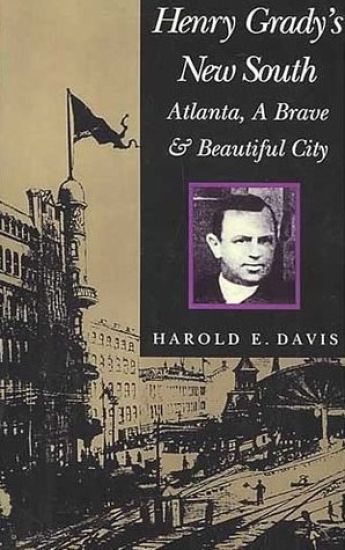
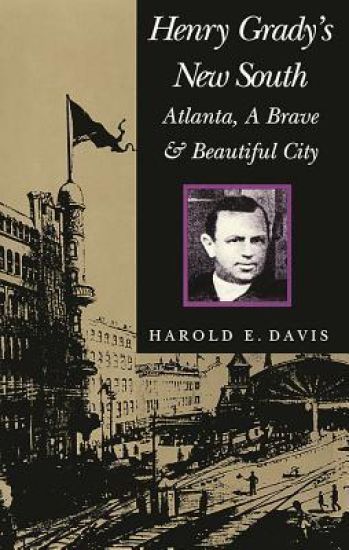
Henry Grady's New South

Henry Grady's New South

Harold Davis

The University of Alabama Press
2002
nidottu
The popular image of Henry W. Grady is that of a champion of the postbellum South, a region that would forgive the North for defeating it and would mobilize its own many resources for hones business and agricultural competition. Biographies and collections of Grady\u2019s essays and speeches that appeared shortly after his death enhanced this image, and for a half-century, Grady was considered the personification of the New South Movement, a movement which promised industrialization for the South, an improved Southern agriculture, and justice and opportunity for black Southerners. As managing editor of the Atlanta Constitution, he espoused the New South throughout the nation and was in demand as a speaker for audiences in New York and Boston. Through extensive research, focusing on the decade of the 1880s in Georgia, Davis demonstrates that although Grady said all the right things to show that he wished to industrialize the South and that he was committed to the improvement of agriculture and fairness in racial matters, in fact he spent most of his efforts on behalf of Atlanta. His major interest was in making a difference for that city, leaving the rest of the South to enjoy whatever Atlanta could not garner for itself.
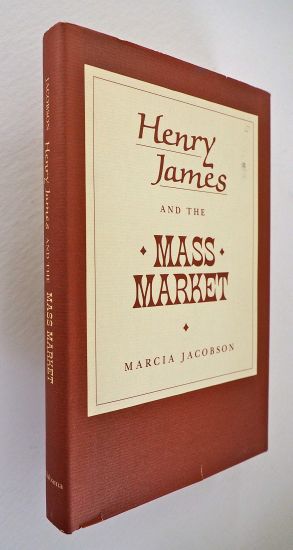
Henry James and the Mass Market

Henry James and the Mass Market

Marcia Jacobson

The University of Alabama Press
2002
nidottu
The author considers James's work from The Bostonians to The Awkward Age - from 1883 to 1889 - a period in which James was resident in London and searching for material to replace the "international theme." Jacobson considers this context in relation to the emergence of a mass market and sees James's major fiction of this period as an attempt to exploit the conventions of popular fiction in an analysis of his society's assumptions. James's work at this time must also be viewed as an artist's effort to secure popular attention and acceptance. Such an approach allows Jacobson to treat James's "French period" and his "experimental period" as a unit and to counter the myth that James was an ivory tower artist.
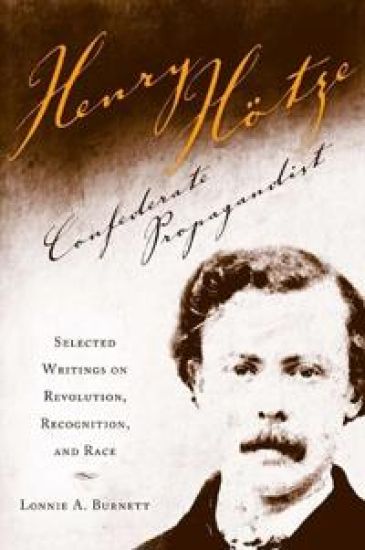
Henry Hotze, Confederate Propagandist

Henry Hotze, Confederate Propagandist

Lonnie A. Burnett

The University of Alabama Press
2008
sidottu
An immigrant to Mobile from Switzerland becomes a passionate promoter of the Confederacy. The life of Henry Hotze encompasses the history of antebellum Mobile, Confederate military recruitment, Civil War diplomacy and international intrigue, and the development of a Darwinian-based effort to find scientific evidence for differences among human ""races."" When civil war broke out in his adopted country, Hotze enthusiastically assumed the mindset of the young Southern secessionist, serving first as newspaper correspondent and Confederate soldier until the Confederate government selected him as an agent, with instructions to promote the Southern cause in London. There he founded, edited, and wrote most of the content for ""The Index"", a pro-Southern paper, as a part of the effort to convince the British Government to extend recognition to the Confederacy.Among the arguments Hotze employed were adaptations of the scientific racism of the period, which attempted to establish a rational basis for assumptions of racial difference. After the collapse of the Confederacy in 1865, Hotze remained in Europe, where he became an active partisan and promoter of the ideas of Arthur de Gobineau (1816-1882) whose work Essai sur L'inegalite des Races Humaines was a founding document in racism's struggle for intellectual respectability.This work consists of a biographical essay on Hotze; his contributions to Mobile newspapers during his military service in 1861; his correspondence with Confederate officials during his service in London; articles he published in London to influence British and European opinion; and his correspondence with, and published work in support of, Gobineau.
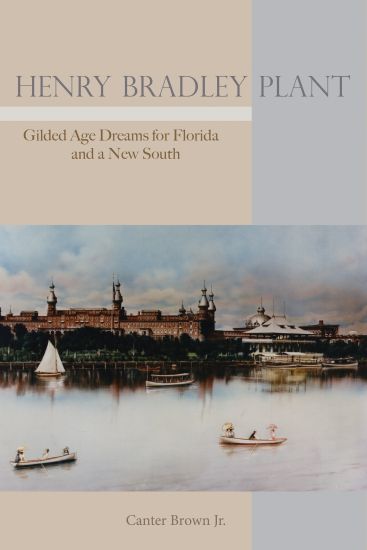
Henry Bradley Plant

Henry Bradley Plant

Canter Brown

The University of Alabama Press
2019
sidottu
The first biography of Henry Bradley Plant, the entrepreneur and business magnate considered the father of modern Florida. In this landmark biography, Canter Brown Jr. makes evident the extent of Henry Bradley Plant's influences throughout North, Central, and South America as well as his role in the emergence of integrated transportation and a national tourism system. One of the preeminent historians of Florida, Brown brings this important but understudied figure in American history to the foreground. Henry Bradley Plant: Gilded Age Dreams for Florida and a New South carefully examines the complicated years of adventure and activity that marked Plant's existence, from his birth in Connecticut in 1819 to his somewhat mysterious death in New York City in 1899. Brown illuminates Plant's vision and perspectives for the state of Florida and the country as a whole and traces many of his influences back to events from his childhood and early adulthood. The book also elaborates on Plant's controversial Civil War relationships and his utilization of wartime earnings in the postwar era to invest in the bankrupt Southern rail lines. With the success of his businesses such as the Southern Express Company and the Tampa Bay Hotel, Plant transformed Florida into a hub for trade and tourism-traits we still recognize in the Florida of today. This thoroughly researched biography fills important gaps in Florida's social and economic history and sheds light on a historical figure to an extent never previously undertaken or sufficiently appreciated. Both informative and innovative, this history will be a valuable resource for scholars and general readers interested in Southern history, business history, Civil War-era history, and transportation history.
Henry William Ravenel, 1814-1887

Henry William Ravenel, 1814-1887

Tamara Miner Haygood

The University of Alabama Press
2006
nidottu
"Provides an engaging and illuminating view of the culture of the South and the study of natural history. . . . Ravenel's achievements, Haygood argues, refute Clement Eaton's contention that slavery stifled creative thought; they also modify the more extravagant claim for southern equality with northern science made in Thomas Cary Johnson's Scientific Interests in the Old South (1936)." --American Historical Review"Convincingly argues for the importance of these middle years to understanding American science and vividly illustrates the effect of the Civil War on science. . . . Ravenel, a geographically isolated planter with a college degree but no scientific training, managed to serve as one of America's leading mycologists, despite continual financial and medical problems and the disruption of the Civil War. This lively account of his life and work is at once inspiring and tragic." Journal of the History of Biology"A thoroughly enjoyable biography of one of the important American naturalists, botanists, and mycologists of the 1800s. . . . Truly an outstanding contribution to the history of American science." --Brittonia
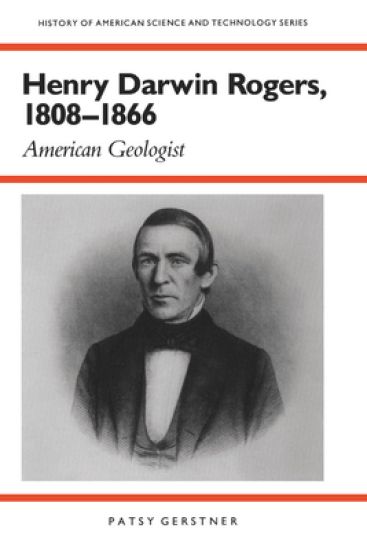
Henry Darwin Rogers, 1808-1866

Henry Darwin Rogers, 1808-1866

Patsy Gerstner

The University of Alabama Press
2014
nidottu
Henry Darwin Rogers was one of the first professional geologists in the United States. He directed two of the earliest state geological surveys - New Jersey and Pennsylvania - in the mid-1830s. His major interest was Pennsylvania, with its Appalachian Mountains, which Rogers saw as great folds of sedimentary rock. He belived that an interpretation of these folds would lead to an understanding of the dynamic processes that had shaped the earth. From Rogers' efforts to explain these Pennsylvania folds came the first uniquely American theory of mountain elevation, a theory that Rogers personally considered his most significant achievement.
Henry Bradley Plant

Henry Bradley Plant

Canter Brown

The University of Alabama Press
2019
nidottu
The first biography of Henry Bradley Plant, the entrepreneur and business magnate considered the father of modern Florida. In this landmark biography, Canter Brown Jr. makes evident the extent of Henry Bradley Plant's influences throughout North, Central, and South America as well as his role in the emergence of integrated transportation and a national tourism system. One of the preeminent historians of Florida, Brown brings this important but understudied figure in American history to the foreground. Henry Bradley Plant: Gilded Age Dreams for Florida and a New South carefully examines the complicated years of adventure and activity that marked Plant's existence, from his birth in Connecticut in 1819 to his somewhat mysterious death in New York City in 1899. Brown illuminates Plant's vision and perspectives for the state of Florida and the country as a whole and traces many of his influences back to events from his childhood and early adulthood. The book also elaborates on Plant's controversial Civil War relationships and his utilization of wartime earnings in the postwar era to invest in the bankrupt Southern rail lines. With the success of his businesses such as the Southern Express Company and the Tampa Bay Hotel, Plant transformed Florida into a hub for trade and tourism-traits we still recognize in the Florida of today. This thoroughly researched biography fills important gaps in Florida's social and economic history and sheds light on a historical figure to an extent never previously undertaken or sufficiently appreciated. Both informative and innovative, this history will be a valuable resource for scholars and general readers interested in Southern history, business history, Civil War-era history, and transportation history.
Henry Adams and the Southern Question

Henry Adams and the Southern Question

Michael O'Brien

University of Georgia Press
2007
pokkari
“Strictly, the Southerner had no mind; he had temperament. He was not a scholar; he had no intellectual training; he could not analyze an idea, and he could not even conceive of admitting two.” This judgment, rendered in The Education of Henry Adams, may be the most quoted of Adams’s writings on the South. However, it is far from the only one of his beliefs that helped to shape a national outlook on the region from the late antebellum period to the present.Thinking about the South, says Michael O’Brien, was “part of being an Adams.” In this book O’Brien shows how Adams (grandson of President John Quincy Adams and great-grandson of President John Adams) looked at the region during various phases of his life. O’Brien explores the cultural and familial impulses behind those views and locates them in American intellectual history. He begins with the young Henry Adams, who served as his father’s secretary in the House of Representatives during the secession crises of 1860-1861 and in the American embassy in London during and after the Civil War, until 1868.O’Brien then covers a number of topics relevant to Adams’s outlook on the South, including his residency in that deceptively “southern” city, Washington, D.C.; his journalism on the Reconstruction-era South; his biographical or historical works on the Virginians John Randolph, Thomas Jefferson, and James Madison; and his two novels, especially Democracy. Finally, O’Brien ponders the vein of southern self-criticism—exemplified by Wilbur J. Cash’s Mind of the South—that embraces the notorious slur so often quoted from The Education of Henry Adams.
The Collected Poems of Henry Timrod

The Collected Poems of Henry Timrod

Henry Timrod

University of Georgia Press
2007
pokkari
An important figure in the literature of the antebellum South, Henry Timrod was a member of the literary group of Charleston, South Carolina. This book is a variorum edition of Timrod's major poetry, arranged as nearly as possible in chronological order. A "Notes and Variants" section provides detailed information in a set pattern: the record of publication of each poem, explanatory comments, variant readings, and occasionally a commentary by an earlier critic. The editors have included a biographical and critical Introduction.
The Essays of Henry Timrod

The Essays of Henry Timrod

Henry Timrod

University of Georgia Press
2007
pokkari
This book contains all of Timrod's essays and editorials that deal with literature. It includes William J. Grayson's neoclassical essay on poetry, since Timrod answered that attack on romanticism. A long introduction treats Timrod's work as critic, with a consideration of his reading and of the ideas that influenced his poetry.
The Uncollected Poems of Henry Timrod

The Uncollected Poems of Henry Timrod

Henry Timrod

University of Georgia Press
2007
pokkari
This edition of the uncollected poems of Timrod more than doubles the number of poems formerly collected. Together, this book and the Memorial Edition present in competent texts all of his known poetry. The editor has included only poems signed with the poet's name or with his pseudonym, unless special evidence was available. Such evidence for testing authenticity is given in footnotes.