Kirjojen hintavertailu. Mukana 11 699 587 kirjaa ja 12 kauppaa.

Kirjahaku

Etsi kirjoja tekijän nimen, kirjan nimen tai ISBN:n perusteella.

1000 tulosta hakusanalla Henry Soames

Henry V

Henry V

William Shakespeare; Lloyd Suh

Arizona Center for Medieval Renaissance Studies,US
2022
nidottu
Playwright Lloyd Suh reimagines the political intrigue and high drama of Henry V for twenty-first-century audiences. Shakespeare’s Henry V is a play about nationalism, war, and how we remember history. Known for its rousing speeches and miraculous outcomes, the play has long had a life beyond the stage and page, its themes and rhetoric common points of reference in politics. In this modern translation of Henry V, Lloyd Suh has created a new interpretation that is distinctly his own while protecting the mystery of Shakespeare’s drama. Suh’s translation focuses on the actors and the staging, channeling the theatrical nature of Shakespeare’s play for a new audience. This translation of Henry V was written as part of the Oregon Shakespeare Festival’s Play On! project, which commissioned new translations of thirty-nine Shakespeare plays. These translations present the Bard’s work in language accessible to modern audiences while never losing the beauty of Shakespeare’s verse. Enlisting the talents of a diverse group of contemporary playwrights, screenwriters, and dramaturges from diverse backgrounds, this project reenvisions Shakespeare for the twenty-first century. These volumes make these works available for the first time in print—a new First Folio for a new era.
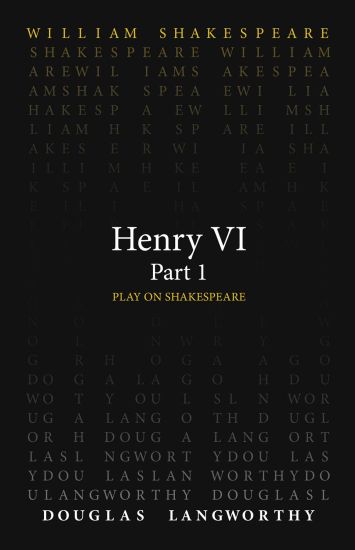
Henry VI, Part 1

Henry VI, Part 1

William Shakespeare

Arizona Center for Medieval Renaissance Studies,US
2022
nidottu
In his three Henry VI plays, Shakespeare tackles the infamous Wars of the Roses and the fall of the House of Lancaster. In this translation of Henry VI, Part 1, Douglas Langworthy explores the initial unrest as a young Henry VI becomes king. Langworthy’s translation takes a deep dive into the language of Shakespeare. With a fine-tooth comb, he updates passages that are archaic and difficult to the modern ear and matches them with the syntax and lyricism of the rest of the play, essentially translating archaic Shakespeare to match contemporary Shakespeare. This translation of Henry VI, Part 1 was written as part of the Oregon Shakespeare Festival’s Play On! project, which commissioned new translations of thirty-nine Shakespeare plays. These translations present the work of "The Bard" in language accessible to modern audiences while never losing the beauty of Shakespeare’s verse. Enlisting the talents of a diverse group of contemporary playwrights, screenwriters, and dramaturges from diverse backgrounds, this project reenvisions Shakespeare for the twenty-first century. These volumes make these works available for the first time in print—a new First Folio for a new era.
Henry IV Part 1

Henry IV Part 1

William Shakespeare; Yvette Nolan

Arizona Center for Medieval Renaissance Studies,US
2022
nidottu
The two-part tale of King Henry IV, rewritten with new language for the twenty-first century. Shakespeare’s two Henry IV plays follow the exploits of King Henry IV after usurping the crown from his cousin Richard II. Featuring some of Shakespeare’s most recognizable characters such as Prince Hal and the roguish Sir John Falstaff, Henry IV, Part 1 delves into complicated questions of loyalty and kingship on and off the battlefield. Henry IV, Part 2 follows Prince Hal as he grapples with his eventual ascent to the throne and his increasingly strained relationship with Falstaff. As the king falls sick and Hal’s ascent appears imminent, Hal’s decisions hold significant implications for all those around him. Modernizing the language of the two plays, Yvette Nolan’s translation carefully works at the seeds sown by Shakespeare—bringing to new life the characters and dramatic arcs of the original. These translations of Henry IV were written as part of the Oregon Shakespeare Festival’s Play On! project, which commissioned new translations of thirty-nine Shakespeare plays. These translations present work from “The Bard” in language accessible to modern audiences while never losing the beauty of Shakespeare’s verse. Enlisting the talents of a diverse group of contemporary playwrights, screenwriters, and dramaturges from diverse backgrounds, this project reenvisions Shakespeare for the twenty-first century. These volumes make these works available for the first time in print—a new First Folio for a new era.
Henry IV Part 2

Henry IV Part 2

William Shakespeare; Yvette Nolan

Arizona Center for Medieval Renaissance Studies,US
2022
nidottu
The two-part tale of King Henry IV, rewritten with new language for the twenty-first century. Shakespeare’s two Henry IV plays follow the exploits of King Henry IV after usurping the crown from his cousin Richard II. Featuring some of Shakespeare’s most recognizable characters such as Prince Hal and the roguish Sir John Falstaff, Henry IV, Part 1 delves into complicated questions of loyalty and kingship on and off the battlefield. Henry IV, Part 2 follows Prince Hal as he grapples with his eventual ascent to the throne and his increasingly strained relationship with Falstaff. As the king falls sick and Hal’s ascent appears imminent, Hal’s decisions hold significant implications for all those around him. Modernizing the language of the two plays, Yvette Nolan’s translation carefully works at the seeds sown by Shakespeare—bringing to new life the characters and dramatic arcs of the original. These translations of Henry IV were written as part of the Oregon Shakespeare Festival’s Play On! project, which commissioned new translations of thirty-nine Shakespeare plays. These translations present work from “The Bard” in language accessible to modern audiences while never losing the beauty of Shakespeare’s verse. Enlisting the talents of a diverse group of contemporary playwrights, screenwriters, and dramaturges from diverse backgrounds, this project reenvisions Shakespeare for the twenty-first century. These volumes make these works available for the first time in print—a new First Folio for a new era.
Henry VI, Part 2

Henry VI, Part 2

William Shakespeare; Douglas Langworthy

Arizona Center for Medieval Renaissance Studies,US
2022
nidottu
New versions of Shakespeare’s history plays from director and translator Douglas Langworthy. In his three Henry VI plays, Shakespeare tackles the infamous Wars of the Roses and the fall of the House of Lancaster. In this translation of Henry VI, Part 2, Douglas Langworthy follows the increasing tensions as the Duke of York foments rebellion against the crown. Langworthy’s translation takes a deep dive into the language of Shakespeare. With a fine-tooth comb, he updates passages that are archaic and difficult to the modern ear, and matches them with the syntax and lyricism of the rest of the play, essentially translating archaic Shakespeare to match contemporary Shakespeare. This translation of Henry VI, Part 2 was written as part of the Oregon Shakespeare Festival’s Play On! project, which commissioned new translations of thirty-nine Shakespeare plays. These translations present the work of "The Bard" in language accessible to modern audiences while never losing the beauty of Shakespeare’s verse. Enlisting the talents of a diverse group of contemporary playwrights, screenwriters, and dramaturges from diverse backgrounds, this project reenvisions Shakespeare for the twenty-first century. These volumes make these works available for the first time in print—a new First Folio for a new era.
Henry VI, Part 3

Henry VI, Part 3

William Shakespeare; Douglas Langworthy

Arizona Center for Medieval Renaissance Studies,US
2022
nidottu
New versions of Shakespeare’s history plays from director and translator Douglas Langworthy. In his three Henry VI plays, Shakespeare tackles the infamous Wars of the Roses and the fall of the House of Lancaster. In this translation of Henry VI, Part 3, Douglas Langworthy concludes the trilogy, tracking the final downfall of Henry VI and the rise of the House of York. Langworthy’s translation takes a deep dive into the language of Shakespeare. With a fine-tooth comb, he updates passages that are archaic and difficult to the modern ear, and matches them with the syntax and lyricism of the rest of the play, essentially translating archaic Shakespeare to match contemporary Shakespeare. This translation of Henry VI, Part 3 was written as part of the Oregon Shakespeare Festival’s Play On! project, which commissioned new translations of thirty-nine Shakespeare plays. These translations present the work of "The Bard" in language accessible to modern audiences while never losing the beauty of Shakespeare’s verse. Enlisting the talents of a diverse group of contemporary playwrights, screenwriters, and dramaturges from diverse backgrounds, this project reenvisions Shakespeare for the twenty-first century. These volumes make these works available for the first time in print—a new First Folio for a new era.
Henry VIII

Henry VIII

William Shakespeare; Caridad Svich

Arizona Center for Medieval Renaissance Studies,US
2022
nidottu
Caridad Svich offers a new take on the history play, which tells the story of Henry VIII’s marriage to Anne Boleyn. Shakespeare’s Henry VIII is a story of a brazen race to power and the desire for an heir. Advised by Cardinal Wolsey, Henry VIII is caught between church and state as he meets Anne Boleyn and seeks to annul his marriage to Queen Katherine. This episodic and plot-driven play examines the machinations of royal power. Shakespeare’s Henry VIII, in this new translation by Caridad Svich, is a swift-moving, complex tale of intrigue. This translation of Henry VIII was written as part of the Oregon Shakespeare Festival’s Play On! project, which commissioned new translations of thirty-nine Shakespeare plays. These translations present work from “The Bard” in language accessible to modern audiences while never losing the beauty of Shakespeare’s verse. Enlisting the talents of a diverse group of contemporary playwrights, screenwriters, and dramaturges from diverse backgrounds, this project reenvisions Shakespeare for the twenty-first century. These volumes make these works available for the first time in print—a new First Folio for a new era.
Henry M. Teller

Henry M. Teller

Duane A. Smith

University Press of Colorado
2002
sidottu
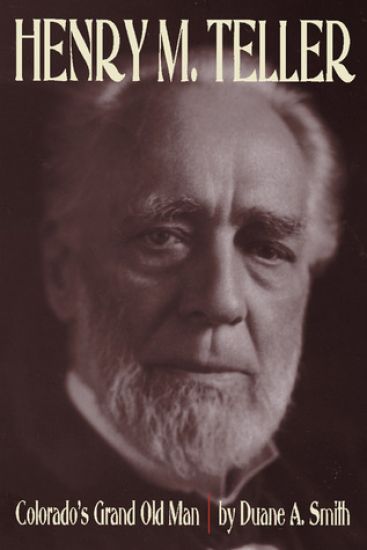
Serving longer in the US Senate than any other Coloradan, Henry M Teller was one of the Centennial State's greatest statesmen and political leaders. Teller was a prime example of what a politician should be in an era when elected officials left a great deal to be desired. As Colorado's representative, Teller stated his beliefs and stuck by them. Not all agreed with him, but all admired him for his honesty and integrity. His legal career in Colorado encompassed much of the early legislation in the territory, such as developing mining law and the organisation of the Colorado Central Railroad, while his Washington career touched on nearly every important western economic development issue that occurred in Colorado between 1876 and 1909. Teller declared to the US Congress that Colorado was a part of the nation, and that the West deserved a say in its decisions.
Henry Ford's Plan for the American Suburb

Henry Ford's Plan for the American Suburb

Heather Barrow

Northern Illinois University Press
2015
sidottu
Around Detroit, suburbanization was led by Henry Ford, who not only located a massive factory over the city's border in Dearborn, but also was the first industrialist to make the automobile a mass consumer item. So, suburbanization in the 1920s was spurred simultaneously by the migration of the automobile industry and the mobility of automobile users. A welfare capitalist, Ford was a leader on many fronts—he raised wages, increased leisure time, and transformed workers into consumers, and he was the most effective at making suburbs an intrinsic part of American life. The decade was dominated by this new political economy—also known as "Fordism"—linking mass production and consumption. The rise of Dearborn demonstrated that Fordism was connected to mass suburbanization as well. Ultimately, Dearborn proved to be a model that was repeated throughout the nation, as people of all classes relocated to suburbs, shifting away from central cities. Mass suburbanization was a national phenomenon. Yet the example of Detroit is an important baseline since the trend was more discernable there than elsewhere. Suburbanization, however, was never a simple matter of outlying communities growing in parallel with cities. Instead, resources were diverted from central cities as they were transferred to the suburbs. The example of the Detroit metropolis asks whether the mass suburbanization which originated there represented the "American dream," and if so, by whom and at what cost. This book will appeal to those interested in cities and suburbs, American studies, technology and society, political economy, working-class culture, welfare state systems, transportation, race relations, and business management.
Henry Ford's Plan for the American Suburb

Henry Ford's Plan for the American Suburb

Heather Barrow

Northern Illinois University Press
2018
pokkari
Around Detroit, suburbanization was led by Henry Ford, who not only located a massive factory over the city's border in Dearborn, but also was the first industrialist to make the automobile a mass consumer item. So, suburbanization in the 1920s was spurred simultaneously by the migration of the automobile industry and the mobility of automobile users. A welfare capitalist, Ford was a leader on many fronts—he raised wages, increased leisure time, and transformed workers into consumers, and he was the most effective at making suburbs an intrinsic part of American life. The decade was dominated by this new political economy—also known as "Fordism"—linking mass production and consumption. The rise of Dearborn demonstrated that Fordism was connected to mass suburbanization as well. Ultimately, Dearborn proved to be a model that was repeated throughout the nation, as people of all classes relocated to suburbs, shifting away from central cities. Mass suburbanization was a national phenomenon. Yet the example of Detroit is an important baseline since the trend was more discernable there than elsewhere. Suburbanization, however, was never a simple matter of outlying communities growing in parallel with cities. Instead, resources were diverted from central cities as they were transferred to the suburbs. The example of the Detroit metropolis asks whether the mass suburbanization which originated there represented the "American dream," and if so, by whom and at what cost. This book will appeal to those interested in cities and suburbs, American studies, technology and society, political economy, working-class culture, welfare state systems, transportation, race relations, and business management.
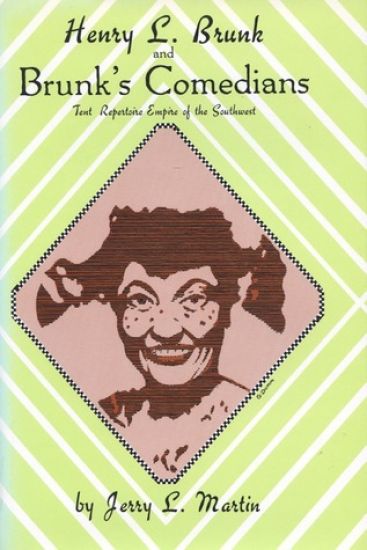
Henry L Brunk & Brunks Comedian

Henry L Brunk & Brunks Comedian

Martin

Bowling Green University Popular Press,US
1984
nidottu
Tent repertoire theatre as a form of popular entertainment caught on in the late 19th century, had its heyday in the 1920s, and was finished by the Depression and World War II gasoline rationing. The author examines this rise and fall in context of an increasingly urbanized society.