Kirjojen hintavertailu. Mukana 11 627 362 kirjaa ja 12 kauppaa.

Kirjahaku

Etsi kirjoja tekijän nimen, kirjan nimen tai ISBN:n perusteella.

1000 tulosta hakusanalla Herman van Rompuy

Being Lucky

Being Lucky

Herman B Wells

INDIANA UNIVERSITY PRESS
2022
pokkari
Being Lucky: Reminiscences and Reflections, The Complete Edition presents legendary Indiana University president Herman B Wells' autobiography as he originally intended. Painstakingly restored from original archival materials and featuring over a dozen fascinating vignettes and talks that were cut from the original edition, Being Lucky is a must read for Hoosiers everywhere. In this absorbing autobiography, Herman B Wells recalls his small-town childhood, the strong influence of his parents, and his pioneering work with Indiana banks during the Great Depression. His first contact with Indiana University was as an undergraduate in 1921, when the still provincial school had fewer than 3,000 students. At the end of his 25-year tenure as president in 1962, IU had gained an international reputation and a student body that would soon exceed 30,000. Wells' reflections on his years as university president are both lighthearted and illuminating. They describe in candied detail how he approached the job, his observations on effective administration, his thoughts on academic freedom and tenure, his approach to student and alumni relations, and his views on the role of the university as a cultural center. Also included are his fifty maxims for young college presidents. Finally Wells discusses the national and international service that helped shape his presidency and the university. Being Lucky is a nourishing brew of the memories, advice, wit, and wisdom of a remarkable man.
Africans in Colonial Mexico

Africans in Colonial Mexico

Herman L. Bennett

Indiana University Press
2005
pokkari
"This book charts new directions in thinking about the construction of new world identities. . . . Bennett does a masterful job." —Judith A. Byfield, Dartmouth In this study of the largest population of free and slave Africans in the New World, Herman L. Bennett has uncovered much new information about the lives of slave and free blacks, the ways that their lives were regulated by the government and the Church, the impact upon them of the Inquisition, their legal status in marriage, and their rights and obligations as Christian subjects.
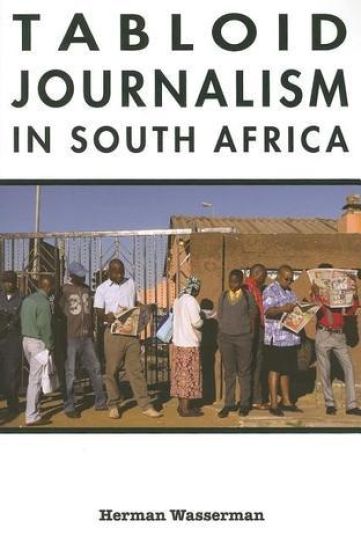
Tabloid Journalism in South Africa

Tabloid Journalism in South Africa

Herman Wasserman

Indiana University Press
2010
pokkari
Less than a decade after the advent of democracy in South Africa, tabloid newspapers have taken the country by storm. One of these papers—the Daily Sun—is now the largest in the country, but it has generated controversy for its perceived lack of respect for privacy, brazen sexual content, and unrestrained truth-stretching. Herman Wasserman examines the success of tabloid journalism in South Africa at a time when global print media are in decline. He considers the social significance of the tabloids and how they play a role in integrating readers and their daily struggles with the political and social sphere of the new democracy. Wasserman shows how these papers have found an important niche in popular and civic culture largely ignored by the mainstream media and formal political channels.
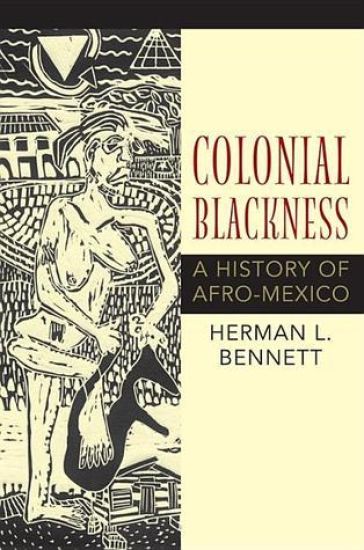
Colonial Blackness

Colonial Blackness

Herman L. Bennett

Indiana University Press
2010
pokkari
Asking readers to imagine a history of Mexico narrated through the experiences of Africans and their descendants, this book offers a radical reconfiguration of Latin American history. Using ecclesiastical and inquisitorial records, Herman L. Bennett frames the history of Mexico around the private lives and liberty that Catholicism engendered among enslaved Africans and free blacks, who became majority populations soon after the Spanish conquest. The resulting history of 17th-century Mexico brings forth tantalizing personal and family dramas, body politics, and stories of lost virtue and sullen honor. By focusing on these phenomena among peoples of African descent, rather than the conventional history of Mexico with the narrative of slavery to freedom figured in, Colonial Blackness presents the colonial drama in all its untidy detail.
The Johnstown Flood

The Johnstown Flood

Herman Dieck

Metalmark Books
2008
pokkari
On May 31, 1889, the South Fork Dam upstream of Johnstown, Pennsylvania, failed, unleashing a torrent of water that killed more than two thousand people and destroyed the city. Herman Dieck's Johnstown Flood, published shortly after the event, offers sensational stories of death, escape, sacrifice, and survival along with demographic reports and an investigation of several myths-such as the legend of a Paul Revere-like messenger on horseback racing down the valley, warning of the impending flood.The flooding of late May and early June 1889 was not limited to the Johnstown area. Dieck includes reports of rains that inundated many river towns of the mid-Atlantic region. His accounts of other catastrophic floods place the Pennsylvania disaster in historical perspective. The book also presents the tragic story of the Pennsylvania Children's Aid Society. The group's headquarters had been transferred from Philadelphia to Johnstown just before the flood; only two officers survived. Despite this devastation, reinforcements from the Philadelphia branch office were able to establish a new, greatly needed orphanage in what proved to be one of the most effective relief efforts after the flood.The Johnstown Flood gives a rich account of one of the worst disasters in America and the Keystone State.
Adolescent Subcultures and Delinquency

Adolescent Subcultures and Delinquency

Herman Schwendinger; Julia Schwendinger

Praeger Publishers Inc
1985
nidottu
The author presents a theory of juvenile delinquency which explains the rise of delinquents from middle class backgrounds. Written by two eminent sociologists, Adolescent Subcultures and Delinquency is the culmination of 20 years of research, and includes new methodological procedures in addition to new data.
The Golden Frontier

The Golden Frontier

Herman Francis Reinhart

University of Texas Press
1962
nidottu
The gold rush was Herman Francis Reinhart's life for almost twenty years. From the summer of 1851 when, as a boy in his late teens, he traveled the Oregon trail to California, until a January day in 1869 when he climbed aboard an eastbound train at Evanston, Wyoming, he was a part of every gold discovery that stirred the West.Reinhart dipped his pan in the streams of northern California and western Oregon-in Humbug Creek, Indian Creek, Rogue River, and Sucker Creek. He made the arduous and dangerous overland journey through Indian-occupied western Washington and British Columbia to find the Fraser River gold even more elusive than that farther south. With his teams and wagons he traversed all of the inland mine areas from Walla Walla to Fort Benton, from Boise Basin to South Pass City.Reinhart's German common sense soon turned him from actual mining to other sources of income, but whatever his labor was, the mines were always the focal point of his activities. When he operated a bakery and saloon it was a business whose customers were miners, whose transactions were more likely to involve gold dust than legal tender, and whose gambling tables saw the exchange of mining fortunes. When he operated a whipsaw mill the timbers cut there were used by miners for sluices and cradles. For a while Reinhart farmed, but planting and harvesting suffered from interruption by frequent expeditions to the mines. And when he prospered as a teamster it was to and from the mining towns that he hauled passengers, supplies, and equipment.The men who, like Herman Francis Reinhart, hopefully followed the golden frontier were not an articulate group, and the written records of their lives are few and fragmentary. But Reinhart, in his later years, recorded his experiences in five long, narrow, hardback ledgers. Many years after he died his daughter gave the ledgers to a friend in Chanute, Kansas-Nora Cunningham-who read the narrative, became fascinated by it, and typed it for publication.Reinhart's account, written in a grammar and language all his own, is not a record of the historian's West, but of the West of the individual miner. The pages are filled with the details of day-to-day life of the miners-the subjects that interested them, the problems that plagued them, their fun and feuding, their frustrations and hopes. Edited by an authority of the history of the West, it is a book that will offer exciting reading to casual readers and scholars alike.
The Last Days of the Jerusalem of Lithuania

The Last Days of the Jerusalem of Lithuania

Herman Kruk

Yale University Press
2002
sidottu
For five horrifying years in Vilna, the Vilna ghetto, and concentration camps in Estonia, Herman Kruk recorded his own experiences as well as the life and death of the Jewish community of the city symbolically called “The Jerusalem of Lithuania.” This unique chronicle includes many recovered pages of Kruk’s diaries and provides a powerful eyewitness account of the annihilation of the Jewish communities of Eastern Europe. This volume includes the Yiddish edition of Kruk’s diaries, published in 1961 and translated here for the first time, as well as many widely scattered pages of the chronicles, collected here for the first time and meticulously deciphered, translated, and annotated.Kruk describes vividly the collapse of Poland in September, 1939, life as a refugee in Vilna, the manhunt that destroyed most of Vilna Jewry in the summer of 1941, the creation of a ghetto and the persecution and self-rule of the remnants of the “Jerusalem of Lithuania,” the internment of the last survivors in concentration camps in Estonia, and their brutal deaths. Kruk scribbled his final diary entry on September 17, 1944, managing to bury the small, loose pages of his manuscript just hours before he and other camp inmates were shot to death and their bodies burnt on a pyre.Kruk’s writings illuminate the tragedy of the Vilna Jews and their courageous efforts to maintain an ideological, social, and cultural life even as their world was being destroyed. To read Kruk’s day-by-day account of the unfolding of the Holocaust is to discern the possibilities for human courage and perseverance even in the face of profound fear.Co-published with the YIVO Institute for Jewish Research
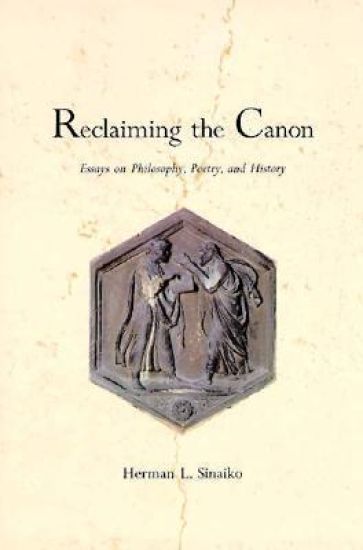
Reclaiming the Canon

Reclaiming the Canon

Herman L. Sinaiko

Yale University Press
1998
sidottu
Herman Sinaiko is renowned for his gifts as a guide to exploring and appreciating the humanities. This book brings to general readers Sinaiko’s thoughts on, and invitations to read or reread, a wide selection of major literary and philosophical works—from ancient Greek to Chinese to modern. Taking a conversational approach, he deals with the perennial questions that thinking people have always raised, and investigates how works of great art may provide answers to these questions.Sinaiko reestablishes the notion that there is a canon of great works from the great traditions of the world and argues for the existence of permanent standards of excellence. He rejects most contemporary critical views of classical literature and philosophy, including those of "experts" who seek to monopolize access to great works, academics whose extreme emphasis on historical context disallows any current relevance, and theorists whose lenses distort with personal bias rather than sharpening focus on the works they discuss. Sinaiko reclaims the canon for all of us, opening up discussion on texts ranging from Plato to Tolstoy, Confucius to Mary Shelley, and encouraging each reader to listen and respond to the rich diversity of powerful views on the human condition that such great works offer.
Battle-pieces And Aspects Of The War

Battle-pieces And Aspects Of The War

Herman Melville

Da Capo Press Inc
1995
pokkari
Herman Melville (1819-1891) stopped writing fiction after the publication of The Confidence Man: His Masquerade ] in 1857 as he entered his forties, he turned to poetry as his literary avocation. His first published book of poems was Battle-Pieces and Aspects of the War (1866), a meditation on the Civil War in short lyric and narrative verses, and a work as ambitious and rich as any that issued from his pen. Melville was well acquainted with the war. He made many trips south to visit his cousin Henry Gansevoort, a Union officer- on one such trip, he was active in an unsuccessful pursuit of Confederate raider John Mosby. He had met Abraham Lincoln in Washington, and called upon General Ulysses S. Grant in Virginia in 1864. And his position within his family, whose members were involved in almost every aspect of the war, was close enough to allow him a rare vantage point on this country's greatest conflict. But, Battle-Pieces is anything but epic. Rather than celebratory, the tone of Melville's poem is grievous and disconsolate. "Unmindful, without purposing to be, of consistency" (as Melville puts it in his preface), the poems do not attempt to paint a broad picture of the whole of the war, but rather represent disjoint aspects, each faithful to Melville's impulsive, modern, yet realist view of the tragedy.This facsimile edition of Battle-Pieces includes 72 poems on almost every major campaign, battle, and event Melville's own detailed historical notes and his supplementary essay on Reconstruction and a new introduction by Lee Rust Brown, who teaches English at the University of Utah and is the author of The Emerson Museum. An American classic is thus available once again.
To Destroy A City

To Destroy A City

Herman Knell

Da Capo Press Inc
2003
sidottu
A survivor of the 1945 Allied air campaign in World War II that resulted in the destruction of Wnrtsburg follows his reconstruction of the events that occurred and his investigation into the strategy of area bombing to evaluate its effectiveness and consequences.
Gertrude

Gertrude

Herman Hesse

St Martin's Press
2005
nidottu
With "Gertrude, Herman Hesse continues his lifelong exploration of the irreconcilable elements of human existence. In this fictional memoir, the renowned composer Kuhn recounts his tangled relationships with two artists--his friend Heinrich Muoth, a brooding, self-destructive opera singer, and the gentle, self-assured Gertrude Imthor. Kuhn is drawn to Gertrude upon their first meeting, but Gertrude falls in love with Heinrich, to whom she is introduced when Kuhn auditions them for the leads in his new opera. Hopelessly ill-matched, Gertrude and Heinrich have a disastrous marriage that leaves them both ruined. Yet this tragic affair also becomes the inspiration for Kuhn's opera, the most important success of his artistic life.
Benito Cereno

Benito Cereno

Herman Melville

Bedford Books
2006
nidottu
This version of Benito Cereno presents the novel in a readable and affordable format with light and supportive annotations and supporting editorial content to help you connect with the central themes of the book.
The Politically Correct Netherlands

The Politically Correct Netherlands

Herman Vuijsje

Praeger Publishers Inc
2000
sidottu
In the 1960s, the Netherlands became known as an anarchists social laboratory, producing one of the earliest examples of political correctness. Strong taboos in areas such as governmental control, privacy, and racial relations were the rule. While the Netherlands has become a country with a large degree of personal freedom, the ideas that originated in the openness of the 1960s have since spilled over from the private into the public sphere, resulting in an era of anxious conformity. Vuijsje, a Dutch journalist, examines why notions of political correctness became so strongly ingrained in the Netherlands and how the results have not always been positive. The ideology of political correctness created totems and taboos that made it difficult to deal with, or even signal the presence of, the real problems in Dutch society. This has often led to a worsening of the situation for precisely the social groups that society wanted to protect, such as racial minorities. Vuijsje traces this issue back to historical conditions that include: the public feeling of guilt about the large number of Dutch Jews killed in the war; the scope and duration of the baby boom; and the continuing Dutch prosperity. This study is an essay on the way that the Dutch government and its officials have functioned over the last thirty years and on the changing relationship between the authority of the state and its citizens. Fully annotated to make it accessible to those less familiar with Dutch society. Vujisje's book offers a perspective of the issue of political correctness that has been muted in the American discussions of the issue and that is especially refreshing. His book is of interest not only to student of the Netherlands but also to students of Western society as a whole.
Hole in Texas

Hole in Texas

Herman Wouk

LITTLE, BROWN COMPANY
2005
pokkari
With this rollicking novel-hailed equally for its satiric bite, its lightly borne scientific savvy, and its tender compassion for foible-prone humanity-one of America's preeminent storytellers returns to fiction. Guy Carpenter is a regular guy, a family man, an obscure NASA scientist, when he is jolted out of his quiet life and summoned to the corridors of power in Washington, D.C. Through a turn of events as unlikely as it is inevitable, Guy finds himself compromised by scandal and romance, hounded by Hollywood, and agonizingly alone at the white-hot center of a firestorm ignited as three potent forces of American culture--politics, big science, and the media--spectacularly collide.
The Winds of War

The Winds of War

Herman Wouk

Back Bay Books
2002
nidottu
Like no other masterpiece of historical fiction, Herman Wouk's sweeping epic of World War II is the great novel of America's Greatest Generation.Wouk's spellbinding narrative captures the tide of global events, as well as all the drama, romance, heroism, and tragedy of World War II, as it immerses us in the lives of a single American family drawn into the very center of the war's maelstrom.The Winds of War and its sequel War and Remembrance stand as the crowning achievement of one of America's most celebrated storytellers.