This debut collection of The Best American Humor celebrates the funniest short stories, essays, articles, and excerpts of the past year. The more than 40 entries in this edition feature some of the most well-known wits and humorists, including Garry Trudeau, Russell Baker, Paul Rudnick, Douglas Coupland, Garrison Keillor, Conan O'Brien, Philip Roth, T. Coraghessan Boyle, and John Updike among others. Edited by Moshe Waldoks, who co-edited the bestselling The Big Book of Jewish Humor and The Big Book of New American Humor, this volume -- the only "best of the year" humor anthology -- is a hilarious, cynical, witty, sarcastic, and laugh-out-loud look at the funny side of existence and survival. The Best American Humor 1994 is sure to delight all lovers of fun and laughter. ContributorsJerry Adler Meredith Anthony Russell Baker Stanley Bing T. Coraghessan Boyle Ron Carlson Mark Childress Andrei Codrescu Douglas Coupland Jim Crotty Amanda Filipacchi Karen Finley Ian Frazier Frank Gannon Jim Garner Libby Gellman-Waxner Veronica Geng Molly Giles Robert Grossman Michael Guinzberg Cynthia Heimel Robin Hemley Harold Jaffe Garrison Keillor Mike Lane Bryon Lanning Mark Leyner Gordon Lish Bruce McCall Daniel Mendelsohn Ron Nyswaner Conan O'Brien Emily Prager Philip Roth Paul Rudnick Cathleen Schine Steve Stern Linda Sunshine Garry Trudeau John Updike Wendy Wasserstein
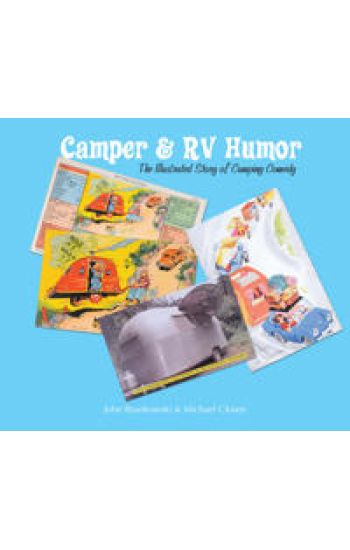
This amusing book covers early camping history, RV designs, road conditions, driving habits, campground issues, and more, with a twist. Things go wrong in each and every chapter, and that is where the humor arises. Some 230 photos (both black-and-white and color) of more than 290 separate postcards from the authors’ personal collections illustrate the fun. Because camping and RVing are so popular all around the world, numerous postcards from Australia, Canada, England, France, Germany, Italy, Netherlands, Portugal, and more, are included. Many images shown are quite scarce, and some are truly rare. The text and illustrations tell the humorous side of camping and RVing, past and present. All the postcards illustrated are described in detailed captions, which include each card's age, size, maker, and estimated value. The unique approach of this new book makes it stand alone as both a resource for information and a source of good old-fashioned entertainment.
Humor permeates every aspect of society and has done so for thousands of years. People experience it daily through television, newspapers, literature, and contact with others. Rarely do social researchers analyze humor or try to determine what makes it such a dominating force in our lives. The types of jokes a person enjoys contribute significantly to the definition of that person as well as to the character of a given society. Arthur Asa Berger explores these and other related topics in An Anatomy of Humor. He shows how humor can range from the simple pun to complex plots in Elizabethan plays.Berger examines a number of topics—ethnicity, race, gender, politics—each with its own comic dimension. Laughter is beneficial to both our physical and mental health, according to Berger. He discerns a multiplicity of ironies that are intrinsic to the analysis of humor. He discovers as much complexity and ambiguity in a cartoon, such as Mickey Mouse, as he finds in an important piece of literature, such as Huckleberry Finn. An Anatomy of Humor is an intriguing and enjoyable read for people interested in humor and the impact of popular and mass culture on society. It will also be of interest to professionals in communication and psychologists concerned with the creative process.
Humor, wit, and laughter surround each person. From everyday quips to the carefully contrived comedy of literature, newspapers, and television we experience humor in many forms, yet the impetus for our laughter is far from innocuous. Misfortune, stupidity, and moral or cultural defects, however faintly revealed in others and ourselves, seem to make us laugh. Although discomforting, such negative terms as superiority, aggression, hostility, ridicule, or degradation can be applied to instances of humor. According to scholars, Thomas Hobbes's "superiority theory"—that humor arises from mischances, infirmities, and indecencies, where there is no wit at all—applies to most humor. With the exception of good-natured play, Charles R. Gruner claims that humor is rarely as innocent as it first appears.Gruner's proposed superiority theory of humor is all-encompassing. In The Game of Humor, he expands the scope of Hobbes's theory to include and explore the contest aspect of "good-natured" play. As such, the author believes all instances of humor can be examined as games, in terms of competition and keeping score—winners and losers. Gruner draws on a broad spectrum of thought-provoking examples. Holocaust jokes, sexual humor, the racialist dialogue of such comic characters as Stepin Fetchit and Archie Bunker, simple puns, and many of the author's own encounters with everyday humor. Gruner challenges the reader to offer a single example of humor that cannot be "de-humorized" by its agonistic nature.The Game of Humor makes intriguing and enjoyable reading for people interested in humor and the aspects of human motivation. This book will also be valuable to professionals in communication and information studies, sociologists, literary critics and linguists, and psychologists concerned with the conflicts and tensions of everyday life.
Why do modern Americans believe in something called a sense of humor, and how did they come to that belief? Daniel Wickberg traces the relatively short cultural history of the concept to its British origins as a way to explore new conceptions of the self and social order in modern America. More than simply the history of an idea, Wickberg's study provides new insights into a peculiarly modern cultural sensibility.The expression "sense of humor" was first coined in the 1840s, and the idea that such a sense was a personality trait to be valued developed only in the 1870s. What is the relationship between medieval humoral medicine and this distinctively modern idea of the sense of humor? What has it meant in the past 125 years to declare that someone lacks a sense of humor? Why do modern Americans say it is a good thing not to take oneself seriously? How is the joke, as a twentieth-century quasi-literary form, different from the traditional folktale? Wickberg addresses these questions among others and in the process uses the history of ideas to throw new light on the way contemporary Americans think and speak about humor and laughter.The context of Wickberg's analysis is Anglo-American; the specifically British meanings of humor and laughter from the sixteenth century forward provide the framework for understanding American cultural values in the nineteenth and twentieth centuries. The genealogy of the sense of humor is, like the study of keywords, an avenue into a significant aspect of the cultural history of modernity. Drawing on a wide range of sources and disciplinary perspectives, Wickberg's analysis challenges many of the prevailing views of modern American culture and suggests a new model for cultural historians.
Why do modern Americans believe in something called a sense of humor, and how did they come to that belief? Daniel Wickberg traces the relatively short cultural history of the concept to its British origins as a way to explore new conceptions of the self and social order in modern America. More than simply the history of an idea, Wickberg's study provides new insights into a peculiarly modern cultural sensibility. The expression "sense of humor" was first coined in the 1840s, and the idea that such a sense was a personality trait to be valued developed only in the 1870s. What is the relationship between medieval humoral medicine and this distinctively modern idea of the sense of humor? What has it meant in the past 125 years to declare that someone lacks a sense of humor? Why do modern Americans say it is a good thing not to take oneself seriously? How is the joke, as a twentieth-century quasi-literary form, different from the traditional folktale? Wickberg addresses these questions among others and in the process uses the history of ideas to throw new light on the way contemporary Americans think and speak about humor and laughter. The context of Wickberg's analysis is Anglo-American; the specifically British meanings of humor and laughter from the sixteenth century forward provide the framework for understanding American cultural values in the nineteenth and twentieth centuries. The genealogy of the sense of humor is, like the study of keywords, an avenue into a significant aspect of the cultural history of modernity. Drawing on a wide range of sources and disciplinary perspectives, Wickberg's analysis challenges many of the prevailing views of modern American culture and suggests a new model for cultural historians.
Although Bill Nye (1850-1896) was America's best known humorist in the late 1880's and early 1890's, his work is little known today--his books long out of print and his columns yellowing in newspaper files. Now T. A. Larson, a dyed-in-the-wool Nye fan for more than thirty years, has assembled the best of Bill Nye's work, most of it dating from the seven Wyoming years when Nye made his name. The selections are chosen from Laramie, Cheyenne, and Denver newspapers and from six books published in the 1890's. The resulting collection is both good fun and a valuable picture of a lively period.
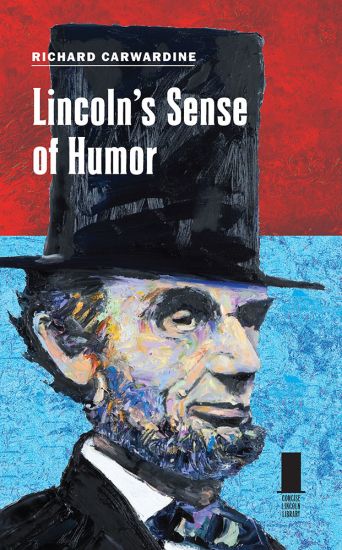
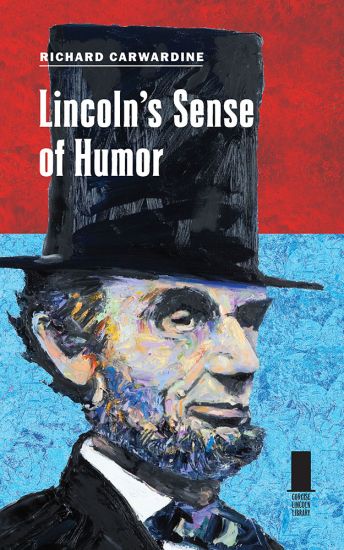
Abraham Lincoln was the first president to make storytelling, jokes, and laughter tools of the office, and his natural sense of humor has become legendary. Lincoln’s Sense of Humor registers the variety, complexity of purpose, and ethical dimension of Lincoln’s humor and pinpoints the political risks Lincoln ran in telling jokes while the nation was engaged in a bloody struggle for existence. Complete with amusing anecdotes, this book shows how Lincoln’s uses of humor evolved as he matured and explores its versatility, range of expressions, and multiple sources: western tall tales, morality stories, bawdy jokes, linguistic tricks, absurdities, political satire, and sharp wit. While Lincoln excelled at self-mockery, nothing gave him greater pleasure than satirical work lampooning hypocrisy and ethical double standards. He particularly enjoyed David R. Locke’s satiric writings by Petroleum V. Nasby, a fictional bigoted secessionist preacher, and the book explores the nuances of Lincoln’s enthusiasm for what he called Locke’s genius, showing the moral springs of Lincoln’s humor. Richard Carwardine methodically demonstrates that Lincoln’s funny stories were the means of securing political or personal advantage, sometimes by frontal assault on opponents but more often by depiction through parable, obfuscation through hilarity, refusal through wit, and diversion through cunning. Throughout his life Lincoln worked to develop the humorist’s craft and hone the art of storytelling. His jokes were valuable in advancing his careers as politician and lawyer and in navigating his course during a storm-tossed presidency. His merriness, however, coexisted with self-absorbed contemplation and melancholy. Humor was his lifeline; dark levity acted as a tonic, giving Lincoln strength to tackle the severe challenges he faced. At the same time, a reputation for unrestrained, uncontrollable humor gave welcome ammunition to his political foes. In fact, Lincoln’s jocularity elicited waves of criticism during his presidency. He was dismissed as a “smutty joker,” a “first rate second rate man,” and a “joke incarnated.” Since his death, Lincoln’s anecdotes and jokes have become detached from the context that had given them their political and cultural bite, losing much of the ironic and satiric meaning that he had intended. With incisive analysis and laugh-inducing examples, Carwardine helps to recapture a strong component of Lincoln’s character and reanimates the good humor of our sixteenth president.
Winner, Abraham Lincoln Institute Book Prize, 2018Winner, ISHS Annual Award for a Scholarly Publication, 2018Abraham Lincoln was the first president to make storytelling, jokes, and laughter tools of the office, and his natural sense of humor has become legendary. Lincoln’s Sense of Humor registers the variety, complexity of purpose, and ethical dimension of Lincoln’s humor and pinpoints the political risks Lincoln ran in telling jokes while the nation was engaged in a bloody struggle for existence.Complete with amusing anecdotes, this book shows how Lincoln’s uses of humor evolved as he matured and explores its versatility, range of expressions, and multiple sources: western tall tales, morality stories, bawdy jokes, linguistic tricks, absurdities, political satire, and sharp wit. While Lincoln excelled at self-mockery, nothing gave him greater pleasure than satirical work lampooning hypocrisy and ethical double standards. He particularly enjoyed David R. Locke’s satiric writings by Petroleum V. Nasby, a fictional bigoted secessionist preacher, and the book explores the nuances of Lincoln’s enthusiasm for what he called Locke’s genius, showing the moral springs of Lincoln’s humor.Richard Carwardine methodically demonstrates that Lincoln’s funny stories were the means of securing political or personal advantage, sometimes by frontal assault on opponents but more often by depiction through parable, obfuscation through hilarity, refusal through wit, and diversion through cunning. Throughout his life Lincoln worked to develop the humorist’s craft and hone the art of storytelling. His jokes were valuable in advancing his careers as politician and lawyer and in navigating his course during a storm-tossed presidency. His merriness, however, coexisted with self-absorbed contemplation and melancholy. Humor was his lifeline; dark levity acted as a tonic, giving Lincoln strength to tackle the severe challenges he faced. At the same time, a reputation for unrestrained, uncontrollable humor gave welcome ammunition to his political foes. In fact, Lincoln’s jocularity elicited waves of criticism during his presidency. He was dismissed as a “smutty joker,” a “first rate second rate man,” and a “joke incarnated.”Since his death, Lincoln’s anecdotes and jokes have become detached from the context that had given them their political and cultural bite, losing much of the ironic and satiric meaning that he had intended. With incisive analysis and laugh-inducing examples, Carwardine helps to recapture a strong component of Lincoln’s character and reanimates the good humor of our sixteenth president.
This work analyses, through his early writings, the ways in which Samuel Clemens assumed a separate identity/literary persona under the name of Mark Twain. This text also analyses continuity and duality in Twain's writings, including the extent of Twain's multiple writings.