Kirjojen hintavertailu. Mukana 11 244 527 kirjaa ja 12 kauppaa.

Kirjahaku

Etsi kirjoja tekijän nimen, kirjan nimen tai ISBN:n perusteella.

1000 tulosta hakusanalla Ian Thompson

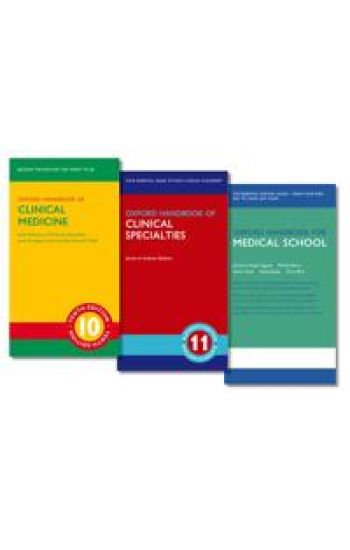
Oxford Handbook of Clinical Medicine, Oxford Handbook of Clinical Specialties, and Oxford Handbook for Medical School Pack
The Oxford Handbook of Clinical Medicine, the Oxford Handbook of Clinical Specialties and the Oxford Handbook for Medical School are bundled together in a pack of three that represents excellent value and serves as the ultimate guide to the study, practice, and philosophy of medicine, providing all the relevant knowledge needed for medical school and in modern clinical practice. Now in its tenth edition, the Oxford Handbook of Clinical Medicine has five new authors on the writing team bringing content fresh from the bedside. Unique among medical texts, it is a complete and concise guide to the core areas of medicine that also encourages thinking about the world from the patient's perspective, offering a holistic, patient-centred approach. For over thirty years, the Oxford Handbook of Clinical Specialties has guided students and junior doctors through their clinical placements, renowned for providing all the information needed for both practice and revision in a deceptively small package. Now in its eleventh edition, the Handbook has been revitalized by an expanded team of specialty experts and junior doctors to guide readers through each of the specialties encountered through medical school and Foundation Programme rotations, while remaining true to the humanity and patient focus of the original edition. The Oxford Handbook for Medical School provides an essential, practical guide for all students, whether you have just received your offer, you're eager to succeed on the wards, or you're about to start your final exams. This handbook includes quick-access summaries covering the crucial information for your preclinical years and for each clinical specialty. This pack of three will be your closest companion right up to graduation and beyond. Loved and trusted by millions for over three decades, the Oxford Handbook of Clinical Medicine continues to be a truly indispensable companion for the practice of modern medicine. With reassuring and friendly advice throughout, the Oxford Handbook of Clinical Specialities is the ultimate guide and revision tool for every medical student and junior doctor for each clinical specialty placement. The Oxford Handbook for Medical School will be more than a survival guide, it will help you navigate the bewildering range of opportunities medical school offers, showing you how to make the most of your time, so you are fully prepared for your future career. Unmatched by any competitor in their class, these handbooks encompass the entire spectrum of clinical medicine, helping you become the doctor you want to be.
Criminal Law

Criminal Law

Ian Edwards; Michael Allen

Oxford University Press
2024
nidottu
Balanced perfectly to give students thought-provoking contextual discussion with succinct and focused coverage. "Criminal Law" explains, analyses, and critiques the criminal law. Contextual coverage ensures that students can enjoy a comprehensive understanding of this most fascinating subject. Key Features: 1. The text closely covers all the areas studied on mainstream criminal law courses in sufficient detail without being overwhelming, providing students new to the subject with the ideal balance of coverage. 2.The straightforward and jargon-free approach towards the legal and judicial process helps students feel comfortable with the subject and develop their own critical skills 3."Law in Context" boxes frame the law in its practical context, exploring the modern challenges that the law faces today 4. Further reading sections at the end of each chapter provide those preparing essays with a carefully targeted starting point for research 5. Boxed examples, case fact summaries, key points, and questions help to highlight important points, break the text down, and aid effective learning 6.Also available as an e-book with functionality, navigation features, and links that offer extra learning support New to this Edition: New coverage examining the relevance of a defendant's right to protest in criminal damage cases following the decision in Attorney General's Reference [2022] Includes the Law Commission's 2023 Consultation on Evidence in Sexual Offence Prosecutions and 2021 Hate Crime Laws recommendations Includes increases in punishments for destroying or damaging a memorial enacted by the Police, Crime, Sentencing and Courts Act 2022 and the Sentencing Code (introduced by the Sentencing Act 2020) Digital formats and resources: The seventeeth edition is available for students and institutions to purchase in a variety of formats: the eBook and Law Trove offer a mobile experience and convenient access along with multiple choice questions for students, functionality tools, navigation features and links that offer extra learning support. For more information about eBooks, please visit: www.oxfordtextbooks.co.uk/ebooks
Britons and their Battlefields

Britons and their Battlefields

Ian Atherton

Oxford University Press
2024
sidottu
While much attention has been paid to the commemoration of conflict in the twentieth century, this book is the first to consider conflict memory in the long term, arguing that modern practices were not created out of the mud of the trenches, but evolved from much longer practices. From the fourteenth century to the present day, this work analyses the changing commemoration and memories of British battlefields at home and overseas, from Bannockburn (1314) to Bosworth (1485) to Basra (2003-9). Across these seven centuries, there has been a series of recurring post-battle rituals that have shaped and continue to shape memories of conflict. Three distinct but overlapping periods of memory can be delineated. In the later Middle Ages battlefields were consecrated by the burial of the fallen and often by the erection of a battlefield cross, or chapel or chantry to pray for the dead. The second phase began with the Protestant Reformation in the 1530s, when pilgrimage and prayers for the dead were abolished, and battlefield chantries were dissolved and many battlefield crosses were demolished. Memories shifted from the dead to the living, especially the bodies of surviving veterans who commemorated the conflict by their wounds, and from soil and stone to print and ink. The third phase began in the eighteenth century when antiquaries and others established new monuments on past battlefields. Monuments to survivors and the dead were established on contemporary battlefields such as Waterloo, once again hailed as sacred ground hallowed by bloodshed, fit destinations for a pilgrimage. Not just officers but ordinary soldiers began to be memorialized by name on the battlefield, culminating in the cult of the names of the dead enshrined by the creation of the War Graves Commission in 1917, and the idea that battlefields should be preserved unchanged as seen in modern heritage management. Drawing on a wide variety of literary and historical sources and taking a uniquely longue durée approach, the book explores and links memory-making practices from across the period to reconsider the ways in which battlefields are commemorated and re-commemorated. In so doing, it makes a unique contribution to a wide range of historiographical fields: British history since the fourteenth century, memory studies, heritage studies, landscape history, conflict archaeology, and military history.
Oxford Clinical Guidelines: Newly Qualified Doctor and Oxford Handbook of Clinical Medicine pack

Oxford Clinical Guidelines: Newly Qualified Doctor and Oxford Handbook of Clinical Medicine pack

Ian Wilkinson; Tim Raine; Kate Wiles; Peter Hateley; Dearbhla Kelly; Iain McGurgan

Oxford University Press
2024
muu
This great-value pack of two essential resources offers students and newly qualified doctors a definitive resource on clinical medicine. Unique among medical texts, the Oxford Handbook of Clinical Medicine is a complete and concise guide to the core areas of medicine that also encourages thinking about the world from the patient's perspective, to develop a holistic approach to care with a passion for practice. The eleventh edition has been fully updated to reflect the latest changes in clinical practice and best management, filled with expert knowledge, practical advice, and reassurance, each page has been reviewed by a consultant and trainee. Oxford Clinical Guidelines: Newly Qualified Doctor summarises the key clinical practice guidelines which all final year medical students and Foundation Year 1 and 2 doctors should know when managing common conditions. Logically organised by medical specialty, the reader can quickly familiarise themselves with the key principles of diagnosis and management at the appropriate level for beginning a new rotation on the wards. Each entry has been written by a trainee, reviewed by and approved by senior consultants. Together these two pocketbooks provide a complete companion for the practice and philosophy of modern medicine and the clinical guidelines which underpin modern care ensuring you have everything you need at your fingertips whether on the go, in clinical sessions, or for revision.
Oxford Handbook of Clinical Medicine and Oxford Handbook of Clinical Specialties

Oxford Handbook of Clinical Medicine and Oxford Handbook of Clinical Specialties

Ian Wilkinson; Tim Raine; Kate Wiles; Peter Hateley; Dearbhla Kelly; Iain McGurgan

Oxford University Press
2024
muu
This perfect pair of two essential Oxford Handbooks offers medical students and trainee doctors a definitive resource on clinical medicine and the core clinical specialties. Unique among medical texts, the Oxford Handbook of Clinical Medicine is a complete and concise guide to the core areas of medicine that also encourages thinking about the world from the patient's perspective, to develop a holistic approach to care with a passion for practice. The eleventh edition has been fully updated to reflect the latest changes in clinical practice and best management, filled with expert knowledge, practical advice, and reassurance, each page has been reviewed by a consultant and trainee. For over thirty years, the Oxford Handbook of Clinical Specialties has guided students and junior doctors through their clinical placements and is renowned for providing all the information needed for both practice and revision. Now in its eleventh edition, the Handbook has been revitalized by an expanded team of specialty experts and junior doctors to guide readers through each of the specialties encountered through medical school and Foundation Programme rotations, while remaining true to the humanity and patient focus of the original edition. The two Handbooks provide a complete companion for the practice and philosophy of modern medicine which underpin modern care, together encompassing the entire spectrum of clinical medicine and unmatched by any competitor in their class, helping you become the doctor you want to be!
The Fiery Test of Critique

The Fiery Test of Critique

Ian Proops

Oxford University Press
2025
nidottu
Kant conceived of 'critique' as a kind of winnowing exercise, one whose aim was to separate the wheat of good metaphysics from the chaff of bad. But he used a less familiar metaphor to make this point, namely, that of a 'fiery test of critique'. This is not a medieval ordeal or trial by fire, but rather a metallurgical assay, a procedure in which ore samples are tested for their precious-metal content. Critique therefore has a positive, investigatory side: it seeks not merely to eliminate bad, 'dogmatic' metaphysics but also to discover what valuable residue traditional speculative metaphysics might contain. In this comprehensive study of the Transcendental Dialectic of Kant's Critique of Pure Reason, Proops argues that Kant uncovered two nuggets of value: the indirect proof of Transcendental Idealism afforded by the resolution of the Antinomies, and a defence of theoretically grounded 'doctrinal beliefs' in a wise and great originator, on the one hand, and in an afterlife, on the other. This examination of critique engages with Kant's views on a number of central problems in philosophy and meta-philosophy: the explanation of the enduring human impulse towards metaphysics, the correct philosophical method, the limits of self-knowledge, the possibility of human freedom, the resolution of metaphysical paradox ('Antinomy'), the justification of faith, the nature of scepticism, and the role of 'as if ' reasoning in natural science.
How to Cut a Cake

How to Cut a Cake

Ian Stewart

Oxford University Press
2006
nidottu
Welcome back to Ian Stewart's magical world of mathematics! This is a strange world of never-ending chess games, empires on the moon, furious fireflies, and, of course, disputes over how best to cut a cake. Each quirky tale presents a fascinating mathematical puzzle -- challenging, fun, and also introducing the reader to a significant mathematical problem in an engaging and witty way.
Mathematical Logic

Mathematical Logic

Ian Chiswell; Wilfrid Hodges

Oxford University Press
2007
nidottu
Assuming no previous study in logic, this informal yet rigorous text covers the material of a standard undergraduate first course in mathematical logic, using natural deduction and leading up to the completeness theorem for first-order logic. At each stage of the text, the reader is given an intuition based on standard mathematical practice, which is subsequently developed with clean formal mathematics. Alongside the practical examples, readers learn what can and can't be calculated; for example the correctness of a derivation proving a given sequent can be tested mechanically, but there is no general mechanical test for the existence of a derivation proving the given sequent. The undecidability results are proved rigorously in an optional final chapter, assuming Matiyasevich's theorem characterising the computably enumerable relations. Rigorous proofs of the adequacy and completeness proofs of the relevant logics are provided, with careful attention to the languages involved. Optional sections discuss the classification of mathematical structures by first-order theories; the required theory of cardinality is developed from scratch. Throughout the book there are notes on historical aspects of the material, and connections with linguistics and computer science, and the discussion of syntax and semantics is influenced by modern linguistic approaches. Two basic themes in recent cognitive science studies of actual human reasoning are also introduced. Including extensive exercises and selected solutions, this text is ideal for students in Logic, Mathematics, Philosophy, and Computer Science.
Legitimacy in International Society

Legitimacy in International Society

Ian Clark

Oxford University Press
2007
nidottu
The word 'legitimacy' is seldom far from the lips of practitioners of international affairs. The legitimacy of recent events - such as the wars in Kosovo and Iraq, the post-September 11 war on terror, and instances of humanitarian intervention - have been endlessly debated by publics around the globe. And yet the academic discipline of IR has largely neglected this concept. This book encourages us to take legitimacy seriously, both as a facet of international behaviour with practical consequences, and as a theoretical concept necessary for understanding that behaviour. It offers a comprehensive historical and theoretical account of international legitimacy. It argues that the development of principles of legitimacy lie at the heart of what is meant by an international society, and in so doing fills a notable void in English school accounts of the subject. Part I provides a historical survey of the evolution of the practice of legitimacy from the 'age of discovery' at the end of the 15th century. It explores how issues of legitimacy were interwoven with the great peace settlements of modern history - in 1648, 1713, 1815, 1919, and 1945. It offers a revisionist reading of the significance of Westphalia - not as the origin of a modern doctrine of sovereignty - but as a seminal stage in the development of an international society based on shared principles of legitimacy. All of the historical chapters demonstrate how the twin dimensions of legitimacy - principles of rightful membership and of rightful conduct - have been thought about and developed in differing contexts. Part II then provides a trenchant analysis of legitimacy in contemporary international society. Deploying a number of short case studies, drawn mainly from the wars against Iraq in 1991 and 2003, and the Kosovo war of 1999, it sets out a theoretical account of the relationship between legitimacy, on the one hand, and consensus, norms, and equilibrium, on the other. This is the most sustained attempt to make sense of legitimacy in an IR context. Its conclusion, in the end, is that legitimacy matters, but in a complex way. Legitimacy is not to be discovered simply by straightforward application of other norms, such as legality and morality. Instead, legitimacy is an inherently political condition. What determines its attainability or not is as much the general political condition of international society at any one moment, as the conformity of its specific actions to set normative principles.
Mapping Policy Preferences

Mapping Policy Preferences

Ian Budge; Hans-Dieter Klingemann

Oxford University Press
2001
nidottu
This book uniquely enriches and empowers its readers. It enriches them by giving them the most detailed and extensive data available on the policies and preferences of key democratic actors—parties, governments, and electors in 25 democracies over the post-war period. Estimates are provided for every election and most coalitions of the post-war period and derive from the programmes, manifestos, and platforms of parties and governments themselves. Thus, they form a uniquely authoritative source, recognized as such and provided through the labour of a team of international scholars over 25 years. The book empowers readers by providing these estimates on the website http://manifestoproject.wzb.eu/MPP1. The printed text provides documentation and suggested uses for data, along with much other background information. The changing ideologies and concerns of parties trace general social developments over the post-war period, as well as directly affecting economic policy making. Indispensable for any serious discussion of democratic politics, the book provides necessary information for political scientists, policy analysts, comparativists, sociologists, and economists. A must for every social science library—private as well as academic or public.
High Calvinists in Action

High Calvinists in Action

Ian J. Shaw

Oxford University Press
2003
sidottu
This valuable contribution to the debate about the relation of religion to the modern city fills an important gap in the historiography of early nineteenth-century religious life. Although there is some evidence that strict doctrine led to a more restricted response to urban problems, extensive local and personal variations mean that simple generalizations should be avoided. Ian J.Shaw argues against earlier prejudiced views and shows that high Calvinists played a vigorous and successful part in the response of early nineteenth-century churches to the process of urbanization. The study includes six substantial case studies of ministers and their churches in Manchester and London. Four high Calvinist ministers are considered, with two studies of ministers holding to an evangelical Calvinist doctrine also included to provide instructive contrasts. Detailed social analysis of the congregations is based upon extensive use of manuscript and printed sources, sermons, and local and denominational press.
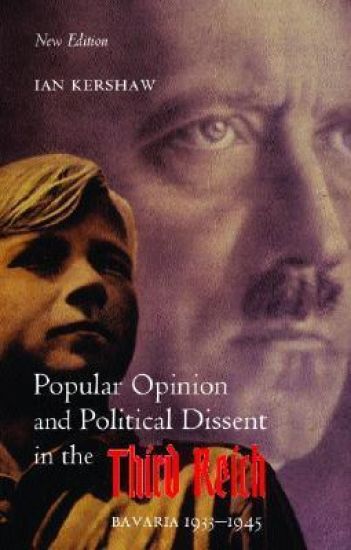
Popular Opinion and Political Dissent in the Third Reich
Now updated with a new introduction and bibliography Ian Kershaw's classic study of popular responses to Nazi policy and ideology explores the political mentality of 'ordinary Germans' in one part of Hitler's Reich. Basing his account on many unpublished sources, the author analyses socio-economic discontent and the popular reaction to the anti-Church and anti-Jewish policies of the Nazis, and reveals the bitter divisions and dissent of everyday reality in the Third Reich, in stark contrast to the propaganda image of a 'National Community' united behind its leaders. The focus on one particular region makes possible a depth of analysis that takes full account of local and social variations, and avoids easy generalization; but the findings of this study of ordinary behaviour in a police state have implications extending far beyond the confines of Bavaria or indeed Germany in this period.
The Regulation of Arms and Dual-Use Exports

The Regulation of Arms and Dual-Use Exports

Ian Davis

Oxford University Press
2002
sidottu
This study analyses the reasons for and the broad implications of the post-cold war reforms of arms and dual-use export controls within the European Union. It conceptualizes the arms export policy process as a policy system, involving the interaction of three basic elements-the policy environment, policy stakeholders and public policies. Three national case studies (the UK, Germany and Sweden) explore the major problems and paradoxes of practical regulatory activity. The differences in their approaches, including variations in the export control criteria, controlled goods, decision-making bodies, licensing decisions and enforcement procedures, are rooted in each state's unique historical normative framework. Evidence is also presented of policy convergence within the EU as a whole. While COCOM was the main instrument of convergence during the cold war, the most significant instrument of convergence in the 1990s was EU integration. The main conclusions are that the process of European integration in the 1990s led to a significant but incomplete convergence of the three states' arms and dual-use export controls; convergence has gone further for dual-use technologies than for military goods; convergence accelerated during the late 1990s as a result of the introduction of the EU Code of Conduct on Arms Exports and common measures to combat illicit trafficking in small arms; convergence is more advanced for policy-making structures than for policy-execution structures; and further convergence can be expected in the next decade.
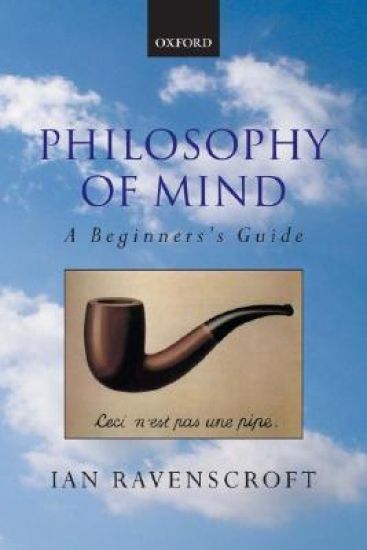
Philosophy of Mind

Philosophy of Mind

Ian Ravenscroft

Oxford University Press
2005
nidottu
Philosophy of Mind: A Beginner's Guide provides the most accessible introduction to the philosophy of mind. Specifically aimed at beginning students with no background knowledge in the subject, Ravenscroft brings together all of the basic concepts and major theories. The text is supported by many pedagogical aids including chapter summaries, a glossary, further reading suggestions and self-assessment questions.
Diachronic Syntax

Diachronic Syntax

Ian Roberts

Oxford University Press
2007
nidottu
This book shows how the generative approach to linguistics may be used to understand how languages change. Generative diachronic syntax has developed since the inception of the principles and parameters approach to comparative syntax in the early 1980s: it has become increasingly important in historical linguistics and generative theory, acting as a bridge between them and providing insights to both. Ian Roberts relates work in historical linguistics to contemporary work on universal grammar and historical syntactic variation. He explains how standard questions in historical linguistics - including word-order change, grammaticalization, and reanalysis - can be explored in terms of current generative theory. He examines the nature of the links between syntactic change and first-language acquisition and considers the short and long-term effects of language contact. Professor Roberts provides numerous examples from a range of different languages, guides to further reading, and a comprehensive glossary. This is the ideal textbook introduction for students of syntactic change.
Legitimacy in International Society

Legitimacy in International Society

Ian Clark

Oxford University Press
2005
sidottu
The word 'legitimacy' is seldom far from the lips of practitioners of international affairs. The legitimacy of recent events - such as the wars in Kosovo and Iraq, the post-September 11 war on terror, and instances of humanitarian intervention - have been endlessly debated by publics around the globe. And yet the academic discipline of IR has largely neglected this concept. This book encourages us to take legitimacy seriously, both as a facet of international behaviour with practical consequences, and as a theoretical concept necessary for understanding that behaviour. It offers a comprehensive historical and theoretical account of international legitimacy. It argues that the development of principles of legitimacy lie at the heart of what is meant by an international society, and in so doing fills a notable void in English school accounts of the subject. Part I provides a historical survey of the evolution of the practice of legitimacy from the 'age of discovery' at the end of the 15th century. It explores how issues of legitimacy were interwoven with the great peace settlements of modern history - in 1648, 1713, 1815, 1919, and 1945. It offers a revisionist reading of the significance of Westphalia - not as the origin of a modern doctrine of sovereignty - but as a seminal stage in the development of an international society based on shared principles of legitimacy. All of the historical chapters demonstrate how the twin dimensions of legitimacy - principles of rightful membership and of rightful conduct - have been thought about and developed in differing contexts. Part II then provides a trenchant analysis of legitimacy in contemporary international society. Deploying a number of short case studies, drawn mainly from the wars against Iraq in 1991 and 2003, and the Kosovo war of 1999, it sets out a theoretical account of the relationship between legitimacy, on the one hand, and consensus, norms, and equilibrium, on the other. This is the most sustained attempt to make sense of legitimacy in an IR context. Its conclusion, in the end, is that legitimacy matters, but in a complex way. Legitimacy is not to be discovered simply by straightforward application of other norms, such as legality and morality. Instead, legitimacy is an inherently political condition. What determines its attainability or not is as much the general political condition of international society at any one moment, as the conformity of its specific actions to set normative principles.
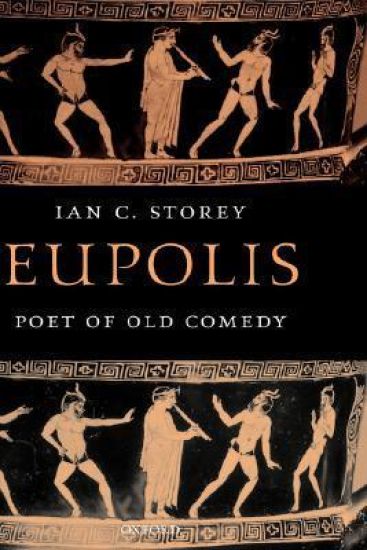
Eupolis, Poet of Old Comedy

Eupolis, Poet of Old Comedy

Ian C. Storey

Oxford University Press
2003
sidottu
Eupolis (fl. 429-411 BC) was one of the best-attested and most important of Aristophanes' rivals. No complete work by this lost master has survived, but of his fourteen plays we have 500 fragments. These include 120 lines of his best-known comedy, Demoi (The Demes), which were discovered and published in 1911. Even in fragmentary form, Eupolis' plays shed interesting light on the whole range of issues - political, poetic, and dramatic - that make Aristophanes so perennially fascinating. There has, however, been no substantial survey in English until now. As well as providing a new translation of all the remaining fragments and a separate essay on each lost play, Ian C. Storey discusses Eupolis' career, redates the plays, examines how Eupolis was known in the ancient world, explores his relationship with Aristophanes (as both rival and collaborator), and delineates the distinct nature of the comedy that this prizewinning poet created.
A Measure of Freedom

A Measure of Freedom

Ian Carter

Oxford University Press
2004
nidottu
It is often said that one person or society is 'freer' than another, or that people have a right to equal freedom, or that freedom should be increased or even maximized. Such quantitative claims about freedom are of great importance to us, forming an essential part of our political discourse and theorizing. Yet their meaning has been surprisingly neglected by political philosophers until now. Ian Carter provides the first systematic account of the nature and importance of our judgements about degrees of freedom. He begins with an analysis of the normative assumptions behind the claim that individuals are entitled to a measure of freedom, and then goes on to ask whether it is indeed conceptually possible to measure freedom. Adopting a coherentist approach, the author argues for a conception of freedom that not only reflects commonly held intuitions about who is freer than whom but is also compatible with a liberal or freedom-based theory of justice.
Reducing Threats at the Source

Reducing Threats at the Source

Ian Anthony

Oxford University Press
2004
sidottu
In 2002 the Group of Eight industrialized nations - in which Canada, France, Germany, Italy, Japan, Russia, the UK, the USA and representatives of the European Union participate - formed the Global Partnership Against the Spread of Weapons and Materials of Mass Destruction. The G8 pledged to raise up to $20 billion to carry out the Global Partnership projects over a 10-year period, initially in Russia but with the intention to expand the scope of projects to include other countries. These projects will help to specify the quantities and locations of weapons and materials and ensure that stocks are held under safe and secure custody to prevent diversion to unauthorized users or inappropriate uses. If the weapons or materials are not required, this practical assistance can also help to eliminate the surplus. The G8 initiative is only one of a number of activities sharing the same basic features: tailor-made measures jointly implemented on the territory of one state by a coalition including states, international organizations, local and regional governments, non-governmental organizations and the private sector. This report reviews the current cooperative threat reduction activities with a particular focus on projects and approaches engaging European partners. It examines the organizing principles for cooperative threat reduction and the lessons learned from past project implementation. Finally, it examines how European countries might organize their cooperative threat reduction activities to increase their coherence and effectiveness.