

Kirjahaku
Etsi kirjoja tekijän nimen, kirjan nimen tai ISBN:n perusteella.
1000 tulosta hakusanalla Ira M. Condit





The Great Cylinder Inscriptions a and B of Gudea, Text and Sign Lift
Ira Maurice Price
Kessinger Pub
2009
pokkari
How does a listener understand a sarcastic 'That was a wonderful speech' when the words point to a positive review? Why do students of introductory logic interpret 'Some cabs are yellow' as 'Not all cabs are yellow' when the meaning of 'some' is compatible with 'all'? Pragmatics aims to explain how listeners draw out a speaker's meaning from utterances, an astonishing feat when one considers that the words in a sentence hardly suffice for fully comprehending what the speaker intended. Given the nature of pragmatics, it is going to take the interdisciplinary firepower of many cognitive sciences - including philosophy, experimental psychology, linguistics and neuroscience - to fully appreciate this uniquely human ability. In this book, Ira Noveck, a leading pioneer in experimental pragmatics, engagingly walks the reader through the phenomena, the theoretical debates, the experiments as well as the historical development of this growing academic discipline.
How does a listener understand a sarcastic 'That was a wonderful speech' when the words point to a positive review? Why do students of introductory logic interpret 'Some cabs are yellow' as 'Not all cabs are yellow' when the meaning of 'some' is compatible with 'all'? Pragmatics aims to explain how listeners draw out a speaker's meaning from utterances, an astonishing feat when one considers that the words in a sentence hardly suffice for fully comprehending what the speaker intended. Given the nature of pragmatics, it is going to take the interdisciplinary firepower of many cognitive sciences - including philosophy, experimental psychology, linguistics and neuroscience - to fully appreciate this uniquely human ability. In this book, Ira Noveck, a leading pioneer in experimental pragmatics, engagingly walks the reader through the phenomena, the theoretical debates, the experiments as well as the historical development of this growing academic discipline.

Some Little-Known Scenic Pleasure Places in the Cascade Range in Oregon
Ira A Williams
BCR (Bibliographical Center for Research)
2010
pokkari
Diabetes Mellitus and Oral Health: An Interprofessional Approach is a practical tool for dentists and dental hygienists providing oral health care to patients with diabetes mellitus. Firmly grounded in the latest evidence, the book addresses medical considerations, dental considerations, and case scenarios from clinical practice in three easily accessible sections.The first section on medical considerations reviews the definition of diabetes and discusses underlying pathologic mechanisms, classification, diagnosis, and medical complications of the disease. It also promotes the comprehensive management of patients with diabetes in the dental office, with a thorough discussion of lifestyle changes and medications used to treat diabetes.The second section on dental considerations provides guidance on how treat patients with diabetes. Oral complications will be covered in detail, with a focus on management and treatment strategies that can be used in the dental office.The third section includes multiple case studies illustrating common complications and how-to instruction on appropriate patient management.Ideal for all members of the dental team, Diabetes Mellitus and Oral Health is an essential tool for providing optimal clinical care to patients with diabetes.
Reinvent public schools with proven, innovative practices Our homes, communities, and the world itself need the natural assets our children bring with them as learners, and which they often lose over time on the assembly line that pervades most of the public education system today. We see no actions as more important in school than developing, supporting, and reinforcing children's sense of agency, the value of their voices, and their potential to influence their own communities. In Timeless Learning, an award-winning team of leaders, Chief Technology Officer Ira Socol, Superintendent Pam Moran, and Lab Schools Principal Chad Ratliff demonstrate how you can implement innovative practices that have shown remarkable success. The authors use progressive design principles to inform pathways to disrupt traditions of education today and show you how to make innovations real that will have a timeless and meaningful impact on students, keeping alive the natural curiosity and passion for learning with which children enter school. Discover the power of project-based and student-designed learningFind out what “maker learning” entailsLaunch connected and interactive digital learningBenefit from the authors’ “opening up learning” space and time Using examples from their own successful district as well as others around the country, the authors create a deep map of the processes necessary to move from schools in which content-driven, adult-determined teaching has been the traditional norm to new learning spaces and communities in which context-driven, child-determined learning is the progressive norm.
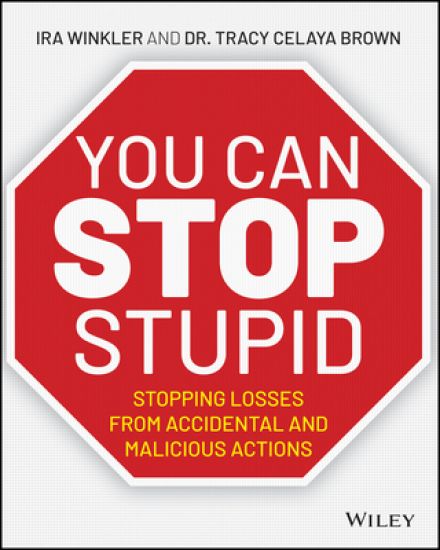
Stopping Losses from Accidental and Malicious Actions Around the world, users cost organizations billions of dollars due to simple errors and malicious actions. They believe that there is some deficiency in the users. In response, organizations believe that they have to improve their awareness efforts and making more secure users. This is like saying that coalmines should get healthier canaries. The reality is that it takes a multilayered approach that acknowledges that users will inevitably make mistakes or have malicious intent, and the failure is in not planning for that. It takes a holistic approach to assessing risk combined with technical defenses and countermeasures layered with a security culture and continuous improvement. Only with this kind of defense in depth can organizations hope to prevent the worst of the cybersecurity breaches and other user-initiated losses. Using lessons from tested and proven disciplines like military kill-chain analysis, counterterrorism analysis, industrial safety programs, and more, Ira Winkler and Dr. Tracy Celaya's You CAN Stop Stupid provides a methodology to analyze potential losses and determine appropriate countermeasures to implement. Minimize business losses associated with user failingsProactively plan to prevent and mitigate data breachesOptimize your security spendingCost justify your security and loss reduction effortsImprove your organization’s culture Business technology and security professionals will benefit from the information provided by these two well-known and influential cybersecurity speakers and experts.
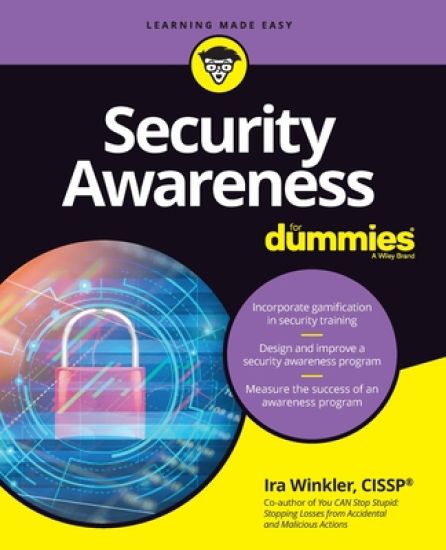
Make security a priority on your team Every organization needs a strong security program. One recent study estimated that a hacker attack occurs somewhere every 37 seconds. Since security programs are only as effective as a team’s willingness to follow their rules and protocols, it’s increasingly necessary to have not just a widely accessible gold standard of security, but also a practical plan for rolling it out and getting others on board with following it. Security Awareness For Dummies gives you the blueprint for implementing this sort of holistic and hyper-secure program in your organization. Written by one of the world’s most influential security professionals—and an Information Systems Security Association Hall of Famer—this pragmatic and easy-to-follow book provides a framework for creating new and highly effective awareness programs from scratch, as well as steps to take to improve on existing ones. It also covers how to measure and evaluate the success of your program and highlight its value to management. Customize and create your own program Make employees aware of the importance of security Develop metrics for success Follow industry-specific sample programs Cyberattacks aren’t going away anytime soon: get this smart, friendly guide on how to get a workgroup on board with their role in security and save your organization big money in the long run.


On The Crises Of 1837, 1847, And 1857, In England, France, And The United States (1905)
Ira Ryner
KESSINGER PUBLISHING, LLC
2009
pokkari

Studies On The Decomposition Of Cellulose In Soils (1916)
Ira Guy McBeth
KESSINGER PUBLISHING, LLC
2009
pokkari



Giving Voice to Values as a Professional Physician provides students with the theoretical background and practical applications for acting on their values in situations of ethical conflict. It is the first medical ethics book that utilizes the Giving Voice to Values methodology to instruct students in medical ethics and professionalism.In doing so, it shifts the focus of ethics education from intellectually examining ethical theories and conflicts to emphasizing moral action. Each section of the book explains how moral decision-making and action can be implemented in the healthcare arena. Medical ethics cases are provided throughout in order to assist students in giving voice to their values and developing skills for professional action. The Giving Voice to Values methodology, and the cases in this book, do not focus on the big questions of academic ethics, but rather on the ethics of the everyday, even if the challenges presented are difficult. In other words, the ethical questions students will have to face, in this book and in medical education and practice, are about how to interact with others, whether they be patients or colleagues, who might have different ethical positions.The book provides a unique guide for professional identity formation and the teaching of ethics in medical schools.