Kirjojen hintavertailu. Mukana 11 605 943 kirjaa ja 12 kauppaa.

Kirjahaku

Etsi kirjoja tekijän nimen, kirjan nimen tai ISBN:n perusteella.

1000 tulosta hakusanalla J. Edwards

A Historical Perspective on Evidence-Based Immunology

A Historical Perspective on Evidence-Based Immunology

Edward J. Moticka

Elsevier Science Publishing Co Inc
2015
nidottu
A Historical Perspective on Evidence-Based Immunology focuses on the results of hypothesis-driven, controlled scientific experiments that have led to the current understanding of immunological principles. The text helps beginning students in biomedical disciplines understand the basis of immunologic knowledge, while also helping more advanced students gain further insights. The book serves as a crucial reference for researchers studying the evolution of ideas and scientific methods, including fundamental insights on immunologic tolerance, interactions of lymphocytes with antigen TCR and BCR, the generation of diversity and mechanism of tolerance of T cells and B cells, the first cytokines, the concept of autoimmunity, the identification of NK cells as a unique cell type, the structure of antibody molecules and identification of Fab and Fc regions, and dendritic cells.
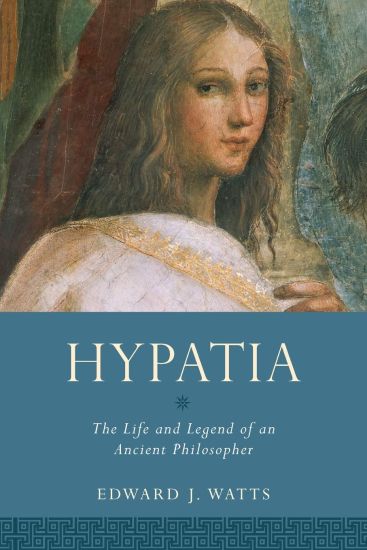
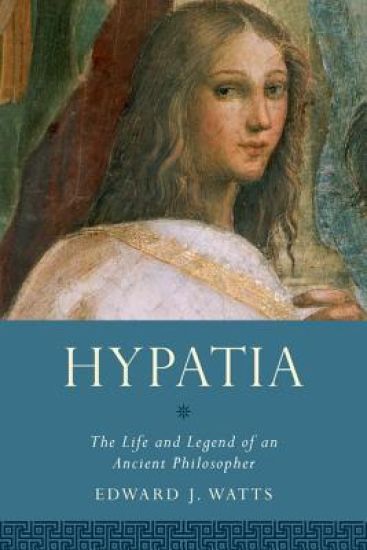
Hypatia

Hypatia

Edward J. Watts

Oxford University Press Inc
2019
nidottu
A philosopher, mathematician, and martyr, Hypatia is one of antiquity's best known female intellectuals. During the sixteen centuries following her murder, by a mob of Christians, Hypatia has been remembered in books, poems, plays, paintings, and films as a victim of religious intolerance whose death symbolized the end of the Classical world. But Hypatia was a person before she was a symbol. Her great skill in mathematics and philosophy redefined the intellectual life of her home city of Alexandria. Her talent as a teacher enabled her to assemble a circle of dedicated male students. Her devotion to public service made her a force for peace and good government in a city that struggled to maintain trust and cooperation between pagans and Christians. Despite these successes, Hypatia fought countless small battles to live the public and intellectual life that she wanted. This book rediscovers the life Hypatia led, the unique challenges she faced as a woman who succeeded spectacularly in a man's world, and the tragic story of the events that led to her tragic murder.
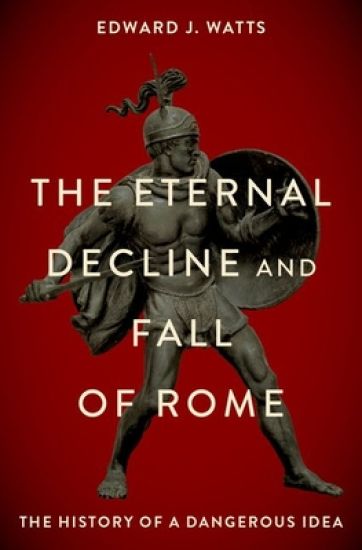
The Eternal Decline and Fall of Rome

The Eternal Decline and Fall of Rome

Edward J. Watts

Oxford University Press Inc
2021
sidottu
As this book intriguingly explores, for those who would make Rome great again and their victims, ideas of Roman decline and renewal have had a long and violent history. The decline of Rome has been a constant source of discussion for more than 2200 years. Everyone from American journalists in the twenty-first century AD to Roman politicians at the turn of the third century BC have used it as a tool to illustrate the negative consequences of changes in their world. Because Roman history is so long, it provides a buffet of ready-made stories of decline that can help develop the context around any snapshot. And Rome did, in fact, decline and, eventually, fall. An empire that once controlled all or part of more than 40 modern European, Asian, and African countries no longer exists. Roman prophets of decline were, ultimately, proven correct-a fact that makes their modern invocations all the more powerful. If it happened then, it could happen now. The Eternal Decline and Fall of Rome tells the stories of the people who built their political and literary careers around promises of Roman renewal as well as those of the victims they blamed for causing Rome's decline. Each chapter offers the historical context necessary to understand a moment or a series of moments in which Romans, aspiring Romans, and non--Romans used ideas of Roman decline and restoration to seize power and remake the world around them. The story begins during the Roman Republic just after 200 BC. It proceeds through the empire of Augustus and his successors, traces the Roman loss of much of western Europe in the fifth century AD, and then follows Roman history as it runs through the Eastern Roman Empire (Byzantium) until its fall in 1453. The final two chapters look at ideas of Roman decline and renewal from the fifteenth century until today. If Rome illustrates the profound danger of the rhetoric of decline, it also demonstrates the rehabilitative potential of a rhetoric that focuses on collaborative restoration, a lesson of great relevance to our world today.
Hypatia

Hypatia

Edward J. Watts

Oxford University Press Inc
2017
sidottu
A philosopher, mathematician, and martyr, Hypatia is one of antiquity's best-known female intellectuals. For the sixteen centuries following her murder by a mob of Christians Hypatia has been remembered in books, poems, plays, paintings, and films as a victim of religious intolerance whose death symbolized the end of the Classical world. But Hypatia was a person before she was a symbol. Her great skill in mathematics and philosophy redefined the intellectual life of her home city of Alexandria. Her talent as a teacher enabled her to assemble a circle of dedicated male students. Her devotion to public service made her a force for peace and good government in a city that struggled to maintain trust and cooperation between pagans and Christians. Despite these successes, Hypatia fought countless small battles to live the public and intellectual life that she wanted. This book rediscovers the life Hypatia led, the unique challenges she faced as a woman who succeeded spectacularly in a man's world, and the tragic story of the events that led to her murder.
The Lion's Pride

The Lion's Pride

Edward J. Renehan

Oxford University Press Inc
1998
sidottu
Working from letters, unpublished memoirs, and other previously unavailable materials, the author illustrates the grand idealism, heroism, and reckless ambition that drove Theodore Roosevelt and his four sons to embrace World War I, with tragic consequences. UP.
The Lion's Pride

The Lion's Pride

Edward J. Renehan

Oxford University Press Inc
2000
nidottu
In The Lion's Pride, Edward J. Renehan, Jr. vividly portrays the grand idealism, heroic bravery, and reckless abandon that Theodore Roosevelt both embodied and bequeathed to his children and the tragic fulfillment of that legacy on the battlefields of World War I. Drawing upon a wealth of previously unavailable materials, including letters and unpublished memoirs, The Lion's Pride takes us inside what is surely the most extraordinary family ever to occupy the White House. Theodore Roosevelt believed deeply that those who had been blessed with wealth, influence, and education were duty bound to lead, even perhaps especially if it meant risking their lives to preserve the ideals of democratic civilization. Teddy put his principles, and his life, to the test in Spanish American war, and raised his children to believe they could do no less. When America finally entered the "European conflict" in 1917, all four of his sons eagerly enlisted and used their influence not to avoid the front lines but to get there as quickly as possible. Their heroism in France and the Middle East matched their father's at San Juan Hill. All performed with selfless some said heedless courage: Two of the boys, Archie and Ted, Jr., were seriously wounded, and Quentin, the youngest, was killed in a dogfight with seven German planes. Thus, the war that Teddy had lobbied for so furiously brought home a grief that broke his heart. He was buried a few months after his youngest child. Filled with the voices of the entire Roosevelt family, The Lion's Pride gives us the most intimate and moving portrait ever published of the fierce bond between Teddy Roosevelt and his remarkable children.
Trial and Error

Trial and Error

Edward J. Larson

Oxford University Press Inc
2003
sidottu
The debate over teaching evolution in the public schools remains one of the most emotionally charged controversies in twentieth-century America. This third edition of Edward J. Larson's highly acclaimed study - which ranges from before the Scopes trial of 1925 to the creationism disputes of the 1980's - offers the first comprehensive account of the educational and legal battles erupting from this persistent belief.
Trial and Error

Trial and Error

Edward J. Larson

Oxford University Press Inc
2003
nidottu
Trial and Error traces the coverage or lack thereof, of evolution in textbooks used in American public schools from the mid-1800s to the present. While the teaching of Darwinian evolution was common and not controversial in the late 19th century and into the early 20th century, the debates between evolutionists and creationists, those who argue that the Biblical theory of origins deserves equal treatment, have flared throughout the twentieth century--first in the 1920s, most famously in the Scopes trial; again in the 1960s, when the regional legislation banning the teaching of evolution was overturned, notably in Arkansas and Louisiana; and throughout the 1980s with various controversies over science textbooks, including California. Larson proposes to bring the subject up to the present through a discussion of recent trends, including the "intelligent design" movement, led by Phillip Johnson, a revised form of anti-evolutionism that gained popularity on college campuses; the impact of Michael Behe's versions of evolution; and debates over what counts as evidence for and against evolution--all of which have influenced debates over science standards, particularly at state and local levels. This new chapter will chronicle anti-evolution actions in Kansas and elsewhere and counter-actions by the National Academy of Science and other anti-creationist groups. This updated classic work presents a balanced historical interpretation of legal and educational debates over evolutionism, and will appeal to those interested in the fields of history, religion, science, and law.
Overcoming the Trauma of Your Motor Vehicle Accident

Overcoming the Trauma of Your Motor Vehicle Accident

Edward J. Hickling; Edward B. Blanchard

Oxford University Press Inc
2006
nidottu
Motor vehicle accidents account for over 3 million injuries annually and are one of the most common traumas individuals experience. But the physical injuries are often less impactful in the long run than the severe emotional distress, flashbacks, and substantial impairment in work or family life. Studies of the general population have found that approximately 9% of people who suvive an accident develop Posttraumatic Stress Disorder. And yet, few people seek treatment immediately, mostly because they are not aware of the nature of their condition or that successful brief treatments are available. Written by the creators of an empirically supported cognitive-behavioral therapy program developed at The Center for Stress and Anxiety Disorders in Albany, this Therapist Guide includes all the information and materials necessary to implement a successful program for treating accident-related PTSD. The therapeutic technique described in this book is research-based with a proven success rate. The renowned authors provide clinicians with step-by-step instructions for teaching their clients important skills that have been scientifically tested and shown to be effective in treating emotional trauma caused by involvement in a car accident. Designed to be used in conjunction with its corresponding workbook, this therapist guide outlines a treatment program that includes cognitive restructuring, relaxation techniques, and exposure exercises. User-friendly and comprehensive, Overcoming the Trauma of Your Motor Vehicle Accident, Therapist Guide is a resource that no clinician can do without.
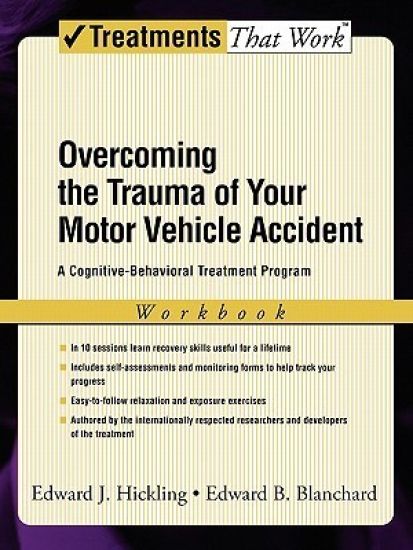
Overcoming the Trauma of Your Motor Vehicle Accident

Overcoming the Trauma of Your Motor Vehicle Accident

Edward J. Hickling; Edward B. Blanchard

Oxford University Press Inc
2006
nidottu
It is estimated that over 3 million people per year are injured in motor vehicle accidents. Whether or not a fatality or injury occurs, many people develop posttraumatic stress disorder as a result. Written by the creators of an empirically supported cognitive-behavioral therapy program, this Workbook includes all the information necessary for a client to learn the appropriate skills to overcome their MVA-related PTSD. When used in conjunction with the corresponding therapist guide, this book provides a complete treatment package with a proven success rate. Through the use of this workbook, clients will become active participants in their supervised treatment. Clients will learn to alleviate their suffering through a variety of skills including relaxation techniques and exposure exercises. In addition, this workbook gives clients the opportunity to deal with other issues that may have resulted from the accident such as anger, numbness, estrangement, and others. Overcoming the Trauma of Your Motor Vehicle Accident: Workbook comes complete with assessments to be completed at various stages throughout treatment, as well as blank forms used to monitor progress that can be photocopied or downloaded from the Treatments That Work website. It is a one-of-a-kind resource that allows clients to work alongside their therapist to personalise their treatment strategy and overcome their PTSD.
Arms Watch

Arms Watch

Edward J. Laurance; Siemon T. Wezeman; Herbert Wulf

Oxford University Press
1993
nidottu
This report documents the government submissions to the UN on the transfer of arms in seven weapons categories in 1992 and compares this data with information published by SIPRI in its arms trade register. It assesses the results of the UN register and the prospects for improving it in 1994.
Market Abuse Regulation

Market Abuse Regulation

Edward J. Swan; John Virgo

Oxford University Press
2019
sidottu
Market Abuse Regulation is a wide-ranging and insightful analysis of the market abuse regime and the applications of the regulations in the UK and European Union. It provides detailed discussion of the implementation and interpretation of the regulation, the conduct of investigations, the defences and appeals available against a finding of market abuse, and overlapping United States regulation. The new edition explains and evaluates the changes introduced by the Markets in Financial Instruments Directive , the Market Abuse Directive, the Market Abuse Regulation, and the implementation of the Regulation on Wholesale Market Integrity and Transparency, which have resulted in dramatic expansion of the coverage of EU market abuse regulation. It addresses the regulation of additional financial instruments, the expansion to include new markets and trading facilities, and changes to the coverage of commodity derivatives and physical commodities. It discusses the dramatic changes to the format of regulation as a result of the restructuring of UK regulators; as well as the addition of new EU supervisory bodies with revised powers over national regulation within the EU. Beyond the EU, it discusses international protocols and treaties which have also added to the regulatory structure.
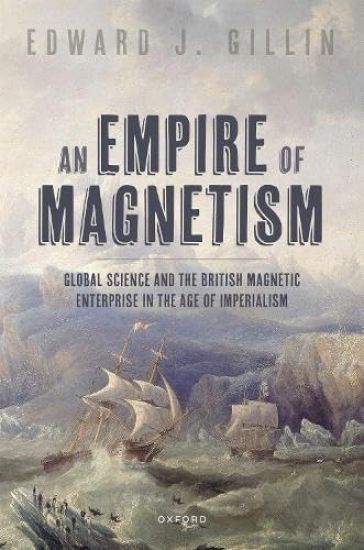
An Empire of Magnetism

An Empire of Magnetism

Edward J. Gillin

Oxford University Press
2023
sidottu
During the 1840s and 1850s, the British government financed a world-wide investigation into how the Earth's magnetic phenomena operated, consisting of a network of naval expeditions and colonial observatories. Questions surrounding terrestrial magnetism were not just philosophical, but engendered urgent concerns over accurate navigation, on which Britain's commercial and colonial power relied. The British Magnetic Survey was celebrated at the time as the most extensive state-orchestrated scientific enterprise ever conducted. Yet although it was a fundamentally global endeavour, both in terms of its scale and its impact, the experimental instruments and techniques required were to be found amid Britain's booming local industry, where the harnessing of coal and iron, and use of steam power, shaped a scientific culture prominently concerned with the relationship between heat, pressure, and motion. In particular, it was philosophical apparatus fashioned within the mines of Cornwall that the government was able to conscript within this world-wide magnetic investigation. These locally produced experimental techniques and technologies proved capable of transformation into a system for obtaining magnetic measurements from over great expanses of time and space. As An Empire of Magnetism demonstrates, this not only sustained an immense world-wide scientific investigation, but became inseparable from the proliferation of empire, sustaining colonial expansion and unprecedented multi-cultural exchanges as British naval crews and natural philosophers surveyed previously unknown regions in the search for magnetic data. In so doing, Edward Gillin argues that the British Magnetic Survey had broader implications over the formation of the 'modern state', the expansion of nineteenth-century empire, and the development of global science.
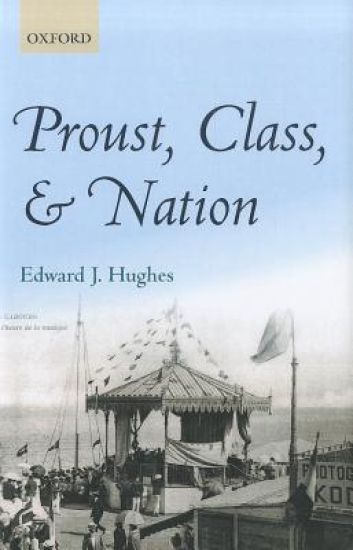
Proust, Class, and Nation

Proust, Class, and Nation

Edward J. Hughes

Oxford University Press
2011
sidottu
Writing in 1927, Julien Benda described France as being afflicted by the twin scourges of narrow, class-based politics and rabid nationalism. He nevertheless identified Marcel Proust (who had died in 1922) as a writer who had refused to embrace the ideological narrowness of his age. Edward J. Hughes seeks to assess how Proust and his novel A la recherche du temps perdu might be understood in relation to issues of class and nation. A la recherche was produced in momentous times. As an extended textual construction, first conceived of in 1908 and the last tranche of which appeared posthumously almost two decades later, it was assembled against a backdrop of major historical events: pre-war tensions in the wake of the Dreyfus Affair and the Separation of Church and State (issues on which Proust had campaigned publicly); the First World War and the atmosphere of narrow nationalism and Germanophobia which the conflict generated; and the continuing polarization in class politics in the years after the First World War. These all find echoes in A la recherche and Hughes establishes how the exposure given to questions of class and nation needs to be understood historically. He demonstrates that the frequently entrenched positions of Proust's contemporaries at times square with the language and images of social conservativism to be found in A la recherche. Yet alongside that, Hughes unearths evidence that points to Proust as a free-floating, often playful, iconoclast and radical commentator who, as Theodor Adorno observed, resisted bourgeois compartmentalization.
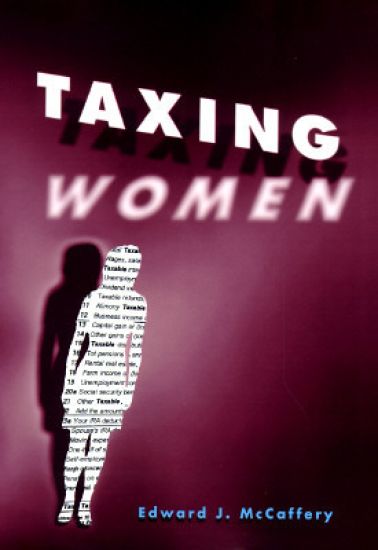
Taxing Women

Taxing Women

Edward J. McCaffery

University of Chicago Press
1997
sidottu
The US tax system was designed in the 1930s and 1940s, when the typical American household was a single-income family featuring a male breadwinner and a female homemaker. Writing for an audience with no prior knowledge of tax, this study shows how the modern tax system penalizes two-earner families, pressuring some families to break up and many mothers to stay at home. The author illustrates how working wives are hard hit by tax law inequalities. As secondary earners under a joint filing system, wives enter the workforce at a high tax rate dictated by their husband's salary. Using real-life examples, Mccaffery shows how many wives actually lose money by working; why social security is a pure tax, with no benefits, on most working wives; and why part-time work is often not a viable option for married mothers. The book seeks to find solutions to these entrenched gender-based problems in the tax code, which affect all aspects of social life. Mccaffery proposes simple, but effective, changes in the tax system to alleviate the stresses facing women. In fact, standard economic theory has long recommended taxing married women less than men - exactly the opposite of what the USA does at present.
Taxing Women

Taxing Women

Edward J. McCaffery

University of Chicago Press
1999
nidottu
Taxing Women comprises both an insightful, critical analysis of the gender biases in current tax laws and a wake-up call for all those concerned with gender justice to pay more attention to the pervasive impact of such laws. Providing real-life examples, Edward McCaffery shows how tax laws are actually written to punish married couples who file jointly. No dual-income household can afford not to read this book before filing their taxes."Taxing Women is a must-have primer for any woman who wants to understand how our current tax system affects her family's economic condition. In plain English, McCaffery explains how the tax code stacks the deck against women and why it's in women's economic interest to lead the next great tax rebellion."—Patricia Schroeder"McCaffery is an expert on the interplay between taxes and social policy. . . . Devastating in his analysis. . . . Intriguing."—Harris Collingwood, Working Women"A wake-up call regarding the inequalities of an archaic system that actually penalizes women for working."—Publishers Weekly
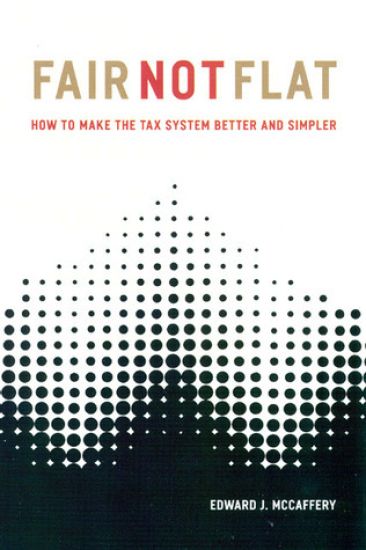
Fair Not Flat

Fair Not Flat

Edward J. McCaffery

University of Chicago Press
2006
nidottu
Everyone knows that the current tax system is unfair. Some of the richest people in America pay no tax, while a huge share of the tax burden falls on the rest of us. A mere glance at the tax code confirms that it is far too complex, with volumes of rules that no ordinary person could possibly comprehend. What is to be done? Some conservatives have called for a so-called flat tax. But a flat tax is not necessarily a simple tax, and "flat" means "more" for most taxpayers: a rise in middle-class taxes to finance tax cuts for the rich. Is there another choice? In clear, easy-to-understand language, Edward J. McCaffery proposes a straightforward and fair alternative. A "fair not flat" tax that is consistent and progressive would tax spending, not income and savings. And if it were collected at its lower levels through a national sales tax, most people would not have to file a return. A supplemental tax on spending for the wealthiest individuals would make the national sales tax progressive. Under McCaffery's system, a family of four would pay no tax on their first $20,000 in spending, and 15 percent on the next $60,000. Only the few families who spend more than $80,000 a year would be subject to the supplemental tax. Necessities would be taxed less than ordinary and luxury items. No one would be taxed directly on savings. The estate and gift or so-called death tax would be abolished, for the simple reason that dead people don't spend. The "fair not flat" tax would fall on heirs when and as they spend their good fortune. Perhaps best of all, most Americans would not have to fill out tax returns.Simpler, more efficient, fairer, and more reflective of America's current social values, McCaffery's "fair not flat" tax could help get us out of the tax mess that politicians and special interests have gotten us into, improving the whole country in the process. Read Fair Not Flat to find out how. “In Fair Not Flat, Mr. McCaffery lays out the case for a consumption tax. He does so in a reader-friendly way, presenting his argument with very few footnotes, equations or technical terms. The consumption of the book, so to speak, is not at all taxing. And its argument is well worth pondering.”—Bruce Bartlett, Wall Street Journal
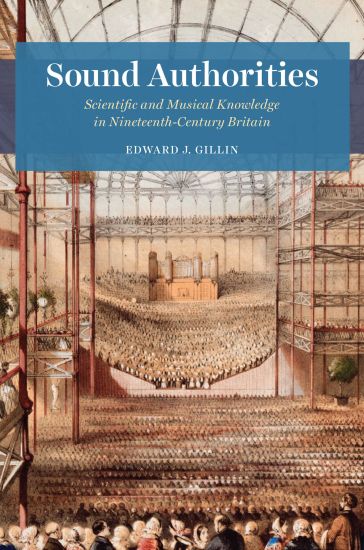
Sound Authorities

Sound Authorities

Edward J. Gillin

University of Chicago Press
2022
sidottu
Sound Authorities shows how experiences of music and sound played a crucial role in nineteenth-century scientific inquiry in Britain. In Sound Authorities, Edward J. Gillin focuses on hearing and aurality in Victorian Britain, claiming that the development of the natural sciences in this era cannot be understood without attending to the study of sound and music. During this time, scientific practitioners attempted to fashion themselves as authorities on sonorous phenomena, coming into conflict with traditional musical elites as well as religious bodies. Gillin pays attention to sound in both musical and nonmusical contexts, specifically the cacophony of British industrialization. Sound Authorities begins with the place of acoustics in early nineteenth-century London, examining scientific exhibitions, lectures, spectacles, workshops, laboratories, and showrooms. He goes on to explore how mathematicians mobilized sound in their understanding of natural laws and their vision of a harmonious ordered universe. In closing, Gillin delves into the era’s religious and metaphysical debates over the place of music (and humanity) in nature, the relationship between music and the divine, and the tensions between spiritualist understandings of sound and scientific ones.