
Kirjahaku
Etsi kirjoja tekijän nimen, kirjan nimen tai ISBN:n perusteella.
1000 tulosta hakusanalla James C. Rodkey
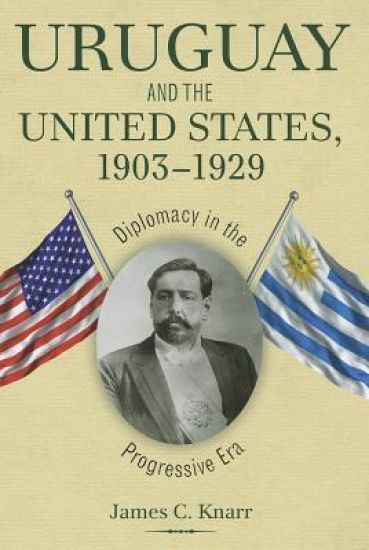
Despite its fascinating history, the attention paid by North American historians to Uruguay, a nation nestled in the corner of South America between Argentina and Brazil, is scant when compared to that shown to its neighbours. A major portion of the Uruguayan story revolves around the figure of two-time president Jose Batlle y Ordonez, who was the nation's dominant political figure between 1903 and 1929. Historians have credited Batlle with creating the hemisphere's first welfare state. Under his guidance, Uruguay passed laws in the area of workers rights, unemployment compensation, public education, public works, and voting expansion. Ever ambitious, Batlle sought to make Uruguay the world's model country. Uruguay and the United States, 1903-1929 is the first study to look at the political, social, and commercial relationship between Batlle s Uruguay and the Progressive Era United States. Using government records from Montevideo and Washington, as well as newspapers, the personal papers of many of the key actors, and a variety of other sources, author James Knarr examines how this ideological and harmonious relationship developed between Batllistas in Uruguay and Progressives in the United States. Through his analysis of diplomatic, commercial, and cultural bonds, Knarr comprehensively explores how Batlle's liberal ideas, partially built on U.S. concepts, resulted in a relationship that brought rewards for both the United States and Uruguay. This work is a must read for historians of U.S. foreign relations and Latin America.



Over the years, Boston has been one of America’s leading laboratories of urban culture, including restaurants, and Boston history provides valuable insights into American food ways. James C. O’Connell, in this fascinating look at more than two centuries of culinary trends in Boston restaurants, presents a rich and hitherto unexplored side to the city’s past. Dining Out in Boston shows that the city was a pioneer in elaborate hotel dining, oyster houses, French cuisine, student hangouts, ice cream parlors, the twentieth-century revival of traditional New England dishes, and contemporary locavore and trendy foodie culture. In these stories of the most-beloved Boston restaurants of yesterday and today—illustrated with an extensive collection of historic menus, postcards, and photos—O’Connell reveals a unique history sure to whet the intellectual and nostalgic appetite of Bostonians and restaurant-goers the world over.

This study examines the transformation of the United States Navy as a fighting organisation that took place on the North Atlantic Station between 1874 and 1897. At the beginning of this period, the warships assigned to this station were collectively administered by a rear-admiral, but were operationally deployed as individual units, each of whose actions were directed by their captains. By 1897 the North Atlantic, or “Home” Squadron as it was known, was a group of warships constituting a protean battle fleet – that is, an organised body moving and fighting in close-order, which meant that the actions of the captains were directed by a commanding admiral. The process of the development of an American battle fleet resulted in the construction of a new organisational identity for the North Atlantic Squadron. This process was as critical as the eventual outcome. It was not linear, but one in which progress in critical areas was modulated by conflicting demands that caused distraction. From 1874-1888, exercises in fleet tactics under steam were carried out sporadically utilising existing wooden cruising vessels. From 1889-1894, the last wooden cruisers were decommissioned and the Squadron consisted entirely of new steel warships. Ad-hoc concentrations of vessels for purposes besides exercise and training retarded the continued development of doctrine and tactics necessary for a multi-ship fighting capability during this time. However, much work was done to develop a concept of multi-ship operations. From 1895-1897, the identity of the North Atlantic Squadron as a combat unit solidified. Tactical exercises were held that had specific offensive and defensive wartime applications. These exercises were necessary to develop a combat capability. The results of this study demonstrate that the United States government had an interest in developing an offensive naval combat capability as early as the 1870’s. Based on the record of the North Atlantic Squadron, it is argued that imperial aspirations, in the sense of possessing a capability to restrict the actions of other great powers in the Caribbean region, existed prior to the War of 1898. However, the process of change often resulted in the appearance of capability without the rigorous exercise necessary to possess it.

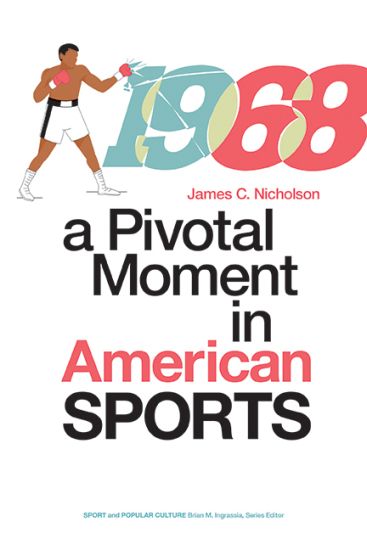
Opening with Vince Lombardi's last win as coach of the Packers in Super Bowl II and closing with Joe Namath's Super Bowl III guarantee, James Nicholson delivers an original portrait of a sensational closing decade in American culture. Controversies on the field and in the ring reflected broader political and social turmoil in the late-sixties United States. With one of the most contentious presidential elections in US history, the ongoing civil rights movement, and the Vietnam War all storming in the background, Nicholson charts a course through the oddly unsettled waters of American sports in 1968: the Masters golf tournament decided by the strict enforcement of an arcane rule to the detriment of a foreign player; the winner of the Kentucky Derby disqualified for a drug violation; Muhammad Ali waiting in sports exile while he appealed a criminal conviction for draft evasion; an unorthodox rendition of the national anthem at the World Series nearly overshadowing the game it preceded; and the silent gesture at the Mexico City Olympics made by Tommie Smith and John Carlos that shocked the nation



Boston and the Making of a Global City
James C. O'Connell
UNIVERSITY OF MASSACHUSETTS PRESS
2025
nidottu
In the late twentieth century the American and global economy shifted from manufacturing toward a knowledge industry. Following an economic low point several decades earlier, the city of Boston took advantage of the new era of globalization, fueled by dramatic advances in telecommunications, computer power, and air and sea travel, as well as its own impressive intellectual capital.Boston and the Making of a Global City pulls together scholarship, media stories, personal interviews, and city planning documents to tell the story of Boston’s historical trajectory, as it quickly became a competitive global hub. Starting with its role as a colonial port and nineteenth-century maritime power, but moving quickly forward, the book describes how Boston capitalized on its strengths in higher education and such innovation sectors as life sciences, healthcare, information technology, and finance. Author James O’Connell traces the historical sweep of global flows—trade and supply chains, innovation and the dissemination of knowledge, investment, transportation, tourism, telecommunications, and immigration—that have shaped the city and region’s development. This volume also addresses the economic, social, and environmental challenges that Boston currently faces and how it is strategically positioned to confront them going forward.

Boston and the Making of a Global City
James C. O'Connell
UNIVERSITY OF MASSACHUSETTS PRESS
2025
sidottu
In the late twentieth century the American and global economy shifted from manufacturing toward a knowledge industry. Following an economic low point several decades earlier, the city of Boston took advantage of the new era of globalization, fueled by dramatic advances in telecommunications, computer power, and air and sea travel, as well as its own impressive intellectual capital.Boston and the Making of a Global City pulls together scholarship, media stories, personal interviews, and city planning documents to tell the story of Boston’s historical trajectory, as it quickly became a competitive global hub. Starting with its role as a colonial port and nineteenth-century maritime power, but moving quickly forward, the book describes how Boston capitalized on its strengths in higher education and such innovation sectors as life sciences, healthcare, information technology, and finance. Author James O’Connell traces the historical sweep of global flows—trade and supply chains, innovation and the dissemination of knowledge, investment, transportation, tourism, telecommunications, and immigration—that have shaped the city and region’s development. This volume also addresses the economic, social, and environmental challenges that Boston currently faces and how it is strategically positioned to confront them going forward.

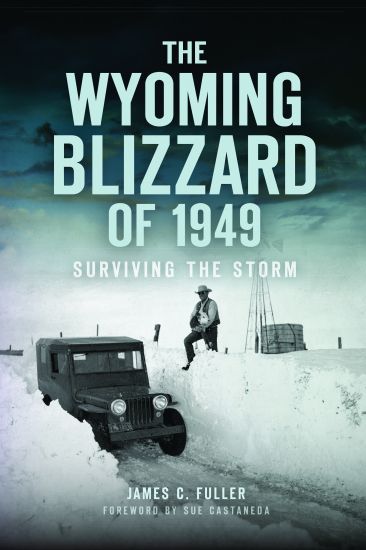
Snow, wind and frigid temperatures devastated parts of Wyoming and neighboring states in 1949. For nearly two months, towns and ranches were marooned by enormous drifts, some reportedly eighty feet tall. The storm stranded hundreds of motorists on the hig

Florida's swamps and sands hide a rich history and strange stories abound. Whether you live in the state or just have a fascination with its unique background these are stories to surprise and fascinate.Florida has a history as diverse as its residents. And much of that is still hidden. Since the arrival of the Spanish in 1513, the state has played host to strange stories. A heartbroken senator entered a mental institution over unrequited love for an heiress. Thousands of British pilots trained in flight schools across the state. And the true, and darker, story of Pocahontas is linked with the first barbecue. Author and historian James C. Clark unearths a history hidden beneath swamps and sand for years.
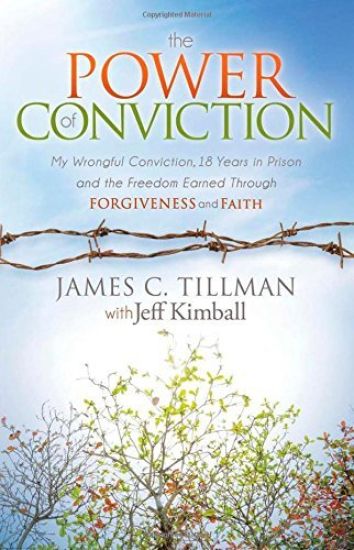
James Tillman was stretched out on his basement couch, relaxing after a long day of work at the car wash, the smell of sweet onions and simmering steak filling the air of his modest apartment in the projects of Hartford, Conn. His mother, a bible perched nearby, was softly singing a hymn when she was shaken by the thundering sound of pounding on the front door. It wasn’t a knock; it was an act of sheer force. In an instant, the police burst in, lifted James out of his home and shoved him into prison, arresting him for the brutal rape of a young corporate executive. For over 18 years, James professed his innocence, through the investigation, trial, appeals, and to anyone who would listen. Finally, after a series of extraordinary events, the Connecticut Innocence Project took up James’ case, eventually winning his freedom—the first person to be exonerated in the state through the use of DNA. This is an inspirational story about the power of conviction: the wrongful conviction that sent James Tillman to prison for over 18 years, and the power of his own conviction that helped him persevere, offer a transformational forgiveness and earn a redemption that is so valued he remarkably calls his experience in prison, “a gift.” "The Power of Conviction" is for people who are facing tough times. You will understand that you’re not alone, that things can be brutally bad and we can react poorly at times, but where there is love, there is always hope. How did James Tillman endure 18 years of hell in prison? What specific lessons can you learn about the transformational power of forgiveness, love and conviction? When faced with your own challenges in life, what will you choose?
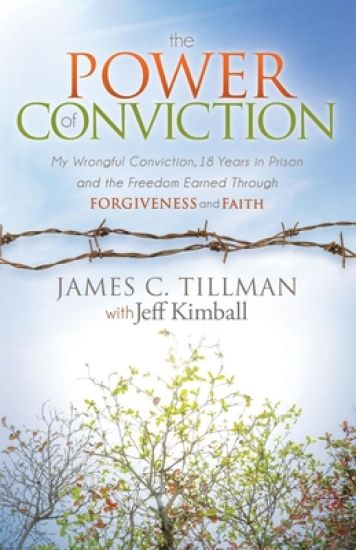
James Tillman was stretched out on his basement couch, relaxing after a long day of work at the car wash, the smell of sweet onions and simmering steak filling the air of his modest apartment in the projects of Hartford, Conn. His mother, a bible perched nearby, was softly singing a hymn when she was shaken by the thundering sound of pounding on the front door. It wasn’t a knock; it was an act of sheer force. In an instant, the police burst in, lifted James out of his home and shoved him into prison, arresting him for the brutal rape of a young corporate executive. For over 18 years, James professed his innocence, through the investigation, trial, appeals, and to anyone who would listen. Finally, after a series of extraordinary events, the Connecticut Innocence Project took up James’ case, eventually winning his freedom---the first person to be exonerated in the state through the use of DNA. This is an inspirational story about the power of conviction: the wrongful conviction that sent James Tillman to prison for over 18 years, and the power of his own conviction that helped him persevere, offer a transformational forgiveness and earn a redemption that is so valued he remarkably calls his experience in prison, “a gift.” "The Power of Conviction" is for people who are facing tough times. You will understand that you’re not alone, that things can be brutally bad and we can react poorly at times, but where there is love, there is always hope. How did James Tillman endure 18 years of hell in prison? What specific lessons can you learn about the transformational power of forgiveness, love and conviction? When faced with your own challenges in life, what will you choose?