

Kirjahaku
Etsi kirjoja tekijän nimen, kirjan nimen tai ISBN:n perusteella.
1000 tulosta hakusanalla James Cook
James Madison is a fourth president of the United states, a statesman and the father of the United states constitution. On the other hand, his lavish lifestyle through the use of slavery and his conflictions about it sound hypocritical and that leaves the questions- is he a hypocrite?
From the Preface. THE task of giving some account of Maxwell's work -- of describing the share that he has taken in the advance of Physical Science during the latter halt of this nineteenth century -- has proved no light labour. The problems which he attacked are of such magnitude and complexity, that the attempt to explain them and their importance, satisfactorily, without the aid of symbols, is almost foredoomed to failure. However, the attempt has been made, in the belief that there are many who, though they cannot follow the mathematical analysis of Maxwell's work, have sufficient general knowledge of physical ideas and principles to make an account of Maxwell and of the development of the truths that he discovered, subjects of intelligent interest. Maxwell's life was written in 1882 by two of those who were most intimately connected with him, Professor Lewis Campbell and Dr. Garnett. Many of the biographical details of the earlier part of this book are taken from their work....
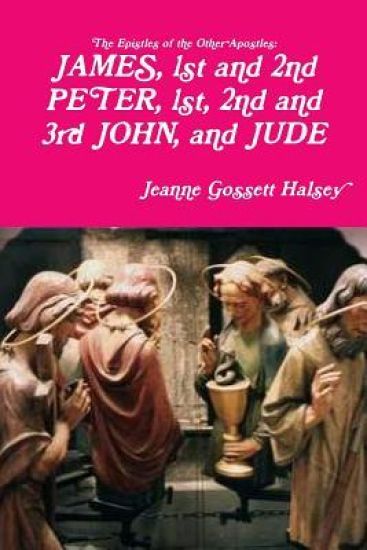
JAMES, 1st and 2nd PETER, 1st, 2nd and 3rd JOHN, and JUDE
Jeanne Gossett Halsey
Lulu.com
2018
nidottu
The Bible has many authors, all brought together by the guidance of Holy Spirit. In the New Testament, most people know who wrote the four Gospels, most people know about the prolific writings of the Apostle Paul, but not everyone knows about the Other Apostles! Here are the voices of James, Peter, John, and Jude, one chapter at a time.
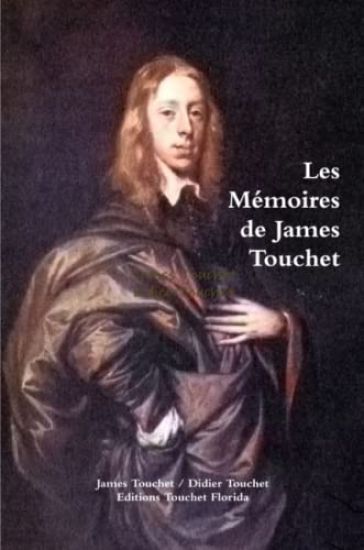
James Touchet nous raconte les guerres d'Irlande qu'il a v?cu et dont il a ?t? un des acteurs, nous faisant revivre les diverses cessations et trait's entre Charles 1er, Cromwell et Charles II, les int?r?ts contradictoires des 3 royaumes, et la vie des rebelles catholiques d'Irlande dans les ann?es 1640. Ce livre est d'abord paru en 1680 ? Londres, augment? et r dit? en 1684. Il a ?t? r?imprim? en 1753 et un renouvellement d'int?r't en 1815 a conduit ? l'apparition de plusieurs ?ditions imprim?es ? Dublin . La derni?re ?dition date de 2011 ? l?usage des ?tudiants et des chercheurs. Cet ouvrage ?tait disponible dans toutes les bonnes biblioth?ques Nord-Am?ricaines mais exclusivement en Anglais.
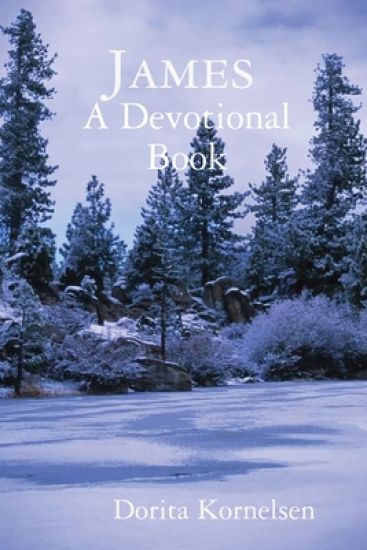
James (A Devotional Book), is a book about the book James in the Bible. It is about how we should do what the Bible says, as believers. God is so good, and so full of love for us. His ways and plans are best.

James McNeill Whistler and France: A Dialogue in Paint, Poetry, and Music is the first full-length and in-depth study to position this painter within the overall trajectory of French modernism during the second half of the nineteenth century and to view the artist as integral to the aesthetic projects of its most original contributors. Suzanne M. Singletary maintains that Whistler was in a unique situation as an insider within the emerging French avant-garde, thereby in an enviable position to both absorb and transform the innovations of others – and that until now, his widespread influence as a catalyst among his colleagues has been neither investigated nor appreciated. Singletary contends that Whistler’s importance rivals that of Manet, whose multi-layered (and often unexpected) interconnections with Whistler are the focus of one chapter. In addition, Whistler’s pivotal role in linking the legacies of Baudelaire, Delacroix, Gautier, Wagner, and other mid-century innovators to the later French Symbolists has previously been largely ignored. Courbet, Degas, Monet, and Seurat complete the roster of French artists whose dialogue with Whistler is highlighted.
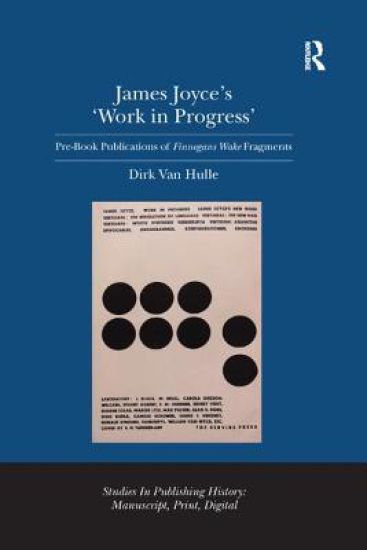
The text of Finnegans Wake is not as monolithic as it might seem. It grew out of a set of short vignettes, sections and fragments. Several of these sections, which James Joyce confidently claimed would "fuse of themselves", are still recognizable in the text of Finnegans Wake. And while they are undeniably integrated very skillfully, they also function separately. In this publication history, Dirk Van Hulle examines the interaction between the private composition process and the public life of Joyce's 'Work in Progress', from the creation of the separate sections through their publication in periodicals and as separately published sections. Van Hulle highlights the beautifully crafted editions published by fine arts presses and Joyce's encouragement of his daughter's creative talents, even as his own creative process was slowing down in the 1930s. All of these pre-book publications were "alive" in both bibliographic and textual terms, as Joyce continually changed the texts in order to prepare the book publication of Finnegans Wake. Van Hulle's book offers a fresh perspective on these texts, showing that they are not just preparatory versions of Finnegans Wake but a 'Work in Progress' in their own right.

James Joyce and Education is the first full-length study of education across the Joyce oeuvre. A new account of how the politics and aesthetics of the Joyce text is informed by historical contexts, it is the latest contribution to the growing contemporary debate about education, late modernism and literary innovation.This highly original account reads Dubliners, A Portrait of the Artist as a Young Man, Ulysses and Finnegans Wake in new and challenging ways. It produces the Joyce text as a complex and comic devotion to the representation of schooled education — an exemplification of the elitism that state schooling was historically designed to reproduce and a devastating undoing of the epistemologies it was designed to sustain. Chapters explore a range of themes, including Joyce and radical education, the impact of Nietzsche’s writing on Joyce and women and education.The book will appeal to researchers, scholars and postgraduate students in the fields of literature in education, pedagogy, Joyce scholarship and modernism.
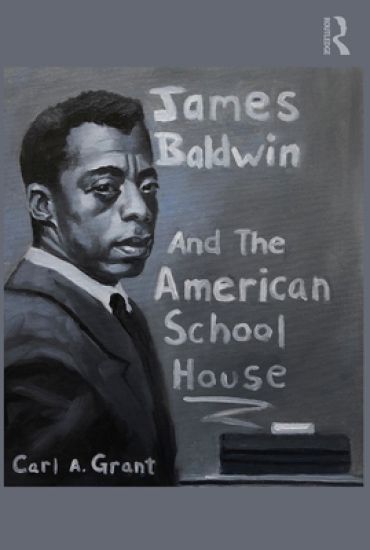
This book – written for teacher educators, teachers and admirers of James Baldwin –employs his essays and speeches to discuss how the effects of race and racism enter the souls of African American students and become attached and difficult to dislodge. Yet, his essays also provide educators and students with purpose, meaning and suggestions for how to stand up against racism, develop an authentic self and fight oppression. Whereas this book takes advantage of the full body of Baldwin’s work – fiction, nonfiction, interviews, lectures, speeches and letters – its foundation is three speeches James Baldwin gave in the 1960s on the education of African American children and African American and European American race relations in the United States. The purpose of education, defying myths, freedom, willful ignorance and developing identity are discussed through a Baldwinian lens. African American and European American teachers are encouraged to "Go for Broke" as this book explores the important role Baldwin’s work can play in schools and universities.
This book – written for teacher educators, teachers and admirers of James Baldwin –employs his essays and speeches to discuss how the effects of race and racism enter the souls of African American students and become attached and difficult to dislodge. Yet, his essays also provide educators and students with purpose, meaning and suggestions for how to stand up against racism, develop an authentic self and fight oppression. Whereas this book takes advantage of the full body of Baldwin’s work – fiction, nonfiction, interviews, lectures, speeches and letters – its foundation is three speeches James Baldwin gave in the 1960s on the education of African American children and African American and European American race relations in the United States. The purpose of education, defying myths, freedom, willful ignorance and developing identity are discussed through a Baldwinian lens. African American and European American teachers are encouraged to "Go for Broke" as this book explores the important role Baldwin’s work can play in schools and universities.

James Shirley and Early Modern Theatre
Routledge
2020
nidottu
James Shirley was the last great dramatist of the English Renaissance, shining out among other luminaries such as John Ford, Ben Jonson, or Richard Brome. This collection considers Shirley within the culture of his time, and highlights his contribution to seventeenth-century English literature as poet and playwright. Individual essays explore Shirley’s musical theatre and spoken verse, performance conditions, female agency and politics, and the presentation of his work in manuscript and print. Collectively, the essays assemble a larger picture of Caroline drama, showing it to be more than simply a nostalgic endgame, its poets daintily sipping hemlock on the eve of the Civil Wars. Shirley’s literary versatility and long life, spanning the last days of Queen Elizabeth I to the ascension of Charles II, make him an ideal writer through whom to examine the distinctive qualities of Caroline theatre.

James Mill’s (1773–1836) role in the development of utilitarian thought in the nineteenth century has been overshadowed both by John Stuart Mill (1806–1873) and by Jeremy Bentham (1748–1832). Of the three, the elder Mill is considered to be the least original and with the least important, if any, contributions to utilitarian theory. True as this statement may be, even those who have tried to challenge some of its aspects take the common portrayal of Mill – "the rationalist, the maker of syllogisms, the geometrician" – as given. This book does not. Studying James Mill’s background has surprising results with reference to influences outside the Benthamite tradition as well as unexpected implications for his contributions to debates of his time. The book focuses on his political ideas, the ways in which he communicated them and the ways in which he formed them in an attempt to reveal a portrait of Mill unencumbered from the legacy of Thomas Babington Macaulay’s (1800–1859) brilliant essay "Utilitarian Logic and Politics".

James Joyce and Education is the first full-length study of education across the Joyce oeuvre. A new account of how the politics and aesthetics of the Joyce text is informed by historical contexts, it is the latest contribution to the growing contemporary debate about education, late modernism and literary innovation.This highly original account reads Dubliners, A Portrait of the Artist as a Young Man, Ulysses and Finnegans Wake in new and challenging ways. It produces the Joyce text as a complex and comic devotion to the representation of schooled education — an exemplification of the elitism that state schooling was historically designed to reproduce and a devastating undoing of the epistemologies it was designed to sustain. Chapters explore a range of themes, including Joyce and radical education, the impact of Nietzsche’s writing on Joyce and women and education.The book will appeal to researchers, scholars and postgraduate students in the fields of literature in education, pedagogy, Joyce scholarship and modernism.
James VI and Noble Power in Scotland 1578-1603
Routledge
2019
nidottu
James VI and Noble Power in Scotland explores how Scotland was governed in the late sixteenth century by examining the dynamic between King James and his nobles from the end of his formal minority in 1578 until his accession to the English throne in 1603. The collection assesses James’ relationship with his nobility, detailing how he interacted with them, and how they fought, co-operated with and understood each other. It includes case studies from across Scotland from the Highlands to the Borders and burghs, and on major individual events such as the famous Gowrie conspiracy. Themes such as the nature of government in Scotland and religion as a shaper of policy and faction are addressed, as well as broader perspectives on the British and European nobility, bloodfeuds, and state-building in the early modern period. The ten chapters together challenge well-established notions that James aimed to be a modern, centralising monarch seeking to curb the traditional structures of power, and that the period represented a period of crisis for the traditional and unrestrained culture of feuding nobility. It is demonstrated that King James was a competent and successful manager of his kingdom who demanded a new level of obedience as a ‘universal king’. This volume offers students of Stuart Britain a fresh and valuable perspective on James and his reign.
James Orr was the foremost of the Ulster Weaver poets and has been favourably compared to his near contemporary Robert Burns. Baraniuk looks at Orr's life and work, examining the changing social, political and theological context of his writing and reassessing his contribution to radical literature and culture during the Romantic era.
James Monroe, John Marshall and ‘The Excellence of Our Institutions’, 1817–1825
Peter J. Aschenbrenner
TAYLOR FRANCIS LTD
2022
sidottu
When James Monroe became president in 1817, the United States urgently needed a national transportation system to connect new states and territories in the west with older states facing the Atlantic Ocean. In 1824, the Supreme Court declared that Congress had the power to regulate traffic on all navigable rivers and lakes in the United States. Congress began clearing obstructions from rivers, and these projects enabled steamboats to transform cross-country travel in the United States. This book explains how building a nationwide economic market was essential to secure the loyalty of geographically remote regions to the new republic. Aschenbrenner defends the activist role of President James Monroe (1817-1825) and Chief Justice John Marshall (1801-1835). Under their leadership, the federal government made national prosperity its 'Job One'. The market revolution transformed the daily lives of households and businesses in the United States and proved to Americans that they shared a common social and economic destiny. As Monroe declared at the conclusion of his Presidency: 'We find abundant cause to felicitate ourselves in the excellence of our institutions'.
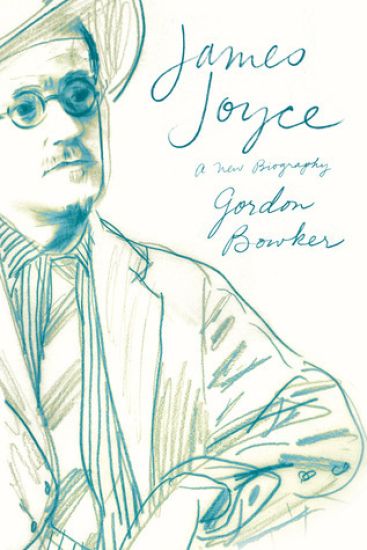
A revealing biography of one of the twentieth century's towering literary figures James Joyce is one of the greatest writers of the twentieth century, foundational in the history of literary modernism. Yet Joyce's genius was not immediately recognized, nor was his success easily won. At twenty-two the author chose a life of exile; he battled poverty and financial dependency for much of his adult life; his out-of-wedlock relationship with Nora Barnacle was scandalous for the time; and the attitudes he held toward Ireland, England, sexuality, politics, Catholicism, popular culture--to name a few--were complex, contradictory, and controversial. In James Joyce, Gordon Bowker, draws on material recently come to light and reconsiders the two signal works produced about Joyce's life--Herbert Gorman's authorized biography of 1939 and Richard Ellmann's magisterial tome of 1959. By intimately binding together the life and work of this singular Irish novelist, Bowker gives us a masterful, fresh, eminently readable contribution to our understanding both of Joyce's personality and of the monumental opus he created. Bowker goes further than his predecessors in exploring Joyce's inner depths--his ambivalent relationships to England, to his native Ireland, and to Judaism--and uncovers revealing evidence. He draws convincing correspondences between the iconic fictional characters Joyce created and their real-life models and inspirations. And he paints a nuanced portrait of a man of enormous complexity, the clearest picture yet of an extraordinary writer who continues to influence and fascinate more than a century after his birth.
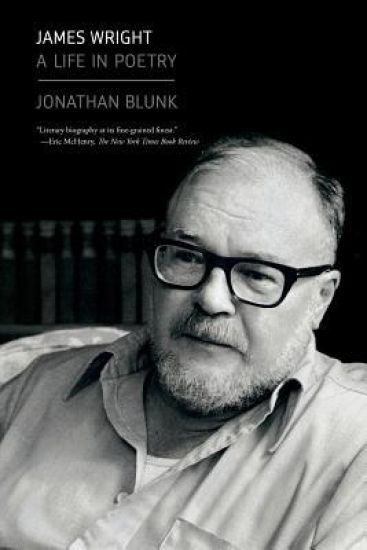
The authorized and sweeping biography of one of America's most complex, influential, and enduring poets In the extraordinary generation of American poets who came of age in the middle of the twentieth century, James Wright (1927-1980) was frequently placed at the top of the list. With a fierce, single-minded devotion to his work, Wright escaped the steel town of his Depression-era childhood in the Ohio valley to become a revered professor of English literature and a Pulitzer Prize winner. But his hometown remained at the heart of his work, and he courted a rough, enduring muse from his vivid memories of the Midwest. A full-throated lyricism and classical poise became his tools, honesty and unwavering compassion his trademark. Using meticulous research, hundreds of interviews, and Wright's public readings, Jonathan Blunk's authorized biography explores the poet's life and work with exceptional candor, making full use of Wright's extensive unpublished work--letters, poems, translations, and personal journals. Focusing on the tensions that forced Wright's poetic breakthroughs and the relationships that plunged him to emotional depths, Blunk provides a spirited portrait, and a fascinating depiction of this turbulent period in American letters. A gifted translator and mesmerizing reader, Wright appears throughout in all his complex and eloquent urgency. Discerning yet expansive, James Wright will change the way the poet's work is understood and inspire a new appreciation for his enduring achievement.
Following the widely celebrated Collected Poems, this second volume in the series of James Merrill's works brings us Merrill as novelist and playwright. Just as in his poems we come upon prose pieces, dramatic dialogue, and even a short play in verse, in his novels and plays we find the rhythms of his poetry reflected and given new form. Merrill's first novel, The Seraglio, is a daring roman clef derived in large part from his early life as the cosmopolitan son of Charles Merrill, one of America's most famous twentieth-century financiers. Written in a highly refined prose that owes something to Henry James, the book is a compelling portrait of the luxury and treachery swirling around the Southampton beach house of an irrepressible family patriarch, with his many mistresses and ex-mistresses in attendance, told from the point of view of his lively but troubled son. At the other end of the narrative spectrum we find The (Diblos) Notebook, an experimental novel in which a young American's adventures on a Greek island are deconstructed and assembled into a tentative fiction before our eyes. Merrill's plays, including the one-act comedy of manners The Bait and the Chekhovian The Immortal Husband--a reinvention of the myth of Tithonus, who was granted eternal life but not eternal youth--are also fresh turns on his characteristic themes: home and travel, reality and artifice, simplicity and complication. And, for the first time in print, here is Merrill's short play The Birthday, a fledgling effort written in 1947 and a fascinating window onto the concern with spiritual communication and the otherwordly that would later blossom into his great epic, The Changing Light at Sandover.