Kirjojen hintavertailu. Mukana 11 699 587 kirjaa ja 12 kauppaa.

Kirjahaku

Etsi kirjoja tekijän nimen, kirjan nimen tai ISBN:n perusteella.

1000 tulosta hakusanalla James Tipton

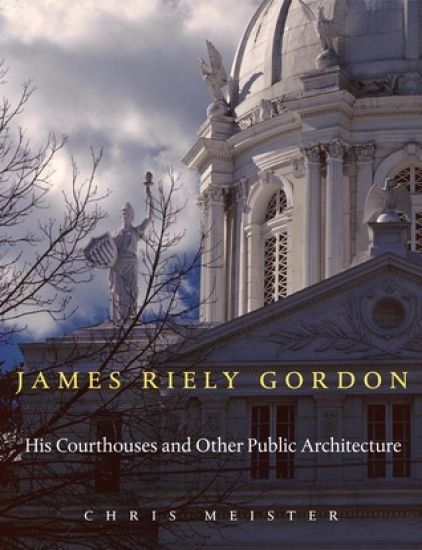
James Riely Gordon

James Riely Gordon

Chris Meister

Texas Tech Press,U.S.
2011
sidottu
One of Texas's most talented architects in the late nineteenth century, James Riely Gordon may have been the nation's most prolific designer of county courthouses. Though Gordon's Texas courthouses made his reputation, they represent only half of a career in which we see reflected many issues and events shaping American architecture. Most notable were the effort among architects to organize their craft as a profession, the controversial Office of the Supervising Architect of the United States Treasury, the 1893 World's Columbian Exposition, and the City Beautiful Movement. Situating Gordon's career, Meister focuses on the public architecture, the pursuit of which took Gordon from San Antonio to Dallas and on to Chicago and New York City as he secured commissions in nine states. Competition was fierce, and Gordon often had to defend his reputation against scandalous charges leveled by jealous architects and unscrupulous politicians. In his interdisciplinary approach, Meister examines political, cultural, and economic forces for their impact on the finished buildings as well as on Gordon's career and exposes the political and legal wrangling so often attendant to the construction of buildings that serve as the nexus for their communities.
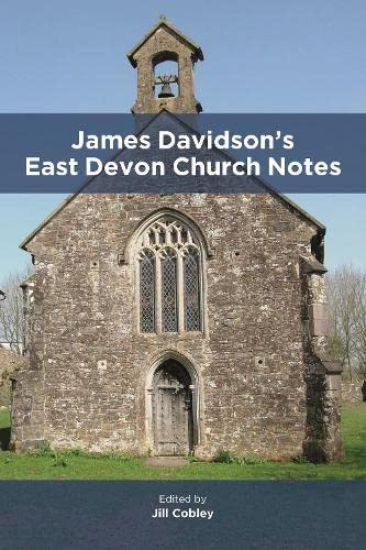
James Davidson’s East Devon Church Notes

James Davidson’s East Devon Church Notes

Devon Cornwall Record Society
2022
pokkari
Sheds light on the history of East Devon's churches from the Middle Ages onwards, illustrating the ways in which parish churches were transformed in the late nineteenth century. In the mid nineteenth century the Devon antiquarian James Davidson visited all of East Devon's churches and made detailed notes about their buildings, fabric and fittings. His notes are an eyewitness record of the state of these parish churches at the time before changes in liturgy and fashion in the later Victorian period brought about irreplaceable change. Davidson's descriptions highlight what has been lost from the archaeological record and allow us to make comparisons with the churches today. In this way they shed light on the history of East Devon's churches from the Middle Ages onwards and illustrate the ways in which parish churches were transformed in the late nineteenth century. Davidson's records of memorials and inscriptions in the churches also provide rich and fascinating material for research into local history, social history and family history from the fifteenth to the nineteenth centuries and illustrate changing attitudes to death and commemoration.
James Beattie

James Beattie

James Beattie

Imprint Academic
2004
pokkari
James Beattie (1735-1803) was appointed professor of moral philosophy and logic at Marischal College, Aberdeen, Scotland at the age of twenty-five. Though more fond of poetry than philosophy, he became part of the Scottish 'Common Sense' school of philosophy that included Thomas Reid and George Campbell. In 1770 Beattie published the work for which he is best known, An Essay on Truth, an abrasive attack on 'modern scepticism' in general, and on David Hume in particular, subsequently and despite Beattie's attack, Scotland's most famous philosopher. The Essay was a great success, earning its author an honorary degree from Oxford and an audience with George III. Samuel Johnson declared in 1772 that 'We all love Beattie'. Hume, on the other hand, described the Essay as 'a horrible large lie in octavo', and dismissed its author as a 'bigotted silly Fellow'. Although Beattie is no match for Hume as a philosopher, the success of the Essay suggests that, unlike Hume, Beattie voices the characteristic assumptions, and anxieties, of his age. The first part of this selection—the first ever made from Beattie's prose writings—includes several key chapters from the Essay on Truth, along with extracts from all of Beattie's other works on moral philosophy. The topics treated include memory, the existence of God, the nature of virtue, and slavery. The second part of the selection is devoted to Beattie's contributions to literary criticism and aesthetics. Beattie's studies of poetry, music, taste, and the sublime are vital to the understanding of the literary culture out of which developed the early Romanticism of Wordsworth and Coleridge.