Kirjojen hintavertailu. Mukana 11 244 527 kirjaa ja 12 kauppaa.

Kirjahaku

Etsi kirjoja tekijän nimen, kirjan nimen tai ISBN:n perusteella.

1000 tulosta hakusanalla Jason Bulmahn

Force Without Authority

Force Without Authority

Jason Brownlee

OXFORD UNIVERSITY PRESS INC
2026
nidottu
Force Without Authority explores why the United States' costliest military operations since Vietnam came up short and pushed Republican and Democratic leaders toward withdrawal and retrenchment. Covering the sweep of US armed interventions since the end of the Cold War, Jason Brownlee sets America's post-9/11 invasions in a thirty-five-year foreign-policy arc--from caution to bravado--and back. The al-Qaeda attacks suspended America's traditional aversion to high-risk military missions abroad. For the better part of a decade, presidents from both parties poured US troops into nation-building in Afghanistan and Iraq, only to return, in the 2010s, to a less hazardous and less ambitious program of eliminating enemies from a distance without reshaping politics on the ground. This same calculus pushed successive administrations toward diplomacy with America's most formidable foes. Critical and wide-sweeping, the book delivers a bracing audit of America's unipolar moment and a compelling case for statecraft over bluster.
Mapping the Germans

Mapping the Germans

Jason D. Hansen

Oxford University Press
2015
sidottu
Mapping the Germans explores the development of statistical science and cartography in Germany between the beginning of the nineteenth century and the start of World War One, examining their impact on the German national identity. It asks how spatially-specific knowledge about the nation was constructed, showing the contested and difficult nature of objectifying this frustratingly elastic concept. Ideology and politics were not themselves capable of providing satisfactory answers to questions about the geography and membership of the nation; rather, technology also played a key role in this process, helping to produce the scientific authority needed to make the resulting maps and statistics realistic. In this sense, Mapping the Germans is about how the abstract idea of the nation was transformed into a something that seemed objectively measurable and politically manageable. Jason Hansen also examines the birth of radical nationalism in central Europe, advancing the novel argument that it was changes to the vision of nationality rather than economic anxieties or ideological shifts that radicalized nationalist practice at the close of the nineteenth century. Numbers and maps enabled activists to "see" nationality in local and spatially-specific ways, enabling them to make strategic decisions about where to best direct their resources. In essence, they transformed nationality into something that was actionable, that ordinary people could take real actions to influence.
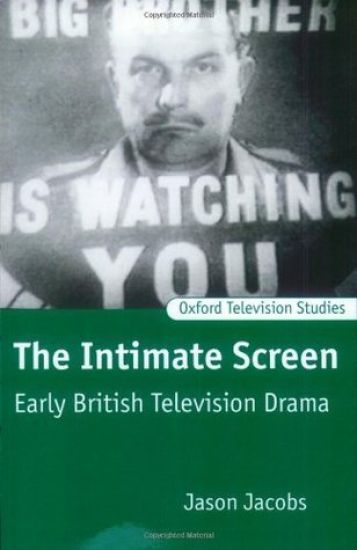
The Intimate Screen

The Intimate Screen

Jason Jacobs

Clarendon Press
2000
nidottu
This book explores the formative period of British television drama, concentrating on the years 193655. It examines the continuities and changes of early television drama, and the impact this had upon the subsequent 'golden age'. In particular, it questions the caricature of early television drama as 'photographed stage plays' and argues that early television pioneers in fact produced a diverse range of innovative drama productions, using a wide range of techniques. It also explores the often competing definitions about the form and aesthetics of early television drama both inside and outside the BBC. Given the absence of an audio-visual record of early television drama, the book uses written archive material in order to reconstruct how early television drama looked, and how it was considered by producers and critics, whilst also offering a critical examination of surviving dramas, such as Rudolph Cartier's Nineteen Eighty-Four.
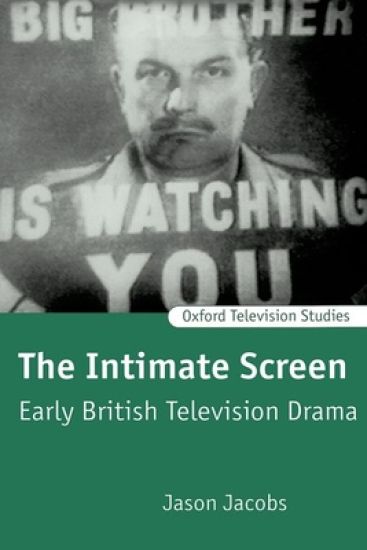
The Intimate Screen

The Intimate Screen

Jason Jacobs

Clarendon Press
2000
sidottu
This book explores the formative period of British television drama, concentrating on the years 1936-55. It examines the continuities and changes of early television drama, and the impact this had upon the subsequent 'golden age'. In particular, it questions the caricature of early television drama as 'photographed stage plays' and argues that early television pioneers in fact produced a diverse range of innovative drama productions, using a wide range of techniques. It also explores the often competing definitions about the form and aesthetics of early television drama both inside and outside the BBC. Given the absence of an audio-visual record of early television drama, the book uses written archive material in order to reconstruct how early television drama looked, and how it was considered by producers and critics, whilst also offering a critical examination of surviving dramas, such as Rudolph Cartier's Nineteen Eighty-Four.
Allegory and Enchantment

Allegory and Enchantment

Jason Crawford

Oxford University Press
2017
sidottu
What is modernity? Where are modernitys points of origin? Where are its boundaries? And what lies beyond those boundaries? Allegory and Enchantment explores these broad questions by considering the work of English writers at the threshold of modernity, and by considering,in particular, the cultural forms these writers want to leave behind. From the fourteenth to the seventeenth centuries, many English writers fashion themselves as engaged in breaking away from an array of old idols: magic, superstition, tradition, the sacramental, the medieval. Many of these writers persistently use metaphors of disenchantment, of awakening from a broken spell, to describe their self-consciously modern orientation toward a medieval past. And many of them associate that repudiated past with the dynamics and conventions of allegory. In the hands of the major English practitioners of allegorical narrativeWilliam Langland, John Skelton, Edmund Spenser, and John Bunyanallegory shows signs of strain and disintegration. The work of these writers seems to suggest a story of modern emergence in which medieval allegory, with its search for divine order in the material world, breaks down under the pressure of modern disenchantment. But these four early modern writers also make possible other understandings of modernity. Each of them turns to allegory as a central organizing principle for his most ambitious poetic projects. Each discovers in the ancient forms of allegory a vital, powerful instrument of disenchantment. Each of them, therefore, opens up surprising possibilities: that allegory and modernity are inescapably linked; that the story of modern emergence is much older than the early modern period; and that the things modernity has tried to repudiatethe old enchantmentsare not as alien, or as absent, as they seem.
Isaac of Nineveh's Ascetical Eschatology

Isaac of Nineveh's Ascetical Eschatology

Jason Scully

Oxford University Press
2017
sidottu
Isaac of Nineveh's Ascetical Eschatology demonstrates that Isaac's eschatology is an original synthesis based on ideas garnered from a distinctively Syriac cultural milieu. Jason Scully investigates six sources relevant to the study of Isaac's Syriac source material and cultural heritage. These include ideas adapted from Syriac authors like Ephrem, John the Solitary, and Narsai, but also adapted from the Syriac versions of texts originally written in Greek, like Evagrius's Gnostic Chapters, Pseudo-Dionysius's Mystical Theology, and the Pseudo-Macarian homilies. Isaac's eschatological synthesis of this material is a sophisticated discourse on the psychological transformation that occurs when the mind has an experience of God. It begins with the premise that asceticism was part of God's original plan for creation. Isaac says that God created human beings with infantile knowledge and that God intended from the beginning for Adam and Eve to leave the Garden of Eden. Once outside the garden, human beings would have to pursue mature knowledge through bodily asceticism. Although perfect knowledge is promised in the future world, Isaac also believes that human beings can experience a proleptic taste of this future perfection. Isaac employs the concepts of wonder and astonishment in order to explain how an ecstatic experience of the future world is possible within the material structures of this world. According to Isaac, astonishment describes the moment when a person arrives at the threshold of eschatological perfection but is still unable to comprehend the heavenly mysteries, while wonder describes spiritual comprehension of heavenly knowledge through the intervention of divine grace.
Milton's Theological Process

Milton's Theological Process

Jason A. Kerr

Oxford University Press
2023
sidottu
This volume proposes a method for reading Milton's De Doctrina Christiana as an artifact of his process of theological thinking rather than as a repository of his doctrinal views. Jason A. Kerr argues that reading in this way involves attention to the complex material state of the manuscript along with Milton's varying modes of engagement with scripture and various theological interlocutors, and reveals that Milton's approach to theology underwent significant change in the course of his work on the treatise. Initially, Milton set out to use Ramist logic to organize scripture in a way that drew out its intrinsic doctrinal structure. This method had two unintended consequences: it drove Milton to an antitrinitarian understanding of the Son of God, and it obliged him to reflect on his own authority as an interpreter and to develop an ecclesiology capable of sifting divine truth from human error. Consequently, Milton's Theological Process explores the complex interplay between Milton's preconceived theological ideas and his willingness to change his mind as it develops through the layers of revision in the manuscript. Kerr concludes by considering Paradise Lost as a vehicle for Milton's further reflection on the foundations of theology--and by showing how even the epic presents challenges to the fruits of these reflections. Reading Milton theologically means more than working to ascertain his doctrinal views; it means attending critically to his messy process of evaluating and rethinking the doctrinal views to which his prior study had led him.
Defending the Society of States

Defending the Society of States

Jason Ralph

Oxford University Press
2007
sidottu
This book is among the first to address the issues raised by the International Criminal Court (ICC) from an International Relations perspective. By clearly outlining a theoretical framework to interpret these issues, Ralph makes a significant contribution to the English School's study of international society. More specifically, he offers a concise definition of 'world society' and thus helps to resolve a longstanding problem in international theory. This groundbreaking conceptual work is supported by an in-depth empirical analysis of American opposition to the ICC. Ralph goes beyond the familiar arguments related to national interests and argues that the Court has exposed the extent to which American notions of accountability are tied to the nation-state. Where other democracies are willing to renegotiate their social contract because they see themselves as part of world society, the US protects its particular contract with 'the people' because it offers a means of distinguishing America and its democracy from the rest of the world. This 'sovereigntist', or more accurately 'Americanist', influence is further illustrated in chapters on the sources of law, universal jurisdiction, transatlantic relations and US policy on international humanitarian law in the war on terror. The book concludes by evoking E.H. Carr's criticism of those great powers who claim that a harmony exists between their particular interests and those of wider society. It also recalls his argument that great powers sometimes need to compromise and in this context, Ralph argues that support for the ICC is a more effective means of fulfilling America's purpose and a less costly sacrifice than that demanded by the 'Americanist' policy of nation-building.
Language in Context

Language in Context

Jason Stanley

Clarendon Press
2007
sidottu
Natural languages all contain constructions the interpretation of which depends upon the situation in which they are used. In Language and Context, Jason Stanley presents a series of essays which develop a theory of how the situation in which we speak interacts with the words we use to help produce what we say. The reason we can so smoothly operate with sentences that can be used to express very different items of information, Stanley argues, is that there are linguistically mandated constraints on the effects of the situation on what we say. These linguistically mandated constraints are most evident in the cases of sentences containing explicit pronouns, such as 'She is a mathematician', where interpretation of the information expressed is guided by the use of the pronoun 'she'. But even when such explicit pronouns are lacking, our sentences provide similar cues to allow our interlocutors to determine the information expressed. We are, in the main, confident that our interlocutors will smoothly grasp what we say, because the grammar and meaning of our sentences encodes these constraints. In defending this theory, Stanley pays close attention to specific cases of context-sensitive constructions, such as quantified noun phrases, comparative adjectives, and conditionals. Philosophers and cognitive scientist have appealed to the dependence of what is intuitively said by a sentence on the situation in which it is uttered to argue against the possibility of a systematic theory of meaning for natural language. The theory developed in this book is a vigorous defence of the possibility of a systematic theory of meaning for natural language against these influential tendencies.
Language in Context

Language in Context

Jason Stanley

Clarendon Press
2007
nidottu
Natural languages all contain constructions the interpretation of which depends upon the situation in which they are used. In Language and Context, Jason Stanley presents a series of essays which develop a theory of how the situation in which we speak interacts with the words we use to help produce what we say. The reason we can so smoothly operate with sentences that can be used to express very different items of information, Stanley argues, is that there are linguistically mandated constraints on the effects of the situation on what we say. These linguistically mandated constraints are most evident in the cases of sentences containing explicit pronouns, such as 'She is a mathematician', where interpretation of the information expressed is guided by the use of the pronoun 'she'. But even when such explicit pronouns are lacking, our sentences provide similar cues to allow our interlocutors to determine the information expressed. We are, in the main, confident that our interlocutors will smoothly grasp what we say, because the grammar and meaning of our sentences encodes these constraints. In defending this theory, Stanley pays close attention to specific cases of context-sensitive constructions, such as quantified noun phrases, comparative adjectives, and conditionals. Philosophers and cognitive scientist have appealed to the dependence of what is intuitively said by a sentence on the situation in which it is uttered to argue against the possibility of a systematic theory of meaning for natural language. The theory developed in this book is a vigorous defence of the possibility of a systematic theory of meaning for natural language against these influential tendencies.
Knowledge and Practical Interests

Knowledge and Practical Interests

Jason Stanley

Clarendon Press
2007
nidottu
Jason Stanley presents a startling and provocative claim about knowledge: that whether or not someone knows a proposition at a given time is in part determined by his or her practical interests, i.e. by how much is at stake for that person at that time. So whether a true belief is knowledge is not merely a matter of supporting beliefs or reliability; in the case of knowledge, practical rationality and theoretical rationality are intertwined. Stanley defends this thesis against alternative accounts of the phenomena that motivate it, such as the claim that knowledge attributions are linguistically context-sensitive (contextualism about knowledge attributions), and the claim that the truth of a knowledge claim is somehow relative to the person making the claim (relativism about knowledge). In the course of his argument Stanley introduces readers to a number of strategies for resolving philosophical paradox, making the book essential not just for specialists in epistemology but for all philosophers interested in philosophical methodology. Since a number of his strategies appeal to linguistic evidence, it will be of great interest to linguists as well.
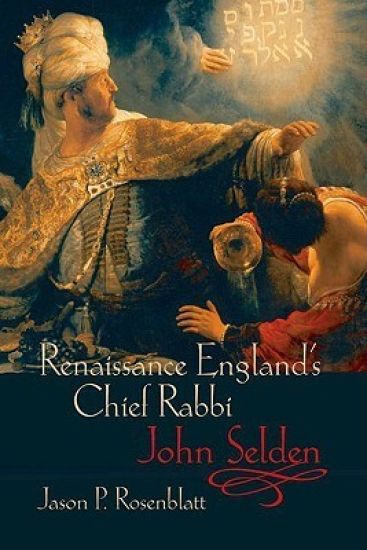
Renaissance England's Chief Rabbi: John Selden

Renaissance England's Chief Rabbi: John Selden

Jason P. Rosenblatt

Oxford University Press
2008
nidottu
In the midst of an age of prejudice, John Selden's immense, neglected rabbinical works contain magnificent Hebrew scholarship that respects, to an extent remarkable for the times, the self-understanding of Judaism. Scholars celebrated for their own broad and deep learning gladly conceded Selden's superiority and conferred on him titles such as 'the glory of the English nation' (Hugo Grotius), 'Monarch in letters' (Ben Jonson), 'the chief of learned men reputed in this land' (John Milton). Although scholars have examined Selden (1584-1654) as a political theorist, legal and constitutional historian, and parliamentarian, Renaissance England's Chief Rabbi is the first book-length study of his rabbinic and especially talmudic publications, which take up most of the six folio volumes of his complete works and constitute his most mature scholarship. It traces the cultural influence of these works on some early modern British poets and intellectuals, including Jonson, Milton, Andrew Marvell, James Harrington, Henry Stubbe, Nathanael Culverwel, Thomas Hobbes, and Isaac Newton. It also explores some of the post-biblical Hebraic ideas that served as the foundation of Selden's own thought, including his identification of natural law with a set of universal divine laws of perpetual obligation pronounced by God to our first parents in paradise and after the flood to the children of Noah. Selden's discovery in the Talmud and in Maimonides' Mishneh Torah of shared moral rules in the natural, pre-civil state of humankind provides a basis for relationships among human beings anywhere in the world. The history of the religious toleration of Jews in England is incomplete without acknowledgment of the impact of Selden's uncommonly generous Hebrew scholarship.
The Syntax of Silence

The Syntax of Silence

Jason Merchant

Oxford University Press
2001
nidottu
This work focuses on the form of ellipsis known as sluicing, a feature of interrogative clauses, such as in "Sally's out hunting - guess what!"; and "Someone called, but I can't tell you who". The phenomenon is studied across 24 languages to try to explain it in linguistic and behavioural terms.
The Syntax of Silence

The Syntax of Silence

Jason Merchant

Oxford University Press
2001
sidottu
A primary goal of contemporary theoretical linguistics is to develop a theory of the correspondence between sound (or gesture) and meaning. This sound-meaning correspondence breaks down completely in the case of ellipsis, and yet various forms of ellipsis are pervasive in natural language: words and phrases which should be in the linguistic signal go missing. How this should be possible is the focus of Jason Merchant's investigation. He focuses on the form of ellipsis known as sluicing, a common feature of interrogative clauses, such as in 'Sally's out hunting - guess what!'; and 'Someone called, but I can't tell you who'. It is the most frequently found cross-linguistic form of ellipsis. Dr Merchant studies the phenomenon across twenty-four languages, and attempts to explain it in linguistic and behavioural terms.
Sir John Harington and the Book as Gift

Sir John Harington and the Book as Gift

Jason Scott-Warren

Oxford University Press
2001
sidottu
Sir John Harington (1560-1612) has long been recognized as one of the most colourful and engaging figures at the English Renaissance court. Godson of Queen Elizabeth, translator of Ariosto, and inventor of the water-closet, he was also a lively writer in a wide variety of modes, and an acute commentator on his times. This study opens a new perspective on Harington's literary production by attending to the fact that almost all of his writings were designed as gifts. Combining detailed readings and first-hand historical research, Jason Scott-Warren reconstructs the complex, often devious agenda which Harington wrote into his books as he customized them for specific individuals and occasions. Offering a wealth of insights into self-fashioning and the pursuit of patronage, this study makes a persuasive case for the significance of material culture to textual interpretation. It will be of interest to all who work on the early modern period, and in particular to historians of the book.
The Criterion

The Criterion

Jason Harding

Oxford University Press
2002
sidottu
In this detailed study of literary culture in the inter-war period, Jason Harding examines the standing of T. S. Eliot's journal the Criterion in relation to other literary periodicals and, beyond that, to the larger cultural networks of the time. The Criterion may at first sight seem a well-studied publication, often dismissed as predictably conservative, even proto-Fascist. However, through his examination of insufficiently known archive material and interviews with living witnesses to the period, Harding significantly alters our understanding of the journal and of Eliot's role as editor. More than that, by carefully resituating the journal in its relations - of both competition and co-operation - with a range of other literary periodicals (for the most part little-studied themselves), he shows himself an authoritative and discriminating guide to the often complex networks within which Eliot worked. The Criterion: Cultural Politics and Periodical Networks in Inter-War Britain defends the journal against charges of Fascism and anti-Semitism: it is an invaluable book for scholars of Eliot and an original and incisive exploration of difficult areas of literary-cultural exchange.
Renaissance England's Chief Rabbi: John Selden

Renaissance England's Chief Rabbi: John Selden

Jason P. Rosenblatt

Oxford University Press
2006
sidottu
In the midst of an age of prejudice, John Selden's immense, neglected rabbinical works contain magnificent Hebrew scholarship that respects, to an extent remarkable for the times, the self-understanding of Judaism. Scholars celebrated for their own broad and deep learning gladly conceded Selden's superiority and conferred on him titles such as 'the glory of the English nation' (Hugo Grotius), 'Monarch in letters' (Ben Jonson), 'the chief of learned men reputed in this land' (John Milton). Although scholars have examined Selden (1584-1654) as a political theorist, legal and constitutional historian, and parliamentarian, Renaissance England's Chief Rabbi is the first book-length study of his rabbinic and especially talmudic publications, which take up most of the six folio volumes of his complete works and constitute his most mature scholarship. It traces the cultural influence of these works on some early modern British poets and intellectuals, including Jonson, Milton, Andrew Marvell, James Harrington, Henry Stubbe, Nathanael Culverwel, Thomas Hobbes, and Isaac Newton. It also explores some of the post-biblical Hebraic ideas that served as the foundation of Selden's own thought, including his identification of natural law with a set of universal divine laws of perpetual obligation pronounced by God to our first parents in paradise and after the flood to the children of Noah. Selden's discovery in the Talmud and in Maimonides' Mishneh Torah of shared moral rules in the natural, pre-civil state of humankind provides a basis for relationships among human beings anywhere in the world. The history of the religious toleration of Jews in England is incomplete without acknowledgment of the impact of Selden's uncommonly generous Hebrew scholarship.
Public Inquiries

Public Inquiries

Jason Beer QC

Oxford University Press
2011
sidottu
The tradition of the public inquiry has become a pivotal part of public life, and a major instrument of accountability in the United Kingdom. There have been over 30 significant public inquiries in the decade (including the BSE, Shipman, Hutton, Bloody Sunday and Billy Wright Inquiries). This book is written and edited by practitioners who have appeared in a large number of these significant inquiries. This new work is the first of its kind, and will function as a handbook for practitioners. The work examines and explains both statutory (in particular the Inquiries Act 2005 and the Inquiry Rules 2006) and non-statutory inquiries in chapters relating to the need for and purpose of the public inquiry, the mechanisms for establishing a public inquiry, terms of reference, the subject matter of inquiries, the relationship of inquiries to other legal proceedings, the constitution of an inquiry, the administration of an inquiry, evidence and procedure, public access to an inquiry, immunities and defamation, representation and funding, inquiry reports and the duty to be fair, ending the inquiry and challenging an inquiry. This book is fully indexed and cross-referenced, including extensive referencing to the position in other jurisdictions. With a Foreword written by Lord Brown.
Building the Skyline

Building the Skyline

Jason M. Barr

Oxford University Press Inc
2016
sidottu
The Manhattan skyline is one of the great wonders of the modern world. But how and why did it form? Much has been written about the city's architecture and its general history, but little work has explored the economic forces that created the skyline. This book chronicles the economic history of the Manhattan skyline. In the process, the book debunks some widely-held misconceptions about the city's history. Part I lays out the historical and environmental background that established Manhattan's real estate trajectory before the Skyscraper Revolution at the end of the 19th century. The book begins with Manhattan's natural and geological history and then moves on to how it influenced early land use and neighborhood formation, and how these early decisions eventually impacted the location of skyscrapers. Part II focuses specifically on the economic history of skyscrapers and the skyline, investigating the reasons for their heights, frequencies, locations, and shapes. The book discusses why skyscrapers emerged downtown and why they appeared three miles to the north in midtown, but not in between. Contrary to popular belief it was not due to the depths of Manhattan's bedrock, nor the presence of Grand Central Station. Rather midtown's emergence was a response to the economic and demographic forces that were taking place north of 14th Street after the Civil War. The book also presents the first rigorous investigation of the causes of the building boom during the Roaring Twenties. Contrary to conventional wisdom, the boom was largely a rational response to the economic growth of the nation and city. The last chapter investigates the value of Manhattan Island and the relationship between skyscrapers and land prices. Finally, an Epilogue offers policy recommendations for a resilient and robust future skyline.