Kirjojen hintavertailu. Mukana 11 717 486 kirjaa ja 12 kauppaa.

Kirjahaku

Etsi kirjoja tekijän nimen, kirjan nimen tai ISBN:n perusteella.

1000 tulosta hakusanalla Jeffrey B. Perry

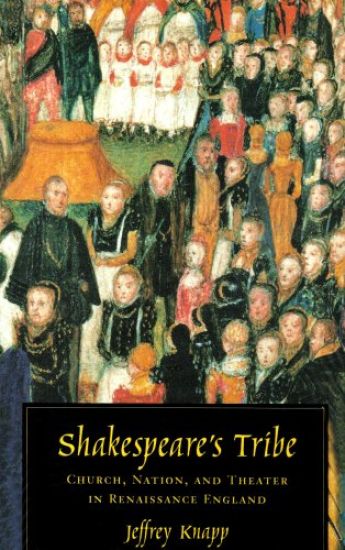
Shakespeare's Tribe

Shakespeare's Tribe

Jeffrey Knapp

University of Chicago Press
2004
nidottu
Most contemporary critics characterize Shakespeare and his tribe of fellow playwrights and players as resolutely secular, interested in religion only as a matter of politics or as a rival source of popular entertainment. Yet as Jeffrey Knapp demonstrates in this radical new reading, a surprising number of writers throughout the English Renaissance, including Shakespeare himself, represented plays as supporting the cause of true religion.To be sure, Renaissance playwrights rarely sermonized in their plays, which seemed preoccupied with sex, violence, and crime. During a time when acting was regarded as a kind of vice, many theater professionals used their apparent godlessness to advantage, claiming that it enabled them to save wayward souls the church could not otherwise reach. The stage, they argued, made possible an ecumenical ministry, which would help transform Reformation England into a more inclusive Christian society.Drawing on a variety of little-known as well as celebrated plays, along with a host of other documents from the English Renaissance, Shakespeare's Tribe changes the way we think about Shakespeare and the culture that produced him.Winner of the Best Book in Literature and Language from the Association of American Publishers' Professional/Scholarly division, the Conference on Christianity and Literature Book Award, and the Roland H. Bainton Prize for Literature from the Sixteenth Century Society and Conference.
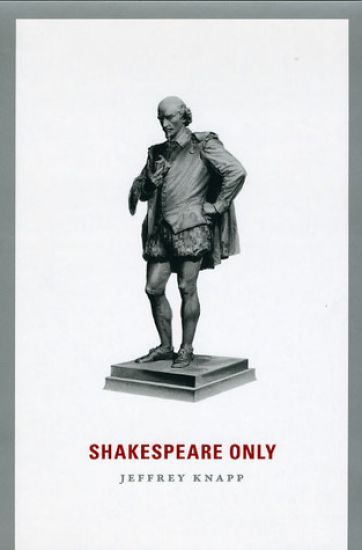
Shakespeare Only

Shakespeare Only

Jeffrey Knapp

University of Chicago Press
2009
sidottu
Three decades of controversy in Shakespeare studies can be summed up in a single question: Was Shakespeare one of a kind? On one side of the debate are the Shakespeare lovers, the bardolaters, who insist on Shakespeare's timeless preeminence as an author. On the other side are the theater historians who view modern claims of Shakespeare's uniqueness as a distortion of his real professional life. In "Shakespeare Only", Knapp draws on an extraordinary array of historical evidence to reconstruct Shakespeare's authorial identity as Shakespeare and his contemporaries actually understood it. He argues that Shakespeare tried to adapt his own singular talent and ambition to the collaborative enterprise of drama by imagining himself as uniquely embodying the diverse, fractious energies of the popular theater. Rewriting our current histories of authorship as well as Renaissance drama, "Shakespeare Only" recaptures a sense of the creative force that mass entertainment exerted on Shakespeare and that Shakespeare exerted on mass entertainment.
Shakespeare Only

Shakespeare Only

Jeffrey Knapp

University of Chicago Press
2011
nidottu
Three decades of controversy in Shakespeare studies can be summed up in a single question: Was Shakespeare one of a kind? On one side of the debate are the Shakespeare lovers, the bardolaters, who insist on Shakespeare's timeless preeminence as an author. On the other side are the theater historians who view modern claims of Shakespeare's uniqueness as a distortion of his real professional life. In "Shakespeare Only", Knapp draws on an extraordinary array of historical evidence to reconstruct Shakespeare's authorial identity as Shakespeare and his contemporaries actually understood it. He argues that Shakespeare tried to adapt his own singular talent and ambition to the collaborative enterprise of drama by imagining himself as uniquely embodying the diverse, fractious energies of the popular theater. Rewriting our current histories of authorship as well as Renaissance drama, "Shakespeare Only" recaptures a sense of the creative force that mass entertainment exerted on Shakespeare and that Shakespeare exerted on mass entertainment.
Esalen

Esalen

Jeffrey J. Kripal

University of Chicago Press
2008
nidottu
Jeffrey J. Kripal here recounts the spectacular history of Esalen, the institute that has long been a world leader in alternative and experiential education and stands today at the center of the human potential movement. Forged in the literary and mythical leanings of the Beat Generation, inspired in the lecture halls of Stanford by radical scholars of comparative religion, the institute was the remarkable brainchild of Michael Murphy and Richard Price.Set against the heady backdrop of California during the revolutionary 1960s, "Esalen" recounts in fascinating detail how these two maverick thinkers sought to fuse the spiritual revelations of the East with the scientific revolutions of the West, or to combine the very best elements of Zen Buddhism, Western psychology, and Indian yoga into a decidedly utopian vision that rejected the dogmas of conventional religion. In their religion of no religion, the natural world was just as crucial as the spiritual one, science and faith not only commingled but became staunch allies, and the enlightenment of the body could lead to the full realization of our development as human beings.
Kali's Child

Kali's Child

Jeffrey J. Kripal

University of Chicago Press
1998
nidottu
The 19th-century Bengali mystic Ramakrishna played a major role in the development of Hinduism and is regarded as a modern saint. Yet he remains an enigma to followers unable to reconcile his saintly status with his eroticized language and actions. In this work, Jeffrey J. Kripal attempts to untangle the paradox. He demonstrates that Ramakrishna's famous mystical experiences were driven by erotic energies that he neither fully accepted nor understood; the key to understanding him, Kripal argues, lies in Tantra and its ritual, symbolic and doctrinal equation of the mystical and the erotic. Moving through Ramakrishna's world both chronologically and conceptually, this book employs two complementary interpretive strategies: a nuanced phenomenological reinterpretation of original Bengali texts and a non-reductive psychoanalytic reading of Ramakrishna's mystical eroticism. Kripal shows how the heterosexual structure of Tantric symbolism, the abusive way its rituals were often forced upon the saint, and Ramakrishna's own homosexual desires all came together to produce in him profound feelings of shame, disgust and fear. Kripal establishes that the homosexuality of this great, if unwilling, Tantric mystic is linked inextricably to virtually every aspect of his life and teachings.
Roads of Excess, Palaces of Wisdom

Roads of Excess, Palaces of Wisdom

Jeffrey J. Kripal

University of Chicago Press
2001
sidottu
William Blake once wrote that "The road of excess leads to the palace of wisdom". Inspired by these poetic terms, Jeffrey J. Kripal reveals how the works of scholars of mysticism are often rooted in their own mystical experiences, "roads of excess", which can both lead to important insights into these scholars' works and point us to our own "palaces of wisdom". In his new book, Kripal addresses the 20th-century study of mysticism as a kind of mystical tradition in its own right, with its own unique histories, discourses, sociological dynamics and rhetorics of secrecy. Fluidly combining autobiography and biography with scholarly exploration, Kripal takes us on a tour of comparative mystical thought by examining the lives and works of five major historians of mysticism - Evelyn Underhill, Louis Massignon, R.C. Zaehner, Agehananda Bharati and Elliot Wolfson -as well as relating his own mystical experiences. The result, Kripal finds, is seven "palaces of wisdom": the religious power of excess, the necessity of distance in the study of mysticism, the relationship between the mystical and art, the dilemmas of male subjectivity and modern heterosexuality, a call for ethical criticism, the paradox of the insider-outsider problem in the study of religion, and the magical power of texts and their interpretation. An original and penetrating analysis of modern scholarship and scholars of mysticism, "Roads of Excess, Palaces of Wisdom" is also a persuasive demonstration of the way this scholarly activity is itself a mystical phenomenon.
Roads of Excess, Palaces of Wisdom

Roads of Excess, Palaces of Wisdom

Jeffrey J. Kripal

University of Chicago Press
2001
nidottu
William Blake once wrote that "The road of excess leads to the palace of wisdom." Inspired by these poetic terms, Jeffrey J. Kripal reveals how the works of scholars of mysticism are often rooted in their own mystical experiences, "roads of excess," which can both lead to important insights into these scholars' works and point us to our own "palaces of wisdom."In his new book, Kripal addresses the twentieth-century study of mysticism as a kind of mystical tradition in its own right, with its own unique histories, discourses, sociological dynamics, and rhetorics of secrecy. Fluidly combining autobiography and biography with scholarly exploration, Kripal takes us on a tour of comparative mystical thought by examining the lives and works of five major historians of mysticism—Evelyn Underhill, Louis Massignon, R. C. Zaehner, Agehananda Bharati, and Elliot Wolfson—as well as relating his own mystical experiences. The result, Kripal finds, is seven "palaces of wisdom": the religious power of excess, the necessity of distance in the study of mysticism, the relationship between the mystical and art, the dilemmas of male subjectivity and modern heterosexuality, a call for ethical criticism, the paradox of the insider-outsider problem in the study of religion, and the magical power of texts and their interpretation. An original and penetrating analysis of modern scholarship and scholars of mysticism, Roads of Excess, Palaces of Wisdom is also a persuasive demonstration of the way this scholarly activity is itself a mystical phenomenon.
The Serpent's Gift

The Serpent's Gift

Jeffrey J. Kripal

University of Chicago Press
2006
sidottu
“Because thou hast done this, thou art cursed above all cattle, and above every beast of the field.” With those words in Genesis, God condemns the serpent for tempting Adam and Eve, and the serpent has shouldered the blame ever since. But how would the study of religion change if we looked at the Fall from the snake’s point of view? Would he appear as a bringer of wisdom, more generous than the God who wishes to keep his creation ignorant? Inspired by the early Gnostics who took that startling view, Jeffrey J. Kripal uses the serpent as a starting point for a groundbreaking reconsideration of religious studies and its methods. In a series of related essays, he moves beyond both rational and faith-based approaches to religion, exploring the erotics of the gospels and the sexualities of Jesus, John, and Mary Magdalene. He considers Feuerbach’s Gnosticism, the untapped mystical potential of comparative religion, and even the modern mythology of the X-Men. Ultimately, The Serpent’s Gift is a provocative call for a complete reorientation of religious studies, aimed at a larger understanding of the world, the self, and the divine.
The Serpent's Gift

The Serpent's Gift

Jeffrey J. Kripal

University of Chicago Press
2006
nidottu
“Because thou hast done this, thou art cursed above all cattle, and above every beast of the field.” With those words in Genesis, God condemns the serpent for tempting Adam and Eve, and the serpent has shouldered the blame ever since. But how would the study of religion change if we looked at the Fall from the snake’s point of view? Would he appear as a bringer of wisdom, more generous than the God who wishes to keep his creation ignorant? Inspired by the early Gnostics who took that startling view, Jeffrey J. Kripal uses the serpent as a starting point for a groundbreaking reconsideration of religious studies and its methods. In a series of related essays, he moves beyond both rational and faith-based approaches to religion, exploring the erotics of the gospels and the sexualities of Jesus, John, and Mary Magdalene. He considers Feuerbach’s Gnosticism, the untapped mystical potential of comparative religion, and even the modern mythology of the X-Men. Ultimately, The Serpent’s Gift is a provocative call for a complete reorientation of religious studies, aimed at a larger understanding of the world, the self, and the divine.
Authors of the Impossible

Authors of the Impossible

Jeffrey J. Kripal

University of Chicago Press
2010
sidottu
Most scholars dismiss research into the paranormal as pseudoscience, a frivolous pursuit for the paranoid or gullible. Even historians of religion, whose work naturally attends to events beyond the realm of empirical science, have shown scant interest in the subject. But the history of psychical phenomena, Jeffrey J. Kripal contends, is an untapped source of insight into the sacred, and by tracing that history through the last two centuries of Western thought we can see its potential centrality to the critical study of religion. The cultural history of telepathy, teleportation, and UFOs; a ghostly love story; the occult dimensions of science fiction; Cold War psychic espionage; galactic colonialism; and, the intimate relationship between consciousness and culture all come together in "Authors of the Impossible", a dazzling and profound look at how the paranormal bridges the sacred and the scientific.
Authors of the Impossible

Authors of the Impossible

Jeffrey J. Kripal

University of Chicago Press
2011
nidottu
Most scholars dismiss research into the paranormal as pseudoscience, a frivolous pursuit for the paranoid or gullible. Even historians of religion, whose work naturally attends to events beyond the realm of empirical science, have shown scant interest in the subject. But the history of psychical phenomena, Jeffrey J. Kripal contends, is an untapped source of insight into the sacred, and by tracing that history through the last two centuries of Western thought we can see its potential centrality to the critical study of religion. The cultural history of telepathy, teleportation, and UFOs; a ghostly love story; the occult dimensions of science fiction; Cold War psychic espionage; galactic colonialism; and, the intimate relationship between consciousness and culture all come together in "Authors of the Impossible", a dazzling and profound look at how the paranormal bridges the sacred and the scientific.
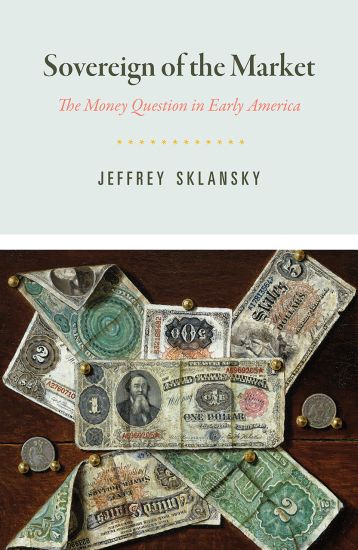
Sovereign of the Market

Sovereign of the Market

Jeffrey Sklansky

University of Chicago Press
2017
sidottu
What should serve as money, who should control its creation and circulation, and according to what rules? For more than two hundred years, the "money question" shaped American social thought, becoming a central subject of political debate and class conflict. Sovereign of the Market reveals how and why this happened. Jeffrey Sklansky's wide-ranging study comprises three chronological parts devoted to major episodes in the career of the money question. First, the fight over the innovation of paper money in colonial New England. Second, the battle over the development of commercial banking in the new United States. And third, the struggle over the national banking system and the international gold standard in the late nineteenth century. Each section explores a broader problem of power that framed each conflict in successive phases of capitalist development: circulation, representation, and association. The three parts also encompass intellectual biographies of opposing reformers for each period, shedding new light on the connections between economic thought and other aspects of early American culture. The result is a fascinating, insightful, and deeply considered contribution to the history of capitalism.
Legacies of Losing in American Politics

Legacies of Losing in American Politics

Jeffrey K. Tulis; Nicole Mellow

University of Chicago Press
2018
sidottu
American politics is typically a story about winners. The fading away of defeated politicians and political movements is a feature of American politics that ensures political stability and a peaceful transition of power. But American history has also been built on defeated candidates, failed presidents, and social movements that at pivotal moments did not dissipate as expected but instead persisted and eventually achieved success for the loser's ideas and preferred policies. With Legacies of Losing in American Politics, Jeffrey K. Tulis and Nicole Mellow rethink three pivotal moments in American political history: the founding, when anti-Federalists failed to stop the ratification of the Constitution; the aftermath of the Civil War, when President Andrew Johnson's plan for restoring the South to the Union was defeated; and the 1964 presidential campaign, when Barry Goldwater's challenge to the New Deal order was soundly defeated by Lyndon B. Johnson. In each of these cases, the very mechanisms that caused the initial failures facilitated their eventual success. After the dust of the immediate political defeat settled, these seemingly discredited ideas and programs disrupted political convention by prevailing, often subverting, and occasionally enhancing constitutional fidelity. Tulis and Mellow present a nuanced story of winning and losing and offer a new understanding of American political development as the interweaving of opposing ideas.
Legacies of Losing in American Politics

Legacies of Losing in American Politics

Jeffrey K. Tulis; Nicole Mellow

University of Chicago Press
2018
nidottu
American politics is typically a story about winners. The fading away of defeated politicians and political movements is a feature of American politics that ensures political stability and a peaceful transition of power. But American history has also been built on defeated candidates, failed presidents, and social movements that at pivotal moments did not dissipate as expected but instead persisted and eventually achieved success for the loser's ideas and preferred policies. With Legacies of Losing in American Politics, Jeffrey K. Tulis and Nicole Mellow rethink three pivotal moments in American political history: the founding, when anti-Federalists failed to stop the ratification of the Constitution; the aftermath of the Civil War, when President Andrew Johnson's plan for restoring the South to the Union was defeated; and the 1964 presidential campaign, when Barry Goldwater's challenge to the New Deal order was soundly defeated by Lyndon B. Johnson. In each of these cases, the very mechanisms that caused the initial failures facilitated their eventual success. After the dust of the immediate political defeat settled, these seemingly discredited ideas and programs disrupted political convention by prevailing, often subverting, and occasionally enhancing constitutional fidelity. Tulis and Mellow present a nuanced story of winning and losing and offer a new understanding of American political development as the interweaving of opposing ideas.
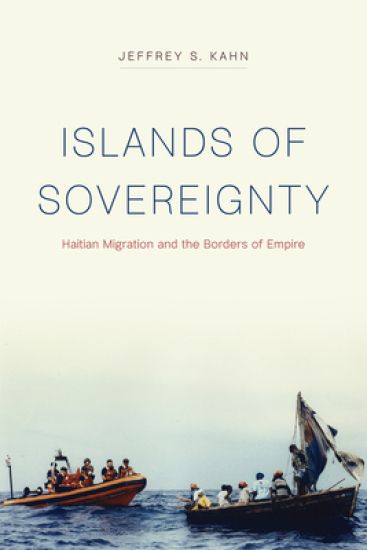
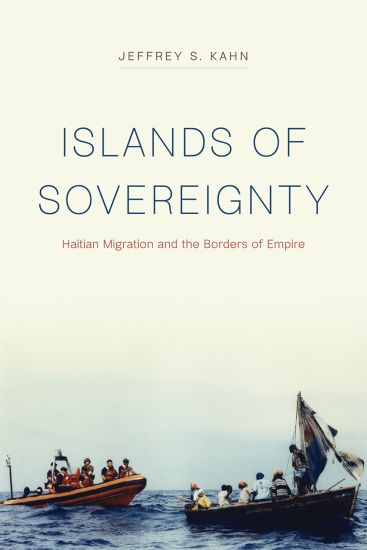
Islands of Sovereignty

Islands of Sovereignty

Jeffrey S Kahn

University of Chicago Press
2019
sidottu
In Islands of Sovereignty, anthropologist and legal scholar Jeffrey S. Kahn offers a new interpretation of the transformation of US borders during the late twentieth century and its implications for our understanding of the nation-state as a legal and political form. Kahn takes us on a voyage into the immigration tribunals of South Florida, the Coast Guard vessels patrolling the northern Caribbean, and the camps of Guantánamo Bay—once the world’s largest US-operated migrant detention facility—to explore how litigation concerning the fate of Haitian asylum seekers gave birth to a novel paradigm of offshore oceanic migration policing. Combining ethnography—in Haiti, at Guantánamo, and alongside US migration patrols in the Caribbean—with in-depth archival research, Kahn expounds a nuanced theory of liberal empire’s dynamic tensions and its racialized geographies of securitization. An innovative historical anthropology of the modern legal imagination, Islands of Sovereignty forces us to reconsider the significance of the rise of the current US immigration border and its relation to broader shifts in the legal infrastructure of contemporary nation-states across the globe.
Islands of Sovereignty

Islands of Sovereignty

Jeffrey S Kahn

University of Chicago Press
2018
pokkari
In November 1978, a group of Haitians sailed their small wooden vessel into the harbor of the US Naval Station at Guantánamo Bay. After replenishing their stores of food and water, they departed with the blessing of the base commander and continued toward the Florida Coast in search of asylum. Far from unusual, this voyage was one of many that unfolded across an open Caribbean seascape in which Guantánamo served as a waypoint in a larger odyssey of oceanic migration. By the early 1990s, these unimpeded sea routes gave way to a virtually impenetrable wall of Coast Guard cutters while Guantánamo itself transformed into the largest US-operated migrant detention center in the world. Islands of Sovereignty is the first book to examine the history of this new maritime border and how it emerged from decades of litigation struggles over the treatment of Haitian asylum seekers in the United States. Jeffrey S. Kahn explores how a series of skirmishes in the South Florida offices of the US immigration bureaucracy became something much more—a fight for the soul of immigration policing in the United States that would eventually remake the asylum adjudication landscape on a global scale. Combining fieldwork with a wide array of historical sources, Kahn seamlessly weaves together anthropology and law in an ambitious account of liberal empire’s geographies of securitization. A novel historical ethnography of the modern legal imagination, Islands of Sovereignty offers new ways of thinking through border control in the United States and elsewhere and the political forms it continues to generate into the present.
In the House of the Hangman

In the House of the Hangman

Jeffrey K. Olick

University of Chicago Press
2005
sidottu
The central question for both the victors and the vanquished of World War II was just how widely the stain of guilt would spread over Germany. Political leaders and intellectuals on both sides of the conflict debated whether support for National Socialism tainted Germany's entire population and thus discredited the nation's history and culture. The tremendous challenge that Allied officials and German thinkers faced as the war closed, then, was how to limn a post-war German identity that accounted for National Socialism without irrevocably damning the idea and character of Germany as a whole. "In the House of the Hangman" chronicles this delicate process, exploring key debates about the Nazi past and German future during the later years of World War II and its aftermath. What did British and American leaders think had given rise to National Socialism, and how did these beliefs shape their intentions for occupation? What rhetorical and symbolic tools did Germans develop for handling the insidious legacy of Nazism? Considering these and other questions, Jeffrey K. Olick explores the processes of accommodation and rejection that Allied plans for a new German state inspired among the German intelligentsia. He also examines heated struggles over the value of Germany's institutional and political heritage. Along the way, he demonstrates how the moral and political vocabulary for coming to terms with National Socialism in Germany has been of enduring significance - as a crucible not only of German identity but also of contemporary thinking about memory and social justice more generally. Given the current war in Iraq, the issues contested during Germany's abjection and reinvention - how to treat a defeated enemy, how to place episodes within wider historical trajectories, how to distinguish varieties of victimhood - are as urgent today as they were sixty years ago, and "In the House of the Hangman" offers readers an invaluable historical perspective on these critical questions.
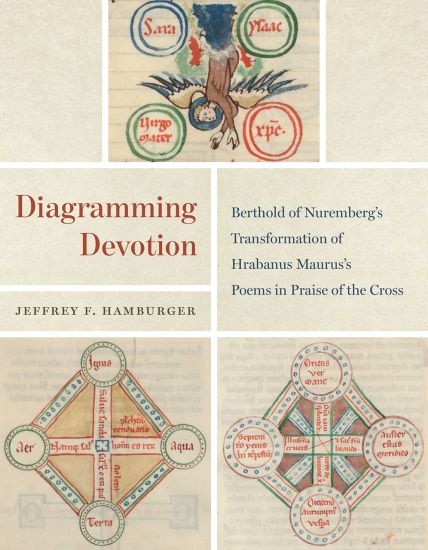
Diagramming Devotion

Diagramming Devotion

Jeffrey F Hamburger

University of Chicago Press
2020
sidottu
During the European Middle Ages, diagrams provided a critical tool of analysis in cosmological and theological debates. In addition to drawing relationships among diverse areas of human knowledge and experience, diagrams themselves generated such knowledge in the first place. In Diagramming Devotion, Jeffrey F. Hamburger examines two monumental works that are diagrammatic to their core: a famous set of picture poems of unrivaled complexity by the Carolingian monk Hrabanus Maurus, devoted to the praise of the cross, and a virtually unknown commentary on Hrabanus's work composed almost five hundred years later by the Dominican friar Berthold of Nuremberg. Berthold's profusely illustrated elaboration of Hrabnus translated his predecessor's poems into a series of almost one hundred diagrams. By examining Berthold of Nuremberg's transformation of a Carolingian classic, Hamburger brings modern and medieval visual culture into dialog, traces important changes in medieval visual culture, and introduces new ways of thinking about diagrams as an enduring visual and conceptual model.
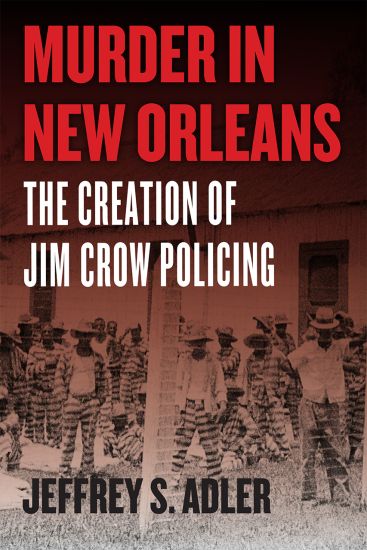
Murder in New Orleans

Murder in New Orleans

Jeffrey S Adler

University of Chicago Press
2019
sidottu
New Orleans in the 1920s and '30s was a deadly place. In 1925, the city's homicide rate was six times that of New York City and twelve times that of Boston, despite having a fraction of the population. Jeffrey S. Adler has explored every homicide officially recorded in New Orleans between 1925 and 1940--over two thousand in all--scouring police and autopsy reports, old interviews, and crumbling newspapers. More than simply quantifying these cases, Adler places them in larger contexts--legal, political, cultural, and demographic--and emerges with a tale of racism, urban violence, and vicious policing that has startling relevance for today. Murder in New Orleans shows how whites were convicted of homicide at far higher rates than blacks leading up the mid-1920s. But by the end of the next decade, this pattern had reversed completely, despite an overall plummet in municipal crime rates. This sharp rise in arrests was compounded by the increasingly harsh treatment of black subjects by New Orleans police, marked by acts of extreme brutality. Adler also explores counter-intuitive trends in violence, particularly how murder soared during the flush times of the Roaring Twenties, how it plummeted during the Great Depression, and how the vicious response to African American crime occurred as such violence plunged in frequency, revealing that the city's cycle of racial policing and punishment was connected less to actual patterns of wrongdoing than to the national enshrinement of Jim Crow. Rather than some hyperviolent outlier, this Louisiana city was a harbinger of the endemic racism at the center of today's criminal justice state. Murder in New Orleans lays bare how decades-old crimes, and the racially motivated cruelty of the official response, once again have baleful resonance in the age of Black Lives Matter.
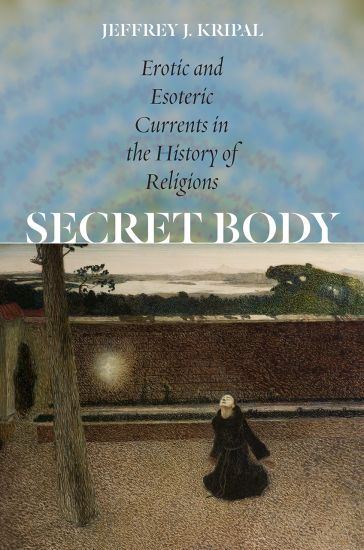
Secret Body

Secret Body

Jeffrey J Kripal

University of Chicago Press
2019
pokkari
Over the course of his twenty-five-year career, Jeffrey J. Kripal's study of religion has had two major areas of focus: the erotic expression of mystical experience and the rise of the paranormal in American culture. This book brings these two halves together in surprising ways through a blend of memoir, manifesto, and anthology, drawing new connections between these two realms of human experience and revealing Kripal's body of work to be a dynamic whole that has the potential to renew and reshape the study of religion. Kripal tells his story, biographically, historically and politically contextualizing each of the six books of his Chicago corpus, from Kali's Child to Mutants and Mystics, all the while answering his censors and critics and exploring new implications of his thought. In the process, he begins to sketch out a speculative "new comparativism" in twenty theses. The result is a new vision for the study of religion, one that takes in the best of the past, engages with outside critiques from the sciences and the humanities, and begins to blaze a new positive path forward. A major work decades in the making, Secret Body will become a landmark in the study of religion.