Kirjojen hintavertailu. Mukana 12 196 819 kirjaa ja 12 kauppaa.

Kirjahaku

Etsi kirjoja tekijän nimen, kirjan nimen tai ISBN:n perusteella.

1000 tulosta hakusanalla Joel Colón-Ríos

Ethical Knowledge

Ethical Knowledge

Joel J Kupperman

Routledge
2002
sidottu
First published in 2002. This is Volume VIII of the Library Psychology 12 volume series. The philosophical problem addressed by this book is perhaps the one most relevant to the life of the average unphilosophical man. It can be argued that every man assumes a solution in his life. Much of the first half of this book is historical or exploratory. The second half is highly analytical, examining the relations between ethical claims and other kinds of claims that generally are accorded cognitive status. This is designed to be work of a kind with which advanced students in philosophy are most familiar.
Why Ireland Starved

Why Ireland Starved

Joel Mokyr

Routledge
2005
sidottu
Technical changes in the first half of the nineteenth century led to unprecedented economic growth and capital formation throughout Western Europe; and yet Ireland hardly participated in this process at all. While the Northern Atlantic Economy prospered, the Great Irish Famine of 1845–50 killed a million and a half people and caused hundreds of thousands to flee the country. Why the Irish economy failed to grow, and ‘why Ireland starved’ remains an unresolved riddle of economic history.Professor Mokyr maintains that the ‘Hungry Forties’ were caused by the overall underdevelopment of the economy during the decades which preceded the famine. In Why Ireland Starved he tests various hypotheses that have been put forward to account for this backwardness. He dismisses widespread arguments that Irish poverty can be explained in terms of over-population, an evil land system or malicious exploitation by the British. Instead, he argues that the causes have to be sought in the low productivity of labor and the insufficient formation of physical capital – results of the peculiar political and social structure of Ireland, continuous conflicts between landlords and tenants, and the rigidity of Irish economic institutions.Mokyr’s methodology is rigorous and quantitative, in the tradition of the New Economic History. It sets out to test hypotheses about the causal connections between economic and non-economic phenomena. Irish history is often heavily coloured by political convictions: of Dutch-Jewish origin, trained in Israel and working in the United States. Mokyr brings to this controversial field not only wide research experience but also impartiality and scientific objectivity.The book is primarily aimed at numerate economic historians, historical demographers, economists specializing in agricultural economics and economic development and specialists in Irish and British nineteenth-century history. The text is, nonetheless, free of technical jargon, with the more complex material relegated to appendixes. Mokyr’s line of reasoning is transparent and has been easily accessible and useful to readers without graduate training in economic theory and econometrics since ists first publication in 1983.
International Law and the Use of Armed Force
Since the UN Charter came into effect in 1945, there have been numerous incidents in which one or more of the five major powers (at least arguably) violated the Charter's Article 2(4) prohibition of force. Such incidents notwithstanding, this book demonstrates how the Charter restrains the major powers' military actions. As an instrument of international order, the Charter provides a framework of legal rules restricting the use of armed force. Although these rules are subject to auto-interpretation by the major powers (as a consequence of their veto), they create an expectation of compliance that subjects the major powers' military actions to international scrutiny. To reduce the likelihood of resistance from states threatened by such actions, major powers exercise prudential restraint, altering the manner and timing of their military actions in accordance with the legal arguments offered to justify those actions as consistent with the Charter and therefore not threatening to the existing international order. The book evaluates the efficacy of the Charter using large-N methods and five case studies: US intervention in the Caribbean, 1953–61; Anglo- French intervention in Egypt, 1956; Soviet intervention in Hungary, 1956; US–British intervention in Iraq, 1990–98; and US–British intervention in Iraq, 1999–2003. The book's extensive focus on the two Iraq cases provides a basis for timely evaluation of the continuing salience and possible reforms of the UN Charter system. This book will be of much interest to students of security studies, the UN, international law, and international relations.
The Making of Anti-Muslim Protest
Activism in any social movement group is, as Deborah Gould observes, a project of collective ‘world-making’. It is about changing the world out there by influencing policy and public opinion, but is also about the way it transforms the lives of participants – activists generate new identities, cultures, social ties, rich and varied emotional experiences and interpretations of the world around them. Movements are more likely to be able to attract and sustain support when as projects of collective world-making they feel compelling to activists and would-be activists.In this book Busher explores what has made activism in the English Defence League (EDL), an anti-Muslim protest movement that has staged demonstrations across the UK since 2009, so compelling to those who have chosen to march under its banner. Based on sixteen months of overt observation with grassroots activists, he explores how people became involved with the group; how they forged and intensified belief in the EDL cause; how they negotiated accusations that they were just another racist, far right group; and how grassroots EDL activism began to unravel during the course of 2011 but did not do so altogether. Providing a fresh insight as to how contemporary anti-minority protest movements work on the inside, this book will be of interest to students, scholars and activists working in the areas of British politics, extremism, social movements, community relations and current affairs more generally.
Corporatism, Social Control, and Cultural Domination in Education: From the Radical Right to Globalization
Starting with the 1972 publication of his seminal work, Education and the Rise of the Corporate State, Joel Spring has been documenting and analyzing the politics of knowledge and education. Throughout his work he has explored the attempts to use education to advance the economic and political interests of dominant groups. The general term he uses for the relationship between schools and power is "ideological management." His scholarly work first looked at the influence on American schooling of business and economic doctrines embodied in human capital theories and consumerism. The next step in his exploration of the politics of knowledge was to examine these issues in the context of globalization, leading to a proposed educational rights amendment to national constitutions and a new paradigm for education, both of which might ensure that schools are protected from ideological management by economic and political elites. Spring’s indigenous background has strongly shaped his interest in the political and economic goals of schooling, particularly the attempts of those in power to use schools to destroy indigenous languages and cultures. In this collection, Spring brings together 10 of his key writings, providing an overview not just of his own career but the larger contexts in which it is situated. In the Introduction he reviews the evolution and scope of his work and his earlier arguments and reflects on its central themes, which are reflected in the writings selected for this volume.In the World Library of Educationalists, international scholars themselves compile career-long collections of what they judge to be their finest pieces – extracts from books, key articles, salient research findings, major theoretical and/practical contributions – so the world can read them in a single manageable volume. Readers will be able to follow the themes and strands of their work and see their contribution to the development of a field, as well as the development of the field itself. Contributors to the series include: Michael Apple, James A. Banks, Stephen J. Ball, Elliot Eisner, Howard Gardner, John Gilbert, Ivor F. Goodson, Peter Jarvis.
Why Ireland Starved

Why Ireland Starved

Joel Mokyr

Routledge
2010
nidottu
Technical changes in the first half of the nineteenth century led to unprecedented economic growth and capital formation throughout Western Europe; and yet Ireland hardly participated in this process at all. While the Northern Atlantic Economy prospered, the Great Irish Famine of 1845–50 killed a million and a half people and caused hundreds of thousands to flee the country. Why the Irish economy failed to grow, and ‘why Ireland starved’ remains an unresolved riddle of economic history.Professor Mokyr maintains that the ‘Hungry Forties’ were caused by the overall underdevelopment of the economy during the decades which preceded the famine. In Why Ireland Starved he tests various hypotheses that have been put forward to account for this backwardness. He dismisses widespread arguments that Irish poverty can be explained in terms of over-population, an evil land system or malicious exploitation by the British. Instead, he argues that the causes have to be sought in the low productivity of labor and the insufficient formation of physical capital – results of the peculiar political and social structure of Ireland, continuous conflicts between landlords and tenants, and the rigidity of Irish economic institutions.Mokyr’s methodology is rigorous and quantitative, in the tradition of the New Economic History. It sets out to test hypotheses about the causal connections between economic and non-economic phenomena. Irish history is often heavily coloured by political convictions: of Dutch-Jewish origin, trained in Israel and working in the United States. Mokyr brings to this controversial field not only wide research experience but also impartiality and scientific objectivity.The book is primarily aimed at numerate economic historians, historical demographers, economists specializing in agricultural economics and economic development and specialists in Irish and British nineteenth-century history. The text is, nonetheless, free of technical jargon, with the more complex material relegated to appendixes. Mokyr’s line of reasoning is transparent and has been easily accessible and useful to readers without graduate training in economic theory and econometrics since ists first publication in 1983.
Young Men in Prison

Young Men in Prison

Joel Harvey

Routledge
2012
nidottu
This book examines how young men between the ages of 18 and 21 make the transition to prison life and how they adapt practically, socially and psychologically. Based on extensive research in Feltham Young Offenders Institution, this book examines in particular the role of social support, both inside and outside prison, in relation to their adaptation, along with the constructs of trust, locus of control, and safety. It concentrates both on the successful adaptation to prison life and on the experience of individuals who have difficulties in adapting; it pays special attention to those who harm themselves whilst in prison. It is the first study to provide an in-depth account of the psycho-social experience of imprisonment for young adults. Understanding this early stage of imprisonment is of major importance to policy makers and practitioners in the light of the fact that up to a half of completed suicides occur within the first month in prison.
Ethics without Morals

Ethics without Morals

Joel Marks

Routledge
2012
sidottu
In this volume, Marks offers a defense of amorality as both philosophically justified and practicably livable. In so doing, the book marks a radical departure from both the new atheism and the mainstream of modern ethical philosophy. While in synch with their underlying aim of grounding human existence in a naturalistic metaphysics, the book takes both to task for maintaining a complacent embrace of morality. Marks advocates wiping the slate clean of outdated connotations by replacing the language of morality with a language of desire.The book begins with an analysis of what morality is and then argues that the concept is not instantiated in reality. Following this, the question of belief in morality is addressed: How would human life be affected if we accepted that morality does not exist? Marks argues that at the very least, a moralist would have little to complain about in an amoral world, and at best we might hope for a world that was more to our liking overall. An extended look at the human encounter with nonhuman animals serves as an illustration of amorality’s potential to make both theoretical and practical headway in resolving heretofore intractable ethical problems.
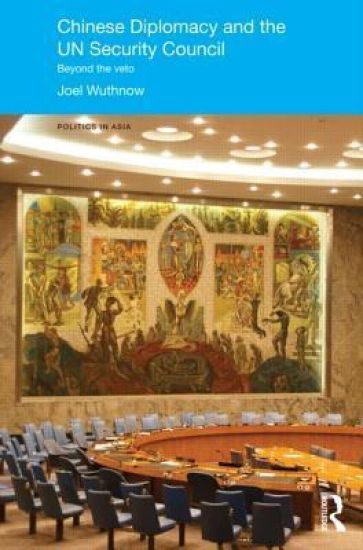
Chinese Diplomacy and the UN Security Council
China has emerged in the 21st century as a sophisticated, and sometimes contentious, actor in the United Nations Security Council. This is evident in a range of issues, from negotiations on Iran’s nuclear program to efforts to bring peace to Darfur. Yet China’s role as a veto-holding member of the Council has been left unexamined. How does it formulate its positions? What interests does it seek to protect? How can the international community encourage China to be a contributor, and not a spoiler? This book is the first to address China’s role and influence in the Security Council. It develops a picture of a state struggling to find a way between the need to protect its stakes in a number of ‘rogue regimes’, on one hand, and its image as a responsible rising power on the world stage, on the other. Negotiating this careful balancing act has mixed implications, and means that whilst China can be a useful ally in collective security, it also faces serious constraints. Providing a window not only into China’s behaviour, but into the complex world of decision-making at the UNSC in general, the book covers a number of important cases, including North Korea, Iran, Darfur, Burma, Zimbabwe, Libya and Syria. Drawing on extensive interviews with participants from China, the US and elsewhere, this book considers not only how the world affects China, but how China impacts the world through its behaviour in a key international institution. As such, it will be of great interest to students and scholars working in the fields of Chinese politics and Chinese international relations, as well as politics, international relations, international institutions and diplomacy more broadly.
A Contemporary Look at Organizational Justice
This book is intended to be an important contribution to scholars with an interest in the burgeoning area of theory and research on organizational justice. Moreover, the ideas described in the book forge connections between justice literature and other prominent bodies of knowledge in organizational and social psychology, including those pertaining to trust, social identity, attribution theory, regulatory focus theory and cross-cultural differences in people’s beliefs and behaviors. Whereas the book focuses mainly on recent theory and research in organizational justice, it also connects with and contributes to a host of other literatures in organizational and social psychology and presents this material in a very accessible way.
Experiencing Phenomenology

Experiencing Phenomenology

Joel Smith

Routledge
2016
sidottu
Phenomenology is the general study of the structure of experience, from thought and perception, to self-consciousness, bodily-awareness, and emotion. It is both a fundamental area of philosophy and a major methodological approach within the human sciences.Experiencing Phenomenology is an outstanding introduction to phenomenology. Approaching fundamental phenomenological questions from a critical, systematic perspective whilst paying careful attention to classic phenomenological texts, the book possesses a clarity and breadth that will be welcomed by students coming to the subject for the first time.Accessibly written, each chapter relates classic phenomenological discussions to contemporary issues and debates in philosophy. The following key topics are introduced and explained: the methodological foundations of phenomenologyintentionality as the ‘mark of the mental’ and the problem of non-existent objects perceptual experience, including our awareness of things, properties, and eventsthe experience of body, self, and othersimaginative and emotional experiencedetailed discussions of classical phenomenological texts, including:Brentano's Psychology from an Empirical Standpoint Husserl's Logical Investigations, Cartesian Meditations, and On the Phenomenology of the Consciousness of Internal Time Heidegger’s History of The Concept of Time, and Being and Time Stein's On the Problem of Empathy Sartre's Transcendence of the Ego, Sketch for a Theory of the Emotions, and The Imaginary Merleau-Ponty's Phenomenology of Perception. Also included is a glossary of key terms and suggestions for further reading, making this book an ideal starting point for anyone new to the study of phenomenology, not only in Philosophy but related disciplines such as Psychology and Sociology.
Experiencing Phenomenology

Experiencing Phenomenology

Joel Smith

Routledge
2016
nidottu
Phenomenology is the general study of the structure of experience, from thought and perception, to self-consciousness, bodily-awareness, and emotion. It is both a fundamental area of philosophy and a major methodological approach within the human sciences.Experiencing Phenomenology is an outstanding introduction to phenomenology. Approaching fundamental phenomenological questions from a critical, systematic perspective whilst paying careful attention to classic phenomenological texts, the book possesses a clarity and breadth that will be welcomed by students coming to the subject for the first time.Accessibly written, each chapter relates classic phenomenological discussions to contemporary issues and debates in philosophy. The following key topics are introduced and explained: the methodological foundations of phenomenologyintentionality as the ‘mark of the mental’ and the problem of non-existent objects perceptual experience, including our awareness of things, properties, and eventsthe experience of body, self, and othersimaginative and emotional experiencedetailed discussions of classical phenomenological texts, including:Brentano's Psychology from an Empirical Standpoint Husserl's Logical Investigations, Cartesian Meditations, and On the Phenomenology of the Consciousness of Internal Time Heidegger’s History of The Concept of Time, and Being and Time Stein's On the Problem of Empathy Sartre's Transcendence of the Ego, Sketch for a Theory of the Emotions, and The Imaginary Merleau-Ponty's Phenomenology of Perception. Also included is a glossary of key terms and suggestions for further reading, making this book an ideal starting point for anyone new to the study of phenomenology, not only in Philosophy but related disciplines such as Psychology and Sociology.
Globalization of Education

Globalization of Education

Joel Spring

Routledge
2014
sidottu
Continuing Joel Spring’s reportage and analysis of the intersection of global forces and education, this text offers a comprehensive overview and synthesis of current research, theories, and models related to the topic. Written in his signature clear, narrative style, Spring introduces the processes, institutions, and forces by which schooling has been globalized and examines the impact of these forces on schooling in local contexts. Significant conceptual frameworks are added to this Second Edition, specifically the “economization of education,” “corporatization of education” and the “audit state.” These concepts are embedded in the global educational plans of major organizations such as the World Bank, the Organization for Economic Development and Cooperation (OECD), World Economic Forum, and multinational corporations. Globalization of Education, Second Edition features new and updated information on • The World Bank• OECD and the United Nations• The World Trade Organization and the Global Culture of Higher Education• Corporatization of Global Education• Religious and Indigenous Education Models• The Global Workforce: Migration and the Talent Auction• Globalization and Complex Thought
Globalization of Education

Globalization of Education

Joel Spring

Routledge
2014
nidottu
Continuing Joel Spring’s reportage and analysis of the intersection of global forces and education, this text offers a comprehensive overview and synthesis of current research, theories, and models related to the topic. Written in his signature clear, narrative style, Spring introduces the processes, institutions, and forces by which schooling has been globalized and examines the impact of these forces on schooling in local contexts. Significant conceptual frameworks are added to this Second Edition, specifically the “economization of education,” “corporatization of education” and the “audit state.” These concepts are embedded in the global educational plans of major organizations such as the World Bank, the Organization for Economic Development and Cooperation (OECD), World Economic Forum, and multinational corporations. Globalization of Education, Second Edition features new and updated information on • The World Bank• OECD and the United Nations• The World Trade Organization and the Global Culture of Higher Education• Corporatization of Global Education• Religious and Indigenous Education Models• The Global Workforce: Migration and the Talent Auction• Globalization and Complex Thought
International Law and the Use of Armed Force
Since the UN Charter came into effect in 1945, there have been numerous incidents in which one or more of the five major powers (at least arguably) violated the Charter's Article 2(4) prohibition of force. Such incidents notwithstanding, this book demonstrates how the Charter restrains the major powers' military actions. As an instrument of international order, the Charter provides a framework of legal rules restricting the use of armed force. Although these rules are subject to auto-interpretation by the major powers (as a consequence of their veto), they create an expectation of compliance that subjects the major powers' military actions to international scrutiny. To reduce the likelihood of resistance from states threatened by such actions, major powers exercise prudential restraint, altering the manner and timing of their military actions in accordance with the legal arguments offered to justify those actions as consistent with the Charter and therefore not threatening to the existing international order.The book evaluates the efficacy of the Charter using large-N methods and five case studies: US intervention in the Caribbean, 1953–61; Anglo- French intervention in Egypt, 1956; Soviet intervention in Hungary, 1956; US–British intervention in Iraq, 1990–98; and US–British intervention in Iraq, 1999–2003. The book's extensive focus on the two Iraq cases provides a basis for timely evaluation of the continuing salience and possible reforms of the UN Charter system.This book will be of much interest to students of security studies, the UN, international law, and international relations.
The Politics of American Education
Turning his distinctive analytical lens to the politics of American education, Joel Spring looks at contemporary educational policy issues from theoretical, practical, and historical perspectives. This comprehensive overview documents and explains who influences educational policy and how, bringing to life the realities of schooling in the 21st century and revealing the ongoing ideological struggles at play. Coverage includes the influence of global organizations on American school policies and the impact of emerging open source and other forms of electronic textbooks.Thought-provoking, lucid, original in its conceptual framework and rich with engaging examples from the real world, this text is timely and useful for understanding the big picture and the micro-level intricacies of the multiple forces at work in controlling U.S. public schools . It is the text of choice for any course that covers or addresses the politics of American education.Companion Website: The interactive Companion Website accompanying this text includes relevant data, public domain documents, YouTube links, and links to websites representing political organizations and interest groups involved in education.