

Kirjahaku
Etsi kirjoja tekijän nimen, kirjan nimen tai ISBN:n perusteella.
1000 tulosta hakusanalla John Collier

John Milton and the Transformation of Ancient Epic
Charles Martindale
Barnes Noble Books-Imports, Div of Rowman Littlefield Pubs., Inc
1986
sidottu
In this book Mr. Martindale examines the use Milton made of ancient poets, and the way they influenced his style. Some surprising ingredients in the style of ^IParadise Lost are uncoveredóHorace, for example. The book is a rare combination of scholarship, both classical and English, and critical judgment.^R
John Donne
WW Norton Co
2007
sidottu
A vivid portrait of the life and work of the English establishment poet places his achievements against a backdrop of a rapidly transforming world and offers insight into how his writings reflect such subjects as his crises of desire and devotion, the outbreak of plague, and life within Bankside taverns.
Traditionally, John the Baptist is seen as little more than an opening act the voice crying in the wilderness in the great Christian drama. In presenting the epic of John s life, novelist Brooks Hansen draws on an extraordinary array of inspirations, from the works of Caravaggio, Bach, and Oscar Wilde to the histories of Josephus, the canonical gospels, the Gnostic gospels, and the sacred texts of those followers of John who never accepted Jesus as Messiah: the Mandeans.Gripping as literary historical fiction, and fascinating as a diligent exploration of ancient and modern sources, this book brings to eye-opening life the richly textured world populated by the magnificently sordid, calculating, and reckless Herods, their families, and their courts into which both John and Jesus were born. John the Baptizer is a captivating tapestry of power and dissent, ambition and self-sacrifice, worldly and otherworldly desire, faith, and doubt."
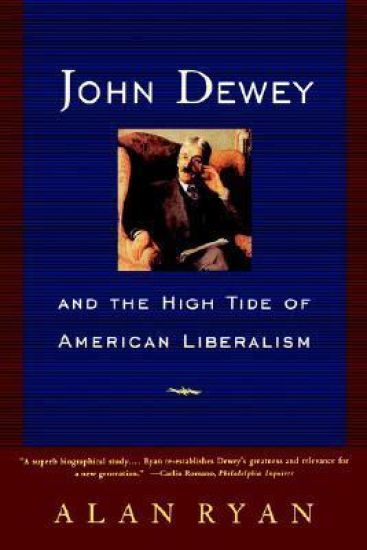
When John Dewey died in 1952, he was memorialized as America's most famous philosopher, revered by liberal educators and deplored by conservatives, but universally acknowledged as his country's intellectual voice. Many things conspired to give Dewey an extraordinary intellectual eminence: He was immensely long-lived and immensely prolific; he died in his ninety-third year, and his intellectual productivity hardly slackened until his eighties. Professor Alan Ryan offers new insights into Dewey's many achievements, his character, and the era in which his scholarship had a remarkable impact. He investigates the question of what an American audience wanted from a public philosopher - from an intellectual figure whose credentials came from his academic standing as a philosopher, but whose audience was much wider than an academic one. Ran argues that Dewey's "religious" outlook illuminates his politics much more vividly than it does the politics of religion as ordinarily conceived. He examines how Dewey fit into the American radical tradition, how he was and was not like his transatlantic contemporaries, why he could for so long practice a form of philosophical inquiry that became unfashionable in England after 1914 at the latest.

John C. Calhoun was a rare figure in American history: a lifelong politician who was also a profound political philosopher. Vice president under John Quincy Adams and Andrew Jackson, he was a dominant presence in the U.S. Senate. Now comes a major new biography from the author of Daniel Webster.
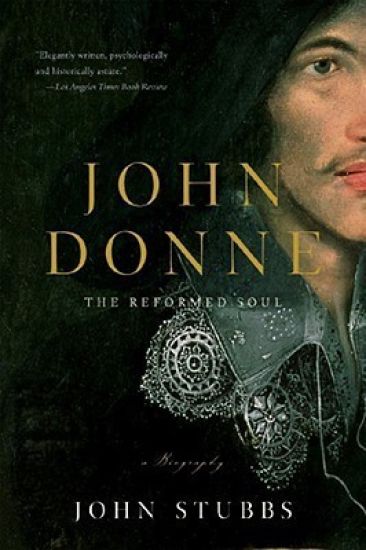
From scholar to buccaneer, from outcast to establishment figure, John Donne emerged as one of the greatest English poets. Following Donne from Plague-ridden streets to palaces, from taverns to the pulpit of St Paul's, John Stubbs's "exemplary literary biography" (Harold Bloom) is a vivid portrait of an extraordinary writer and his country at a time of bewildering and cruel transformation.
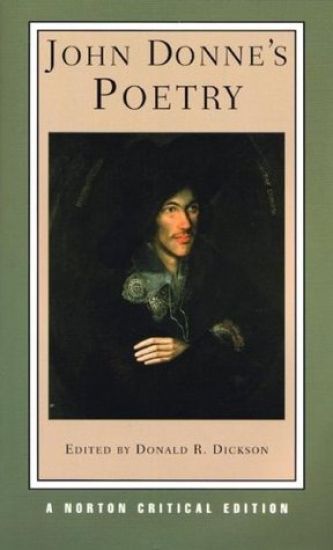
The texts reprinted in this new Norton Critical Edition have been scrupulously edited and are from the Westmoreland manuscript where possible, collated against the most important families of Donne manuscripts—the Cambridge Belam, the Dublin Trinity, and the O’Flahertie—and compared with all seven seventeenth-century printed editions of the poems as well as all major twentieth-century editions. “Criticism” is divided into four sections and represents the best criticism and interpretation of Donne’s writing: “Donne and Metaphysical Poetry” includes seven seventeenth-century views by contemporaries of Donne such as Ben Jonson, Thomas Carew, and John Dryden, among others; “Satires, Elegies, and Verse Letters” includes seven selections that offer social and literary context for and insights into Donne’s frequently overlooked early poems; “Songs and Sonnets” features six analyses of Donne’s love poetry; and “Holy Sonnets/Divine Poems” explores Donne’s struggles as a Christian through four authoritative essays. A Chronology of Donne’s life and work, a Selected Bibliography, and an Index of Titles and First Lines are also included.
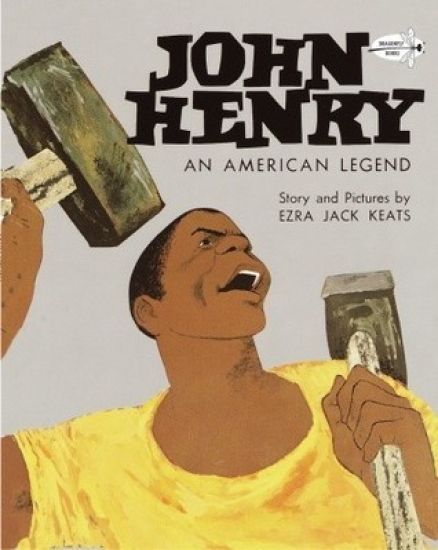
Illus. in full color. The Caldecott Medalist's powerful classic is now reissued in a handsome paperback edition, as well as a library edition. "The heroic figure of John Henry is captured in a simple rhythmic picture book. Dramatic pictures with large bold figures express the feeling of this tall tale."--(starred) School Library Journal.

Edward loves his pet duck more than anything. He raised it from a baby, and now it follows him everywhere&150even to the big fancy hotel in Memphis where he works with his father. Everyone at the Peabody loves to watch that little duck do tricks; why, it can even waddle up and down in time to a John Philip Sousa march, which is why Edward decides to name it John Philip. But one day the hotel owner finds John Philip in his lobby fountain and he is NOT amused. Until Edward has an idea. What if he can train a bevy of ducks to march along behind him, swim in the fountain all day, and then march out every evening? If Edward can do that, the owner tells him, he and John Philip will have a permanent place at the Peabody. But can it really be done? Based on the real-life tradition of the Hotel Peabody Ducks, Patricia Polacco's latest picture book is one of her most charming to date.
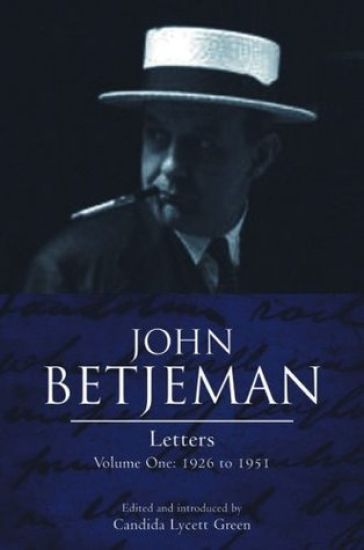
John Betjeman Letters
Methuen Publishing Ltd
2006
nidottu
John Betjeman (1906-1984) was not simply one of the best-loved contemporary English poets but was also one of the best-loved Englishmen of the twentieth century. He was never, nor strove to be, the darling of intellectuals or academics, but by pure chance became the darling of the ordinary man in the street. Volume I of Betjeman's selected letters covers his life from university days through to his period on the staff of The Architectural Review and as editor of the Shell Guides in the thirties; his time as Press Attache in Dublin during the War; and his activities as a broadcaster on radio and television and as a public speaker which established him as an authority and enthusiast in a wide range of fields - literary, artistic, architectural. Volume II covers his life from the age of forty-six when his popularity as poet and broadcaster and as campaigner against the destruction of fine buildings was reaching its height. His correspondents ranged from people in the world of literature and the arts - T. S. Eliot, Cyril Connolly, Evelyn Waugh, Auberon Waugh, John Piper, Philip Larkin and Kingsley Amis, to family and cherished friends - Alan Pryce-Jones, Myfanwy Piper, Nancy Mitford, Osbert Lancaster and later Mary Wilson. He wrote eloquently and passionately on poetry, religion, architecture and town planning and letters to his family recorded adventures in America - gloomy, and Australia - jubilant. His letters are at once serious, comforting, sparkling with humour and sometimes as tumultuous as life itself. In these two volumes, Candida Lycett Green has created a loving portrait of her father, and her notes and introductions to the works serve to amplify her own feelings for a kindly, gentle and universally admired man. This publication coincides with a series of events nationwide to celebrate the centenary of Betjeman's birth on 28 August this year. There is huge media buzz for the centenary. John Murray is reissuing Betjeman's poetry.
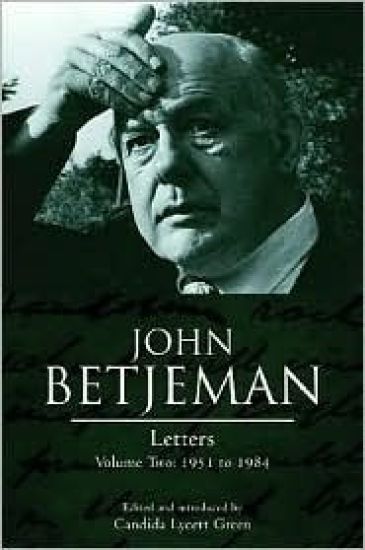
John Betjeman Letters
Methuen Publishing Ltd
2006
nidottu
John Betjeman (1906-1984) was not simply one of the best-loved contemporary English poets but was also one of the best-loved Englishmen of the twentieth century. He was never, nor strove to be, the darling of intellectuals or academics, but by pure chance became the darling of the ordinary man in the street. Volume I of Betjeman's selected letters covers his life from university days through to his period on the staff of The Architectural Review and as editor of the Shell Guides in the thirties; his time as Press Attache in Dublin during the War; and his activities as a broadcaster on radio and television and as a public speaker which established him as an authority and enthusiast in a wide range of fields - literary, artistic, architectural. Volume II covers his life from the age of forty-six when his popularity as poet and broadcaster and as campaigner against the destruction of fine buildings was reaching its height. His correspondents ranged from people in the world of literature and the arts - T. S. Eliot, Cyril Connolly, Evelyn Waugh, Auberon Waugh, John Piper, Philip Larkin and Kingsley Amis, to family and cherished friends - Alan Pryce-Jones, Myfanwy Piper, Nancy Mitford, Osbert Lancaster and later Mary Wilson. He wrote eloquently and passionately on poetry, religion, architecture and town planning and letters to his family recorded adventures in America - gloomy, and Australia - jubilant. His letters are at once serious, comforting, sparkling with humour and sometimes as tumultuous as life itself. In these two volumes, Candida Lycett Green has created a loving portrait of her father, and her notes and introductions to the works serve to amplify her own feelings for a kindly, gentle and universally admired man. This publication coincides with a series of events nationwide to celebrate the centenary of Betjeman's birth on 28 August this year. There is huge media buzz for the centenary. John Murray is reissuing Betjeman's poetry.
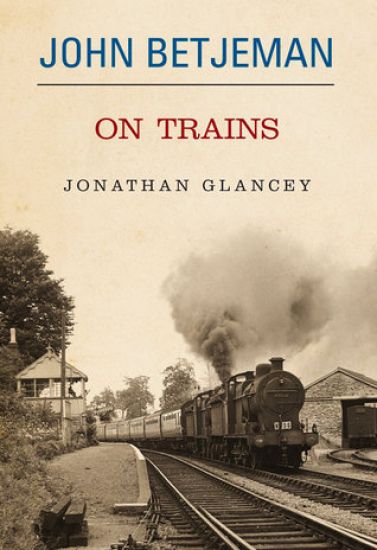
John Betjeman (1906-1984) was not only one of the best-loved Englishmen of the twentieth century, he was also the people's favourite poet and champion of many causes linked to the preservation of Britain's heritage. Whether those causes concerned buildings, bridges or railway branch lines, Betjeman was a feared adversary of bureaucratic excesses. This delightful little book is a celebration of his love of railways and rail travel. Ten letters selected by his daughter, Candida Lycett Green, each describe a journey that he made or that he planned to make or that he planned for a friend or relative. Jonathan Glancey has added his own words to each letter; words that set the scene, bring the letters to life, that describe Betjeman's moods - humorous, mischievous, brisk for business - and above all, remind us of the age of the steam locomotive in Britain and the many stations closed and track miles lost during the sixties and seventies.
John Locke
Routledge
1991
muu
This work is the second in the Routledge Series of Critical Assessments of Leading Political Philosophers. The series presents a comprehensive selection of the critical literature commenting on the life and works of a major political philosopher. John Locke (1632-1704) is crucially important because his political philosophy was the first to develop the principles on which American Independence, the American Constitution and the French Revolution were based. In particular, he stressed the ideas that sovereignty lies with the people; that government is based on a free contract between people which can be subsequently modified; and that as high a degree of religious toleration as possible should be allowed. John Locke also wrote extensively on other aspects of philosophy, on education, and on religion. The present volumes provide students of politics and philosophy with immediate access to Locke's contribution and show how his work has been received and modified by others.
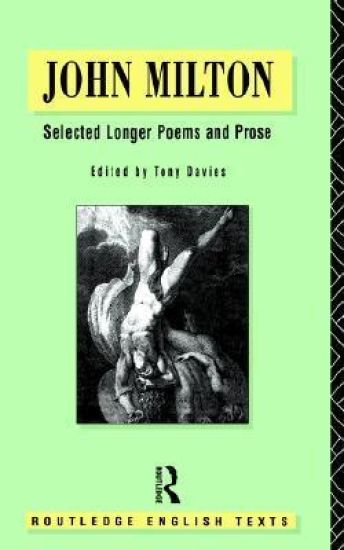
An edition of Milton's later work rk includes the text of six books of Paradise Lost, The History of Britain and the whole of Samson Agonistes. Through his introduction, commmentary and full annotations, Tony Davies sets the works in their political and cultural contexts, and discusses such themes as the `heroic'; sexuality and gender; and Milton's interrogation of the meaning of history.

John Maynard Keynes
Routledge
1982
muu
First published in 1982. This collection is part of the Routledge Critical Assessments of Leading Economists series. John Maynard Keynes: Critical Assessments presents a detailed overview of the analytic writings on John Maynard Keynes from contemporary sources through to the present day. All aspects of Keynes’ writings are considered from both their theoretical and practical applications. The volumes are arranged thematically under the following headings: 1. The Life of John Maynard Keynes and Perspectives on his Thought 2. Keynes’ General Theory of Employment, Interest and Money 3. Keynesian Economic Analysis (Volumes III & IV).
John Dewey
Routledge
1992
muu
Draws together 96 articles to form a comprehensive critical commentary on Dewey's work for those who need to assess his vital contributions to psychology, education, political theory, ethics, epistemology, aesthetics or metaphysics.
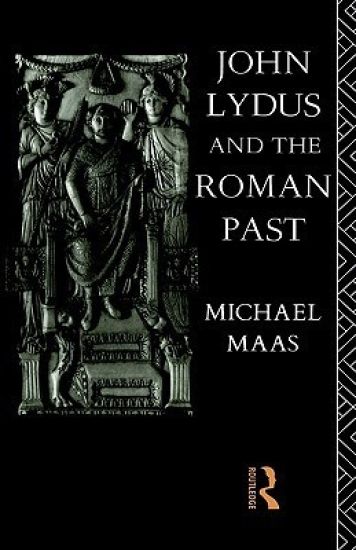
John Lydus and the Roman Past offers a new interpretation of the emergence of Byzantine society as viewed through the eyes of John Lydus, a sixth-century scholar and civil servant. Maas show that control of classical inheritance was politically contested in the reign of Justinian. He demonstrates how the past could be used to convey legitimacy and social definition at a time of profound change.