Kirjojen hintavertailu. Mukana 11 627 483 kirjaa ja 12 kauppaa.

Kirjahaku

Etsi kirjoja tekijän nimen, kirjan nimen tai ISBN:n perusteella.

1000 tulosta hakusanalla John Perry

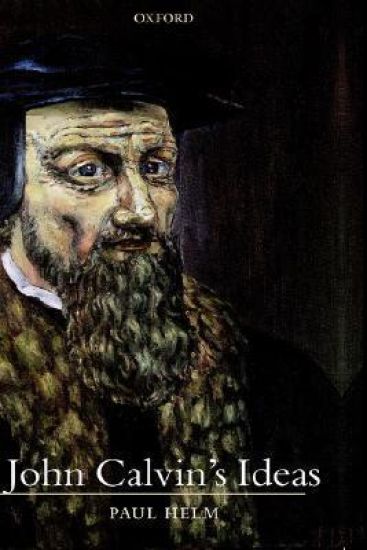
John Calvin's Ideas

John Calvin's Ideas

Paul Helm

Oxford University Press
2004
sidottu
This is a major study of the theological thought of John Calvin, which examines his central theological ideas through a philosophical lens, looking at issues in Metaphysics, Epistemology, and Ethics. The study, the first of its kind, is concerned with how Calvin actually uses philosophical ideas in his work as a theologian and biblical commentator. The book also includes a careful examination of those ideas of Calvin to which the Reformed Epistemologists appeal, to find grounds and precedent for their development of `Reformed Epistemology', notably the sensus divinitatis and the internal testimony of the Holy Spirit.
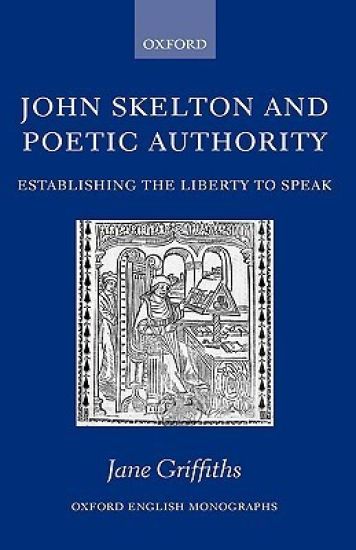
John Skelton and Poetic Authority

John Skelton and Poetic Authority

Jane Griffiths

Clarendon Press
2006
sidottu
John Skelton and Poetic Authority is the first book-length study of Skelton for almost twenty years, and the first to trace the roots of his poetic theory to his practice as a writer and translator. It demonstrates that much of what has been found challenging in his work may be attributed to his attempt to reconcile existing views of the poet's role in society with discoveries about the writing process itself. The result is a highly idiosyncratic poetics that locates the poet's authority decisively within his own person, yet at the same time predicates his 'liberty to speak' upon the existence of an engaged, imaginative audience. Skelton is frequently treated as a maverick, but this book places his theory and practice firmly in the context of later sixteenth as well as fifteenth-century traditions. Focusing on his relations with both past and present readers, it reassess his place in the English literary canon.
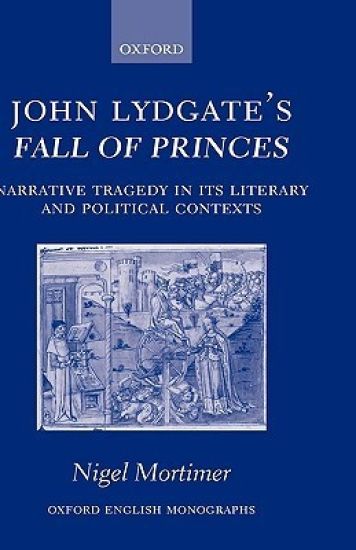
John Lydgate's Fall of Princes

John Lydgate's Fall of Princes

Nigel Mortimer

Clarendon Press
2005
sidottu
The Benedictine monk John Lydgate was the most admired poet of the fifteenth century. He received commissions from some of the most powerful men in the land (including Henry V); he is spoken of with constant admiration; manuscripts of his work are abundant; many of his poems were put into print by England's earliest printers, ensuring that his influence extended well into the sixteenth century. The Fall of Princes, probably the longest poem in the language, is arguably Lydgate's masterwork; yet, until now, it has received only cursory critical attention. This book offers the first extended discussion of the poem. The Fall of Princes accumulates accounts of nearly 500 figures from mythology and history (biblical, classical, and medieval) who have fallen from their positions of fame and power into obscurity, adversity, or poverty. In presenting these tragedies Lydgate probes the causes of the reversal of their fortunes; how far can the caprice of a blind Lady Fortune be blamed? How far are the protagonists themselves responsible for their undoing? Most pressingly of all, why is it that bad things happen to seemingly innocent people? In drawing its conclusions about the downfalls of powerful men and women, Lydgate's poem operates within the popular medieval genre of 'advice to princes' literature. This book locates Lydgate's work within its contexts, exploring the nature of his relationship with the uneasy Lancastrian dynasty during the minority of Henry VI as well as his response to contemporary conflicts between ecclesiastical and secular authority. In particular, this book closely analyses Lydgate's manipulations of his French source text, allowing readers to see in detail for the first time what it is that Lydgate was setting out to achieve. Finally, the book identifies the readership of Lydgate's poem in the fifteenth and sixteenth centuries, discussing its influence on the evolution of narrative tragedy in English.
John Locke: Vindications of the Reasonableness of Christianity
This volume makes available for the first time critical editions of John Locke's A Vindication and A Second Vindication of the Reasonableness of Christianity, in which Locke defends his interpretation of the New Testament and of the Christian Religion against charges of heterodoxy. These works contribute greatly to our understanding of Locke's Christian commitments, which it is now recognized played an important role in shaping his philosophical opinions; they also demonstrate his sophistication as a biblical scholar, and the breadth of his theological learning. The texts are accompanied by a historical introduction explaining the origin of the works and setting them in context. In addition to a textual introduction and critical apparatus, editorial notes help to clarify the text. The volume also includes a French translation and abridgment by Pierre Coste, a Huguenot scholar, who was patronized by Locke and worked on his translations while residing in Locke's household. This definitive edition is an important contribution to an understanding of the development of modern enlightened Christian attitudes.
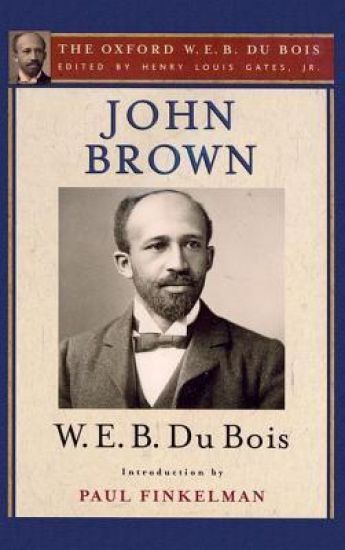
John Brown (The Oxford W. E. B. Du Bois)

John Brown (The Oxford W. E. B. Du Bois)

W. E. B. Du Bois; Paul Finkelman

Oxford University Press Inc
2014
nidottu
W. E. B. Du Bois was a public intellectual, sociologist, and activist on behalf of the African American community. He profoundly shaped black political culture in the United States through his founding role in the NAACP, as well as internationally through the Pan-African movement. Du Bois's sociological and historical research on African-American communities and culture broke ground in many areas, including the history of the post-Civil War Reconstruction period. Du Bois was also a prolific author of novels, autobiographical accounts, innumerable editorials and journalistic pieces, and several works of history. John Brown is W. E. B. Du Bois's groundbreaking political biography that paved the way for his transition from academia to a lifelong career in social activism. This biography is unlike Du Bois's earlier work; it is intended as a work of consciousness-raising on the politics of race. Less important are the historical events of John Brown's life than the political revelations found within the pages of this biography. At the time that he wrote it in 1909, Du Bois had begun his transformation into the most influential civil rights leader of his time. With a series introduction by editor Henry Louis Gates, Jr., and an introduction by Paul Finkelman, this edition is essential for anyone interested in African American history.
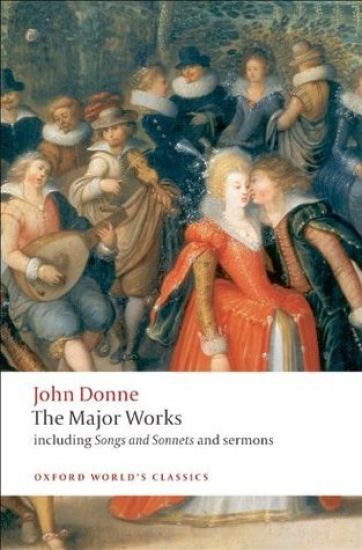
John Donne - The Major Works

John Donne - The Major Works

John Donne

Oxford University Press
2008
nidottu
This authoritative edition was formerly published in the acclaimed Oxford Authors series under the general editorship of Frank Kermode. It brings together a unique combination of Donne's poetry and prose - all the major poems, complemented by rarely published letters and extracts from Donne's sermons - to give the essence of his work and thinking. John Donne (1572-1631) is today celebrated as one of the greatest of the metaphysical poets, whose verse was daringly original and whose use of imagery and conceits marked a new, intellectual approach to poetry. His Satires, Elegies, and Songs and Sonnets, which contain his most famous love poems, were complemented by his religious writing, both verse and prose. He was one of the most renowned preachers of his day, and this volume does equal justice to the full range of his work. In addition to nearly all his English poetry this volume includes over 130 extracts from Donne's sermons, as well as the full text of his last sermon, 'Death's Duel'. A distinguishing feature of the selection is that the works are arranged in the chronological order of their composition. ABOUT THE SERIES: For over 100 years Oxford World's Classics has made available the widest range of literature from around the globe. Each affordable volume reflects Oxford's commitment to scholarship, providing the most accurate text plus a wealth of other valuable features, including expert introductions by leading authorities, helpful notes to clarify the text, up-to-date bibliographies for further study, and much more.
John Nichols's The Progresses and Public Processions of Queen Elizabeth: Volume I
John Nichols's The Progresses of Queen Elizabeth (1788-1823) has long been an indispensable reference tool for scholars working on Elizabethan court and culture - despite the serious limitations of an antiquarian edition now two centuries old. This old-spelling edition of the early modern materials contained in Nichols's Progresses is edited to high and consistent standards, and based on a critical re-examination of printed and manuscript sources. It is structured by a narrative of the two sets of annual progresses undertaken by Queen Elizabeth I: the 'summer progresses,' when Elizabeth travelled throughout southern England and the Midlands, visiting cities as far afield as Bristol, Coventry, Norwich, and Southampton; and the 'winter progresses,' when Elizabeth moved between her residences in and around London, including Richmond, Hampton Court, and Whitehall. New editions of the major progress entertainments - Kenilworth, Woodstock, Elvetham, Cowdray, Ditchley, and Harefield - are set alongside accounts of civic receptions, tilts and Accession Day entertainments, and non-dramatic texts, many of which have not been published since Nichols, including verses delivered by Eton scholars before the Queen (1563); John Lesley's Oratio (1574); Gabriel Harvey's Gratulationum Valdinensium (1578); and the Oxford and Cambridge verses on the death of Queen Elizabeth (1603). The editions are supported by translations of all non-English material, full scholarly annotation, illustrations, and maps. This will make John Nichols's The Progresses and Public Processions of Queen Elizabeth: A New Edition of the Early Modern Sources the most comprehensive collection of early modern texts pertaining to the court and culture of Queen Elizabeth. Volume I covers the years from 1533 to 1571.
John Nichols's The Progresses and Public Processions of Queen Elizabeth: Volume II
John Nichols's The Progresses of Queen Elizabeth (1788-1823) has long been an indispensable reference tool for scholars working on Elizabethan court and culture - despite the serious limitations of an antiquarian edition now two centuries old. This old-spelling edition of the early modern materials contained in Nichols's Progresses is edited to high and consistent standards, and based on a critical re-examination of printed and manuscript sources. It is structured by a narrative of the two sets of annual progresses undertaken by Queen Elizabeth I: the 'summer progresses,' when Elizabeth travelled throughout southern England and the Midlands, visiting cities as far afield as Bristol, Coventry, Norwich, and Southampton; and the 'winter progresses,' when Elizabeth moved between her residences in and around London, including Richmond, Hampton Court, and Whitehall. New editions of the major progress entertainments - Kenilworth, Woodstock, Elvetham, Cowdray, Ditchley, and Harefield - are set alongside accounts of civic receptions, tilts and Accession Day entertainments, and non-dramatic texts, many of which have not been published since Nichols, including verses delivered by Eton scholars before the Queen (1563); John Lesley's Oratio (1574); Gabriel Harvey's Gratulationum Valdinensium (1578); and the Oxford and Cambridge verses on the death of Queen Elizabeth (1603). The editions are supported by translations of all non-English material, full scholarly annotation, illustrations, and maps. This will make John Nichols's The Progresses and Public Processions of Queen Elizabeth: A New Edition of the Early Modern Sources the most comprehensive collection of early modern texts pertaining to the court and culture of Queen Elizabeth. Volume II covers the years from 1572 to 1578.
John Nichols's The Progresses and Public Processions of Queen Elizabeth: Volume III
John Nichols's The Progresses of Queen Elizabeth (1788-1823) has long been an indispensable reference tool for scholars working on Elizabethan court and culture - despite the serious limitations of an antiquarian edition now two centuries old. This old-spelling edition of the early modern materials contained in Nichols's Progresses is edited to high and consistent standards, and based on a critical re-examination of printed and manuscript sources. It is structured by a narrative of the two sets of annual progresses undertaken by Queen Elizabeth I: the 'summer progresses,' when Elizabeth travelled throughout southern England and the Midlands, visiting cities as far afield as Bristol, Coventry, Norwich, and Southampton; and the 'winter progresses,' when Elizabeth moved between her residences in and around London, including Richmond, Hampton Court, and Whitehall. New editions of the major progress entertainments - Kenilworth, Woodstock, Elvetham, Cowdray, Ditchley, and Harefield - are set alongside accounts of civic receptions, tilts and Accession Day entertainments, and non-dramatic texts, many of which have not been published since Nichols, including verses delivered by Eton scholars before the Queen (1563); John Lesley's Oratio (1574); Gabriel Harvey's Gratulationum Valdinensium (1578); and the Oxford and Cambridge verses on the death of Queen Elizabeth (1603). The editions are supported by translations of all non-English material, full scholarly annotation, illustrations, and maps. This will make John Nichols's The Progresses and Public Processions of Queen Elizabeth: A New Edition of the Early Modern Sources the most comprehensive collection of early modern texts pertaining to the court and culture of Queen Elizabeth. Volume III covers the years from 1579 to 1595.
John Nichols's The Progresses and Public Processions of Queen Elizabeth: Volume IV
John Nichols's The Progresses of Queen Elizabeth (1788-1823) has long been an indispensable reference tool for scholars working on Elizabethan court and culture - despite the serious limitations of an antiquarian edition now two centuries old. This old-spelling edition of the early modern materials contained in Nichols's Progresses is edited to high and consistent standards, and based on a critical re-examination of printed and manuscript sources. It is structured by a narrative of the two sets of annual progresses undertaken by Queen Elizabeth I: the 'summer progresses,' when Elizabeth travelled throughout southern England and the Midlands, visiting cities as far afield as Bristol, Coventry, Norwich, and Southampton; and the 'winter progresses,' when Elizabeth moved between her residences in and around London, including Richmond, Hampton Court, and Whitehall. New editions of the major progress entertainments - Kenilworth, Woodstock, Elvetham, Cowdray, Ditchley, and Harefield - are set alongside accounts of civic receptions, tilts and Accession Day entertainments, and non-dramatic texts, many of which have not been published since Nichols, including verses delivered by Eton scholars before the Queen (1563); John Lesley's Oratio (1574); Gabriel Harvey's Gratulationum Valdinensium (1578); and the Oxford and Cambridge verses on the death of Queen Elizabeth (1603). The editions are supported by translations of all non-English material, full scholarly annotation, illustrations, and maps. This will make John Nichols's The Progresses and Public Processions of Queen Elizabeth: A New Edition of the Early Modern Sources the most comprehensive collection of early modern texts pertaining to the court and culture of Queen Elizabeth. Volume IV covers the years from 1596 to 1603.
John Nichols's The Progresses and Public Processions of Queen Elizabeth: Volume V
John Nichols's The Progresses of Queen Elizabeth (1788-1823) has long been an indispensable reference tool for scholars working on Elizabethan court and culture - despite the serious limitations of an antiquarian edition now two centuries old. This old-spelling edition of the early modern materials contained in Nichols's Progresses is edited to high and consistent standards, and based on a critical re-examination of printed and manuscript sources. It is structured by a narrative of the two sets of annual progresses undertaken by Queen Elizabeth I: the 'summer progresses,' when Elizabeth travelled throughout southern England and the Midlands, visiting cities as far afield as Bristol, Coventry, Norwich, and Southampton; and the 'winter progresses,' when Elizabeth moved between her residences in and around London, including Richmond, Hampton Court, and Whitehall. New editions of the major progress entertainments - Kenilworth, Woodstock, Elvetham, Cowdray, Ditchley, and Harefield - are set alongside accounts of civic receptions, tilts and Accession Day entertainments, and non-dramatic texts, many of which have not been published since Nichols, including verses delivered by Eton scholars before the Queen (1563); John Lesley's Oratio (1574); Gabriel Harvey's Gratulationum Valdinensium (1578); and the Oxford and Cambridge verses on the death of Queen Elizabeth (1603). The editions are supported by translations of all non-English material, full scholarly annotation, illustrations, and maps. This will make John Nichols's The Progresses and Public Processions of Queen Elizabeth: A New Edition of the Early Modern Sources the most comprehensive collection of early modern texts pertaining to the court and culture of Queen Elizabeth. Volume V contains the appendices, bibliographies, and index.
John Keats: Major Works

John Keats: Major Works

John Keats

Oxford University Press
2008
nidottu
This authoritative edition was originally published in the acclaimed Oxford Authors series under the general editorship of Frank Kermode. It brings together a unique combination of Keats's poetry and prose - all the major poems, complemented by a generous selection of Keats's letters - to give the essence of his work and thinking. In his tragically short life Keats wrote an astonishing number of superb poems; his stature as one of the foremost poets of the Romantic movement remains unassailable. This volume contains all the poetry published during his lifetime, including Endymion in its entirety, the Odes, 'Lamia', and both versions of 'Hyperion'. The poetry is presented in chronological sequence, illustrating the staggering speed with which Keats's work matured. Further insight into his creative process is given by reproducing, in their original form, a number of poems that were published posthumously. Keats's letters are admired almost as much as his poetry and were described by T. S. Eliot as 'certainly the most notable and most important ever written by any English poet'. They provide the best biographical detail available and shed invaluable light on Keats's poems. ABOUT THE SERIES: For over 100 years Oxford World's Classics has made available the widest range of literature from around the globe. Each affordable volume reflects Oxford's commitment to scholarship, providing the most accurate text plus a wealth of other valuable features, including expert introductions by leading authorities, helpful notes to clarify the text, up-to-date bibliographies for further study, and much more.
John Barleycorn

John Barleycorn

Jack London

Oxford University Press
2009
nidottu
Published in 1913, this harrowing, autobiographical 'A to Z' of drinking shattered London's reputation as a clean-living adventurer and massively successful author of such books as White Fang and The Call of the Wild. ABOUT THE SERIES: For over 100 years Oxford World's Classics has made available the widest range of literature from around the globe. Each affordable volume reflects Oxford's commitment to scholarship, providing the most accurate text plus a wealth of other valuable features, including expert introductions by leading authorities, helpful notes to clarify the text, up-to-date bibliographies for further study, and much more.
John Locke: Correspondence

John Locke: Correspondence

Oxford University Press
2010
sidottu
E. S. de Beer's eight-volume edition of the correspondence of John Locke is a classic of modern scholarship. The intellectual range of the correspondence is universal, covering philosophy, theology, medicine, history, geography, economics, law, politics, travel and botany. This first volume covers the years 1650 to 1679. 'When the eight volumes of correspondence have appeared they will be recognized as one of the great scholarly achievements of their day.' K. H. D. Haley, Times Literary Supplement
John Locke: An Essay concerning Toleration
J. R. and Philip Milton present the first critical edition of John Locke's Essay concerning Toleration and a number of other writings on law and politics composed between 1667 and 1683. Although Locke never published any of these works himself they are of very great interest for students of his intellectual development because they are markedly different from the early works he wrote while at Oxford and show him working out ideas that were to appear in his mature political writings, the Two Treatises of Government and the Epistola de Tolerantia. The Essay concerning Toleration was written in 1667, shortly after Locke had taken up residence in the household of his patron Lord Ashley, subsequently Earl of Shaftesbury. It has been in print since the nineteenth century, but this volume contains the first critical edition based on all the extant manuscripts; it also contains a detailed account of Locke's arguments and of the contemporary debates on comprehension and toleration. Also included are a number of shorter writings on church and state, including a short set of queries on Scottish church government (1668), Locke's notes on Samuel Parker (1669), and 'Excommunication' (1674). The other two main works contained in this volume are rather different in character . One is a short tract on jury selection which was written at the time of Shaftesbury's imprisonment in 1681. The other is 'A Letter from a Person of Quality', a political pamphlet written by or for Shaftesbury in 1675 as part of his campaign against the Earl of Danby. This was published anonymously and is of disputed authorship; it was first attributed to Locke in 1720 and since then has occupied an uncertain position in the Locke canon. This volume contains the first critical edition based on contemporary printed editions and manuscripts and it includes a detailed account of the Letter's composition, authorship, and subsequent history. This volume will be an invaluable resource for all historians of early modern philosophy, of legal, political, and religious thought, and of 17th century Britain.
John Locke and Natural Philosophy

John Locke and Natural Philosophy

Peter R. Anstey

Oxford University Press
2011
sidottu
Peter Anstey presents a thorough and innovative study of John Locke's views on the method and content of natural philosophy. Focusing on Locke's Essay concerning Human Understanding, but also drawing extensively from his other writings and manuscript remains, Anstey argues that Locke was an advocate of the Experimental Philosophy: the new approach to natural philosophy championed by Robert Boyle and the early Royal Society who were opposed to speculative philosophy. On the question of method, Anstey shows how Locke's pessimism about the prospects for a demonstrative science of nature led him, in the Essay, to promote Francis Bacon's method of natural history, and to downplay the value of hypotheses and analogical reasoning in science. But, according to Anstey, Locke never abandoned the ideal of a demonstrative natural philosophy, for he believed that if we could discover the primary qualities of the tiny corpuscles that constitute material bodies, we could then establish a kind of corpuscular metric that would allow us a genuine science of nature. It was only after the publication of the Essay, however, that Locke came to realize that Newton's Principia provided a model for the role of demonstrative reasoning in science based on principles established upon observation, and this led him to make significant revisions to his views in the 1690s. On the content of Locke's natural philosophy, it is argued that even though Locke adhered to the Experimental Philosophy, he was not averse to speculation about the corpuscular nature of matter. Anstey takes us into new terrain and new interpretations of Locke's thought in his explorations of his mercurialist transmutational chymistry, his theory of generation by seminal principles, and his conventionalism about species.
John Mirk's Festial

John Mirk's Festial

Oxford University Press
2011
sidottu
The Festial, most probably composed in the late 1380s by the Augustinian canon, John Mirk, of Lilleshall Abbey, Shropshire, was the most popular and influential collection of sermons in English in the late medieval and early Tudor period, surviving in many copies, and printed by Caxton and his successors. The collection was designed to be accessible and entertaining, as well as orthodox, to counter the success of Lollard preaching, and taught both the priests who used the sermons, as well as their audiences, the fundamentals of the Christian faith and doctrine, illustrated by many stories. The Festial is the only English sermon collection to be printed in England before the Reformation and is probably the most frequently printed work of its time before religious change made it unacceptable.
John Milton

John Milton

Campbell; Corns

Oxford University Press
2010
nidottu
This book re-examines scrupulously the writings and the life records of John Milton, in the context of a proper understanding of the recent developments in seventeenth-century historiography. Milton's thought has often been too simply described. The approach here is to interrogate more sceptically notions like puritanism, republicanism, radicalism, and dissent. A more complex story emerges, of Milton's culturally rich but ideologically conformist early decades, and of his radicalisation during the later years of Laudianism. We track the internal dynamics of English puritanism in the 1640s and the impact that has on his own convictions. In the 1650s Milton's thought and beliefs were reconciled to the role as public servant. In the 1660s a renewed confidence carried him towards the completion of his greatest project, Paradise Lost, and his final years were ones of creative fulfilment and renewed political engagement. Amid the discontinuities occasioned by shifting political circumstance, by the exigencies of polemical context, and the diversity of genres in which he wrote, Milton emerged as a major political thinker and significant systematic theologian, as well as the most eloquent prose writer and most accomplished poet of the age. A more human Milton appears in these pages, flawed, self-contractory, self-serving, arrogant, passionate, ruthless, ambitious, and cunning, as well as the literary genius who achieved so much.
John Donne

John Donne

Oxford University Press
2015
sidottu
The John Donne volume in the 21st-Century Oxford Authors series offers a wholly new edition of Donne's verse and prose. It consists of a selection of the compositions that circulated in manuscript or in print form during Donne's lifetime. In keeping with the approach of the series, the texts are presented in chronological order and the text chosen is, wherever possible, the text of the first published version. Each text is paired with a generous complement of historical and textual annotation, which enables the present day reader to access the excitement with which Donne's contemporaries, his first readers, discovered his famous and incomparable originality, audacity, ingenuity, and wit. The edition incorporates new directions and emphases in scholarly editing that are foregrounded in the 21st-Century Oxford Authors series, such as the history of readership and the history of texts as material objects.
John Henry Newman

John Henry Newman

Oxford University Press
2015
sidottu
John Henry Newman was one of the most eminent of Victorians and an intellectual pioneer for an age of doubt and unsettlement. His teaching transformed the Victorian Church of England, yet many still want to know more of Newman's personal life. Newman's printed correspondence runs to 32 volumes, and John Henry Newman: A Portrait in Letters offers a way through the maze. Roderick Strange has chosen letters that illustrate not only the well-known aspects of Newman's personality, but also those in which elements that may be less familiar are on display. There are letters to family and friends, and also terse letters laced with anger and sarcasm. The portrait has not been airbrushed. This selection of letters presents a rounded picture, one in which readers will meet Newman as he really was and enjoy the pleasure of his company. As Newman himself noted, 'the true life of a man is in his letters'.