Kirjojen hintavertailu. Mukana 11 699 587 kirjaa ja 12 kauppaa.

Kirjahaku

Etsi kirjoja tekijän nimen, kirjan nimen tai ISBN:n perusteella.

1000 tulosta hakusanalla John Thomas Codman

A Pentecostal Commentary on Revelation

A Pentecostal Commentary on Revelation

Jon K Newton; John Christopher Thomas

Wipf Stock Publishers
2021
sidottu
This new commentary approaches Revelation from a Pentecostal perspective, but you may be surprised at what this does and doesn't mean in this case. This is a serious commentary based on the Greek text and includes discussion of all the standard topics (authorship, date, audience, etc.). It gives interpretive priority to the original context and audience while also discussing application today. Newton eschews all populist interpretations of Revelation and questions many assumptions built on futurist or historicist readings, but includes a survey of recent scholarly Pentecostal work on Revelation and an extended discussion of what an authentic Pentecostal reading of Revelation might look like. The commentary highlights features of Revelation that Pentecostals often look for, such as its pneumatology, but also draws attention to features that Pentecostal readers should take more seriously than they often do, such as its missional focus, the narrative flow, intertextual references, and the focus on atonement. This makes it a more optimistic commentary than many available. The commentary interacts in depth with five leading commentaries over the past twenty-five years as well as over two hundred other books and articles, including the oldest existing commentary on Revelation.
Mastering Corneal Surgery

Mastering Corneal Surgery

Amar Agarwal; Thomas John

SLACK Incorporated
2014
nidottu
Mastering Corneal Surgery: Recent Advances and Current Techniques comprehensively covers all the recent advances in the existing techniques for common and rare corneal conditions, as well as presents the potential intraoperative circumstances the surgeon can face with their patients.Mastering Corneal Surgery: Recent Advances and Current Techniques by Drs. Amar Agarwal and Thomas John, along with more than 50 contributors, cover the most recent innovations in corneal surgery, including corneal procedures in combination with IOL implantation in eyes with deficient capsules, and combining endothelial keratoplasty with IOL repositioning.Bonus!Extensive high-quality video demonstrations of the techniques discussed inside Mastering Corneal Surgery: Recent Advances and Current Techniques enhances the written text, creating a superior companion website resource. The 28 videos, combined with the written text, clinical photographs and pictures, furthers the learning process more than learning from text or video alone.Mastering Corneal Surgery: Recent Advances and Current Techniques covers all the recent advances in the existing techniques for common and rare corneal conditions and presents the potential intraoperative circumstances the surgeon can encounter with their patients. The general ophthalmologist and cornea specialist will welcome the novel surgical methods and their differences from the existing techniques highlighted inside this cutting-edge resource.
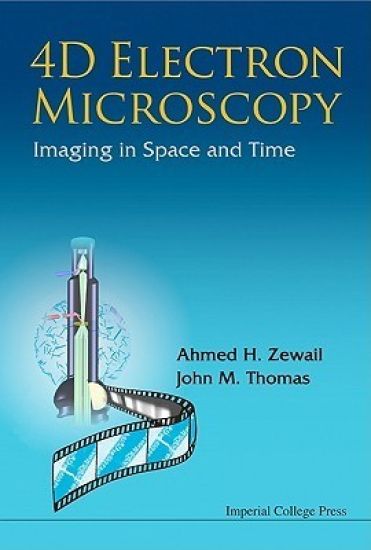
4d Electron Microscopy: Imaging In Space And Time

4d Electron Microscopy: Imaging In Space And Time

Ahmed H Zewail; John Meurig Thomas

Imperial College Press
2009
sidottu
The modern electron microscope, as a result of recent revolutionary developments and many evolutionary ones, now yields a wealth of quantitative knowledge pertaining to structure, dynamics, and function barely matched by any other single scientific instrument. It is also poised to contribute much new spatially-resolved and time-resolved insights of central importance in the exploration of most aspects of condensed matter, ranging from the physical to the biological sciences.Whereas in all conventional EM methods, imaging, diffraction, and chemical analyses have been conducted in a static — time-integrated — manner, now it has become possible to unite the time domain with the spatial one, thereby creating four-dimensional (4D) electron microscopy. This advance is based on the fundamental concept of timed, coherent single-electron packets, or electron pulses, which are liberated with femtosecond durations. Structural phase transitions, mechanical deformations, and the embryonic stages of melting and crystallization are examples of phenomena that can now be imaged in unprecedented structural detail with high spatial resolution, and ten orders of magnitude as fast as hitherto.No monograph in existence attempts to cover the revolutionary dimensions that EM in its various modes of operation nowadays makes possible. The authors of this book chart these developments, and also compare the merits of coherent electron waves with those of synchrotron radiation. They judge it prudent to recall some important basic procedural and theoretical aspects of imaging and diffraction so that the reader may better comprehend the significance of the new vistas and applications now afoot.This book is not a vade mecum — numerous other texts are available for the practitioner for that purpose. It is instead an in-depth exposé of the paradigm concepts and the developed techniques that can now be executed to gain new knowledge in the entire domain of biological and physical science, and in the four dimensions of space and time.
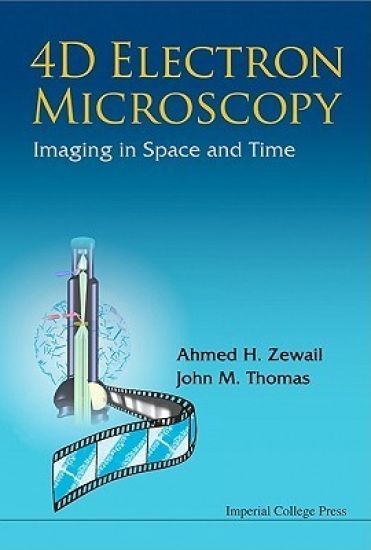
4d Electron Microscopy: Imaging In Space And Time

4d Electron Microscopy: Imaging In Space And Time

Ahmed H Zewail; John Meurig Thomas

Imperial College Press
2009
nidottu
The modern electron microscope, as a result of recent revolutionary developments and many evolutionary ones, now yields a wealth of quantitative knowledge pertaining to structure, dynamics, and function barely matched by any other single scientific instrument. It is also poised to contribute much new spatially-resolved and time-resolved insights of central importance in the exploration of most aspects of condensed matter, ranging from the physical to the biological sciences.Whereas in all conventional EM methods, imaging, diffraction, and chemical analyses have been conducted in a static — time-integrated — manner, now it has become possible to unite the time domain with the spatial one, thereby creating four-dimensional (4D) electron microscopy. This advance is based on the fundamental concept of timed, coherent single-electron packets, or electron pulses, which are liberated with femtosecond durations. Structural phase transitions, mechanical deformations, and the embryonic stages of melting and crystallization are examples of phenomena that can now be imaged in unprecedented structural detail with high spatial resolution, and ten orders of magnitude as fast as hitherto.No monograph in existence attempts to cover the revolutionary dimensions that EM in its various modes of operation nowadays makes possible. The authors of this book chart these developments, and also compare the merits of coherent electron waves with those of synchrotron radiation. They judge it prudent to recall some important basic procedural and theoretical aspects of imaging and diffraction so that the reader may better comprehend the significance of the new vistas and applications now afoot.This book is not a vade mecum — numerous other texts are available for the practitioner for that purpose. It is instead an in-depth exposé of the paradigm concepts and the developed techniques that can now be executed to gain new knowledge in the entire domain of biological and physical science, and in the four dimensions of space and time.
Medical services; general history (Volume I) Medical Services in The United Kingdom In British Garrisons Overseas and During Operations Against Tsingtau, In Togoland, The Cameroons, and South-West Africa
This book has been considered by academicians and scholars of great significance and value to literature. This forms a part of the knowledge base for future generations. So that the book is never forgotten we have represented this book in a print format as the same form as it was originally first published. Hence any marks or annotations seen are left intentionally to preserve its true nature.
Medical services; general history (Volume I) Medical Services in The United Kingdom In British Garrisons Overseas and During Operations Against Tsingtau, In Togoland, The Cameroons, and South-West Africa
This book has been considered by academicians and scholars of great significance and value to literature. This forms a part of the knowledge base for future generations. So that the book is never forgotten we have represented this book in a print format as the same form as it was originally first published. Hence any marks or annotations seen are left intentionally to preserve its true nature.
Learn Chess, a New Way for All, V2: Winning Methods

Learn Chess, a New Way for All, V2: Winning Methods

Conel Hugh O. Alexander; Thomas John Beach

Literary Licensing, LLC
2013
sidottu
""Learn Chess, A New Way For All, V2: Winning Methods"" by Conel Hugh O'Donel Alexander is a comprehensive guide to mastering the game of chess. This book is the second volume in the series and provides readers with advanced strategies and techniques for winning at chess. The author, a renowned chess player and author, shares his knowledge and experience in a clear and concise manner, making it accessible to both beginner and advanced players.The book covers a range of topics, including opening strategies, middle game tactics, endgame techniques, and more. It also includes exercises and puzzles to help readers practice and apply the concepts they learn. The author uses diagrams and illustrations to demonstrate key moves and positions, making it easy for readers to follow along.One of the unique features of this book is its emphasis on a new approach to learning chess. The author argues that traditional methods of teaching chess can be limiting and that a more holistic approach is needed. He advocates for a focus on understanding the underlying principles and concepts of the game, rather than simply memorizing moves and strategies.Overall, ""Learn Chess, A New Way For All, V2: Winning Methods"" is an essential resource for anyone looking to improve their chess game. It offers a fresh perspective on the game and provides readers with the tools they need to become skilled and confident players.This scarce antiquarian book is a facsimile reprint of the old original and may contain some imperfections such as library marks and notations. Because we believe this work is culturally important, we have made it available as part of our commitment for protecting, preserving, and promoting the world's literature in affordable, high quality, modern editions, that are true to their original work.
John Fisher and Thomas More: Keeping Their Souls While Losing Their Heads
In 1929, nearly four hundred years after the deaths of Saints Thomas More and John Fisher, G.K. Chesterton observed in words equally attributable to Fisher, "Blessed Thomas More is more important at this moment than at any moment since his death, even perhaps the great moment of his dying; but he is not quite so important as he will be in a hundred years." Judge Robert J Conrad, Jr. anticipates Chesterton's one-hundred-year mark in a collection of stories from the lives of More and Fisher, demonstrating how their sanctity and integrity carried them and those who loved them through tumultuous and heart-wrenching times which, perhaps surprisingly, bear a striking resemblance to the present epoch. At first blush, nothing could appear more different than the pre-industrial sixteenth century and the tech-centered modern era. But a closer examination presents a similar tale of political maneuvering and hostile hearings, legal corruption, viral pandemics, riots, suppression of speech, loss of religious liberty, and a profound indifference for truth. Judge Conrad effortlessly weaves together tales of both men and what made them who they were--family, faith, friendship, oaths, vocation, detachment, conscience--inviting those who strive for holiness down the same narrow path these two martyrs walked with a clarity founded upon the truth of Christ's Church, and a wit that charmed even their persecutors. Both these men refused to consent to the theological farce that would permit the king's divorce and remarriage and drive a wedge into the unity of the Christian world, and both paid for their convictions with their lives. More died the king's good servant and God's first. Fisher approached his execution with joy befit for a wedding. And yet, both stand today, long after they are gone, as models of courage in a time when it is desperately needed. Discover in this volume of powerful stories two saints whose lives could not be timelier for the present age.
John of St. Thomas [Poinsot] on Sacred Science: Cursus Theologicus I, Question 1, Disputation 2
This volume offers an English translation of John of St. Thomas's Cursus theologicus I, question I, disputation 2. In this particular text, the Dominican master raises questions concerning the scientific status and nature of theology. At issue, here, are a number of factors: namely, Christianity's continual coming to terms with the "Third Entry" of Aristotelian thought into Western Christian intellectual culture - specifically the Aristotelian notion of 'science' and sacra doctrina's satisfaction of those requirements - the Thomistic-commentary tradition, and the larger backdrop of the Iberian Peninsula's flourishing "Second Scholasticism." In this latter context, John of St. Thomas applies the theological principles of Thomas Aquinas to the Scholastic disputes preoccupying Thomist, Franciscan, and Jesuit theologians, such as Cajetan, Ba ez, Luis de Molina, Vazquez, Su rez - to name only a few - in a tour de force of theological thinking throughout the entire period of Scholasticism. In the process - and not insignificantly - the status quaestionis of theology's scientific character is clearly framed and answered according to John's satisfaction. Key to John of St. Thomas's resolution of the question is his understanding of the continuity of the power of human reason with the super-intelligibility of divine revelation spelled out in terms of what he calls "virtual revelation." This text presented in this volume is a quintessential example of the deep and abiding harmony that flourished between faith and reason as well as grace and nature within the golden era of Baroque Scholasticism.