Kirjojen hintavertailu. Mukana 12 390 323 kirjaa ja 12 kauppaa.

Kirjahaku

Etsi kirjoja tekijän nimen, kirjan nimen tai ISBN:n perusteella.

1000 tulosta hakusanalla Joseph Murphy

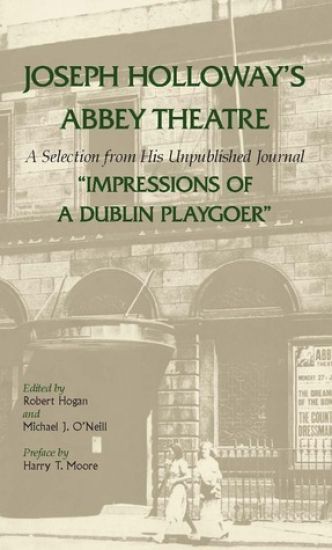
Joseph Holloway's Abbey Theatre

Joseph Holloway's Abbey Theatre

Southern Illinois University Press
2009
nidottu
Until his death in 1944, Holloway attended almost every performance of the Abbey Theatre and daily recorded in his journal his reactions to plays and players and his comments about and conversations with literary and theatrical people. From the journal's 221 bulky volumes, housed in the National Library of Ireland, Mr. Hogan and Mr. O'Neill have compiled this book of extracts from the approximately 25,000,000 words written by the Irishman. The years from 1899 to 1926 were chosen because they are generally considered to be the significant ones for the Abbey Theatre: the year of its founding to the production of Sean O'Casey's The Plough and the Stars, which caused a riot in the theatre. Mr. Holloway attended every play during these years, as well as many rehearsals, and talked with nearly everybody who had anything to do with the theatre. This journal reflects the tensions, feuds, and anguish that produced one of the great theatres of modern times. The meticulous display of minute detail makes Joseph Holloway's Abbey Theatre imperative reading for the student of modern theatre, particularly since its character as a daily account permits ready checking of dates listed in previous works about the Irish National Theatre.
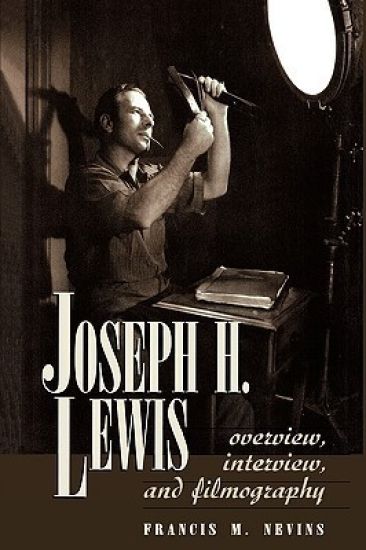
Joseph H. Lewis

Joseph H. Lewis

Francis M. Nevins

Scarecrow Press
1998
sidottu
The first full-length account of the life and work of Joseph H. Lewis, the noted director of films such as My Name is Julia Ross (1945) and The Halliday Brand (1957). Because most commentators and interviewers have focused on Lewis' contributions to film noir and particularly Gun Crazy and The Big Combo, Nevins tries to give equal time to Lewis' early B westerns and television series episodes, including episodes of The Rifleman and Gunsmoke that he directed at the end of his career. Nevins's narrative is interspersed with Lewis's own reflections on his life and career, adding a personal element that enlivens the text. A detailed filmography includes Lewis's editorial work, feature films, and episodes of TV series.
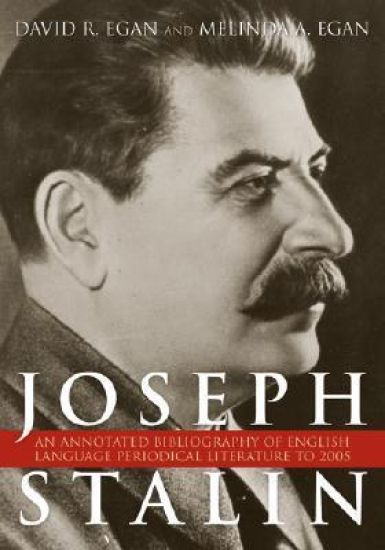
Joseph Stalin

Joseph Stalin

David R. Egan; Melinda A. Egan

Scarecrow Press
2007
sidottu
With the opening of Russian and communist-bloc archives dating from the Soviet-era, there has been a significant increase of scholarly writings pertaining to Joseph Stalin. Widely considered to be among the most influential historical figures of the twentieth century, Stalin continues to be a source of intense study. In the absence of a comprehensive compilation of periodical literature, the need for Joseph Stalin: An Annotated Bibliography of English Language Periodical Literature to 2005 is conspicuous. Ranging from editorials and news reports to academic articles, the more than 1,700 sources cited collectively cover the full range of his life, the various aspects of his leadership, and virtually all facets of the system and practices traditionally associated with his name. The coverage in this bibliography extends beyond the person of Stalin to include the subjects of Stalinism, the Stalinist system, the Stalin phenomenon, and those policies and practices of the Communist Party and Soviet state associated with him. This volume also provides a record of scholarly opinion on Stalin and sheds light on the evolution and current state of Stalinology. An effort has been made to list only those articles in which Stalin figures prominently, but, in some instances, articles have been included which do not center on Stalin but are worthy of listing for other reasons. The book is divided into fourteen main sections: General Studies and Overviews; Biographical Information and Psychological Assessments; The Revolutionary Movement, October Revolution and Civil War; Rise to Power; Politics; Economics; Society and Social Policy; Nationalism and Nationality Policy; Culture; Religion; Philosophy and Theory; Foreign Relations and International Communism; Military Affairs; and De-Stalinization. Including a subject index of several hundred headings and even greater number of subheadings, this comprehensive annotated bibliography should be of benefit to those individuals who, for the purpose of research or classroom
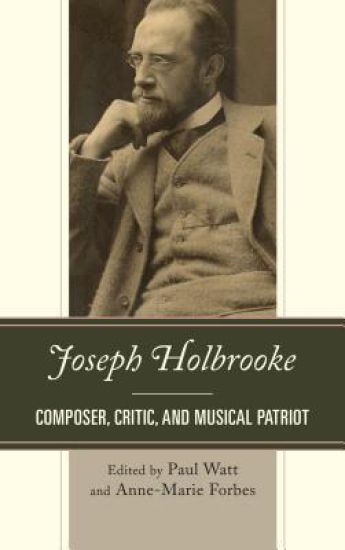
Joseph Holbrooke

Joseph Holbrooke

Rowman Littlefield Publishers
2014
sidottu
This is the first scholarly work to document the musical life of Joseph Holbrooke, one of Britain’s most prolific and controversial composers during the first half of the twentieth century. Holbrooke was outspoken on many issues, including the maligned fortunes of British composers, which he believed were brought about by apathy and indifference on the part of critics and the public. Despite doubts in various quarters over Holbrooke’s ability to forge a unique compositional idiom, many of his works were performed to critical acclaim in Britain, Europe, and the United States. Today, Holbrooke’s music is increasingly enjoyed and recorded. Joseph Holbrooke: Composer, Critic, and Musical Patriot opens with a biographical overview of Holbrooke that concentrates on his relationship with Granville Bantock and Wales and the role that Lord Howard de Walden played in Holbrooke’s work and development. Contributors offer studies of a selection of repertory by Holbrooke, including his chamber music, the operas Pierrot and Pierrette and The Enchanted Garden, and his tone poem “The Raven.” The final chapter describes Holbrooke’s patriotism by examining his book Contemporary British Composers, which was published in 1925. Included is an appendix that provides the first comprehensive and corrected list of Holbrooke’s compositions. This book will interest not only musicologists, musicians and listeners interested in the repertory of the British classical music tradition but also scholars and general readers interested in the ways Celticism, poetic inspiration, and nationalist ideology were expressed in the work of classical composers in the early twentieth century.
Joseph Anton: A Memoir

Joseph Anton: A Memoir

Salman Rushdie

Random House Trade
2013
nidottu
NAMED ONE OF THE BEST BOOKS OF THE YEAR BY San Francisco Chronicle - Newsweek/The Daily Beast - The Seattle Times - The Economist - Kansas City Star - BookPage On February 14, 1989, Valentine's Day, Salman Rushdie was telephoned by a BBC journalist and told that he had been "sentenced to death" by the Ayatollah Khomeini. For the first time he heard the word fatwa. His crime? To have written a novel called The Satanic Verses, which was accused of being "against Islam, the Prophet and the Quran." So begins the extraordinary story of how a writer was forced underground, moving from house to house, with the constant presence of an armed police protection team. He was asked to choose an alias that the police could call him by. He thought of writers he loved and combinations of their names; then it came to him: Conrad and Chekhov--Joseph Anton. How do a writer and his family live with the threat of murder for more than nine years? How does he go on working? How does he fall in and out of love? How does despair shape his thoughts and actions, how and why does he stumble, how does he learn to fight back? In this remarkable memoir Rushdie tells that story for the first time; the story of one of the crucial battles, in our time, for freedom of speech. He talks about the sometimes grim, sometimes comic realities of living with armed policemen, and of the close bonds he formed with his protectors; of his struggle for support and understanding from governments, intelligence chiefs, publishers, journalists, and fellow writers; and of how he regained his freedom. It is a book of exceptional frankness and honesty, compelling, provocative, moving, and of vital importance. Because what happened to Salman Rushdie was the first act of a drama that is still unfolding somewhere in the world every day. Praise for Joseph Anton "A harrowing, deeply felt and revealing document: an autobiographical mirror of the big, philosophical preoccupations that have animated Mr. Rushdie's work throughout his career."--Michiko Kakutani, The New York Times "A splendid book, the finest . . . memoir to cross my desk in many a year."--Jonathan Yardley, The Washington Post "Thoughtful and astute . . . an important book."--USA Today "Compelling, affecting . . . demonstrates Mr. Rushdie's ability as a stylist and storytelle. . . . He] reacted with great bravery and even heroism."--The Wall Street Journal "Gripping, moving and entertaining . . . nothing like it has ever been written."--The Independent (UK) "A thriller, an epic, a political essay, a love story, an ode to liberty."--Le Point (France) "Action-packed . . . in a literary class by itself . . . Like Isherwood, Rushdie's eye is a camera lens --firmly placed in one perspective and never out of focus."--Los Angeles Review of Books "Unflinchingly honest . . . an engrossing, exciting, revealing and often shocking book."--de Volkskrant (The Netherlands) "One of the best memoirs you may ever read."--DNA (India) "Extraordinary . . . Joseph Anton beautifully modulates between . . . moments of accidental hilarity, and the higher purpose Rushdie saw in opposing--at all costs--any curtailment on a writer's freedom."--The Boston Globe
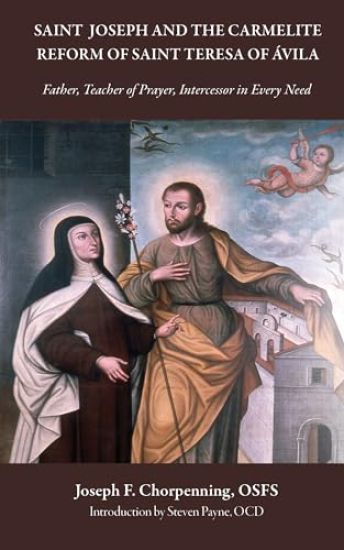
Saint Joseph and the Carmelite Reform of Saint Teresa of Avila

Saint Joseph and the Carmelite Reform of Saint Teresa of Avila

Joseph Chorpenning

THE CATHOLIC UNIVERSITY OF AMERICA PRESS
2025
nidottu
It is a commonplace in devotional literature, historical scholarship, and papal writings that Saint Teresa of Ávila played a key role in the development of veneration of Saint Joseph. Saint Joseph and the Carmelite Reform of Saint Teresa of Ávila unpacks this commonplace by recovering the often-overlooked back story to Teresa's story, namely, the extraordinarily rich liturgical cult of Saint Joseph in the Ancient Order of Carmel which fully flowered in the Teresian Carmel and beyond, to the universal Church.This volume charts a narrative arc from the liturgical cult of Saint Joseph in the Carmelite Order of Ancient Observance; to Saint Joseph's vital formative presence in Saint Teresa's life and reformed Carmel as father, teacher of prayer, and intercessor in every need; to the Carmelite family as a whole giving liturgical expression to its privileged relationship with Saint Joseph by the establishment of the Feast of the Patronage of Saint Joseph; to this feast becoming widespread outside Carmel and ultimately extended to the Universal Church (1847); and, finally, to Saint Joseph's proclamation as Patron of the Universal Church (1870).An epilogue considers the absence of Joseph's title "Patron of the Universal Church" in the post-Vatican II liturgical calendar and books, while the papal magisterium has consistently insisted that this patronage is ever necessary for the Church as not only a protection against all dangers, but also an impetus for its mission of evangelization and re-evangelization. An appendix reprints the letter, "Saint Joseph, Patron of Carmel," jointly issued by the Prior General of the Order of Carmelites of the Ancient Observance and the Superior General of the Order of Discalced Carmelites, to mark the 150th anniversary of the proclamation of Saint Joseph as Patron of the Universal Church.
Joseph Addison

Joseph Addison

Dan Poston

UNIVERSITY OF VIRGINIA PRESS
2023
sidottu
The name Joseph Addison was once synonymous with the finest of English prose. Eminent writers from Voltaire to Lord Macaulay to John Steinbeck considered him a consummate master to be studied and emulated. According to Benjamin Franklin, Addison’s writings "contributed more to the improvement of the minds of the British nation, and polishing their manner, than those of any other English pen whatever." While his influence lives on in the sound and style of English today, the fame of this literary role model has faded from popular awareness. The Addisonian spirit, which ushered in an exceptional era of domestic peace in Britain and provided inspiration for the French and American Revolutions, coded many of the constitutional, political, and social agreements we continue to live with today. This book, the first comprehensive monograph of Addison in half a century, considers Addison’s contribution through an in-depth exploration of his writings, political work, social life, and theatrical stagings.
Joseph Addison

Joseph Addison

Dan Poston

UNIVERSITY OF VIRGINIA PRESS
2023
pokkari
The name Joseph Addison was once synonymous with the finest of English prose. Eminent writers from Voltaire to Lord Macaulay to John Steinbeck considered him a consummate master to be studied and emulated. According to Benjamin Franklin, Addison’s writings "contributed more to the improvement of the minds of the British nation, and polishing their manner, than those of any other English pen whatever." While his influence lives on in the sound and style of English today, the fame of this literary role model has faded from popular awareness. The Addisonian spirit, which ushered in an exceptional era of domestic peace in Britain and provided inspiration for the French and American Revolutions, coded many of the constitutional, political, and social agreements we continue to live with today. This book, the first comprehensive monograph of Addison in half a century, considers Addison’s contribution through an in-depth exploration of his writings, political work, social life, and theatrical stagings.
Joseph Bernardin

Joseph Bernardin

Steven P Millies

Liturgical Press
2016
pokkari
As a priest, archbishop, and president of the US bishops’ conference, Cardinal Joseph Bernardin lived a ministry marked by thoughtfulness, compassion, and conviction. Relying on interviews with the cardinal’s assistants, friends, and family members, as well as on some previously unavailable archival material, Steven P. Millies explores Bernardin’s controversial “seamless garment” approach to life issues, his founding of the Catholic Common Ground Initiative, the disturbing abuse allegations against him that were later recanted, and his experience of cancer that prompted him to write the bestselling book The Gift of Peace and that ultimately took his life. Millies offers a fresh new portrait of one of the most remarkable Catholic leaders of the twentieth century.
Joseph Stone

Joseph Stone

CRC Press Inc
1996
sidottu
First Published in 1996. This series presents the music of early American composers of sacred music—psalmody, as it was called—in collected critical editions. The purpose of the series is to present the music of important early American composers in accurate editions for both performance and study. This volume presents the collected works of Joseph Stone (1758-1837), one of the most interesting and prolific of American psalmodists
Joseph Conrad and the Swan Song of Romance

Joseph Conrad and the Swan Song of Romance

Katherine Isobel Baxter

CRC Press Inc
2017
sidottu
In the first critical study wholly devoted to Joseph Conrad's use of techniques associated with the literary tradition of romance, the author argues that Conrad's engagement with the genre invigorated his work throughout his career. Exploring the ways in which Conrad borrows from, alludes to, and subverts the tropes of romance, the author suggests that Conrad's ambivalent relationship with popular forms like the adventure novel is revealed in the way he uses romance conventions to disrupt narrative expectations and make visible ethical problems with Europe's colonial project. The author examines not only familiar novels like Lord Jim but also less-studied works such as Romance and The Rover, using Robert Miles's model of the 'philosophical romance' to show that for Conrad, romance is also philosophically engaged with issues of ideology. Her study enables a new appreciation of the ways in which Conrad continued to experiment, even in his later fiction, and of the ethical import of that aesthetic experimentation.
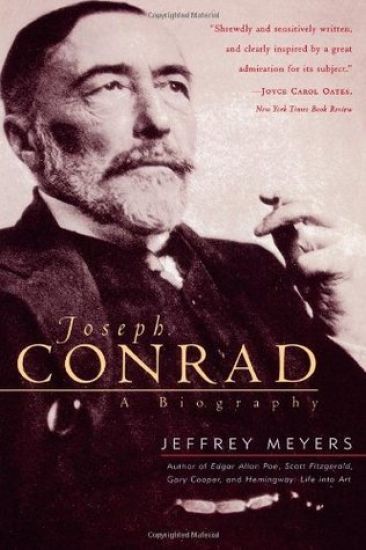
Joseph Conrad

Joseph Conrad

Jeffrey Meyers

Cooper Square Publishers Inc.,U.S.
2001
pokkari
In Joseph Conrad: A Biography, acclaimed writer Jeffrey Meyers presents the definitive account of the life of Joseph Conrad (1857-1924), author of Heart of Darkness, Lord Jim, Nostromo, and many other landmarks in modern literature. Meyers' biography, published for the first time in paperback by Cooper Square Press, is the first biography of the author in many years. Joseph Conrad brings to light new information about Conrad's life and its impact on his fiction: new models emerge for his characters, including Heart of Darkness' Kurtz, and Meyers also examines in great detail Conrad's relationship with the wild and beautiful American journalist Jane Anderson.
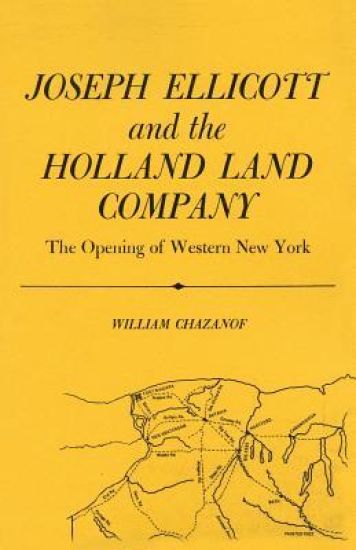
Joseph Ellicott and the Holland Land Company

Joseph Ellicott and the Holland Land Company

William Chazanof

Syracuse University Press
1979
pokkari
In 1800, the Holland Land Company assigned surveyor Joseph Ellicott the task of selling at a profit 3.3 million acres of land west of the Genesee River in New York State. By 1821, when Ellicott’s career as Resident-Agent ended, the area’s population had grown from only a few settlers to over 100,000. This study traces the evolution of western New York from the time the Indians relinquished control to the solidification of institutional life.As a land promoter in the wilderness, Joseph Ellicott quickly discovered that business and politics went hand in hand, for the factors that affected land sales were frequently political. Although his contract with the Holland Land Company expressly forbade it, he became deeply involved in the political life of western New York, playing a decisive role in the creation of Genesee County and its further divisions into four counties. Ellicott used his influence to advance the Erie Canal project, particularly from Rochester westward, and persuaded the state legislature to grant a charter for the Bank of Niagara. Although the rest of the state fluctuated in its political preferences, from his base in Batavia he kept western New York loyal to the Republican Party, building up close relations with DeWitt Clinton.During his long career, Ellicott made many enemies. The postwar nationalists resented him as the agent of the Dutch-owned company. Taxpayers fought him because he blocked a road tax on land owned by nonresidents; his employers were irritated when he could not persuade the state to buy Holland Land Company property; his increasing melancholy angered customers; and his break with Clinton during the 1820 gubernatorial campaign set off a chain reaction of political pressures that led to his dismissal as Resident-Agent the next year. Ellicott direct in 1826.Based on extensive research in the Holland Land Company Papers in Amsterdam’s City Archives, Professor Chazanof’s study presents a previously unexplored part of the political history of New York State on regional, national, and international levels. Illustrations and maps are included.
Joseph Conrad at Mid-Century

Joseph Conrad at Mid-Century

Kenneth A. Lohf; Eugene P. Sheehy

University of Minnesota Press
1957
nidottu
Joseph Conrad at Mid-Century was first published in 1957. Minnesota Archive Editions uses digital technology to make long-unavailable books once again accessible, and are published unaltered from the original University of Minnesota Press editions.Published in the centennial year of Joseph Conrad's birth, this is the first comprehensive bibliography of the writings by and about this important author. Though there is a current revival of interest in Conrad's work, criticism and scholarship devoted to this celebrated novelist and short story writer have lagged behind that of other major twentieth-century authors. This compendium of data about the growing body of Conrad literature should stimulate further interest by bringing together a vast amount of reference information that has been widely scattered until now.The bibliography lists works by Conrad, including serializations, significant translations, and film adaptations, and writings about Conrad, including book and periodical material in western languages, appearing from 1895, the year of publication of Almayer's Folly, through 1955. There are a total of 1200 numbered entries containing approximately 3000 items.In the first section, devoted to Conrad's works, the enumeration of English and American editions is followed by the listing of translations. Most of Conrad's essays and many of his novels were serialized before they appeared in book form, and these serializations are listed here also.The second section lists the studies of Conrad's life and works, as published in books, pamphlets, periodical articles, and reviews. Data are included on bibliographies, commemorative issues of periodicals, criticism of individual works and of Conrad's work in general, and parodies and other miscellany.
Joseph Campbell on Myth and Mythology

Joseph Campbell on Myth and Mythology

University Press of America
1993
nidottu
A selection of readings by Joseph Campbell, including the editor's comments on the influence of mythology on personal and societal behaviour and the evolution of the creative mythologies of today. The development of Campbell's thought is traced and an analysis of 'The Hero's Journey' is included.
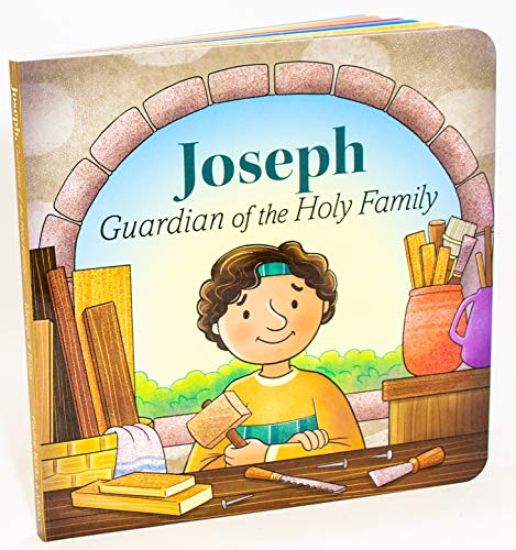
Joseph Guardian of the Holy Family(bb)

Joseph Guardian of the Holy Family(bb)

Marlyn Monge

Pauline Books Media
2019
sidottu
This beautiful board book Joseph: Guardian of the Holy Family provides a memorable way for toddlers to become familiar with Saint Joseph and his role in the earthly life of Jesus. Features & Benefits - ideal as a birth or baptismal gift - entertaining for children ages 1--5 - durable board book - perfect for reading aloud Illustrated by Mary Rojas
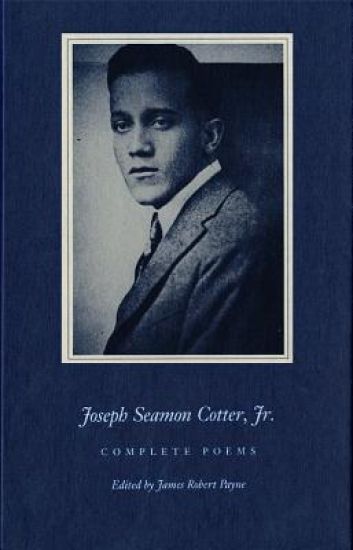
Joseph Seamon Cotter Jr.

Joseph Seamon Cotter Jr.

Joseph Seaman Cotter

University of Georgia Press
1990
sidottu
Joseph Seamon Cotter, Jr.: Complete Poems brings together for the first time all the poems of an accomplished African-American poet of the years just preceding the 1920s renaissance in black American literature.Born in Louisville, Kentucky, in 1895, Joseph Seamon Cotter, Jr., was a precocious child, reared in a strong family tradition of poetry. His father, a local educator, wrote poetry himself, and the family maintained a close friendship with the prominent poet Paul Laurence Dunbar. Encouraged by this environment, Cotter displayed literary leanings from an early age. As his father recalled, Keats was his son's favorite poet among the many writers in their extensive family library: "He never tired of the 'Ode on a Grecian Urn.'" After completing high school, Cotter attended Fisk University in Nashville, Tennessee, for two years until he contracted tuberculosis and was forced to return home. Cotter then wrote almost incessantly—and published one collection of poetry, The Band of Gideon—before his death in 1919 at age twenty-three.Rejecting the popular dialect style of his father and other highly regarded poets of his day, Cotter reflected in his poetry the broad impact of the most devastating event of the time, World War I. Though not limited to war themes, Cotter was unquestionably among the finest poets of the Great War. Displaying empathy for the experience of black soldiers, he perceives that the true enemy of these servicemen is not Germany but racial injustice, as shown in Cotter's "Sonnet to Negro Soldiers": "They shall go down unto Life's Borderland, / Walk unafraid within that Living Hell, / Nor heed the driving rain of shot and shell / That 'round them falls; but with uplifted hand / Be one with mighty hosts, an armed band / Against man's wrong to man-for such full well / They know. And from their trembling lips shall swell / A song of hope the world can understand. / All this to them shall be a glorious sign, / A glimmer of that resurrection morn, / When age-long Faith crowned with a grace benign / Shall rise and from their brows cast down the thorn / Of prejudice. E'en though through blood it be, / There breaks this day their dawn of Liberty."Cotter's poems, from the explorations of prejudice in The Band of Gideon through the later sonnet sequence "Out of the Shadows," place him among the poetic innovators of the second decade of this century.In Joseph Seamon Cotter, Jr.: Complete Poems, James Robert Payne has assembled the entire canon of a diverse poet rarely included in contemporary anthologies because his work has been inaccessible. Payne established reliable text of all of Cotter's poetry, including seven recently discovered poems that are published here for the first time. This collection includes a biographical essay, the poems, a textual commentary, and an apparatus, bringing the productive final years of Joseph Seamon Cotter, Jr., sharply into focus.
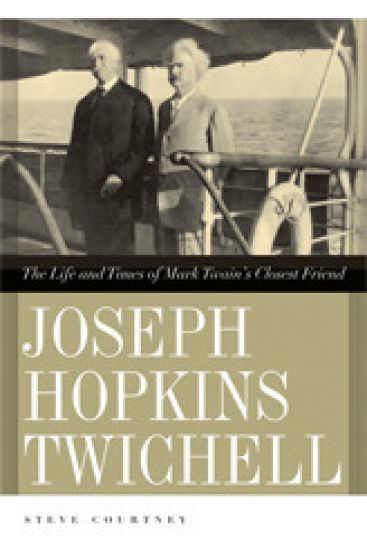
Joseph Hopkins Twichell

Joseph Hopkins Twichell

Steve Courtney

University of Georgia Press
2008
sidottu
Bewilderment often follows when one learns that Mark Twain’s best friend of forty years was a minister. That Joseph Hopkins Twichell (1838-1918) was also a New Englander with Puritan roots only entrenches the “odd couple” image of Twain and Twichell. This biography adds new dimensions to our understanding of the Twichell-Twain relationship; more important, it takes Twichell on his own terms, revealing an elite Everyman—a genial, energetic advocate of social justice in an era of stark contrasts between America’s “haves and have-nots.”After Twichell’s education at Yale and his Civil War service as a Union chaplain, he took on his first (and only) pastorate at Asylum Hill Congregational Church in Hartford, Connecticut, then the nation’s most affluent city. Steve Courtney tells how Twichell shaped his prosperous congregation into a major force for social change in a Gilded Age metropolis, giving aid to the poor and to struggling immigrant laborers as well as supporting overseas missions and cultural exchanges. It was also during his time at Asylum Hill that Twichell would meet Twain, assist at Twain’s wedding, and preside over a number of the family’s weddings and funerals.Courtney shows how Twichell’s personality, abolitionist background, theological training, and war experience shaped his friendship with Twain, as well as his ministerial career; his life with his wife, Harmony, and their nine children; and his involvement in such pursuits as Nook Farm, the lively community whose members included Harriet Beecher Stowe and Charles Dudley Warner. This was a life emblematic of a broad and eventful period of American change. Readers will gain a clear appreciation of why the witty, profane, and skeptical Twain cherished Twichell’s companionship.