Kirjojen hintavertailu. Mukana 11 244 527 kirjaa ja 12 kauppaa.

Kirjahaku

Etsi kirjoja tekijän nimen, kirjan nimen tai ISBN:n perusteella.

1000 tulosta hakusanalla Judith Adamson

Folklore of Lake Erie

Folklore of Lake Erie

Judith S. Neulander

INDIANA UNIVERSITY PRESS
2024
pokkari
Welcome to a very different Lake Erie—where ghost ships sail silently, a Black Dog brings doom to sailors who see it, and sea monsters swirl in the murky depths above a UFO base. In Folklore of Lake Erie, Judith S. Neulander presents these captivating tales and many more from the smallest, yet arguably the most peculiar, of the Great Lakes in North America. Whether you are embarking on a discovery of the vampire crypt that lurks in the shadows while Lincoln's ghost train speeds past on its eternal journey or reminiscing about the tall tales your grandfather used to share, this delightful treasure trove of folklore and local traditions from the Lake Erie region contains legends and stories that are both astonishing and entertaining. Endlessly captivating and easily accessible, Folklore of Lake Erie is a distinctive compilation of eerie and enchanting narratives from across the years that will surprise and delight readers. Just be sure to keep an eye out for any peculiar Black Dogs that may cross your path along the way.
The Resisting Reader

The Resisting Reader

Judith Fetterley

Indiana University Press
1981
pokkari
"Fetterley's questions are often so crucial, her observations repeatedly so acute, that they force us to ask how we avoided them in the past." —Women's Studies International Quarterly " . . . thoughtful, informed, and well written." —Choice
The Woman at the Keyhole

The Woman at the Keyhole

Judith Mayne

Indiana University Press
1990
pokkari
"[The Woman at the Keyhole is one] of the most significant contributions to feminist film theory sin ce the 1970s." —SubStance " . . . this intelligent, eminently readable volume puts women's filmmaking on the main stage. . . . serves at once as introduction and original contribution to the debates structuring the field. Erudite but never obscure, effectively argued but not polemical, The Woman at the Keyhole should prove to be a valuable text for courses on women and cinema." —The Independent When we imagine a "woman" and a "keyhole," it is usually a woman on the other side of the keyhole, as the proverbial object of the look, that comes to mind. In this work the author is not necessarily reversing the conventional image, but rather asking what happens when women are situated on both sides of the keyhole. In all of the films discussed, the threshold between subject and object, between inside and outside, between virtually all opposing pairs, is a central figure for the reinvention of cinematic narrative.
Directed by Dorothy Arzner

Directed by Dorothy Arzner

Judith Mayne

Indiana University Press
1995
pokkari
Dorothy Arzner was the exception in Hollywood film history—the one woman who succeeded as a director, in a career that spanned three decades. In Part One, Dorothy Arzner's film career—her work as a film editor to her directorial debut, to her departure from Hollywood in 1943—is documented, with particular attention to Arzner's roles as "star-maker" and "woman's director." In Part Two, Mayne analyzes a number of Arzner's films and discusses how feminist preoccupations shape them, from the women's communities central to Dance, Girl, Dance and The Wild Party to critiques of the heterosexual couple in Christopher Strong and Craig's Wife. Part Three treats Arzner's lesbianism and the role that desire between women played in her career, her life, and her films.
Deep Listeners

Deep Listeners

Judith Becker

Indiana University Press
2004
pokkari
"A fascinating thesis and a timely synthesis. . . . Becker urges the reader to view certain arcane cultural rituals as being in the mainstream of spiritual development and argues that the resulting trance-like states may relate to the basic fabric of emotions and consciousness, which are our ancestral, animalian heritage. This is both a risky and courageous undertaking that challenges both cultural and neuroscientific studies." —Jaak Panksepp, author of Affective Neuroscience: The Foundations of Human and Animal Emotions In Deep Listeners, Judith Becker brings together scientific and cultural approaches to the study of music and emotion, and music and trancing. Becker claims that persons who experience deep emotions when listening to music are akin to those who trance within the context of religious rituals. Using new discoveries in the fields of neuroscience and biology, Deep Listeners outlines an emotion-based theory of trance using examples from Southeast Asian and American musics. A companion CD includes excerpts from several of the musical genres under discussion, and a 16-page color insert presents vivid documentation of the global experience of "deep listening."
The Social Machine

The Social Machine

Judith Donath

MIT Press
2014
sidottu
New ways to design spaces for online interaction-and how they will change society.Computers were first conceived as "thinking machines," but in the twenty-first century they have become social machines, online places where people meet friends, play games, and collaborate on projects. In this book, Judith Donath argues persuasively that for social media to become truly sociable media, we must design interfaces that reflect how we understand and respond to the social world. People and their actions are still harder to perceive online than face to face: interfaces are clunky, and we have less sense of other people's character and intentions, where they congregate, and what they do.Donath presents new approaches to creating interfaces for social interaction. She addresses such topics as visualizing social landscapes, conversations, and networks; depicting identity with knowledge markers and interaction history; delineating public and private space; and bringing the online world's open sociability into the physical world. Donath asks fundamental questions about how we want to live online and offers thought-provoking designs that explore radically new ways of interacting and communicating.
Open for Business

Open for Business

Judith A. Layzer

MIT Press
2014
pokkari
A detailed analysis of the policy effects of conservatives' decades-long effort to dismantle the federal regulatory framework for environmental protection.Since the 1970s, conservative activists have invoked free markets and distrust of the federal government as part of a concerted effort to roll back environmental regulations. They have promoted a powerful antiregulatory storyline to counter environmentalists' scenario of a fragile earth in need of protection, mobilized grassroots opposition, and mounted creative legal challenges to environmental laws. But what has been the impact of all this activity on policy? In this book, Judith Layzer offers a detailed and systematic analysis of conservatives' prolonged campaign to dismantle the federal regulatory framework for environmental protection.Examining conservatives' influence from the Nixon era to the Obama administration, Layzer describes a set of increasingly sophisticated tactics-including the depiction of environmentalists as extremist elitists, a growing reliance on right-wing think tanks and media outlets, the cultivation of sympathetic litigators and judges, and the use of environmentally friendly language to describe potentially harmful activities. She argues that although conservatives have failed to repeal or revamp any of the nation's environmental statutes, they have influenced the implementation of those laws in ways that increase the risks we face, prevented or delayed action on newly recognized problems, and altered the way Americans think about environmental problems and their solutions. Layzer's analysis sheds light not only on the politics of environmental protection but also, more generally, on the interaction between ideas and institutions in the development of policy.
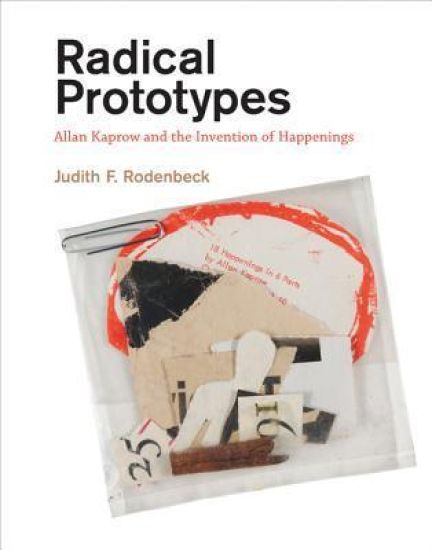
Radical Prototypes

Radical Prototypes

Judith F. Rodenbeck

MIT Press
2014
pokkari
An examination of an experiential and experimental art form that, despite its evanescence, has shaped participatory art into the present."Happenings" have pop connotations that conjure up 1960s youth culture and hippies in public, joyful rebellion. Scholars, meanwhile, locate happenings in a genealogy of avant-garde performance that descends from futurism, surrealism, and Dada through the action painting of the 1950s. In Radical Prototypes, Judith Rodenbeck argues for a more complex etiology. Allan Kaprow coined the term in 1958 to name a new collage form of performance, calling happenings "radical prototypes" of performance art. Rodenbeck offers a rigorous art historical reading of Kaprow's project and related artworks. She finds that these experiential and experimental works offered not a happy communalism but a strong and canny critique of contemporary sociality. Happenings, she argues, were far more ambivalent, negative, and even creepy than they have been portrayed, either in contemporaneous accounts or in more recent efforts to connect them to contemporary art's participatory strategies.In Radical Prototypes, Rodenbeck recovers the critical force of happenings, addressing them both as theoretical objects and as artworks, investigating broader epistemological and formal concerns as well as their material and performative aspects. She links happenings to scores by John Cage (especially 4'33"), avant-garde theater, and photography, and offers new readings of projects ranging from Kaprow's 18 Happenings in 6 Parts (1959) to Gerhard Richter's Leben mit Pop (1963).Rodenbeck casts happenings as a form of participatory art that simultaneously delivers a radical critique of that very participation-a view that revises our understanding of contemporary constructions of the participatory as well as of 1960s projects from Fluxus to conceptual art.
To Live in the New World

To Live in the New World

Judith K. Major

MIT Press
2007
pokkari
A. J. Downing (1815-1852) wrote the first American treatise on landscape gardening. As editor of the Horticulturist and the country's leading practitioner and author, he promoted a national style of landscape gardening that broke away from European precedents and standards. Like other writers and artists, Downing responded to the intensifying demand in the nineteenth century for a recognizably American cultural expression.To Live in the New World examines in detail Downing's growing conviction that landscape gardening must be adapted to the American people and the nation's indigenous landscapes. Despite significant changes in its three editions, Downing's ATreatise on the Theory and Practice of Landscape Gardening remained true to the original intent: to guide country gentlemen-with enough money, time, and taste-in the creation of ideal homes and pleasure grounds. While most historians and critics have focused on Downing's more formally written treatise, Judith Major gives equal emphasis to Downing's spirited monthly editorials in the Horticulturist. In the journal, Downing "spoke American" and encouraged his countrymen and women to practice economy, to use America's rich natural resources wisely yet artfully, to be content with a little cottage and a few fine native trees.Although the book is not a biography, the people, events, and experiences that shaped Downing's thinking on landscape gardening are central to the story. Significantly, Downing spent his life in the spectacular natural setting of the Hudson River valley. Through his professional practice, travels, reading, and extensive correspondence, he gradually became aware of the individual and collective needs that he served. Landscape gardening, Downing came to feel, had to respect not only a client's desires and means, but also the nation's republican values of moderation, simplicity, and civic responsibility. Major takes a fresh look at the influence on Downing's theory and practice of British writers such as Archibald Alison, Uvedale Price, Humphry Repton, John Claudius Loudon, and John Ruskin, and analyzes for the first time his debt to the French academician A. C. Quatremere de Quincy's Essay on Imitation.
Windows Into the Past

Windows Into the Past

Judith Brown

University of Notre Dame Press
2009
nidottu
Judith M. Brown, one of the leading historians of South Asia, provides an original and thought-provoking strategy for conducting and presenting historical research in her latest book, ""Windows into the Past"". Brown looks at how varieties of 'life history' that focus on the lives of institutions and families, as well as individuals, offer a broad and rich means of studying history. Her distinctively creative approach differs from traditional historical biography in that it explores a variety of 'life histories' and shows us how they become invaluable windows into the past. Following her introduction, ""The Practice of History"", Brown opens windows on the history of South Asia. She begins with the life history of an educational institution, Balliol College, Oxford, and tracks the interrelationship between Britain and India through the lives of the British and Indian men who were educated there. She then demonstrates the significance of family life history, showing that by observing patterns of family life over several generations, it is possible to gain insight into the experiences of groups of people who rarely left historical documents about themselves, particularly South Asian women. Finally, Brown uses the life history of two prominent individuals, Mahatma Gandhi and Jawaharlal Nehru, to examine questions about the nature of Indian nationalism and the emergent Indian state.
Scaramutza in Germany

Scaramutza in Germany

Judith P. Aikin

Pennsylvania State University Press
1990
sidottu
Scaramuzza, Scaramouche: the commedia dell'arte figure made a triumphal entry into German literature in the plays of Caspar Stieler (1632–1707). Transformed into a master of language and languages, Scaramutza—social critic, voluptuary, and mouthpiece for his author—ushers in a new type of comedy that depends more on the happy ending than on laughter for its effect. This study should both establish the significance of the long-neglected dramatic works of Caspar Stieler, already regarded as an important lyric poet of the German Baroque, and serve to initiate a reevaluation of German comedy and of the standard definition of the comic genre used by Germanists as Aikin explores the heroic or romantic comedy as a subgenre of literary merit. The study includes a discussion of Stieler's important contributions to the development of the German-language Singspiel and opera.
Scaramutza in Germany

Scaramutza in Germany

Judith P. Aikin

Pennsylvania State University Press
1989
pokkari
Scaramuzza, Scaramouche: the commedia dell'arte figure made a triumphal entry into German literature in the plays of Caspar Stieler (1632–1707). Transformed into a master of language and languages, Scaramutza—social critic, voluptuary, and mouthpiece for his author—ushers in a new type of comedy that depends more on the happy ending than on laughter for its effect. This study should both establish the significance of the long-neglected dramatic works of Caspar Stieler, already regarded as an important lyric poet of the German Baroque, and serve to initiate a reevaluation of German comedy and of the standard definition of the comic genre used by Germanists as Aikin explores the heroic or romantic comedy as a subgenre of literary merit. The study includes a discussion of Stieler's important contributions to the development of the German-language Singspiel and opera.
The Art and Science of William Bartram

The Art and Science of William Bartram

Judith Magee

Pennsylvania State University Press
2007
sidottu
William Bartram's love of nature led him to explore the environs of the American Southeast between 1773 and 1777. Here he collected plants and seeds, kept a journal of his observations of nature, and made drawings of the plants and animals he encountered. The completed drawings were sent to his patron in London, and these make up the bulk of the collection held at London's Natural History Museum.The Art and Science of William Bartram brings together, for the first time, all sixty-eight drawings by Bartram held at the Natural History Museum, along with works by some of the most well-known natural history artists of the eighteenth and nineteenth centuries. The volume explores Bartram's writings and artwork and reveals how influential he was in American science of the period. Bartram was an inspiration to a whole generation of young scientists and field naturalists. He was an authority on the birds of North America and on the lifestyle, culture, and language of the indigenous people of the regions through which he traveled. His work influenced Wordsworth, Coleridge, and other writers and poets throughout the past two hundred years, and his drawings reveal an ecological understanding of nature that only truly developed in the latter half of the nineteenth century.
Life Support

Life Support

Judith Cohen Margolis

Pennsylvania State University Press
2019
sidottu
In this meditative, heartbreaking, and unexpectedly comforting book, artist and essayist Judith Margolis tells the story of her mother’s illness, decline, and death through thoughtfully written vignettes, poignant drawings, and poetic, prayerful affirmations.As her mother fights a series of health crises and faces the end of her life, Margolis documents her anxious concern and her father’s turmoil while juggling responsibilities and her own distress. The resulting narrative, told with quiet intensity and candor, bears witness to contentious deliberations over medical decisions, the difficulties of patient care, and the complicated dynamics of family. In this book, designed to imitate a traditional Jewish prayer book, Margolis reminds herself and others caring for a dying parent to “pray”—pray for clarity, pray to stay centered, pray to forgive oneself—as a way of acknowledging and embodying the turbulent emotions involved. Both the form of the book and Margolis’s rendering of the traditions involved in a family death ground Life Support firmly in the Jewish experience, providing a spiritual layer to this honest, realistic narrative that all readers will find inspiring and relevant.Life Support: Invitation to Prayer is a unique testimony to the power of creative response to infirmity and careful documentation during times of personal loss, as well as a loving tribute to family, spirituality, and grief.
Evidence-based Practice

Evidence-based Practice

Judith Davies

Routledge
2012
nidottu
Taking an evidence-based approach is fundamental to ensuring good clinical practice, but it’s not always easy. This info-packed guide will be an invaluable resource throughout your healthcare or nursing studies and post-registration, helping you to understand the essentials of EBP theory and application, and develop new insights into healthcare practice. The Nursing & Health Survival Guides have evolved - take a look at our our app for iPhone and iPad.
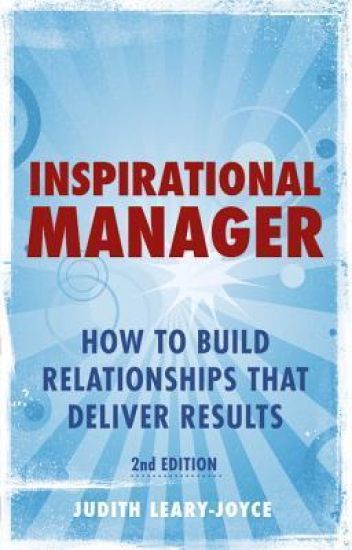
Inspirational Manager

Inspirational Manager

Judith Leary-Joyce

Pearson Business
2011
nidottu
Inspirational managers earn more respect, suffer less stress and produce better results than other managers. Want to be one? This book tells you how. Drawing on the experiences of real inspirational managers, facing real challenges and managing real people, Inspirational Manager, now in it’s second edition, gives you the tools and techniques to ensure that people notice you and say – “now there’s a great manager!”.
The Sixties Papers

The Sixties Papers

Judith Clavir Albert

Praeger Publishers Inc
1984
sidottu
Featuring documents of the period by participants such as Norman Mailer, Allen Ginsberg, H. Rap Brown, Abbie Hoffman, and Robin Morgan, this volume brings together a wide range of material on one of the most turbulent decades in American history. The contributions are divided into five sections, covering ideas influential on the early New Left, the anti-war movement, SDS and Weathermen, the counterculture and Yippies and the the women's movement. The book surveys all the major issues that concerned the sixties generation, and offers a unique documentary history of the period.
Women Shaping Art

Women Shaping Art

Judith K. Van Wagner

Praeger Publishers Inc
1984
sidottu
This lively volume contains 19 interviews with women art critics and gallery dealers which cover their impact on contemporary art. The subjects include those women who have been among the most influential in the art world from the end of World War II to the present, such as Paula Cooper, the first to open a SoHo gallery; Emily Grenauer, the only person to have received a Pulitzer Prize in art criticism; and Ileana Sonnabend, who, together with her husband at at the time, Leo Castelli, discovered Robert Rauschenberg and Andy Warhol and the entire Pop movement.
The Sixties Papers

The Sixties Papers

Judith Clavir Albert

Praeger Publishers Inc
1984
nidottu
Featuring documents of the period by participants such as Norman Mailer, Allen Ginsberg, H. Rap Brown, Abbie Hoffman, and Robin Morgan, this volume brings together a wide range of material on one of the most turbulent decades in American history. The contributions are divided into five sections, covering ideas influential on the early New Left, the anti-war movement, SDS and Weathermen, the counterculture and Yippies and the the women's movement. The book surveys all the major issues that concerned the sixties generation, and offers a unique documentary history of the period.