Kirjojen hintavertailu. Mukana 12 358 272 kirjaa ja 12 kauppaa.

Kirjahaku

Etsi kirjoja tekijän nimen, kirjan nimen tai ISBN:n perusteella.

1000 tulosta hakusanalla Judith R. Hendricks

Heidegger's Eschatology

Heidegger's Eschatology

Judith Wolfe

Oxford University Press
2015
nidottu
Heidegger's Eschatology is a ground-breaking account of Heidegger's early engagement with theology, from his beginnings as an anti-Modernist Catholic to his turn towards an undogmatic Protestantism and finally to a resolutely a-theistic philosophical method. The book centres on Heidegger's developing commitment to an eschatological vision, derived from theological sources but reshaped into a central resource for the development of an atheistic phenomenological account of human existence. This vision originated in Heidegger's attempt, in the late 1910s, to formulate a phenomenology of religious life that would take seriously the inherent temporality of human existence. In this endeavour, Heidegger turned to two trends in Protestant scholarship: the discovery of eschatology as a central preoccupation of the Early Church by A. Schweitzer and the 'History of Doctrine' School, and the 'existential' eschatology of Karl Barth and Eduard Thurneysen, indebted to Kierkegaard, Dostoevsky, and Franz Overbeck. His synthesis of such trends within a phenomenological framework (elaborated primarily via readings of Paul and Augustine in his lecture courses of 1921-2) led Heidegger to postulate an existential sense of eschatological unrest as the central characteristic of authentic Christian existence. His description of this expectant restlessness, however, was now inescapably at odds with its Christian sources, since Heidegger's commitment to a phenomenological description of the human situation led him to abstract the 'existential' experience of expectation from its traditional object: the 'blessed hope' for the Kingdom of God. Christian hope thus for Heidegger no longer constitutes, but rather negates 'eschatological' unrest, because such hope projects an end to that unrest, and thus to authentic existence itself. Against the Christian vision, Heidegger therefore develops a systematic 'eschatology without eschaton', paradigmatically expressed as 'being-unto-death'. Judith Wolfe tells the story of his re-conception of eschatology, using a wealth of primary and newly available original-language sources, and offering in-depth analysis of Heidegger's relationship to theological tradition and the theology of his time.
Myths of the Underworld in Contemporary Culture

Myths of the Underworld in Contemporary Culture

Judith Fletcher

Oxford University Press
2019
sidottu
Myths of the Underworld in Contemporary Culture: The Backward Gaze examines a series of twentieth and twenty-first century fictional works that adapt Greco-Roman myths of the catabasis, the heroic journey to the underworld. Covering a range of genres - including novels, comics, and children's culture, by authors such as Elena Ferrante, Salman Rushdie, Neil Gaiman, A. S. Byatt, Toni Morrison, and Anne Patchett - it reveals how an enduring fascination with life after death, and fantasies of accessing the world of the dead while we are still alive, manifest themselves in myriad and varied re-imaginings of the ancient descent myth. The volume begins with a detailed overview of the use of the myth by ancient authors such as Homer, Aristophanes, Vergil, and Ovid, before exploring the ways in which the narrative of a return trip to Hades by Odysseus, Aeneas, Orpheus, and Persephone can be manipulated by contemporary storytellers to fit themes of social marginality and alterity, postmodern rebellion, the position of female authors in the literary canon, and the dislocation endured by refugees, exiles, and diasporic populations. It also argues that citations of classical underworld stories can disrupt and challenge the literary canon by using media - such as comic books, children's culture, or rock music - not conventionally associated with high culture.
Memory in Early Modern Europe, 1500-1800

Memory in Early Modern Europe, 1500-1800

Judith Pollmann

Oxford University Press
2017
sidottu
For early modern Europeans, the past was a measure of most things, good and bad. For that reason it was also hotly contested, manipulated, and far too important to be left to historians alone. Memory in Early Modern Europe offers a lively and accessible introduction to the many ways in which Europeans engaged with the past and 'practised' memory in the three centuries between 1500 and 1800. From childhood memories and local customs to war traumas and peacekeeping , it analyses how Europeans tried to control, mobilize and reconfigure memories of the past. Challenging the long-standing view that memory cultures transformed around 1800, it argues for the continued relevance of early modern memory practices in modern societies.
Textbook on Land Law

Textbook on Land Law

Judith-Anne MacKenzie; Aruna Nair

Oxford University Press
2020
nidottu
Practical and contextual in its approach, lucid and engaging in style, Textbook on Land Law enlivens the subject for students. The innovative running case study used throughout illustrates the law in action, helping students to visualize the real life applications of the law and demystify abstract concepts. Academic details on key topics are explained straightforwardly for an accessible learning experience. This is enhanced by additional examples, extracts, diagrams, and sample documents which contribute to the building blocks of a clear framework, enabling students to gain a pragmatic understanding of the essential principles. A glossary of key terms is included at the end of the book for ease of reference, while end-of-chapter reading suggestions support further research and exam preparation. Digital formats and resources The eighteenth edition is available for students and institutions to purchase in a variety of formats, and is supported by online resources. - The e-book offers a mobile experience and convenient access along with functionality tools, navigation features, and links that offer extra learning support: www.oxfordtextbooks.co.uk/ebooks - This textbook is also accompanied by online resources including self-test questions with instant feedback, guidance on approaching land law problems, as well as additional examination of topics such as leasehold covenants, perpetuities and accumulations, and undue influence and mortgages. There will also be updates on the legal developments of land law.
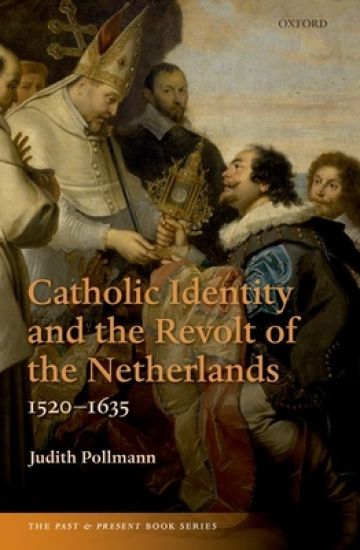
Catholic Identity and the Revolt of the Netherlands, 1520-1635
The Revolt that ripped apart the sixteenth-century Netherlands began as a rebellion against Habsburg authority but it eventually became a war of religion that resulted in the formation of two new states. Although the Southern Netherlands ultimately witnessed the triumph of the militant Catholicism of the Baroque, Catholics throughout the Low Countries found that the Revolt had changed their lives forever. Mining the unusually rich diaries, memoirs, and poems written by Netherlandish Catholics, Judith Pollmann explores how Catholic believers experienced religious and political turmoil in the generations between Erasmus and Rubens. She investigates the initial passivity of Catholics in the face of Calvinist aggression, and asks why they actively supported a Catholic revival after 1585. By listening to the voices of individual Catholics, lay and clerical, Judith Pollmann offers a new perspective both on the Revolt of the Netherlands and on the formation of early modern Catholic identity. Exploring what it took to turn traditional Christians into the agents of their own Counter-Reformation, she sees the dynamic relationship between priests and people as a catalyst for religious change in the sixteenth and seventeenth centuries.
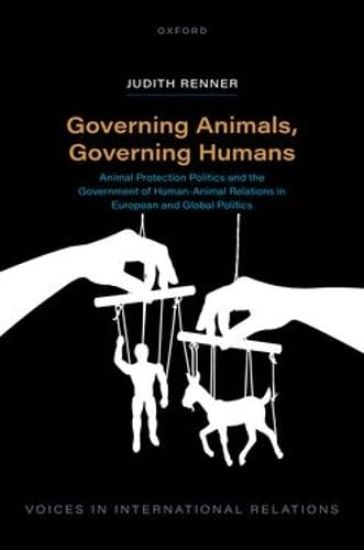
Governing Animals, Governing Humans

Governing Animals, Governing Humans

Judith Renner

Oxford University Press
2025
sidottu
Governing Animals, Governing Humans explores how the global politics of animal protection works as the government of human-animal relations. Responding to recent calls by scholars coming from post-humanist, new materialist, or post-anthropocentric backgrounds who criticize the discipline's human-centred outlook it suggests a way how animals can be analyzed as targets of government by bringing into conversation Foucauldian scholarship within IR, political science and Critical Animal Studies (CAS). Empirically, the book is driven by an interest to understand and theorize two contradicting global tendencies in regard to how humans relate to animals: on the one hand, a growing global concern for animals which has led to animal protection and animal welfare turning into issues of international relevance. On the other hand, the growing use and exploitation of animals as means of human convenience which manifests in the increase of the global trade in animal products, in the numbers of animals used worldwide and in the conditions under which these animals are kept. The book argues that whereas these tendencies seem to be conflicting on the first view, they are in fact closely intertwined as animal welfare, which has emerged as the dominant strategy of global animal protection, establishes the intensive production and use of animals along animal welfare standards as the primary practice of animal protection, coopts animals and humans into this strategy as subjects of animal welfare and animal consumption and thus governs human-animal relations along the seemingly contradicting but intertwined tendencies of animal protection and animal use. ABOUT THE SERIES: Voices in International Relations, published under the auspices of the European International Studies Association (EISA), furthers the development of research at the frontiers of International Relations (IR). It expands the remit of the field by including innovative scholarship that broadens key debates in the discipline, but it is more interested in reconfiguring such debates by approaching them from inside and outside the conventional core. Thematically, we aim to publish research that pushes the limits of IR conventionally defined from within and connects it to debates developing outside the discipline. We are committed to furthering diversity and inclusion in terms of authorship, location, topics and approaches from both inside and outside Europe. We have an inclusive approach to neighbouring disciplines, be it sociology, history, anthropology, geography, economics, political theory or law. Series editors: Debbie Lisle, Tanja Aalberts, Anna Leander, and Laura Sjoberg.
Russia's Unknown Agriculture

Russia's Unknown Agriculture

Judith Pallot; Tat'yana Nefedova

Oxford University Press
2007
sidottu
Basing their findings on four years of research during which they studied rural districts drawn from a variety of contrasting regions of European Russia, the authors discuss the place of rural households in Russia's agri-food production system. They show that far from being solely concerned with 'survival' household plots in contemporary Russia are increasingly used to produce crops and livestock products for the market. In the book they describe the rich variety of forms that small and independent farming takes today from highly localised clusters of cucumber or tomato producers to specialization in crop or animal husbandry at a higher spatial scale or associated with particular ethnic groups. The authors systematically examine the influence on past and present practices of distance and the environment, the state of the large farm sector, local customs, and ethnicity on what households produce and how they produce it often using case studies of people they have met (plot holders, farmers, local officials) to illustrate their point. They criticise the tendency of the household production to be treated as the agricultural 'Other' in post-Soviet Russia and argue with the right incentives it has the potential for further development.
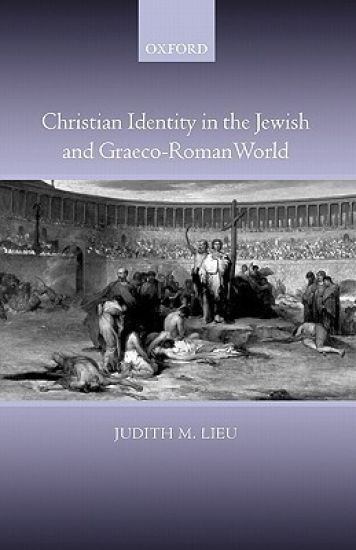
Christian Identity in the Jewish and Graeco-Roman World
'I am a Christian' is the confession of the martyrs of early Christian texts and, no doubt, of many others; but what did this confession mean, and how was early Christian identity constructed? This innovative study sets the emergence of Christian identity in the first two centuries, as it is constructed by the broad range of surviving literature, within the wider context of Jewish and Graeco-Roman identity. It uses a number of models from contemporary constructionist views of identity formation to explore how what comes to be seen as 'Christian' literature creates a sense of what to be 'a Christian' means, and traces both continuities and discontinuities with the ways in which Jewish and Graeco-Roman identity were also being constructed through their texts. It seeks to acknowledge the centrality of texts in shaping early Christianity, historically as well as in our perception of it, while also exploring how we might move from those texts to the individuals and communities who preserved them. Such an approach challenges more traditional emphases on the development of institutions, whether structures or credal and ethical formulations, which often fail to recognize the rhetorical function of the texts on which they draw, and the uncertainties of how well these reflect the actual practice and experience of individuals and communities. While building on recent recognition of the diversity of early Christianity, the book goes on to explore the question whether it is possible to speak of a distinctive Christian identity across both the range of early texts and as a pressing historical and theological question in the contemporary world.
Christian Identity in the Jewish and Graeco-Roman World
'I am a Christian' is the confession of the martyrs of early Christian texts and, no doubt, of many others; but what did this confession mean, and how was early Christian identity constructed? This innovative study sets the emergence of Christian identity in the first two centuries, as it is constructed by the broad range of surviving literature, within the wider context of Jewish and Graeco-Roman identity. It uses a number of models from contemporary constructionist views of identity formation to explore how what comes to be seen as 'Christian' literature creates a sense of what to be 'a Christian' means, and traces both continuities and discontinuities with the ways in which Jewish and Graeco-Roman identity were also being constructed through their texts. It seeks to acknowledge the centrality of texts in shaping early Christianity, historically as well as in our perception of it, while also exploring how we might move from those texts to the individuals and communities who preserved them. Such an approach challenges more traditional emphases on the development of institutions, whether structures or credal and ethical formulations, which often fail to recognize the rhetorical function of the texts on which they draw, and the uncertainties of how well these reflect the actual practice and experience of individuals and communities. While building on recent recognition of the diversity of early Christianity, the book goes on to explore the question whether it is possible to speak of a distinctive Christian identity across both the range of early texts and as a pressing historical and theological question in the contemporary world.
Catholic Identity and the Revolt of the Netherlands, 1520-1635
The Revolt that ripped apart the sixteenth-century Netherlands began as a rebellion against Habsburg authority but it eventually became a war of religion that resulted in the formation of two new states. Although the Southern Netherlands ultimately witnessed the triumph of the militant Catholicism of the Baroque, Catholics throughout the Low Countries found that the Revolt had changed their lives forever. Mining the unusually rich diaries, memoirs, and poems written by Netherlandish Catholics, Judith Pollmann explores how Catholic believers experienced religious and political turmoil in the generations between Erasmus and Rubens. She investigates the initial passivity of Catholics in the face of Calvinist aggression, and asks why they actively supported a Catholic revival after 1585. By listening to the voices of individual Catholics, lay and clerical, Judith Pollmann offers a new perspective both on the Revolt of the Netherlands and on the formation of early modern Catholic identity. Exploring what it took to turn traditional Christians into the agents of their own Counter-Reformation, she sees the dynamic relationship between priests and people as a catalyst for religious change in the sixteenth and seventeenth centuries.
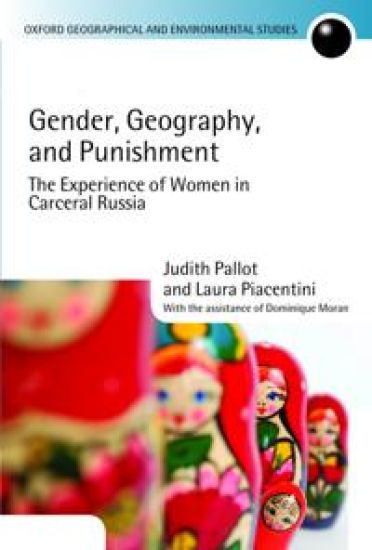
Gender, Geography, and Punishment

Gender, Geography, and Punishment

Judith Pallot; Laura Piacentini; Dominique Moran

Oxford University Press
2012
sidottu
This book is the first of its kind that brings together human geography and the sociology of punishment to explore the relationship between distance and the punishment in contemporary Russia. Using established penological and geographical theories, the book presents in-depth empirical research to show how the experiences of women prisoners are shaped by the distances that the Russian penal service sends prisoners to serve their sentences. Its most eye-catching feature is its use of interviews conducted by the authors and their research team with adult and juvenile women prisoners, ex-prisoners and prison officers in penal facilities in different regions of the Russian Federation between 2006 and 2010. It includes discussion of the impact of Russia's distinctive penal geography on prisoners' family relationships, how women prisoners' sense of place and gender identities are shaped and re-shaped on their journey from pre-trial facility to 'correction colony' to release, and the social hierarchies, relationships and practices that characterise Russia's penal institutions for women. The authors are both experienced researchers in Russia. The book brings together their complementary disciplinary expertise in the development of the concept of 'coerced mobilization' to explore Russia's punishment culture. The book argues that Russia's inherited geography of penality, combined with traditional ideas about women's role that shape the penal service's management of women prisoners, add to their 'pains of imprisonment'. Crucially, the authors show how these factors are constraining the Russian penal service's ability to implement successive reforms aimed at humanizing Russia's notoriously tough prisons. Russian imprisonment as it relates to women is, they believe, an area of significant concern for lawmakers in that country as well as to human rights campaigners, geographers interested in space and power, and scholars studying the post-Soviet system.
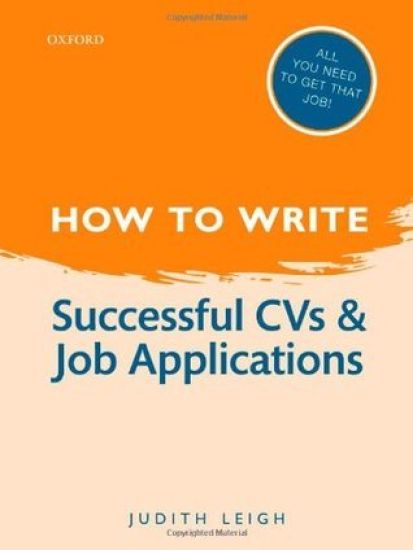
How to Write: Successful CVs and Job Applications

How to Write: Successful CVs and Job Applications

Judith Leigh

Oxford University Press
2013
nidottu
Write a successful CV, cover letter, and job application following the advice in this practical guide. It offers clear, step-by-step guidance on all these matters, and whether you are seeking your first job, coming back to work after a break, aiming to progress in your chosen career, or changing careers altogether, this book takes you through the process that's right for your situation. This new edition has been thoroughly revised and updated, and its structure has been overhauled to make it even easier to find the information you are looking for, plus chapters now include helpful end-of-chapter summaries to recap the key points. New to this edition is a list of 'FAQs', with answers directing you straight to the sections you need. From the building blocks of CV-writing to tweaking your cover letter, from speculative applications to applying for jobs online, How to Write: Successful CVs and Job Applications gives you practical advice and helpful tips, checklists, dos and don'ts, and examples to ensure that you get the job that's right for you.
Gendered Bodies: Feminist Perspectives

Gendered Bodies: Feminist Perspectives

Judith Lorber; Lisa Jean Moore

Oxford University Press
2010
nidottu
Designed for undergraduate students, Gendered Bodies: Feminist Perspectives, Second Edition, is a concise textbook/reader that provides a critical and multifaceted approach to the study of gendered bodies. Acclaimed scholars Judith Lorber and Lisa Jean Moore analyze the construction of gendered bodies in different contexts. Exploring a broad range of both long-established and more cutting-edge topics in feminist studies, Lorber and Moore present scholarly research, offer information on relevant laws and political events, and point to directions for social change. Gendered Bodies, Second Edition, focuses on key themes that reveal how gendered relations, ideologies, and practices shape human bodies. At the same time, it shows how human bodies are linked to other significant axes of inequality based on racial ethnic group, disability, sexuality, class, culture, religion, age, and nation. Thoroughly updated throughout, the second edition incorporates sixteen new selections--including non-Western perspectives--on such fascinating topics as evolution and motherhood; breastfeeding; breast cancer; the effects of height on men; job discrimination and transgendered people; world champion runner Caster Semenya and sex verification; disability, gender, and embodiment; and Palestinian female suicide bombers. It also adds new references and a concluding chapter, "Social Bodies in an Interconnected World." Gendered Bodies, Second Edition, is ideal for courses on the body, feminist theory, women and health, and the sociology of gender. Each chapter includes a list of key concepts, three readings, and suggested readings. The book also includes an appendix of class exercises.
Yoga for Singing

Yoga for Singing

Judith E. Carman

Oxford University Press Inc
2012
kierre
The 19th-century Italian singing teacher Giovanni Battista Lamperti once wrote, "'Know thyself' applies to the singer more than to other professions, because to sing well, body, soul, and mind are tuned together." Yoga, with its focus on connecting mind, body, and soul, is a tool that can greatly enhance the art of singing in this very way. In Yoga for Singing, author Judith Carman outlines the many connections between the two arts, presenting a systematic approach to yoga practices to support the development of singing technique as well as to lay a foundation for confident performance and a long and healthy singing career. She demonstrates how closely practices such as physical postures, breathing practices, and deep relaxation techniques match the needs of singers. Included in the book and its extensive companion website are copious illustrations and specific exercises designed to be used by singers and voice teachers, regardless of their level of experience with yoga. With a unique take on technique and performance improvement, this book is an excellent resource for both vocal students and professionals at any stage of their career.
Gender Inequality: Feminist Theories and Politics

Gender Inequality: Feminist Theories and Politics

Judith Lorber

Oxford University Press
2011
nidottu
In Gender Inequality: Feminist Theories and Politics, Fifth Edition, internationally renowned feminist Judith Lorber examines thirteen evolving theories of gender inequality. Tightly structured around Lorber's own paradigm of "reform, resistance, rebellion," this combination text/reader acknowledges feminism's significant contributions to redressing gender inequality and celebrates its enormous accomplishments over the last forty years. It also documents feminism's ongoing political activism, and with an exploration of postmodern and third-wave trends, points toward its future. Significantly rewritten, reorganized, and updated, the fifth edition includes: * More coverage of cultural feminism* New readings on such topics as deconstruction, ecofeminism, and Chicana feminism* An expanded discussion of postmodern feminism, including transgendering and its congruences and conflicts with feminist theory and politics* New references on transnational feminism and feminist studies of men
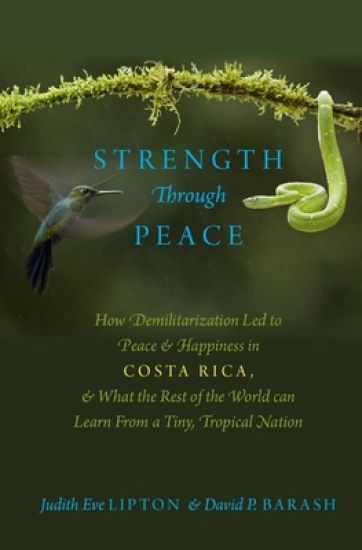
Strength Through Peace

Strength Through Peace

Judith Eve Lipton; David P. Barash

Oxford University Press Inc
2018
sidottu
Costa Rica is the only full-fledged and totally independent country to be entirely demilitarized. Its military was abolished in 1948, with the keys to the armory handed to the Department of Education. Socially, Costa Rica is a success story. Although 94th in the world for GDP, it is in the top 10 on various measurements of health and well-being. Citizens enjoy high standards of living that include universal access to healthcare, education, and pensions. In addition, the country practices sustainable resource management, such as reforestation and the development of solar and wind power, and it expects to be carbon neutral by 2020. Hunting is illegal. 25% of the landmass is parks and reserves. The government supports universal health care, especially maternal and child health. Costa Rica even has a Blue Zone, an area where people live extraordinarily long, healthy lives. To some extent, Costa Rica is simply lucky: it was largely inaccessible, and it had virtually no precious minerals, therefore it was mostly spared the ravages of predatory colonialism. The Costa Rican people made very good social decisions, ranging from an avowed commitment to social democracy at the national level, to local land distribution to develop stable middle class farmers. But Costa Rica's neighbors have not enjoyed nearly as much peace and prosperity. It is unlikely that Costa Rica's demilitarization and its remarkable social success are coincidental; clearly, something special is going on. Through good luck, good leadership, and good decisions, Costa Rica has become arguably the sanest and most progressive country on earth. This book examines how and why Costa Rica is safe and independent without any military at all, and what the rest of us can learn from its success.
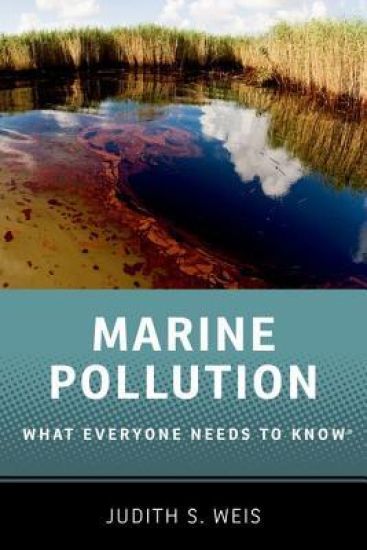
Marine Pollution

Marine Pollution

Judith S. Weis

Oxford University Press Inc
2015
nidottu
Marine pollution occurs today in varied forms--chemical, industrial, and agricultural-and the sources of pollution are endless. In recent history, we've seen oil spills, untreated sewage, eutrophication, invasive species, heavy metals, acidification, radioactive substances, marine litter, and overfishing, among other significant problems. Though marine pollution has long been a topic of concern, it has very recently exploded in environmental, economic, and political debate circles; scientists and non-scientists alike continue to be shocked and dismayed at the sheer diversity of water pollutants and the many ways they can come to harm our environment and our bodies. In Marine Pollution: What Everyone Needs to Know, Judith Weis covers marine pollution from many different angles, each fascinating in its own right. Beginning with its sources and history, the book describes in detail each common pollutant, why exactly it is harmful, why it may draw controversy, and how we can prevent it from destroying our aquatic ecosystems. Weis discusses topics like what actually happened with the Exxon Valdez, and why Harmful Algal Blooms are a serious concern. Later chapters will discuss pollutants that are only now surfacing as major threats, such as pharmaceuticals, personal care products, and metal nanoparticles, and explain how these can begin in the water and progress up the food chain and emerge in human bodies. The book's final section will discuss the effects of climate change and acidification on marine pollution levels, and how we can reduce pollution at the local and global levels.
Marine Pollution

Marine Pollution

Judith S. Weis

Oxford University Press Inc
2015
sidottu
Marine pollution occurs today in varied forms--chemical, industrial, and agricultural-and the sources of pollution are endless. In recent history, we've seen oil spills, untreated sewage, eutrophication, invasive species, heavy metals, acidification, radioactive substances, marine litter, and overfishing, among other significant problems. Though marine pollution has long been a topic of concern, it has very recently exploded in environmental, economic, and political debate circles; scientists and non-scientists alike continue to be shocked and dismayed at the sheer diversity of water pollutants and the many ways they can come to harm our environment and our bodies. In Marine Pollution: What Everyone Needs to Know, Judith Weis covers marine pollution from numerous angles, each fascinating in its own right. Beginning with its sources and history, she discusses common pollutants, why they are harmful, why they cause controversy, and how we can prevent them from destroying our aquatic ecosystems. Questions ask what actually happened with the Exxon Valdez, and why harmful algal blooms are a serious concern. Covering pollutants that are only now surfacing as major threats, such as pharmaceuticals, personal care products, and metal nanoparticles, she explains how these can begin in the water and progress up the food chain to emerge in human bodies. Looking at the effects of climate change and acidification on marine pollution levels, we learn how we can begin to reduce pollution at the local and global levels.
Technical Editing

Technical Editing

Judith Tarutz

Perseus Books
1992
pokkari
At last, direct from the trenches, here's the book technical editors have been waiting for. Unlike other guides which review grammar and spelling,but don't address the special challenges of technical editing,this lively, practical book deals with the real-world problems, issues, and decisions that face technical editors and writers.In this book you'll get tips for preparing a style guide technical writers will want to use. You'll find checklists of what to look for during different types of editorial reviews, learn how to make the transition from traditional to desktop publishing, and see how you can build true usability into printed and online documentation. Enhanced by real examples, case studies, and practical techniques, these flexible and pragmatic solutions go far beyond the mechanics of marking up manuscripts. You get guidance that will help you decide how heavily to edit, how to manage and track large projects, and even how to position yourself for the future when software will handle the copy editing.Whether you edit technical documentation for a living, write technical material, or review the work of others, this book helps you improve your skills and your understanding of the technical editing function.
The Development of Political Attitudes in Children

The Development of Political Attitudes in Children

Judith V. Torney-Purta

AldineTransaction
2005
nidottu
Based on a study of 12,000 elementary school children in eight large and medium-sized American cities, this book presents the first large-scale study of political attitude formation in children. The authors view political development from the perspective of a general theory of socialization, and compare the influences of social class, intelligence, teacher attitude, and religious membership on the growth of political attitudes.The book outlines the way in which the child's political awareness evolvesfrom identification with authority figures such as father, policeman, the president, to a grasp of more abstract political concepts and the rudiments of political participation. Illuminating a topic of great theoretical concern and practical educational importance, the book is a significant contribution to the fields of political sociology, child development and educational psychology, and an important reference work for all concerned with the processes of socialization and of attitude formation in general.The Development of Political Attitudes in Children was based on a major survey, the first of its kind, begun at the University of Chicago in 1960 to as certain information about the induction of children into the political life of the United States, to describe the nature of socialization into citizenship roles, and to examine pre-adult political learning and behavior in terms of other implications for the stability of the political system.