Kirjojen hintavertailu. Mukana 11 627 378 kirjaa ja 12 kauppaa.

Kirjahaku

Etsi kirjoja tekijän nimen, kirjan nimen tai ISBN:n perusteella.

1000 tulosta hakusanalla Karen Lee Grybowski

Transplanting International Courts

Transplanting International Courts

Karen J. Alter; Laurence R. Helfer

Oxford University Press
2019
nidottu
Transplanting International Courts provides a deep, systematic investigation of the most active and successful transplant of the European Court of Justice. The Andean Tribunal is effective by any plausible definition of the term, but only in the domain of intellectual property law. Alter and Helfer explain how the Andean Tribunal established its legal authority within and beyond this intellectual property island, and how Andean judges have navigated moments of both transnational political consensus and political contestation over the goals and objectives of regional economic integration. By letting member states set the pace and scope of Andean integration, by condemning unequivocal violations of Andean rules, and by allowing for the coexistence of national legislation and supranational authority, the Tribunal has retained its fidelity to Andean law while building relationships with nationally-based administrative agencies, lawyers, and judges. Yet the Tribunal's circumspect and formalist approach means that, unlike in Europe, Community law is not an engine of integration. The Tribunal's strategy has also limited its influence within the Andean legal system. Transplanting International Courts also revists the authors' path-breaking scholarship on the effectiveness of international adjudication. Alter and Helfer argue that the European Court of Justice benefitted in underappreciated ways from the support of jurist advocacy movements that are absent or poorly organized in the Andes and elsewhere in the world. The Andean Tribunal's longevity despite these and other challenges offers guidance for international courts in other developing country contexts. Moreover, given that the Andean Community has weathered member state withdrawals and threats of exit, major economic and political crises, and the retrenchment of core policies such as the common external tariff, the Andean experience offers timely and important lessons for Europe's international courts.
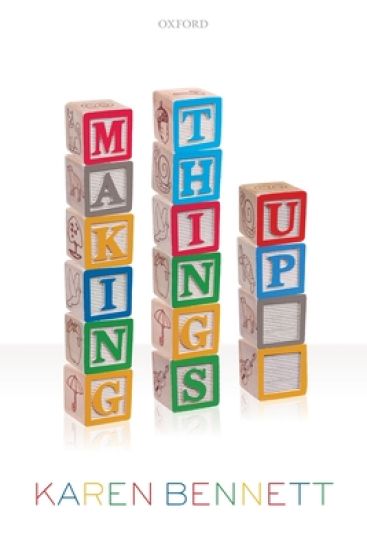
Making Things Up

Making Things Up

Karen Bennett

Oxford University Press
2019
nidottu
A certain kind of talk is ubiquitous among both philosophers and so-called "ordinary people": talk of one phenomenon generating or giving rise to another, or talk of one phenomenon being based in or constructed from another. For example, your computer screen is built of atoms in a complex configuration, and the picture on the screen is based in the local illumination of various individual pixels. Karen Bennett calls the family of relations invoked by such talk 'building relations'. Grounding is one currently popular such relation; so too are composition, property realization, and-controversially-causation. In chapters 2 and 3 Bennett argues that despite their differences, building relations form an interestingly unified family, and characterizes what all building relations have in common. In chapter 4 she argues that it's a mistake to think there is a strict divide between causal and noncausal determination. Chapters 5 and 6 turn to the connections between building and fundamentality. Bennett argues at length that both absolute and relative fundamentality are best understood in terms of building, and that to say that one thing is more fundamental than another is to say no more than that certain patterns of building obtain. In chapter 7 Bennett argues that facts about what builds what must be themselves built: if a builds b, there is something in virtue of which that is the case. She also argues that the answer is a itself. Finally, in chapter 8 she defends an assumption that runs throughout the rest of the book, namely that there indeed are nonfundamental, built entities. Doing so involves substantive discussion about the scope of Ockham's Razor. Bennett argues that some nonfundamentalia are among the proper subject-matter of metaphysics, and thus that metaphysics is not best understood as the study of the fundamental nature of reality.
Mining

Mining

Karen A. Hudson-Edwards; Hannah S.R. Hughes

Oxford University Press
2026
nidottu
Very Short Introductions: Brilliant, Sharp, Inspiring 'If it can't be grown, it must be mined'. This fundamental truth underscores the global need for mining, and the reason why it has been carried out since prehistoric times. To supply the raw materials for buildings, industrial goods, vehicles, technology, and even art, minerals and rock must be removed from the Earth. 'Mining' describes this removal, but also covers the ore deposit exploration, developments of ore deposit models (geological, engineering and mineral economics-focused) and post-removal processing to extract the economically valuable materials, environmental protection, and social and corporate responsibility, in a construct known as the 'Mining Value Chain'. Mining continues to evolve due to the new emphasis on extracting a wider range of materials than ever before for green technologies, on using novel robotic and earth observation technology in exploration and mining, and on integrating environmental and social protection measures throughout the Mining Value Chain. Today's paradigms are 'sustainable' and 'responsible mining', mining that is profitable but protects the environment, human rights, and health. Mining: A Very Short Introduction covers this information and looks to the future to see where mining ideally will go. ABOUT THE SERIES: The Very Short Introductions series from Oxford University Press contains hundreds of titles in almost every subject area. These pocket-sized books are the perfect way to get ahead in a new subject quickly. Our expert authors combine facts, analysis, perspective, new ideas, and enthusiasm to make interesting and challenging topics highly readable.
Women, Households, and the Hereafter in the Qur'an

Women, Households, and the Hereafter in the Qur'an

Karen Bauer; Feras Hamza

Oxford University Press
2023
sidottu
It is commonly understood that the Qur'an sought to transform social and religious practices in its seventh-century Arabian milieu. Yet the nature of that transformation is debated, especially as it relates to women, warfare, kinship and community. This book offers a fresh perspective by undertaking the first historical-critical study of all the Qur'an's verses on women, who were integral to this transformation, and by offering an initial overview of households and patronage — late antique social structures that took the place of formal state structures in the Qur'an's tribal milieu. The findings of this study call into question common approaches to Qur'anic theology, law, and narratives, to the nature of the early community, and to women's place in that community. Bauer and Hamza adopt a holistic method, which integrates aspects of the Qur'an that are commonly considered separately, showing, for instance, how stories act as precursors to law, with female characters acting as models for all believers. Concurrently, they highlight the Qur'an's egalitarian approach to moral agency in existing hierarchical social structures, which the Qur'an seeks to transform both by imposing a salvific frame on them, and by fashioning a community of households characterised by morality, decorum, and care of the vulnerable. This compelling and original work proposes new paradigms for understanding the Qur'an's social milieu and its salvific vision for that world.
Women Writing in a Time of War, 1642-1689

Women Writing in a Time of War, 1642-1689

Karen Britland

Oxford University Press
2025
sidottu
Women Writing in a Time of War, 1642-1689 explores the stereotype of the apolitical woman who was nevertheless valuable as a messenger or secret agent during the English civil wars, not least because her imagined lack of political acumen obscured her partisan behaviour. It examines the interconnections between early modern men and women's cultural production, analyzing the secret writing and communication strategies employed by agents and spies during the wars and arguing that an attention to clandestine modes of writing provides new insights into women's literary production during the conflict. Encouraging us to understand such literary production differently, Britland offers a new history of early modern political writing, one deeply imbricated in-but by no means exclusively focused on-the literary work and experiences of women, the non-elite, and the racially marginalized in early modern England and its colonial trade networks. An attentiveness to the narrative strategies deployed by women writers during the English civil wars also helps us to think about the long histories subtending our own reading and writing practices. Not only does the relative invisibility of female agents in our own historiography reveal a persistent tendency in contemporary criticism to overlook women's contributions to major historical events, but, the book argues, the early modern instrumentalization of women's bodies-particularly the bodies of women from non-elite backgrounds who acted as couriers within elite communication networks-acts as a caution against adopting contemporary methods of reading (particularly computer-aided reading) that can downplay or ignore the contributions of women and non-elite people. This book makes a case for not separating our discussions of women from those of men, nor for privileging analyses of the rich over those of the poor, at the same time as it remains deeply embedded in the literary, material, and merchant cultures of later seventeenth-century England.
Introduction to Electric Circuits

Introduction to Electric Circuits

Karen Craigs; Lauren Fuentes

Oxford University Press, Canada
2019
kierre
First published in 1959, Herbert Jackson's Introduction to Electric Circuits is a core text for introductory circuit analysis courses taught in electronics and electrical engineering technology programs. This lab manual, created to accompany the main text, contains a collection of experiments chosen to cover the main topics taught in foundational courses in electrical engineering programs. Experiments can all be done with inexpensive test equipment and circuit components. Each lab concludes with questions to test students' comprehension of the theoretical concepts illustrated by the experimental results. The manual is formatted to enable it to double as a workbook, to allow students to answer questions directly in the lab manual if a formal lab write-up is not required.
Establishing the Supremacy of European Law

Establishing the Supremacy of European Law

Karen Alter

Oxford University Press
2001
sidottu
The most effective international legal system in the world exists in Europe. It works much like a domestic system, where violations of the law are brought to court, legal decisions are respected, and the autonomous influence of law and legal rulings extends into the political process itself. The European legal system was not always so effective at influencing state behaviour and compelling compliance. Indeed the European Community's original legal system was intentionally designed to have very limited monitoring and enforcement capabilities. The European Court of Justice transformed the original system through bold and controversial legal decisions declaring the direct effect and supremacy of European law over national law. This book starts where traditional legal accounts leave off. Karen Alter explains why national courts took on a role enforcing European law against their governments, and why national governments accepted an institutional change that greatly compromised national sovereignty. She then shows how harnessing national courts to funnel private litigant challenges through to the ECJ and enforce European law supremacy contributed fundamentally to the emergence of an international rule of law in Europe, where national governments are held accountable to their European legal obligations, and where states actually avoid policies that might conflict with European law.
An Uncooperative Commodity

An Uncooperative Commodity

Karen J. Bakker

Oxford University Press
2004
sidottu
Privatization of water suply is an emotive and controversial topic. The 'British model' of water privatization is unique: no other country has entirely privatized its water supply and sewerage systems. This book analyzes the socio-economic and environmental dimensions of privatization in England and Wales. It examines the implications of privatization for consumers, environmental management, and the water supply industry.
The Drama of DNA: Narrative Genomics

The Drama of DNA: Narrative Genomics

Karen H. Rothenberg; Lynn Wein Bush

Oxford University Press Inc
2014
nidottu
Through the use of dramatic narratives, The Drama of DNA brings to life the complexities raised by the application of genomic technologies to health care and diagnosis. This creative, pedagogical approach shines a unique light on the ethical, psychosocial, and policy challenges that emerge as comprehensive sequencing of the human genome transitions from research to clinical medicine. Narrative genomics aims to enhance understanding of how we evaluate, process, and share genomic information, and to cultivate a deeper appreciation for difficult decisions encountered by health care professionals, bioethicists, families, and society as this technology reaches the bedside. This innovative book includes both original genomic plays and theatrical excerpts that illuminate the implications of genomic information and emerging technologies for physicians, scientists, counselors, patients, blood relatives, and society. In addition to the plays, the authors provide an analytical foundation to frame the many challenges that often arise.
Albion's Dance

Albion's Dance

Karen Eliot

Oxford University Press Inc
2016
sidottu
When the Second World War broke out, ballet in Britain was only a few decades old. Few had imagined that it would establish roots in a nation long thought to be unresponsive to dance. Nevertheless, the war proved to be a boon for ballet dancers, choreographers and audiences, for the nation's dancers were forced to look inward to their own identity and sources of creativity. As author Karen Eliot demonstrates in this fascinating book, instead of withering during the enforced isolation of war, ballet in Britain flourished, exhibiting a surprising heterogeneity and vibrant populism that moved ballet outside its typical elitist surroundings to be seen by uninitiated, often enthusiastic audiences. Ballet was thought to help boost audience morale, to render solace to the soul-weary and to afford entertainment and diversion to those who simply craved a few hours of distraction. Government authorities came to see that ballet could serve as a tool of propaganda; the ways it functioned within the larger public discourse of propaganda and sacrifice, and how it answered a public mood of pragmatism and idealism, are also topics in this story of the development of a national ballet identity. This narrative has several key players— dance critics, male and female dancers, producers, audiences, and choreographers. Exploring the so-called "ballet boom" during WWII, the larger story of this book is one of how art and artists thrive during conflict, and how they respond pragmatically and creatively to privation and duress.
The Little Republic

The Little Republic

Karen Harvey

Oxford University Press
2012
sidottu
This is an open access title available under the terms of a CC BY-NC-ND 3.0 International licence. It is free to read at Oxford Scholarship Online and offered as a free PDF download from OUP and selected open access locations. The relationship between men and the domestic in eighteenth-century Britain has been obscured by two well-established historiographical narratives. The first charts changes in domestic patriarchy, founded on political patriarchalism in the early modern period and transformed during the eighteenth century by new types of family relationship rooted in contract theory. The second describes the emergence of a new kind of domestic interior during the long eighteenth century, a 'home' infused with a new culture of 'domesticity' primarily associated with women and femininity. The Little Republic shifts the terms of these debates, rescuing the engagement of men with the house from obscurity, and better equipping historians to understand masculinity, the domestic environment, and domestic patriarchy. Karen Harvey explores how men represented and legitimized their domestic activities. She considers the relationship between discourses of masculinity and domesticity, and whether there was a particularly manly attitude to the domestic. In doing so, Harvey suggests that 'home' is too narrow a concept for an understanding of eighteenth-century domestic experience. Instead, focusing on the 'house' foregrounds a different domestic culture, one in which men and masculinity were central. Reconstructing men's experiences of the domestic as shaped by their own and others' beliefs, assumptions and expectations, Harvey argues for the continuation of a model of domestic patriarchy and also that effective domestic patriarchs remained important to late-eighteenth-century political theory. It was a discourse of 'oeconomy' - the practice of managing the economic and moral resources of the household for the maintenance of good order - that shaped men's attitudes towards and experiences in the house. Oeconomy combined day-to-day and global management of people and resources; it was a meaningful way of defining masculinity and established the house a key component of a manly identity that operated across the divide of 'inside' and 'outside' the house. Significantly for histories of the home which so often narrate a process of privatization and feminization, oeconomy brought together the home and the world, primarily through men's domestic management.
The Least Worst Place

The Least Worst Place

Karen J. Greenberg

Oxford University Press
2009
sidottu
Ever since its foundation in 2002, the Guantanamo Bay Detention Facility has become the symbol for many people around the world of all that is wrong with the 'war on terror'. Secretive, inhumane, and illegal by most international standards, it has been seen by many as a testament to American hubris in the post-9/11 era. Yet until now no one has written about the most revealing part of the story - the prison's first 100 days. It was during this time that a group of career military men and women tried to uphold the traditional military codes of honour and justice that informed their training in the face of a far more ruthless, less rule-bound, civilian leadership in the Pentagon. They were defeated. This book tells their story for the first time. It is a tale of how individual officers on the ground at Guantanamo, along with their direct superiors, struggled with their assignment from Washington, only to be unwittingly co-opted into the Pentagon's plan to turn the prison into an interrogation facility operating at the margins of the law and beyond.
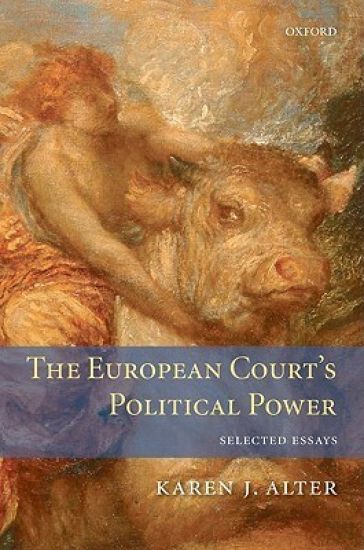
The European Court's Political Power

The European Court's Political Power

Karen Alter

Oxford University Press
2009
sidottu
Karen Alter's work on the European Court of Justice heralded a new level of sophistication in the political analysis of the controversial institution, through its combination of legal understanding and active engagement with theoretical questions. The European Court's Political Power assembles the most important of Alter's articles written over a fourteen year span, adding an original new introduction and conclusion taking an overview of the Court's development and current concerns. Together the articles provide insight into the historical and political contours of the ECJ's influence on European politics, explaining how and why the same institution can have such a varying impact across time and issue area. The book starts with the European Coal and Steel Community, where the ECJ was largely unable to facilitate greater member state respect for ECSC rules. Alter then shows how legal actors orchestrated an activist transformation of the European legal system-with the critical aid of jurist advocacy movements, and via the co-optation national courts. The transformation of the European legal system wrested from member states control over the meaning of European law, but the ECJ continues to have differential influence across issue area. Alter explains that different influence of the ECJ comes from the varied extent to which sub and supra-national actors turn to the ECJ to achieve political objectives. Looking beyond the European experience, the book includes four chapters that put the ECJ into a comparative perspective, examining the extent to which the ECJ experience is unique, or a harbinger of the future role international courts may play in international and comparative politics.
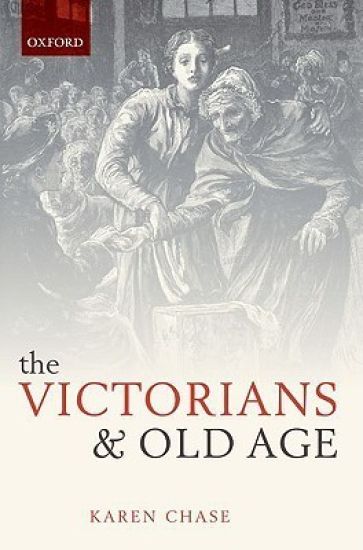
The Victorians and Old Age

The Victorians and Old Age

Karen Chase

Oxford University Press
2009
sidottu
Karen Chase examines old age as it was constructed in Victorian social and literary cultures. Beginning with the vexed relation between elderly people whose numbers and needs taxed the state which sought to identify, classify, and provide for them, she analyzes illuminating moments in narrative form, social policy, or cultural attitudes. The book considers the centrality of institutions and of the generational divide; it traces the power and powerlessness of age through a range of characters and individuals as distinct from one another as Dickens's inebriated nurse, Sairey Gamp, to the sober Queen Victoria; and it studies specific narrative forms for expressing heightened emotions attached to aging and the complexities of representing age in pictorial and statistical 'portraits'. Chapters are organized around major literary works set alongside episodes and artefacts, diaries and memoirs, images and inscriptions, that produced (and now illuminate) the construction of old age through Victoria's long reign. The Victorians and Old Age shows that if old age became for the Victorians such a conspicuous public topic and problem, it also became an intensely private preoccupation. The social formation of old age created terms, images, and narratives that lone individuals used to fashion the stories of their lives. The book is intent to respect the specificity of aging: not only the wide diversities of circumstance (rich and poor, urban and rural, watched and forgotten, powerful and dispossessed) but also the distinct acts of representation by novelists, painters, journalists, sociologists, and diary-keepers.
Spinal Interventions in Pain Management

Spinal Interventions in Pain Management

Karen Simpson; Ganesan Baranidharan; Sanjeeva Gupta

Oxford University Press
2012
nidottu
Concentrating on techniques rather than pain pathology, Spinal Interventions in Pain Management is focused purely on the spine. This practical handbook covers anatomy and imaging, how to choose patients, how to undertake procedures, and includes advice on potential pitfalls. Perfect reading for pain interventionalists and trainees before doing a procedure or before an exam, the book covers the most common spinal interventions for pain that pain specialists undertake, including epidurals, diagnostic facet interventions, the intra-articular injection of the sacroiliac joint and radiofrequency denervation, cervical, thoracic and lumbar discography, and neuromodulation (spinal cord stimulation and intrathecal drug delivery). Extensive illustrations, both x-rays and figures, make the book accessible and help to provide a clear understanding of the anatomy, which underpins spinal interventions.
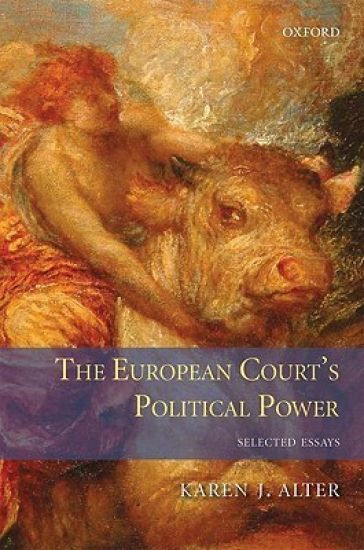
The European Court's Political Power

The European Court's Political Power

Karen Alter

Oxford University Press
2010
nidottu
Karen Alter's work on the European Court of Justice heralded a new level of sophistication in the political analysis of the controversial institution, through its combination of legal understanding and active engagement with theoretical questions. The European Court's Political Power assembles the most important of Alter's articles written over a fourteen year span, adding an original new introduction and a conclusion that takes an overview of the Court's development and current concerns. Together the articles provide insight into the historical and political contours of the ECJ's influence on European politics, explaining how and why the impact of an institution can vary so greatly over time and access different issues. The book starts with the European Coal and Steel Community, where the ECJ was largely unable to facilitate greater member state respect for ECSC rules. Alter then shows how legal actors orchestrated an activist transformation of the European legal system, with the critical aid of jurist advocacy movements, and via the co-optation of national courts. The transformation of the European legal system wrested control from member states over the meaning of European law, but the ECJ continues to have varying influence across different issues. Alter explains that the differing influence of the ECJ comes from the varied extent to which sub- and supra-national actors turn to it to achieve political objectives. Looking beyond the European experience, the book includes four chapters that put the ECJ into a comparative perspective, examining the extent to which the ECJ experience is a unique harbinger of the future role international courts may play in international and comparative politics.
Writing the Lives of Painters

Writing the Lives of Painters

Karen Junod

Oxford University Press
2011
sidottu
Writing the Lives of Painters explores the development of artists' biographies in eighteenth- and early nineteenth-century Britain. During this period artists gradually distanced themselves from artisans and began to be recognised for their imaginative and intellectual skills. The development of the art market and the burgeoning of an exhibition culture, as well as the foundation of the Royal Academy of Arts in 1768, all contributed to redefining the rank of artists in society. This social redefinition of the status of artists in Britain was shaped by a thriving print culture. Contemporary artists were discussed in a wide range of literary forms, including exhibition reviews, art-critical pamphlets, and journalistic gossip-columns. Biographical accounts of modern artists emerged in a dialogue with these other types of writing. This book is an account of a new literary genre, tracing its emergence in the cultural context of the late eighteenth and early nineteenth centuries. It considers artistic biography as a malleable generic framework for investigation. Indeed, while the lives of painters in Britain did not completely abandon traditional tropes, the genre significantly widened its scope and created new individual and social narratives that reflected and accommodated the needs and desires of new reading audiences. Writing the Lives of Painters also argues that the proliferation of a myriad biographical forms mirrored the privileging of artistic originality and difference within an art world that had yet to generate a coherent 'British School' of painting. Finally, by focusing on the emergence of individual biographies of British artists, the book examines how and why the art historiographic model established by Georgio Vasari was gradually dismantled in the hands of British biographers during the Romantic period.
James Joseph Sylvester

James Joseph Sylvester

Karen Hunger Parshall

Oxford University Press
2013
nidottu
In the folklore of mathematics, James Joseph Sylvester (1814-1897) is the eccentric, hot-tempered, sword-cane-wielding, nineteenth-century British Jew who, together with the taciturn Arthur Cayley, developed a theory and language of invariants that then died spectacularly in the 1890s as a result of David Hilbert's groundbreaking, 'modern' techniques. This, like all folklore, has some grounding in fact but owes much to fiction. The present volume brings together for the first time 140 letters from Sylvester's correspondence in an effort to establish the true picture. It reveals - through the letters as well as through the detailed mathematical and historical commentary accompanying them - Sylvester the friend, man of principle, mathematician, poet, professor, scientific activist, social observer, traveller. It also provides a detailed look at Sylvester's thoughts and thought processes as it shows him acting in both personal and professional spheres over the course of his eighty-two year life. The Sylvester who emerges from this analysis - unlike the Sylvester of the folkloric caricature - offers deep insight into the development of the technical and social structures of mathematics.
Transplanting International Courts

Transplanting International Courts

Karen J. Alter; Laurence R. Helfer

Oxford University Press
2017
sidottu
Transplanting International Courts: The Law and Politics of the Andean Tribunal of Justice provides a deep, systematic investigation of the most active and successful transplant of the European Court of Justice. The Andean Tribunal is effective by any plausible definition of the term, but only in the domain of intellectual property law. Alter and Helfer explain how the Andean Tribunal established its legal authority within and beyond this intellectual property island, and how Andean judges have navigated moments of both transnational political consensus and political contestation over the goals and objectives of regional economic integration. By letting member states set the pace and scope of Andean integration, by condemning unequivocal violations of Andean rules, and by allowing for the coexistence of national legislation and supranational authority, the Tribunal has retained its fidelity to Andean law while building relationships with nationally-based administrative agencies, lawyers, and judges. Yet the Tribunals circumspect and formalist approach means that, unlike in Europe, community law is not an engine of integration. The Tribunals strategy has also limited its influence within the Andean legal system. The authors also revisit their own path-breaking scholarship on the effectiveness of international adjudication. Alter and Helfer argue that the European Court of Justice benefitted in underappreciated ways from the support of transnational jurist advocacy movements that are absent or poorly organized in the Andes and elsewhere in the world. The Andean Tribunals longevity despite these and other challenges offers guidance for international courts in other developing country contexts. Moreover, given that the Andean Community has weathered member state withdrawals and threats of exit, major economic and political crises, and the retrenchment of core policies such as the common external tariff, the Andean experience offers timely and important lessons for European international courts.